Prepare for entry-level occupational therapy practice while developing doctoral-level skills in leadership, advocacy, program development, scholarly inquiry, and capstone work.
Why Earn an OTD at New York Tech?
The Doctor of Occupational Therapy prepares students for entry-level OT practice while extending learning through doctoral-level experiences in leadership, advocacy, program development, scholarly inquiry, evidence-informed practice, and capstone work.
OTD students build a foundation in clinical reasoning, occupation-centered care, adaptive design, technology, and full-time fieldwork. The pathway culminates in a 14-week doctoral capstone experience focused on an area of practice, leadership, education, advocacy, program development, or inquiry.
Graduates are eligible to sit for the national certification examination administered by the National Board for Certification in Occupational Therapy. After passing the exam, graduates qualify for certification as registered occupational therapists.
One OT Community. Two Pathways
Both the OTD and M.S. pathways prepare students for entry-level OT practice. The OTD adds doctoral-level preparation in leadership, advocacy, scholarly inquiry, program development, and capstone work. The M.S. offers a focused, practice-centered route to becoming an occupational therapist.
Not sure which pathway is right for you? Our faculty and admissions team can help you compare your goals, timeline, and interests.
Learn where an OTD from New York Tech can take you. Complete the form to start the conversation.
Loading...
What You’ll Learn
Learn how to support health, independence, and participation through occupation-centered care. Students develop the knowledge, clinical reasoning, and professional skills to work with people experiencing impairments, activity limitations, and participation restrictions related to injury, illness, disability, psychosocial needs, aging, and life circumstances. The OTD pathway also includes doctoral preparation through a 14-week capstone experience. Graduates are prepared to sit for the NBCOT certification exam and, after passing, may apply for state licensure to practice as occupational therapists.
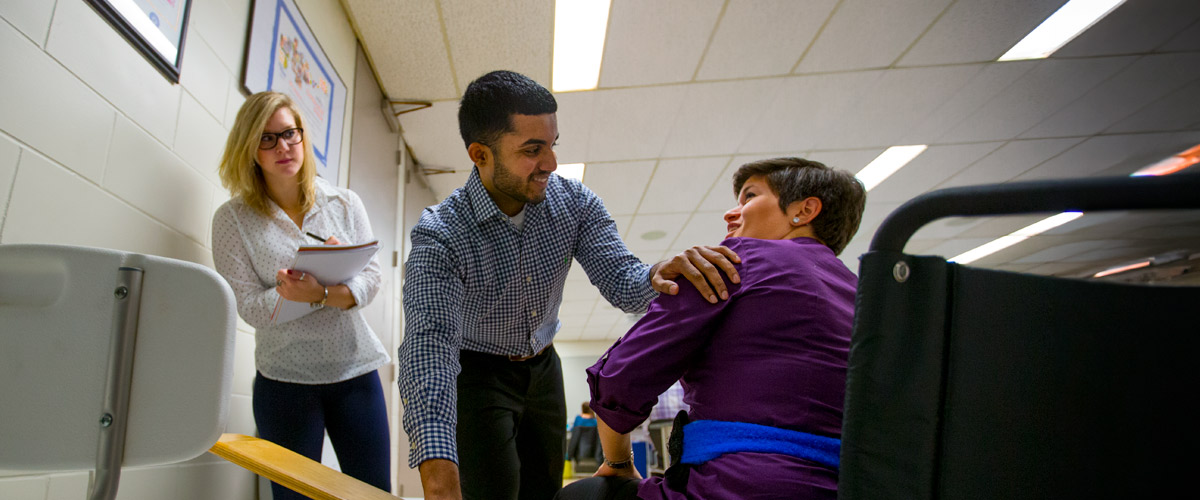
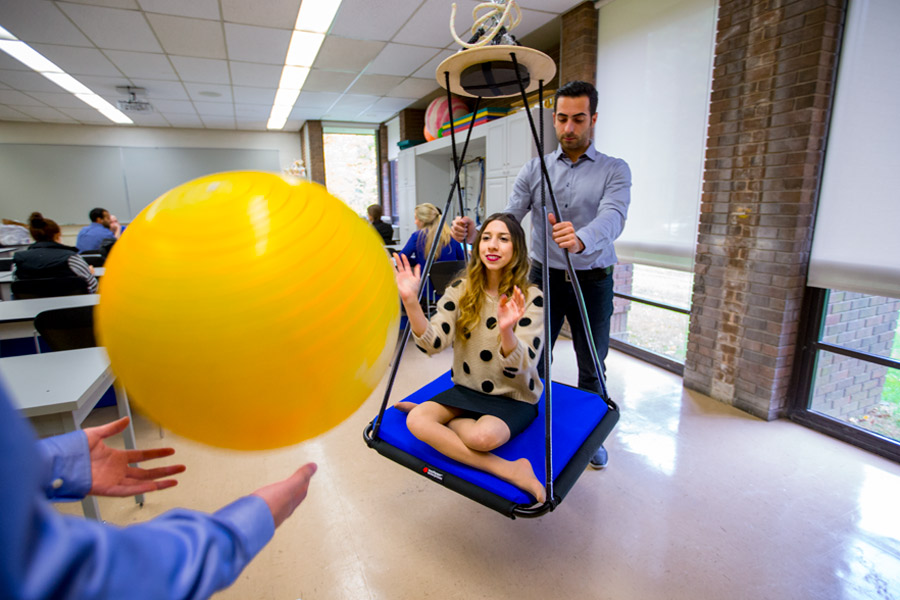
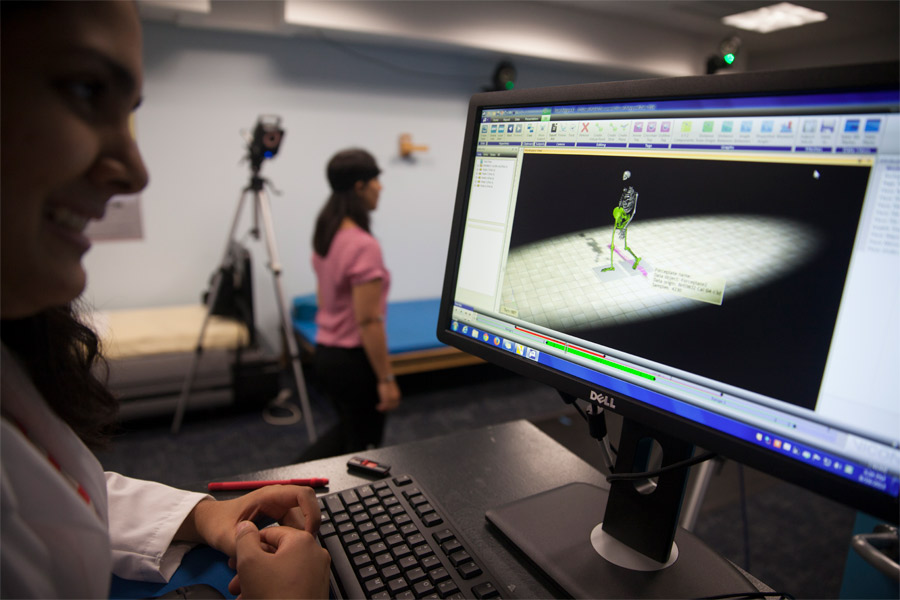
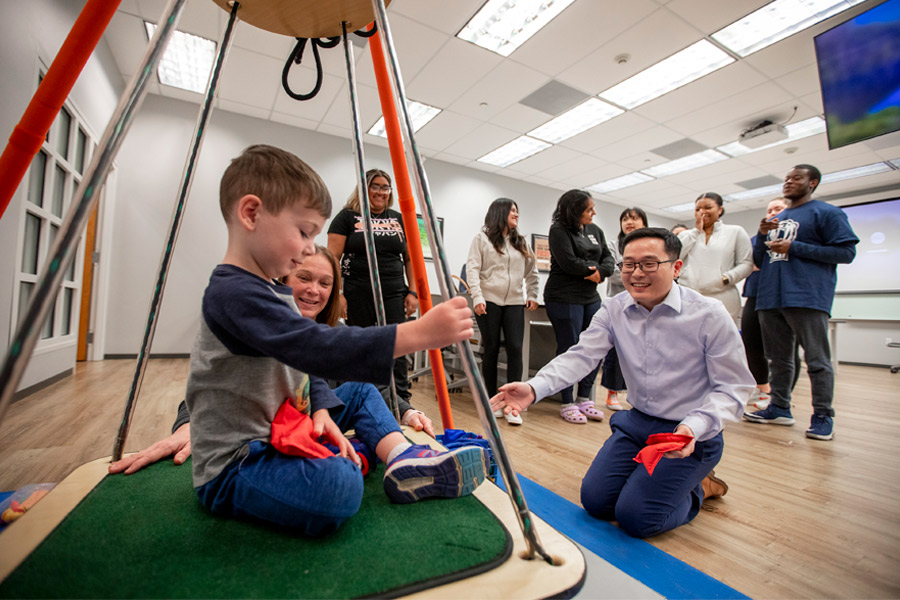
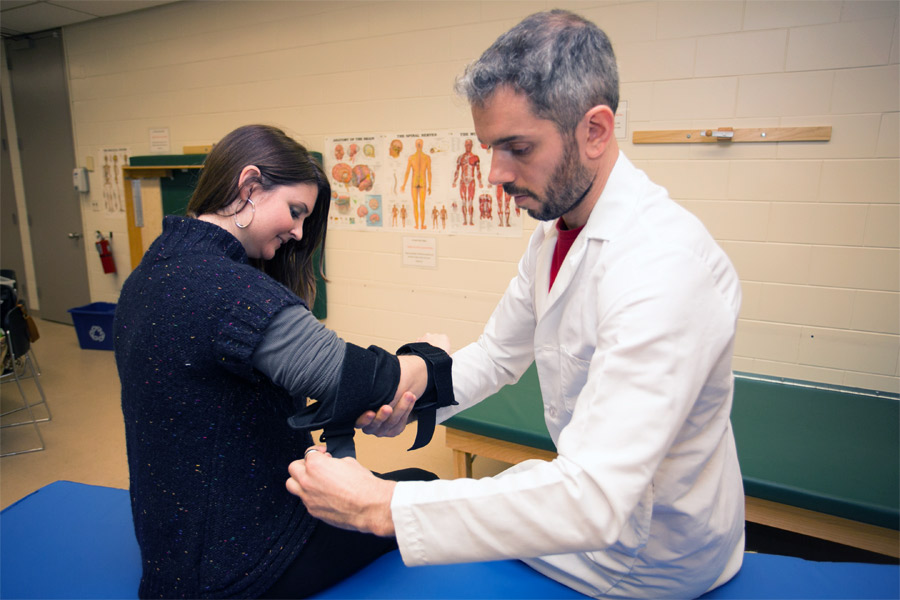
At the School of Health Professions, you’ll do more than sit in classrooms and attend lectures. You’ll learn in high-tech labs and gain experience working at world-class facilities, preparing you for a successful career in the health professions.
There is a total of 24 weeks of full-time fieldwork at selected sites. While doing fieldwork, students will work the same hours as staff at the site. The clinical experience offers additional time in the clinic and for independent learning.
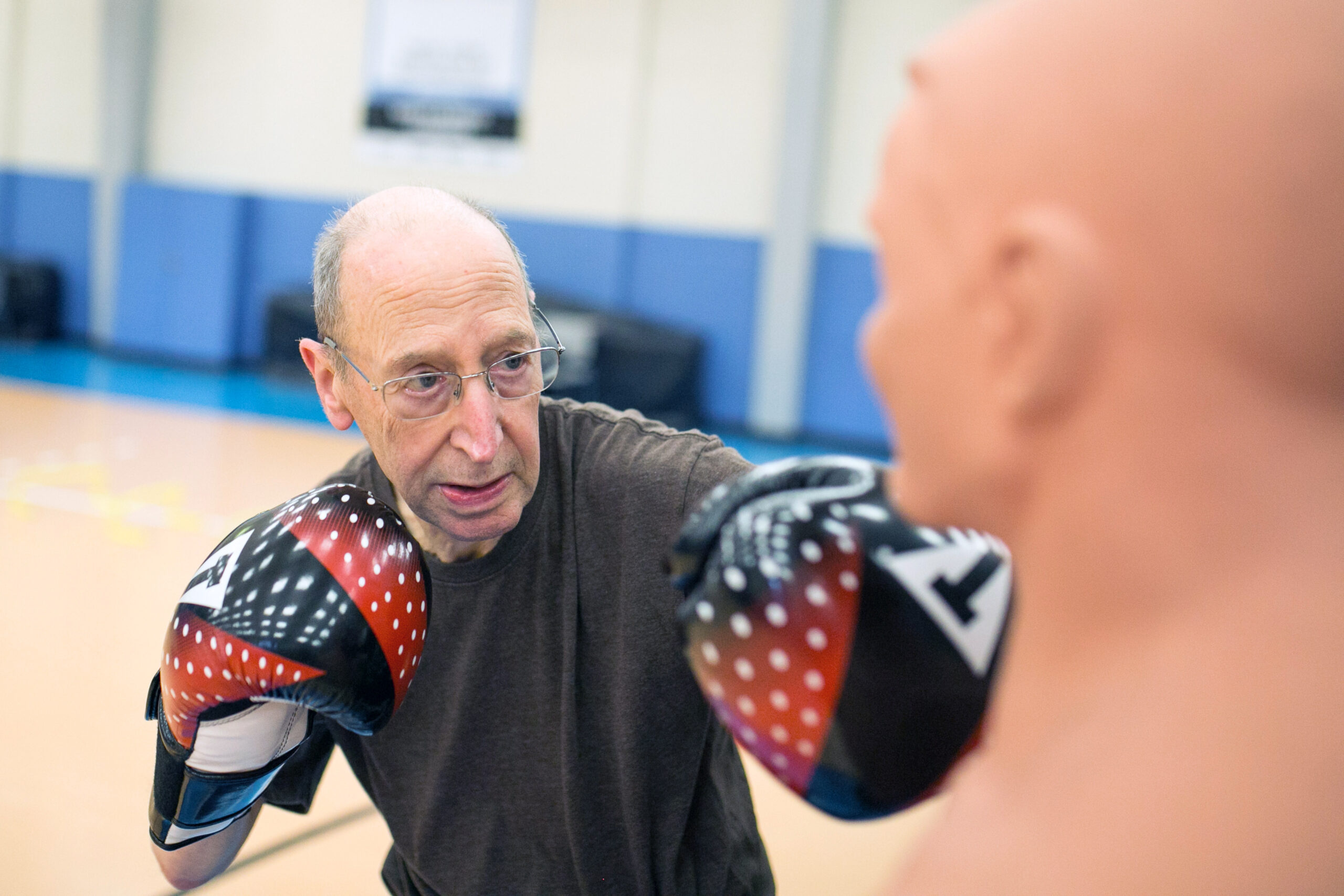
Join in faculty research to enhance your learning and build valuable experience. Our OTD students aim to help individuals with Parkinson’s Disease sleep better, examine the effects of cold exposure on cognition, and explore the potential of virtual environments for learning and therapy.
Throughout our Occupational Therapy, M.S. program, you’ll be exposed to a range of new and emerging technologies to help you prepare for meaningful work in the increasingly digital-driven healthcare industry.
Learn about evidence-based exercises to improve fitness related outcomes, not just for athletes, but for the general public and those with chronic diseases.
Through a combination of classroom learning, international fieldwork, and research, you’ll grow your knowledge of population health and policy development, acquire key competencies as a practitioner, and prepare to serve as an informed leaders and agent change for your patients and your community.
Stats & Rankings
Top 25
Regional Universities (North)
U.S. News & World Report, 2026
97%
NBCOT Licensure Pass Rate, 2024
18%
Most Innovative School (North)
U.S. News & World Report, 2026
Career & Salary Outlook
Occupational therapists help people participate more fully in the daily activities that matter to them. They work across healthcare, school, community, and emerging practice settings to support independence, participation, health, and quality of life.
Job Growth
Employment of occupational therapists is projected to grow 14 percent from 2024 to 2034, much faster than average for all occupations.
Occupational therapists may work in such areas as:
Rehabilitation
Pediatrics
Schools & Education
Mental health
Aging
Community-based practice
Administration & program development
Salary Outlook
The median annual wage for occupational therapists was $98,340, according to the Bureau of Labor Statistics. (May 2024)
Program Details
Learn more about applying to the OTD program, as well as ways to fund your education.
To be eligible to apply to the OTD program, you’ll need:
Bachelor’s degree or equivalent from an accredited institution
Minimum cumulative undergraduate GPA of 3.0
Academic record that includes a balance of coursework in the humanities, social sciences, mathematics, and life sciences, as well as competence in written and spoken English
Basic computer skills
To have satisfactorily completed all prerequisite courses
Graduates of the entry-level doctoral occupational therapy program will be eligible to sit for the national certification examination administered by the National Board of Certification in Occupational Therapy (NBCOT). Successful completion of the exam will result in certification as an Occupational Therapist, Registered (OTR).
All states require licensure to practice. However, state licenses are usually based on the results of the NBCOT Certification Examination. Note: a felony conviction may affect a graduate’s ability to sit for the NBCOT certification examination or attain state licensure. For further information, contact the National Board for Certification in Occupational Therapy, 12 South Summit Avenue, Suite 100, Gaithersburg, Maryland 20877; phone: 301.990.7979. For additional information about state licensing and other restrictions, contact your local State Board of Occupational Therapy.
New York Tech’s entry-level OTD program in occupational therapy received an initial accreditation from ACOTE in 2022. The initial accreditation period is seven years.
This program is approved by the New York State Education Department.
New York Tech is accredited by the Middle States Commission on Higher Education, most recently in 2019.
Graduation Year
Students Entering /Graduating
Students who withdrew or did not graduate with the entering cohort for reasons other than academic performance
Students Graduating
Graduation Rate
2025
20
0
19
100%
2024
31
1
30
97%
2023
27
0
27
95%
Grand Total
78
1
76
97%
Graduation rate is calculated as the number of students graduating divided by the number of students entering the cohort, minus students who withdrew or did not graduate with the entering cohort for reasons other than academic performance.
NBCOT pass rates are reported in accordance with ACOTE standards and reflect the percentage of new graduates who passed the certification exam within 12 months of graduation, regardless of the number of attempts.
My favorite part of the OT degree program has been the experiential knowledge that I receive from my professors in and out of the classroom. They show, using real-life examples, how they have incorporated their knowledge into their own practice, which has been very motivating.