Autism Acceptance Month: Promoting Inclusivity
April is Autism Acceptance Month—formerly known as Autism Awareness Month. This subtle name change, advocated by the Autism Society of America, is a milestone in changing the dialogue surrounding autism spectrum disorder (ASD) and those affected by it. Where “awareness” lacks in promoting inclusivity and positivity, “acceptance” picks up the slack and destigmatizes ASD so those with neurodivergence may live in a society where their strengths and weaknesses are supported.
The Centers for Disease Control and Prevention estimate that about one in 36 children and nearly 5.5 million adults in the United States have ASD. Here we highlight a few members of the New York Tech community who are working to enhance understanding, therapies, and life experiences for those with autism.
Assistant Professor of Biomedical Sciences at the College of Osteopathic Medicine (NYITCOM) Yingtao “Jerry” Zhao, Ph.D., leads a research team that recently secured a three-year, $428,400 grant from the National Institutes of Health (NIH) National Institute of Neurological Disorders and Stroke. This grant will support research to study the sugar molecule heparan sulfate, which covers the surface of all cells in the human body and is believed to help regulate cell-to-cell interactions. Deficient levels of heparan sulfate have been associated with autism, and Zhao’s team aims “to offer a strong scientific basis to develop new therapies for patients with neurological diseases caused by heparan sulfate irregularities.”
Other research at NYITCOM includes explaining how sense of smell is affected in individuals with autism. A study led by Assistant Professor of Biomedical Sciences Gonzalo Otazu, Ph.D., published in the journal Nature Communications, analyzes a mouse model and reports differences in the neurological processes responsible for smell. The research team trained two groups of mice—one group with a mutation in a gene linked to autism (CNTNAP2 knockout mice) and one neurotypical group—to recognize familiar scents. While both groups succeeded in identifying a target scent, the CNTNAP2 mice struggled to identify target scents while unfamiliar odors were introduced in the background. By documenting the neural processes in this mouse model of autism, the team’s findings may help to explain the brain circuitry of humans with autism.
Alexander Lopez, J.D., OT/L, associate professor of occupational therapy, founded his nonprofit Inclusive Sports and Fitness, Inc., to meet the occupational needs of children with performance skill impairments. Recognizing that children with autism may present motor and cognitive delays—causing them to be deprived of mainstream sports opportunities—Lopez seeks to examine “how sports and play can advance sensory and cognitive performance.” Through his work and research, targeted athletic programs enable a child’s brain to process sensory information in ways that promote structural and functional brain changes.
Amant Paul (B.Arch. ’20) has spent more than seven years working with people on the autism spectrum. With his expertise in architecture, Paul’s goal is to “raise awareness about how people on the spectrum would have a better life if the environment was designed for their needs.” People with autism may experience hypersensitivity or hyposensitivity to the world around them. With this in mind, Paul hopes to design spaces better suited for those on the spectrum, enabling them to live more comfortably. While working with the nonprofit organization New Horizons in Autism, Inc., Paul collaborated with their Director of Clinical Services Michael Hitchcock to design better classrooms, including making the spaces smaller and avoiding long hallways as this could be an invitation to run away.
In 2019, a group of College of Engineering and Computing Sciences students in the Undergraduate Research and Entrepreneurship Program worked on their research project, “Pencil Gripper for Children with Autism.” Mentored by N. Sertac Artan, Ph.D., associate professor of electrical and computer engineering, the students created a functional prototype for a pencil gripper that collects pressure measurement data from a sensor. Analyzing the data to assess fine motor skills would allow for personalized exercises to help the user improve their writing skills.
More Features
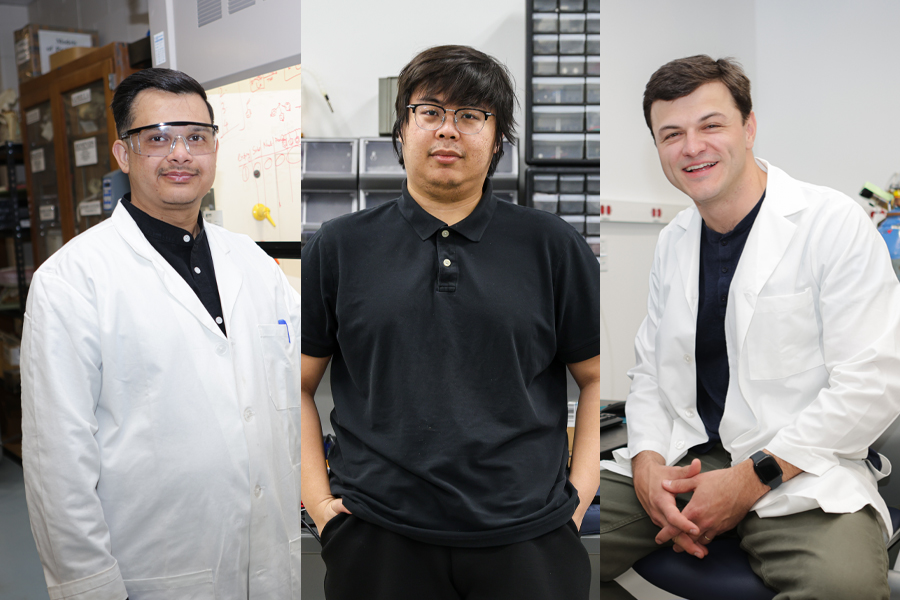
Robust Research
New York Tech’s commitment to research paves the way for important and groundbreaking work. Meet three Ph.D. students whose work may improve disaster response, recovery after muscle and bone injuries, and anticancer therapies.
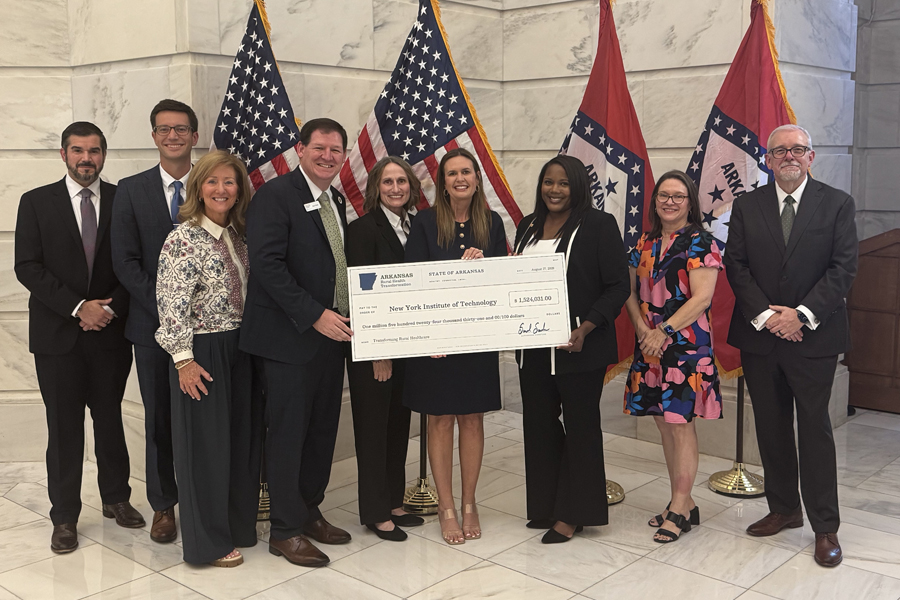
NYITCOM-Arkansas Receives $1.5 Million Grant for Maternal Health Initiative
NYITCOM-Arkansas will use the grant to extend its clinical services focused on rural maternal healthcare access.
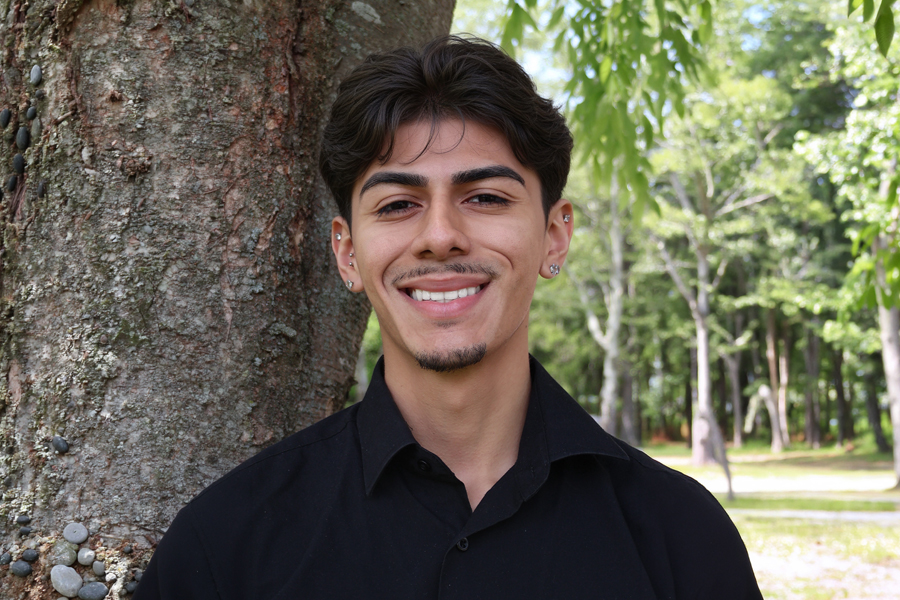
Intern Insight: Brandon Vasquez
This summer, architecture student Brandon Vasquez interned with Gensler, a globally recognized architecture, design, and planning firm.
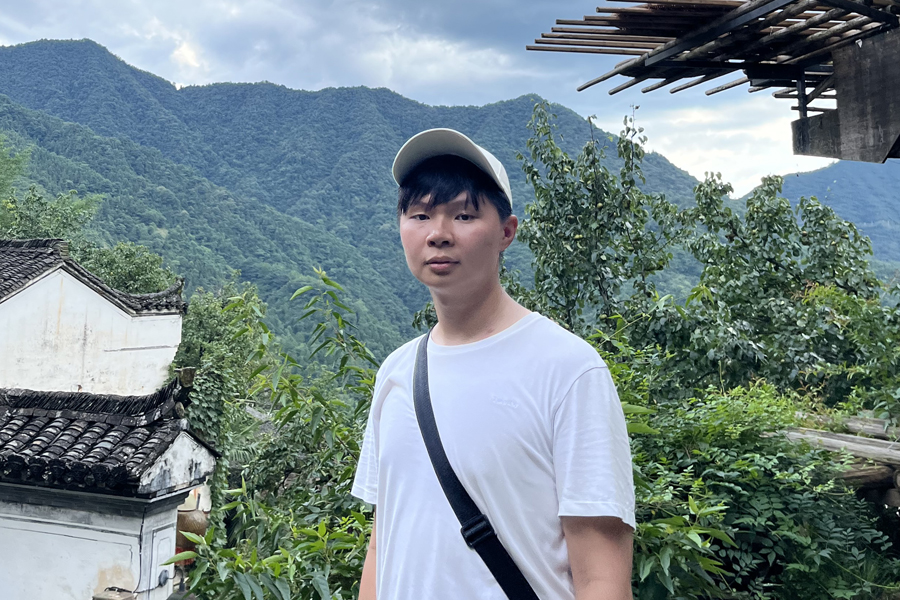
Discover Jiangxi: Two Undergraduate Students’ Experience
For two weeks in July, a nursing student and an architecture student studied on the other side of the globe through the Discover Jiangxi program.
NYITCOM-Arkansas’ Rajagopalan Receives $573K NIH Grant for Cardiovascular Disease Research
The funding will further Associate Professor Viswanathan Rajagopalan’s research regarding the impact thyroid dysfunction has on cardiovascular disease.
Helping Children Manage Back-to-School Anxiety
Cognitive neuroscientist Robert Alexander, Ph.D., assistant professor of counseling and wellness, reminds parents to know the signs of potential anxiety in children as the new school year approaches.