Building a STEM Pipeline Through Summer Research for High Schoolers
For many high school students, conducting hands-on research in a real-life laboratory feels like a distant dream. At New York Tech, that frontier is getting closer to reality.
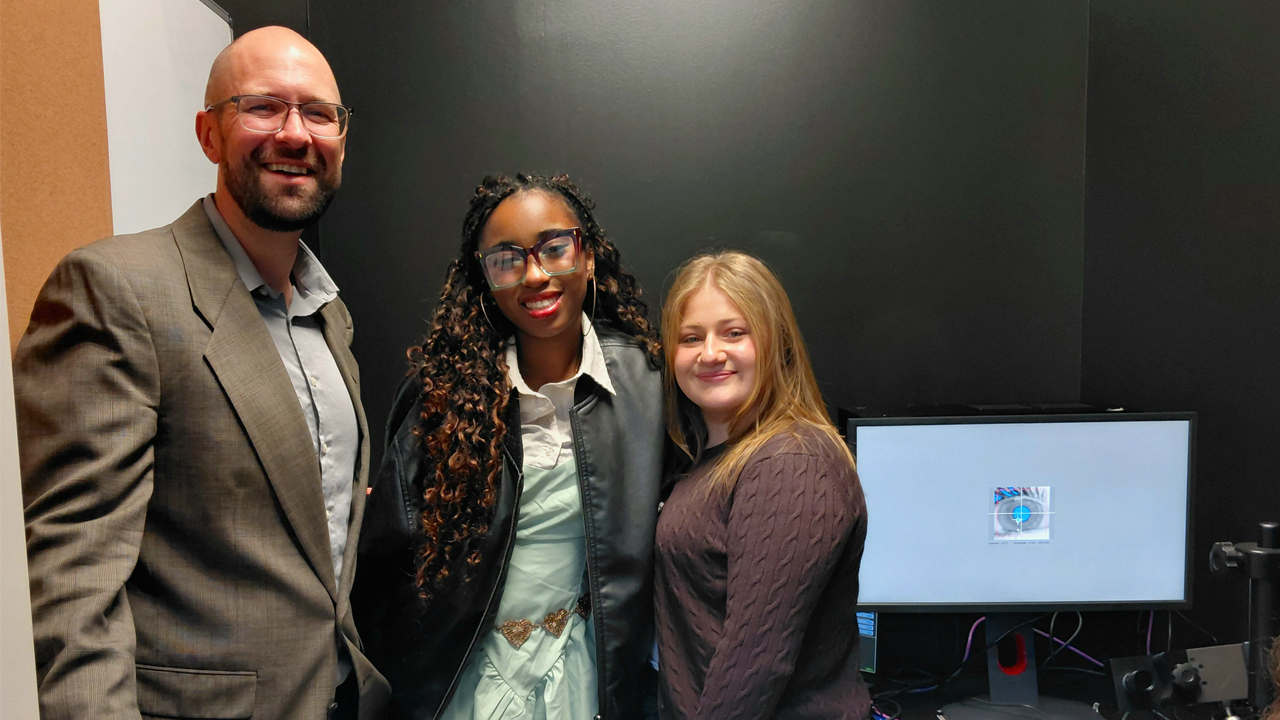
Over the past two summers, Robert Alexander, Ph.D., assistant professor of psychology and counseling and director of New York Tech’s Human Factors and Neuroscience (HFAN) research group, has opened his lab to more than a dozen high school students, giving them hands-on experience in psychological and biomedical research.
Far from just observing, these students are actively participating in the lab’s ongoing projects—learning research methodology, collecting and analyzing data, training on eye-tracking technology, and more. The impact of this experience extends well beyond the lab’s four walls: Five of those students have since enrolled at New York Tech and continue working with Alexander’s lab—now as full-fledged college students.
Opening the Lab Door for High School Students
Typically, high school students seeking research opportunities can face significant barriers. Laboratories have rules governing minors’ participation, and researchers unfamiliar with those requirements may find it difficult to create a program from scratch. Students themselves may send inquiry after inquiry to faculty members without finding a place willing or able to take them on.
Alexander’s approach is to remove some of those barriers. Before joining New York Tech, Alexander worked in a laboratory that hosted high school students during the summer, where he learned to navigate those policies and developed the scaffolding needed to bring high school researchers up to speed. When he established his own lab at New York Tech, he built those lessons into its structure. “HFAN is designed to make laboratory research accessible from the start, and that’s a big reason why it is welcoming to high school students,” says Alexander, whose research focuses largely on how people visually search for and find information in complex images, especially in the context of radiology. “Regardless of when they start with us, students receive structured onboarding, training, and guidance before gradually taking on more responsibility. The structure that supports undergraduate researchers also makes it possible for high school students to participate authentically.”
Real Research, Not Summer Camp
That authenticity is important to Alexander and the students he brings on board.
“The goal is not to give students a simulated, ‘summer camp’ version of research, but to include them in the real work of producing knowledge,” says Alexander.
Alexander met one of HFAN’s first high school researchers, Jaelynn Wesley, at a New York Tech open house in fall 2024 when she was a senior and already interested in both New York Tech and neuroscience. When they met again at an Admitted Students Day in spring 2025, Alexander invited Wesley to visit his lab and offered her a research assistant role.
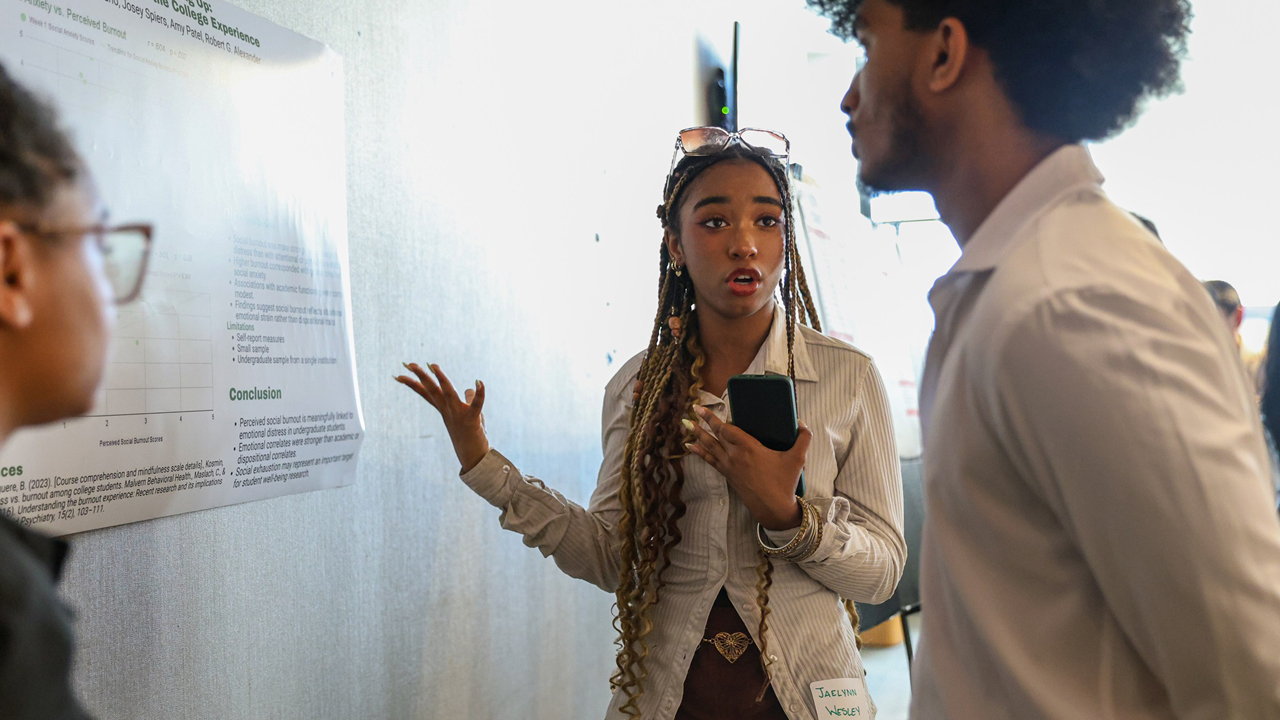
“I already had my heart set on attending New York Tech when I was introduced to Dr. Alexander’s lab, but getting the opportunity to work with him over the summer before my first year was icing on the cake,” says Wesley, now a psychology major at New York Tech and HFAN’s senior lab manager. “In many other labs, you’re much less involved, but the guidance we receive at HFAN is more structured; if you need help, you’re not scared to ask.”
As one of two high school participants in HFAN’s first summer cohort in 2025, Wesley spent much of her time collecting data and helping with a project that used a “star chart” to track undergraduate researchers’ progress. Each star represented a research milestone, such as being added to an Institutional Review Board protocol or learning to operate an eye tracker. The work culminated in a white paper about the project tracker’s usefulness as a motivational teaching tool.
Overall, the experience helped make New York Tech feel like more than a college Wesley was considering. It became a place where she could already see herself participating. Wesley says going from high school researcher to college student researcher also made her first year easier. She already understood how research teams worked, how to manage workflow, and how to ask for help. Just as importantly, she had a community waiting for her.
A Preview of College—and a Career
This past summer, HFAN’s cohort of high school researchers grew from two to 11 participants. This rapid growth was due in part to Alexander making connections—he reached out to research directors at local high schools and invited them to connect interested students with his lab—but also because, as the lab’s online presence has grown, more students have found the lab and reached out independently.
The second cohort of summer researchers worked across several projects connected to Alexander’s research, collecting and analyzing data, working with eye-tracking technology, and contributing to experiments exploring how people search for visual information. Projects included how helpful text cues can be in helping medical and non-medical personnel identify potentially cancerous lung nodules on chest X-rays, as well as discovering how adept participants are at spotting melanoma on photos of simulated skin lesions.
One of this summer’s participants, Galit Alsaygh, first heard about the research opportunity with HFAN after she applied to New York Tech’s Life Sciences, B.S./Osteopathic Medicine D.O. program. In the spring, she received an email from Alexander, who received her information through the Office of Admissions and invited her to interview for a summer research position.
“At first, I was hesitant,” says Alsaygh. “I had applied to other programs, and I wasn’t sure if I would attend New York Tech. But I decided to try the lab anyway because I thought it would be valuable experience regardless. Two weeks into the summer, I knew I was staying.”
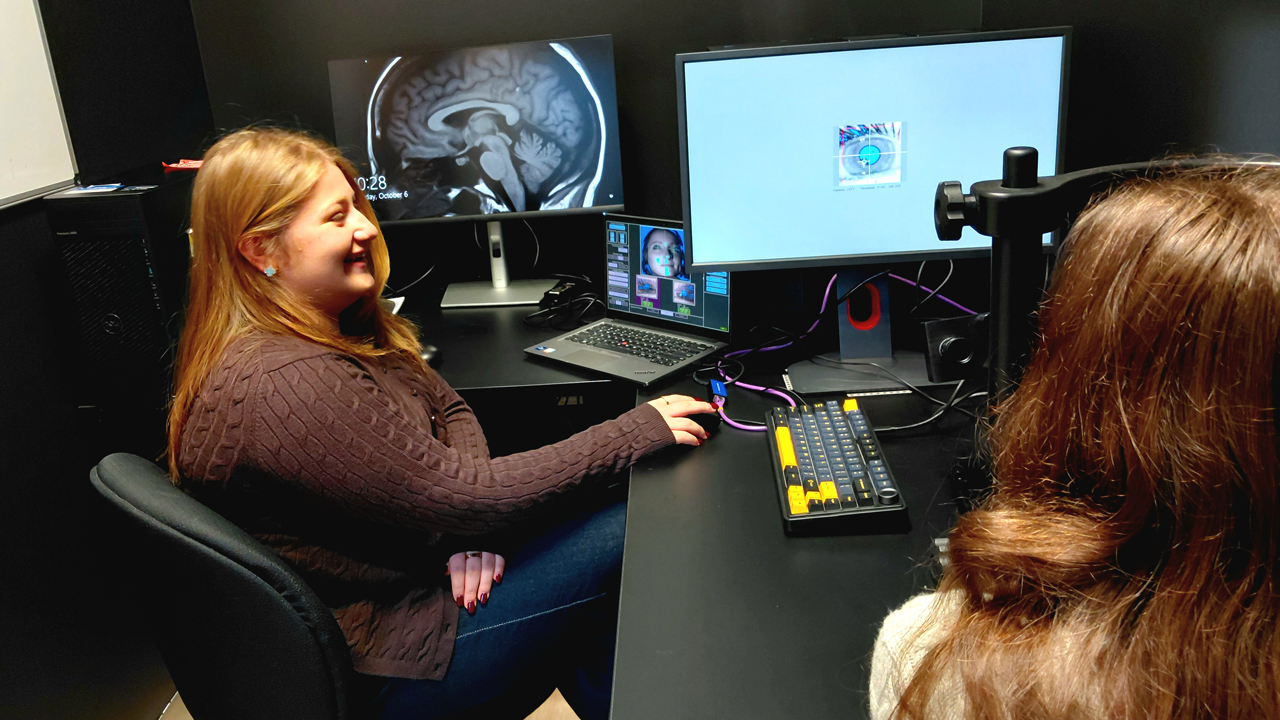
Much like Wesley, the experience gave Alsaygh a preview of both research and college life. She was able to see the university from the inside, meet students already working in the lab, and begin developing relationships and a familiarity with the campus before the first day of classes.
In addition to research skills, Alsaygh also gained new technical skills she can build on throughout college, such as working with Excel and pivot charts to organize and analyze real data sets. Alsaygh’s research with HFAN continues; she is currently involved in a project examining whether people with attention-deficit/hyperactivity disorder (ADHD) show differences in microsaccades, the tiny, involuntary eye movements that occur even when someone is trying to keep their gaze fixed. Alsaygh and her fellow researchers are exploring whether differences in microsaccade patterns could eventually be used as a biomarker to help identify ADHD.
Learning How Science Really Works
For Alexander, another important element of the summer high school experience is introducing students to the creativity and complexity of the real scientific process.
“In theory, science is very straightforward, but in actual practice, science is a very creative pursuit,” says Alexander. “In a traditional laboratory course, students often follow a prescribed procedure toward a known answer. But real, knowledge-making science is very different. Researchers must figure out which questions are worth asking, how to troubleshoot when an approach fails, and how to adjust as we learn more.” That uncertainty, Alexander says, is part of what makes the work real. It can also change students’ perceptions of research careers. Some arrive intending to pursue medical school, only to discover that they genuinely enjoy research and begin imagining themselves as scientists instead.
Building a Pipeline That Extends Beyond New York Tech
The goal of Alexander’s summer research program is to give students access to an experience that may otherwise be unavailable to them. In addition to those who have chosen to enroll at New York Tech after working with Alexander, other former summer researchers have gone on to graduate programs at institutions such as CUNY Graduate Center, NYU, and Boston University. Still more have pursued professional programs such as optometry.
“If they enroll at New York Tech or if they don’t, they can keep working in my lab,” says Alexander. “But the ultimate objective is broader: to support students’ growth in research and technology wherever their education and careers take them.”
Still, the continuity that comes with enrollment at New York Tech can be powerful. Students who begin in the lab as high schoolers can continue into college and take on greater responsibility. They can ask older students where to find a campus resource, how to get involved, how to prepare for a conference, or how to think through a career decision. For incoming students, those relationships can provide something classes alone cannot.
“A course ends after a semester,” says Alexander. “A research community can continue on for years, giving students a sustained connection to the institution and to one another.”
For Alexander, this reality shows what a STEM pipeline can become when access begins early: students gain meaningful research experience, develop professional skills and confidence, and see possibilities for themselves that they may not have considered before.
By Kathrin Havrilla-Sanchez
“A course ends after a semester. A research community can continue on for years, giving students a sustained connection to the institution and to one another.”
—Assistant Professor Robert Alexander, Ph.D.
More News
In Demand
With the enrollment of its largest first-year class, New York Tech finds momentum in career-focused programs, hands-on experiences, and a more personal approach to recruitment.
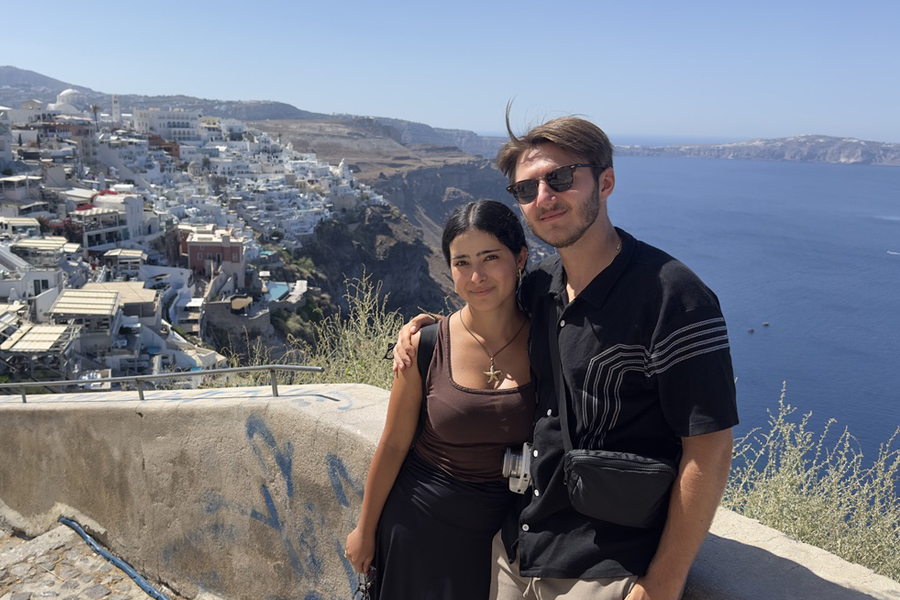
Fellows’ Field Notes: Dominican Republic and Greece
Over the summer and this fall, seven students traveled for their academic research projects supported by the Edward Guiliano Global Fellowship program.
Op-ed: AI Education Can’t End at Graduation
Universities have an opportunity and a responsibility to ensure their students—past, present, and future—are AI literate, writes President Balentine in an op-ed.

Faculty and Alumni Publish New Books
New publications from members of the New York Tech community explore topics and interests across the fiction and nonfiction genres.
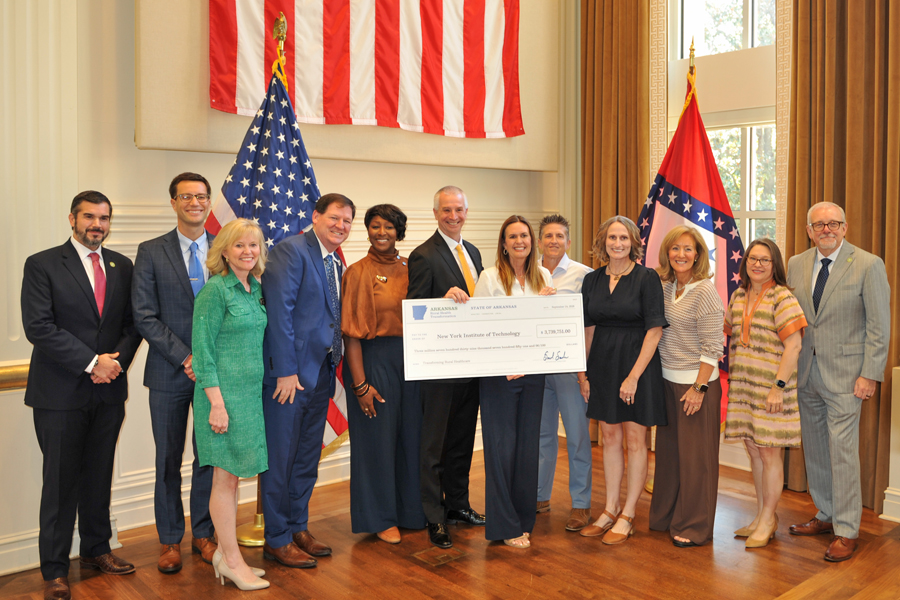
NYITCOM-Arkansas Receives Two Grants for New Residency Program, EMS Training Initiative
Two Rural Health Transformation Project grants, totaling $3.7 million, will support health education programs at the College of Osteopathic Medicine at Arkansas State University (NYITCOM-Arkansas).
Intern Insight: Mansi Santosh Tikam
M.B.A. student Mansi Santosh Tikam spent her summer interning with MetroPlusHealth, where she learned what it means to be a marketing professional.