In Demand
On a fall campus tour, the pitch for New York Institute of Technology isn’t delivered through admissions talking points. It shows up in motion: drones lifting off for engineering students, fabrication labs opening possibilities for future architects, and health professions candidates stepping into the spaces where they will learn to work with patients.

For a growing number of prospective students, that early glimpse of doing—not just studying—is helping turn interest into enrollment.
In fall 2026, New York Tech welcomed 1,097 first-year students (with 1,067 being first-time, full-time students), its largest entering class and a 15.5 percent increase over the previous year. The result suggests that students are responding to a recruitment effort that feels both practical and personal: a degree connected to career direction, hands-on experience, and a university community prepared to help them find their place.
The gain stands out in a national environment where many colleges face fewer traditional college-age students, rising skepticism about the value of higher education, and continued uncertainty around international enrollment. Against that backdrop, New York Tech’s domestic undergraduate growth points to a clear proposition: Students want programs that connect early exploration with long-term opportunity, and they want institutions that help them see themselves succeeding there.
For Joseph Posillico, Ed.D., vice president for enrollment management, campus visits are where that proposition becomes visible.
“When they come, they see it firsthand,” Posillico says. “They see that ‘doers, makers, and innovators’ is more than a slogan. It’s a real thing.”
Seeing the Possibilities
With college costs rising, students and families are asking sharper questions about what a degree will make possible. They want to know how what they will study will connect to internships, employers, graduate schools, and careers.
That is one of New York Tech’s advantages. “We rank in the top 10 percent in return on investment,” says Jerry Balentine, D.O. “When you graduate from New York Tech, you have a defined career path: you’re a nurse, an architect, an engineer.”
For Thomas Shea (M.S. ’21), director of undergraduate admissions, that connection is central to conversations with prospective students. Admissions counselors talk about employers hiring New York Tech graduates, internship opportunities, and the advantages of studying in a region with access to major companies and industries. The goal is to help students and families see the degree not as an abstract credential, but as a pathway with visible steps.
For many students, the appeal is the chance to begin that work early.
Engineering and computing students, for example, tackle applied projects, research, and technologies involving public agencies, utilities, and industry partners. The Entrepreneurship and Technology Innovation Center, with locations on both New York campuses, gives students another setting to test ideas, solve problems, and work alongside faculty and industry partners.
The Innovation and Entrepreneurship Academy offers students resources for mentorship, and support for developing technologies, launching start-ups, and bringing products to market. Startup Tech Central on Long Island will add maker spaces, mentorship, and start-up training to existing university resources. A $5 million venture fund will invest in start-ups from students, faculty, alumni, and other qualified entrepreneurs.
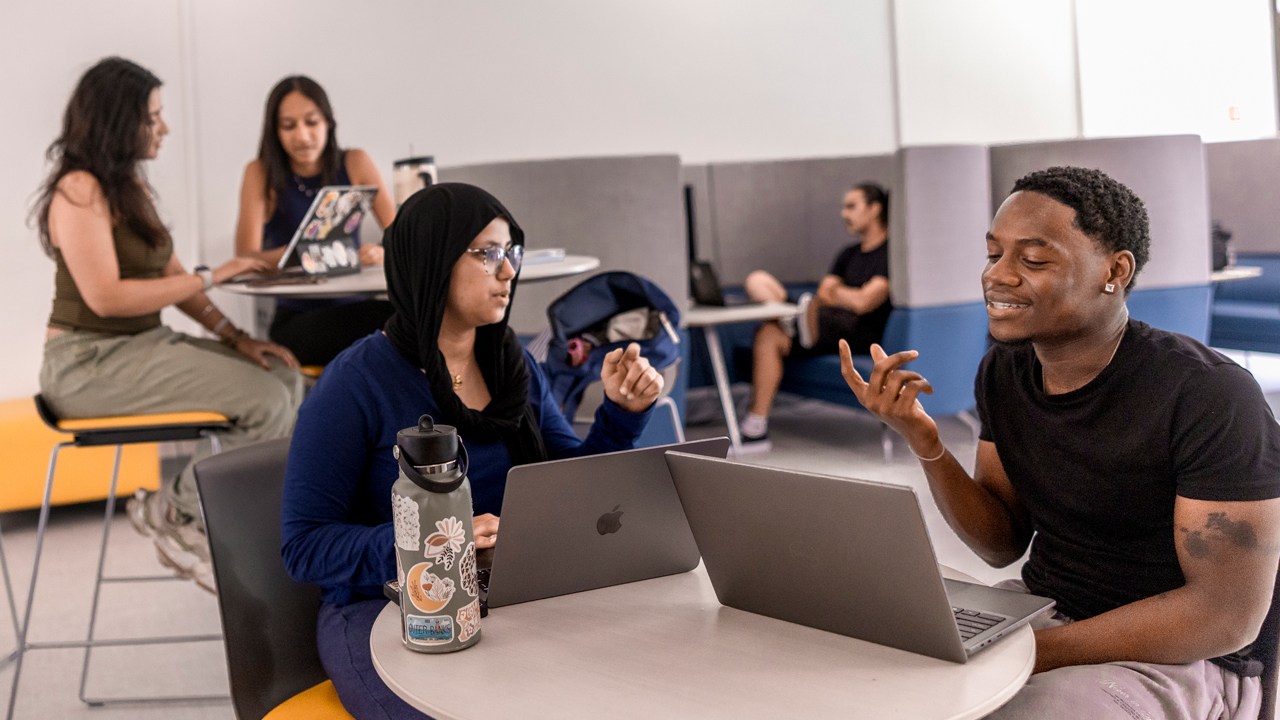
“Many of our students know the major or career path they’re interested in,” Posillico says. “Coming into most of our programs allows them to pursue that very early on.”
That academic focus is helping New York Tech reach beyond its traditional base. Long Island and New York City remain important sources of potential undergraduate students, but the admissions team has also expanded recruitment in other states. Shea reports increased enrollment from Georgia, Florida, Texas, Virginia, and North Carolina, with students drawn to academic programs, hands-on learning, and the advantages of studying near New York City and Long Island’s professional networks and the associated opportunities for internships and co-ops.
For students considering New York City, those opportunities sit alongside the cultural pull of a global metropolitan center. For students considering Long Island, the campus offers a more traditional setting with proximity to research, healthcare, technology, and business communities. Across both locations, the appeal is similar: Students can begin working toward a career while studying in places connected to the industries they hope to enter. Financial assistance helps make that choice possible. According to Posillico, 99 percent of students receive aid, including academic merit scholarships and need-based support.
Making a Personal Connection
Communicating those strengths requires relationships as students move from interest to application, admission, and enrollment.
Under Shea and Marcelle Hicks, dean of admissions and financial aid, the admissions team has introduced more personalized, targeted outreach throughout the recruitment cycle. Phone calls, text messages, and emails help students navigate the many steps between an initial conversation and a final decision. The approach is designed to make the process feel less transactional and more responsive to each student’s questions, interests, and concerns.
“Students appreciate that extra level of interaction,” Shea says. “They feel they have a personalized counselor and someone who knows them on a first-name basis going through the process with them.”
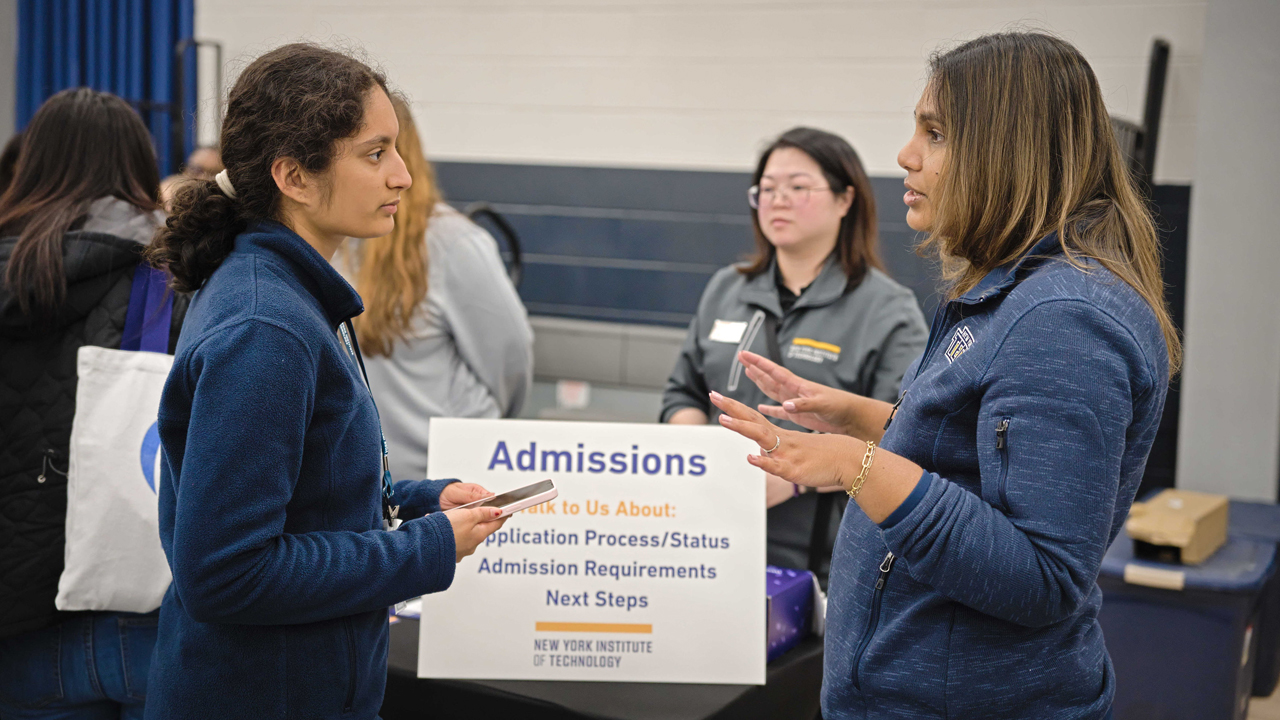
Program-specific campus tours make the experience more concrete. Alongside large open houses, the university offers focused visits for students interested in health professions, architecture, and engineering. During those visits, students can see the spaces where they would learn, understand how labs and studios connect to professional preparation, and experience the hands-on environment that defines many of the university’s programs.
Academic deans provide program-specific information, while student ambassadors offer opportunities to hear from current students. At ambassador events, applicants can ask about classes, clubs, organizations, and everyday life. “It’s all an effort to help students determine that New York Tech is the right place for them,” Hicks says. “At the end of the day, we want students to enroll, and we want them to be successful, but ultimately, we want them to want to be here.”
Understanding What Matters
Admissions staff use data analytics to guide outreach, considering academic goals, social interests, housing preferences, campus visits, and responses to communications.
A repeat campus visitor may need different information from someone just beginning to explore. Parents and high school counselors may also influence decisions, particularly for first-generation students, who will be the first in their families to go to college.
“It’s a much more nuanced approach than a one-size-fits-all experience,” Hicks says. “Everyone has the same end goal—to complete a degree and get into their field of interest—but everyone is bringing different expectations at the starting point.”
The purpose, Hicks explains, is not simply to increase contact. It is to make that contact more useful, more timely, and more relevant to what students are telling the university through their questions, interests, visits, and engagement.
“So, yes, we’re driving the conversation,” she says, “but we’re driving the conversation based on what they’re telling us.”
That attention matters, as approximately 30 percent of students are first-generation. New York Tech also participates in the Common App Direct Admissions program to reach first-generation students and reduce admissions barriers.
Interest in university-sponsored housing has increased at both New York locations since options returned following the pandemic. Residence halls close to the campuses offer another way to experience university life and build community.
Expanded competitive athletics opportunities may add to that sense of belonging. New York Tech currently offers five club sports: men’s and women’s volleyball, men’s and women’s basketball, and coed badminton. In fall 2027, New York Tech will begin competing in the Collegiate Sprint Football League, an exciting development Posillico expects to generate interest among future applicants.
For now, the enrollment milestone reflects something larger than a single strong class. It shows what can happen when an institution aligns its academic strengths, career promise, and recruitment strategy around what students are asking for most clearly: Value they can understand, experiences they can see, and a future they can begin to imagine before they ever enroll.
“We like to think we’re making students’ goals and dreams come true,” says President Balentine. “For most students, that means graduating with a great career so that their life path is secure.”
By Renée Gearhart Levy
“It’s all an effort to help students determine that New York Tech is the right place for them. At the end of the day, we want students to enroll, and we want them to be successful, but ultimately, we want them to want to be here.”
—Marcelle Hicks, dean of admissions and financial aid
More News

Fellows’ Field Notes: Dominican Republic and Greece
Over the summer and this fall, seven students traveled for their academic research projects supported by the Edward Guiliano Global Fellowship program.

Op-ed: AI Education Can’t End at Graduation
Universities have an opportunity and a responsibility to ensure their students—past, present, and future—are AI literate, writes President Balentine in an op-ed.

Faculty and Alumni Publish New Books
New publications from members of the New York Tech community explore topics and interests across the fiction and nonfiction genres.
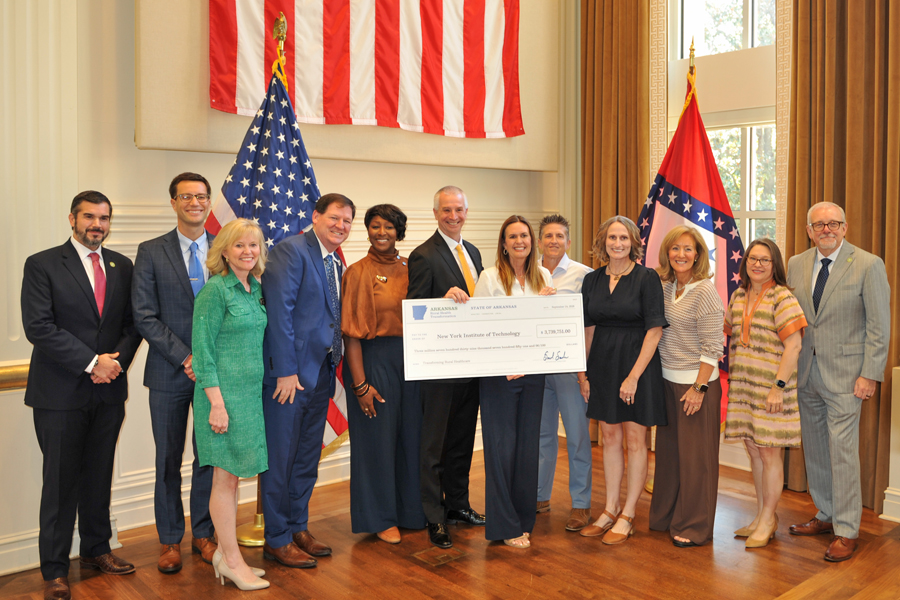
NYITCOM-Arkansas Receives Two Grants for New Residency Program, EMS Training Initiative
Two Rural Health Transformation Project grants, totaling $3.7 million, will support health education programs at the College of Osteopathic Medicine at Arkansas State University (NYITCOM-Arkansas).
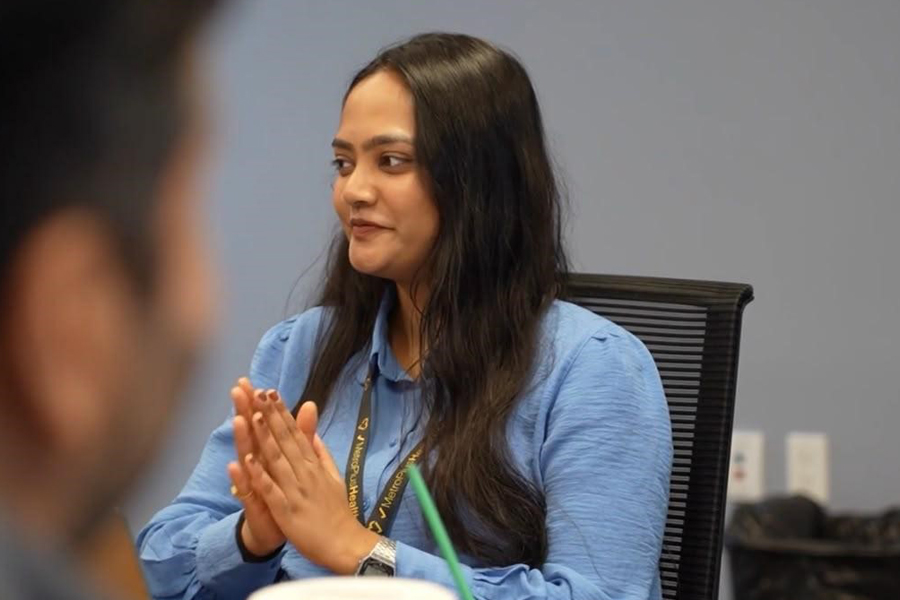
Intern Insight: Mansi Santosh Tikam
M.B.A. student Mansi Santosh Tikam spent her summer interning with MetroPlusHealth, where she learned what it means to be a marketing professional.
The Domino Effect
New York Tech’s Research Experiences for Undergraduates program has spent more than a decade turning summer research opportunities into lasting careers, helping build the university’s research reputation along the way.