Faculty Research
Our Research Areas Include
Cancer Biology Research
Department of Biomedical Sciences, College of Osteopathic Medicine
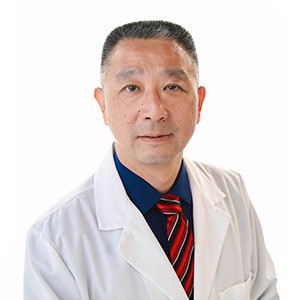
Dong Zhang, Ph.D.
Professor, Director of the New York Tech Center for Cancer Research and the NYITCOM D.O./Ph.D. program
Dong Zhang teaches medical biochemistry and specializes in cancer biology, cell biology, and molecular biology. His research focuses on DNA damage checkpoint, DNA repair, and centrosome biogenesis and its effects on the development and treatment of breast and ovarian cancer.
Zhang received his Ph.D. in biochemistry and molecular biology from Brandeis University and performed his postdoctoral training at Baylor College of Medicine and Harvard Medical School.
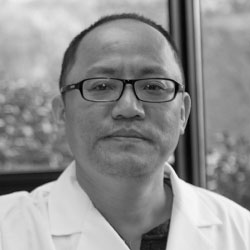
Haotian Zhao
Professor
Haotian Zhao, Ph.D., holds undergraduate and graduate degrees in medicine from China Medical University, as well as a Ph.D. in Molecular, Cellular, and Developmental Biology from The Ohio State University. He completed his postdoctoral training at St. Jude Children‘s Research Hospital, and his current research group at NYITCOM studies the biological processes responsible for childhood brain tumors. Using cellular and genetic approaches, as well as next-generation sequencing technologies, Zhao’s laboratory illustrates the dynamic transcriptomic and epigenetic landscapes in pediatric brain tumors. The group has developed multiple pre-clinical models to understand the biology of pediatric brain tumors and to identify and develop new therapies to target tumor growth without damaging the developing brain.
Cardiovascular Research
Department of Biomedical Sciences, College of Osteopathic Medicine
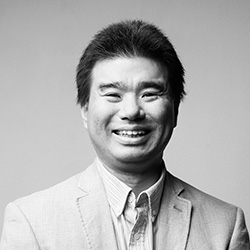
Satoru Kobayashi
Assistant Professor
Satoru Kobayashi received his Ph.D. from the United Graduate School of Agricultural Sciences, Iwate University (UGAS), Japan, and has expertise in Biochemistry, Molecular Biology, Cell Biology, and Physiology. He has dedicated over ten years of his academic career to the basic research of cardiovascular diseases. The objective of his research is to develop new therapeutic strategies to prevent and/or cure any heart disease. His current research focuses on the lysosome function to elucidate the mechanisms that mediate diabetic cardiomyopathy and heart failure, a leading cause of death for diabetic patients.
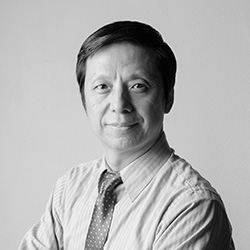
Qiangrong Liang
Professor
Qiangrong Liang obtained his medical degree from Xian Medical University in China and a Ph.D. degree with Dr. Paul Epstein at the University of North Dakota. He did postdoctoral research under the guidance of Dr. Jeff Molkentin at Cincinnati Children’s Hospital Medical Center.
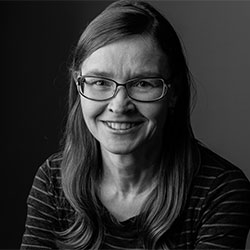
Olga V. Savinova
Associate Professor
Olga V. Savinova received her master’s degree in Biochemistry from the St. Petersburg State University, Russia, where she studied the role of lipoprotein-antibody complexes in the pathogenesis and treatment of human atherosclerosis. After immigrating to the U.S., she worked at the University of Maryland and The Jackson Laboratory in Bar Harbor, Maine, before entering a Ph.D. program in Chemistry and Biochemistry at the University of California at San Diego in 2003. Her Ph.D. work focused on the biochemical characterization of nuclear factor kappa B complexes and their role in orchestrating inflammatory gene expression in macrophages. Savinova obtained her postdoctoral training at the Cardiovascular Research Center at Sanford Research, Sioux Falls, S.D.

Maria Alicia Carrillo Sepulveda
Associate Professor
Maria specializes in vasculo-metabolic physiology. Sepulveda received her B.S. in Nursing from the University State of Campinas (UNICAMP, Brazil), and her Specialization in Cardiology from the Heart Institute at the University of São Paulo (Brazil). After four years in clinical practice, Sepulveda transitioned to a scientific career and received her Ph.D. from the University of São Paulo (Brazil), where she investigated the mechanisms by which thyroid hormones regulate vascular function. Sepulveda obtained a total of five years of post-doctoral training in hypertension from Roy J. and Lucille A. Carver College of Medicine at the University of Iowa (USA) and in vascular physiology from the Medical College of Georgia (USA), where she developed expertise in vascular physiology and pharmacology.
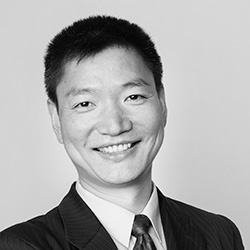
Youhua Zhang
Associate Professor
Youhua Zhang specializes in cardiac electrophysiology, cardiac autonomic control, and heart failure research. He was a cardiologist at the Cardiovascular Institute and Fu Wai Hospital of the Chinese Academy of Medical Sciences (Beijing, China) before joining the Department of Cardiovascular Medicine at the Cleveland Clinic, where he served as a postdoctoral fellow to project staff and research assistant professor from 1999 to 2011. Zhang joined the Department of Biomedical Sciences at NYIT College of Osteopathic Medicine in 2011 as an assistant professor and was promoted to associate professor in 2015.
Integrative Anatomy Research
Department of Anatomy, College of Osteopathic Medicine
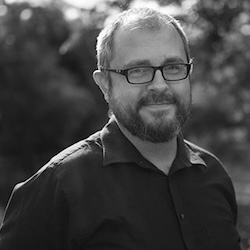
Brian Lee Beatty
Director of the Center for Biomedical Innovation
Brian Beatty, Ph.D., specializes in evolutionary biology, paleontology, anatomy, and paleopathology. His research focuses on marine mammals such as whales, dolphins, and manatees, as well as hoofed mammals such as camels, deer, and extinct forms. In addition to teaching courses on the musculoskeletal and nervous systems and gross anatomy, Brian serves as managing editor of the Journal of Vertebrate Paleontology and runs his own blog, The Aquatic Amniote, where he shares news and insights about marine mammals, marine reptiles, and the evolution of aquatic amniotes.
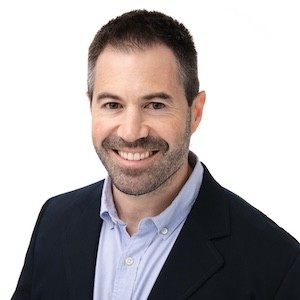
Adam Cossette
Assistant Professor
Adam Cossette is a vertebrate paleobiologist who applies phylogenetic comparative methods, functional morphology, and geometric morphometric methods to understand biodiversity. He graduated with a Ph.D. focusing on vertebrate paleobiology from the University of Iowa Department of Earth and Environmental Sciences in 2018.
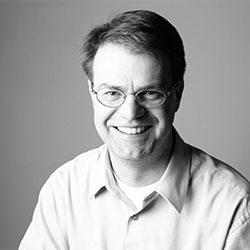
Jonathan Geisler
Professor
Jonathan Geisler, Ph.D., is an expert on the evolutionary history of mammals, with particular emphasis on Cetacea (whales, dolphins, and porpoises). In addition to being an author on papers that have named 13 new species, Geisler has published several large datasets that resolve relationships among mammals. Much of his work involves two related themes: 1) the unique information provided by the fossil record, and 2) that new perspectives can emerge when information from living species is combined with that from fossil species. Geisler is also a Research Associate of the National Museum of Natural History (Washington, D.C.) and has been recognized by the government of Mongolia for his help in repatriating dinosaur fossils that were stolen from that country.
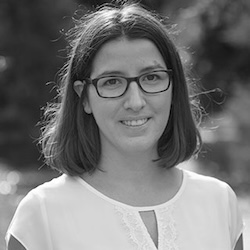
Simone Hoffmann
Associate Professor
Simone Hoffmann’s research centers on how key mammalian features such as large brain size, a keen sense of smell, and high-frequency hearing evolved. Her research combines data from the paleontological record with information drawn from living mammals, utilizing high-resolution CT scanning, soft tissue staining, and 3-D reconstruction software. She contributes to the discovery of new fossils and is actively involved in fieldwork on the underexplored southern hemisphere. Her most recent field involvement has been with the Mahajanga Basin project in the Late Cretaceous of Madagascar.
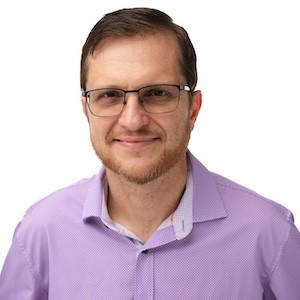
Matthew Mihlbachler
Professor
Matthew C. Mihlbachler earned his Ph.D. in Earth and Environmental Sciences in 2005 from Columbia University; his M.S. in Zoology in 2001 from the University of Florida, Gainesville; and his B.A. in Anthropology in 1996 from Southern Illinois University.
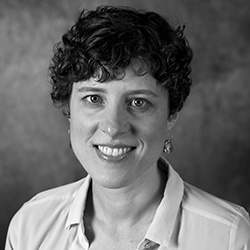
Julia Molnar
Associate Professor
Julia Molnar investigates the evolution of vertebrate locomotion. She uses three-dimensional virtual models of fossil and living animals to study how muscle leverage, joint range of motion, and other biomechanical factors change over evolutionary transitions and across different environments. Her main interest is in non-mammalian vertebrates such as lobe-finned fish, early tetrapods, salamanders, lizards, and crocodylians.
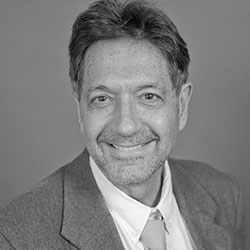
Nikos Solounias
Professor
Nikos Solounias, Ph.D., specializes in evolutionary biology, paleontology, and anatomy. His research focuses on living and extinct ungulates such as horses, giraffes, and antelopes. Solounias teaches embryology and gross anatomy. He is also a research associate at the American Museum of Natural History and a collaborator for the ongoing research of extinct ungulates at the Peabody Museum of Archeology and Ethnology at Harvard. Nikos received his Ph.D. in geology from the University of Colorado, a master’s degree in embryology from Clark University, and a bachelor’s degree in biology from Cornell.
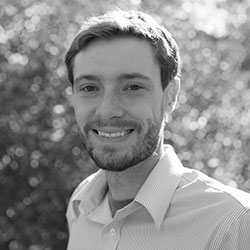
Nathan Thompson
Associate Professor
Nathan Thompson’s research focuses largely on comparative biomechanics of locomotion and the evolution of locomotion in primates, apes, and humans. In particular, his research focuses on how musculoskeletal morphology is related to locomotor performance, and what differences in the musculoskeletal system in fossil apes and humans might mean for how our early ancestors moved and interacted with their environment. Thompson’s previous work has shed light on the evolution of bipedalism in humans and how features of bones, muscles, and organs in modern humans are related to efficient bipedal walking. His research draws heavily on experimental analysis of locomotion in living primates and apes using cutting-edge 3-D methods to quantify movement both in laboratory settings and in the wild.
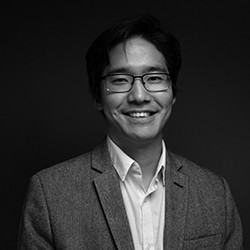
Aki Watanabe
Associate Professor
Aki Watanabe’s research seeks to answer one of the most enduring questions in biology—what drives phenotypic evolution? To this end, his work focuses on three areas: (1) the tempo and mode of morphological evolution, particularly along the dinosaur-bird transition; (2) the complex interplay between anatomical changes along developmental and evolutionary time scales; and (3) the creation of new computational tools to investigate practical and theoretical issues in the collection and analysis of phenotypic data. His research employs a synthesis of modern techniques, including high-resolution 3-D imaging, statistical shape analysis (geometric morphometrics), and programming. Watanabe’s previous projects have elucidated how the highly encephalized brains of birds evolved from their dinosaurian ancestors, while introducing new tools that allow users to evaluate the quality of their own morphological data. Beyond these studies, he regularly engages in paleontological fieldwork, including remote locations in Mongolia and Argentina.
Musculoskeletal System Research
Department of Biological & Chemical Sciences, College of Arts & Sciences
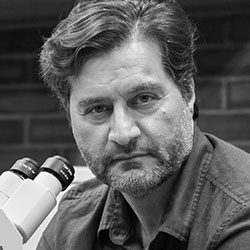
Michael Hadjiargyrou
Professor
Michael Hadjiargyrou is a molecular and cell biologist. His research focuses on understanding the development and regeneration of the musculoskeletal system. Specifically, he seeks to develop innovative approaches for engineering new musculoskeletal tissue using knowledge derived from basic molecular/cellular biology and biomaterials.
Neuroscience Research
Department of Biomedical Sciences, College of Osteopathic Medicine
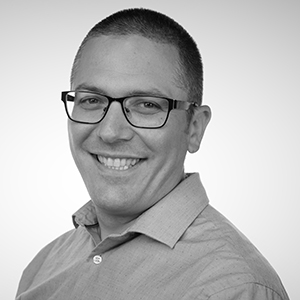
Vladimir Grubisic
Assistant Professor
Vladimir “Vlado” Grubisic received his Doctor of Medicine (M.D.) from Zagreb University in Croatia and his Ph.D. degree in Neurobiology from the University of Alabama at Birmingham, where he was a student of renowned neurobiologist Vladimir Parpura. He obtained his postdoctoral training at Michigan State University under the mentorship of Brian D. Gulbransen, Ph.D.
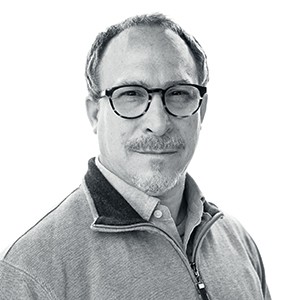
Isaac Kurtzer
Associate Professor
Isaac Kurtzer studies how the nervous system enables coordinated actions, in particular actions with our upper limb. His research has spanned proprioception, postural anticipation, motor learning, stretch reflexes, and cortical processing. He is currently focused on the process of target re-selection during movement like how we can reliably navigate through a crowded and bustling train station. He trains undergraduate and graduate students on experimental design and data collection and analysis, in addition to teaching a biostatistics course, giving lectures on the nervous system, and directing the neuroanatomy lab. He is an active member of the movement science community through his own work, reviewing, and research collaborations.
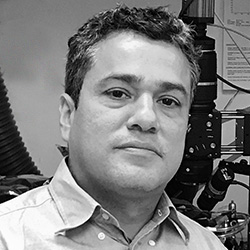
Gonzalo Otazu
Associate Professor
Neuroscientist Gonzalo Otazu, Ph.D., is an associate professor who leverages his electrical engineering expertise to study the computational problems solved by the animal’s brain in order for the animal to survive in its natural environment. This includes how the brain identifies and processes new odors and how this process is affected in neurodevelopmental disorders like autism spectrum disorder (ASD).
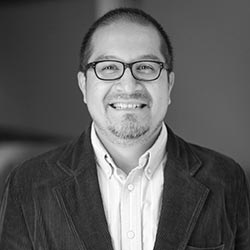
Raddy Ramos
Associate Professor
Raddy Ramos is a neuroscientist with interests in the anatomy and physiology of the developing brain as well as brain malformations. At NYIT College of Osteopathic Medicine, he is involved in teaching (lecture and laboratory), research, and college service (i.e., Institutional Review Board, Instructional Animal Care and Use Committee). In his lab, Dr. Ramos mentors undergraduate and medical student research assistants who often earn co-authorship on conference presentations as well as in peer-reviewed publications.
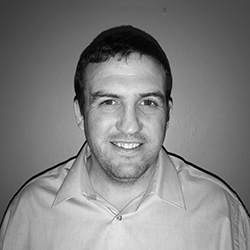
Randy Stout
Associate Professor
Neuroscientist and cell biologist Randy Stout, Ph.D., serves as an associate professor in the Department of Biomedical Sciences, as well as the director of the NYIT Imaging Center (NIC). He is also the scientific director for the recently extablished Biomedical Research Imaging Innovation Center (BRIIC).
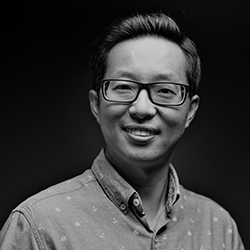
Ying-Tao (Jerry) Zhao
Associate Professor
Jerry Yingtao Zhao, Ph.D., is an associate professor, a biomedical scientist specializing in genomics, glycobiology, and neurobiology. His research aims to understand the molecular basis of heparan sulfate, long genes, and brain disorders. His research uses multidisciplinary approaches, including disease mouse models, genomics, glycobiology, neuroscience, bioinformatics, and molecular biology.