MRI Center
The MRI Center at the Biomedical Research, Innovation, and Imaging Center (BRIIC) at New York Tech stands at the forefront of cutting-edge medical imaging research. Equipped with state-of-the-art MRI technology, the center provides researchers and clinicians with powerful tools to explore the complexities of the human body, advance diagnostic techniques, and develop innovative treatment strategies. By bringing together experts from osteopathic medicine, biomedical engineering, and computer science, the MRI Center fosters interdisciplinary collaboration to drive breakthroughs in medical imaging and patient care.
As a key component of New York Tech’s commitment to high-impact research, the MRI Center supports the university’s pursuit of R2 status, a designation recognizing significant research activity. Through advanced imaging studies, the center contributes to a deeper understanding of neurological disorders, musculoskeletal conditions, and other critical health challenges. With a focus on innovation and discovery, the MRI Center is shaping the future of biomedical research and enhancing patient outcomes through precision imaging and cutting-edge technology.
How MRI Works
Magnetic Resonance Imaging (MRI) is a non-invasive imaging method that generates highly detailed, three-dimensional anatomical visuals without relying on harmful radiation. It is commonly used in the detection of diseases, diagnosing medical conditions, and tracking the progress of treatments. MRI operates using advanced technology that stimulates and captures shifts in the orientation or spin axis of protons found in the water within living tissues.
During an MRI scan, the machine captures numerous extremely thin, two-dimensional slices of the body. These slices are then reconstructed by a computer into comprehensive three-dimensional images. This enables healthcare professionals to examine the scanned area layer by layer, offering enhanced clarity and precision for more accurate diagnosis.
During the Test
Patients are guided into the MRI room and asked to lie comfortably on the scanning table. The specific area of the body being examined is positioned in or near a specialized surface coil, which, when combined with the scanner, helps produce the clearest possible images.
Once positioned, the patient is gently moved into the center of the magnet to begin the scan. The MRI machine never touches the patient, and the entire procedure is completely non-invasive. To capture the most accurate images, patients are encouraged to remain very still. Throughout the scan, the technologist communicates via intercom to keep the patient informed and reassured. After the images are completed, the patient is moved out of the scanner and assisted off the table by the technologist.
MRI machines are known to be noisy, but all of our MRI suites are built with specialized acoustic materials that significantly reduce sound levels—up to 15 decibels—creating a quieter and more relaxing environment. Additionally, every MRI patient is offered noise-cancelling headphones to enjoy music during the scan. Thanks to modern technology and efficient scanning times, most patients finish before their third song ends.
Preparing for Your MRI Exam
For your MRI exam, patients are encouraged to wear loose, comfortable clothing. In some cases, you may be asked to change into a gown for the procedure. To ensure the best quality imaging and patient safety, metallic items such as jewelry, glasses, hearing aids, piercings, dental devices, and metal-containing bras must be removed before the scan.
Depending on the type of MRI exam, patients may be instructed to refrain from eating or drinking for a certain period prior to the procedure. Radiology staff will provide clear instructions on any necessary dietary restrictions.
It is also important for patients to inform the technologists about any medications they are currently taking, allergies to radiology contrast materials, and any major medical conditions, such as hypertension, diabetes, kidney disease, or heart disease, as these can affect the use of contrast and may increase the risk of adverse reactions.
Women should notify the technologist if there is any chance they could be pregnant.
About Us
The Hybrid MRI program located at the Biomedical Research, Innovation, and Imaging Center at NYITCOM is dedicated to advancing medical imaging through research, innovation, and education. Led by a team of faculty, researchers, and clinicians, their expertise drives groundbreaking studies and enhances clinical applications. Thus, providing patients with world class care and advancing research into Parkinson’s disease, Ehlers-Danlos syndrome, autism spectrum disorder, clinical depression, brain injuries, and many more conditions in the fields of osteopathic medicine, and neuroscience.
Our Members

Gabriel J. Gelves, D.O.
AOBR Certified Radiologist
Fellowship trained in MRI.
Associate Professor and Medical Director for MRI
Office: Long Island campus
Email: ggelves@nyit.edu
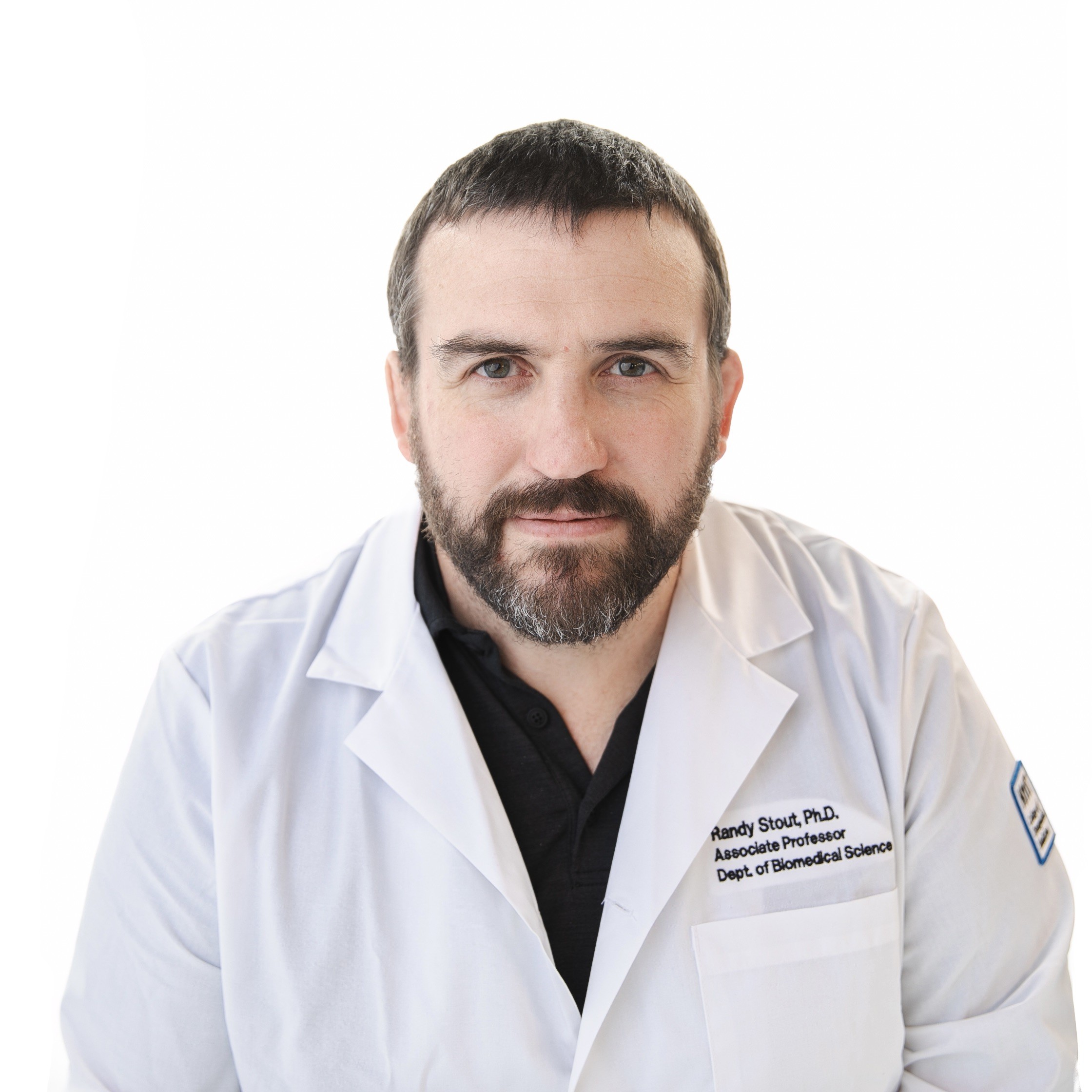
Randy Stout, Ph.D.
Biomedical Sciences
Associate Professor
College of Osteopathic Medicine
Office: Long Island campus
Email: rstout@nyit.edu

Jordan Keys, D.O.
Osteopathic Manipulative Medicine
Associate Professor
College of Osteopathic Medicine
Office: Long Island campus
Email: jordan.keys@nyit.edu
Contact Us
Biomedical Research, Innovation, and Imaging Center
600 Northern Boulevard,
Old Westbury, NY 11568
Safety Resources
Ensuring safety in MRI environments is crucial to prevent accidents and health risks. Below are essential resources covering various safety aspects, including magnetic field hazards, gradient exposure, and radiofrequency safety. These materials are designed to educate and inform all personnel working in MRI suites.