NSF Grant Supports Research to Advance Mobile Edge Computing
Jerry Cheng, Ph.D., assistant professor of computer science, will lend his expertise to research supported by the National Science Foundation (NSF), which will ensure that smart device computing advancements do not outpace experiments in the field.
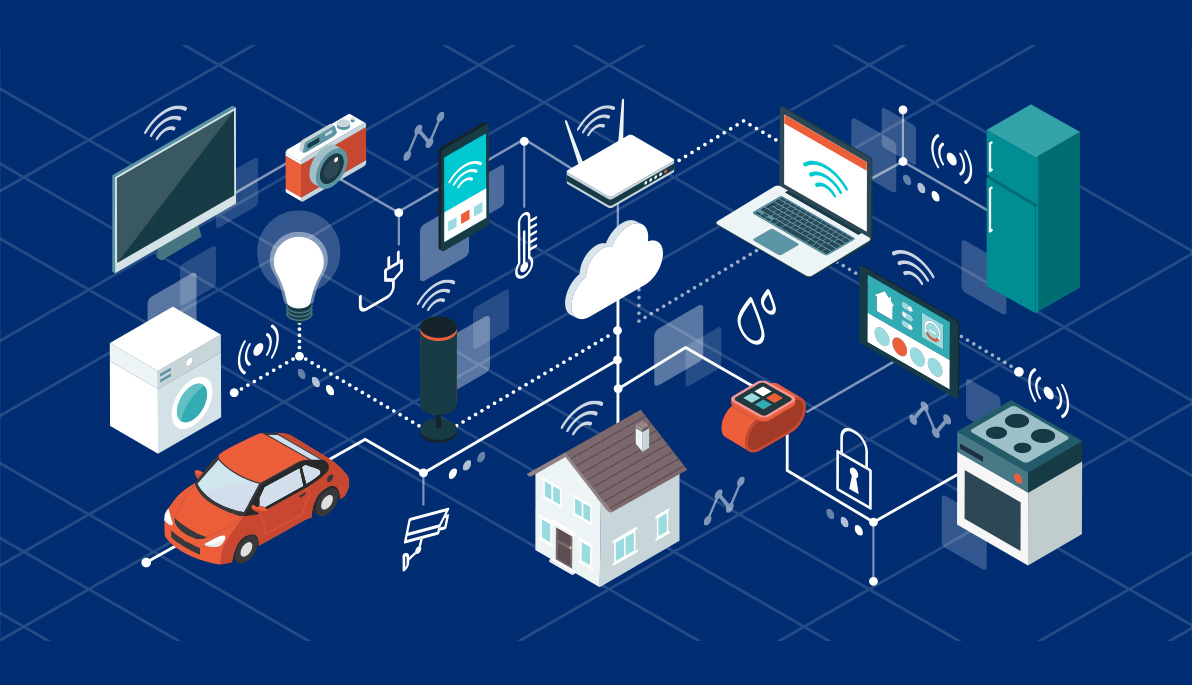
Many emergent technologies, including smartphones, smart appliances, autonomous vehicles, and voice-controlled systems like Amazon’s Alexa, use a network architecture known as mobile edge computing. While traditional cloud computing occurs on centralized remote servers far away from users and their devices, mobile edge computing occurs physically nearby. By unloading the cloud computing process onto individual local servers, network congestion and delays are reduced, allowing devices to become more responsive to events taking place in real-time—that are on “the edge” of happening. For example, as an autonomous vehicle’s sensors become flooded with information about the car’s surroundings, mobile edge computing allows the vehicle to make split-second decisions in response to weather conditions, road hazards, and other real-time factors.
Although mobile edge computing technology has advanced rapidly, experimental research in the field has been limited, and the mobile edge sensing and computing community lacks an infrastructure that can support practical, rigorous, and repeatable experiments. This also makes it challenging for researchers to share data. However, these needs have become increasingly urgent as 5G expansion swiftly transforms radical concepts such as the smart city and autonomous vehicles into reality.
Cheng and a team of investigators from Rutgers University-New Brunswick, Indiana University, and Temple University have collectively received more than $1.5 million in NSF funding to tackle this problem. The team will build a large-scale, configurable, and programmable mobile edge sensing and computing infrastructure. By building a foundation of sensors, edge devices, and robots, they will create a solution that offers low-effort data collection and training, repeatable large-scale experiments, and privacy-preserved data collection.
“The outcomes from this project will connect individual research groups and speed up interdisciplinary research in areas such as the Internet of Things, smart healthcare, the smart home and city, and augmented and virtual reality,” said Cheng. “Consequently, our efforts may help to unlock innovation that was once beyond reach, including safer autonomous vehicles and more secure, responsive smart city infrastructure.”
The research tools and infrastructure services developed will allow academic, industry, and government professionals to readily share their findings. In turn, their studies will be easily tested, ensuring that research in mobile edge computing advances alongside the field’s evolving technology.
“Mobile edge computing is one of the cutting edge and emerging technologies that College of Engineering and Computing Sciences researchers are actively working on,” said Babak D. Beheshti, Ph.D., dean of the College of Engineering and Computing Sciences. “Through these highly focused and collaborative projects, New York Tech contributes to the creation of knowledge as well as involving our students in research. The College of Engineering and Computing Sciences congratulates Dr. Cheng on this grant.”
Cheng’s work is funded by NSF Award No. 2120350 as part of the larger collaborative effort, which will be led by the Wireless Information Network Laboratory at Rutgers University-New Brunswick.
The content is solely the responsibility of the authors and does not necessarily represent the official views of the NSF.
More Features
Natural Talent
Future architect and Honors College student Ayodele Washington’s interests lie in sustainability, and she intends to design and develop buildings that are better not only for humans but for the planet.
Future Physicians Provide Care in the Dominican Republic
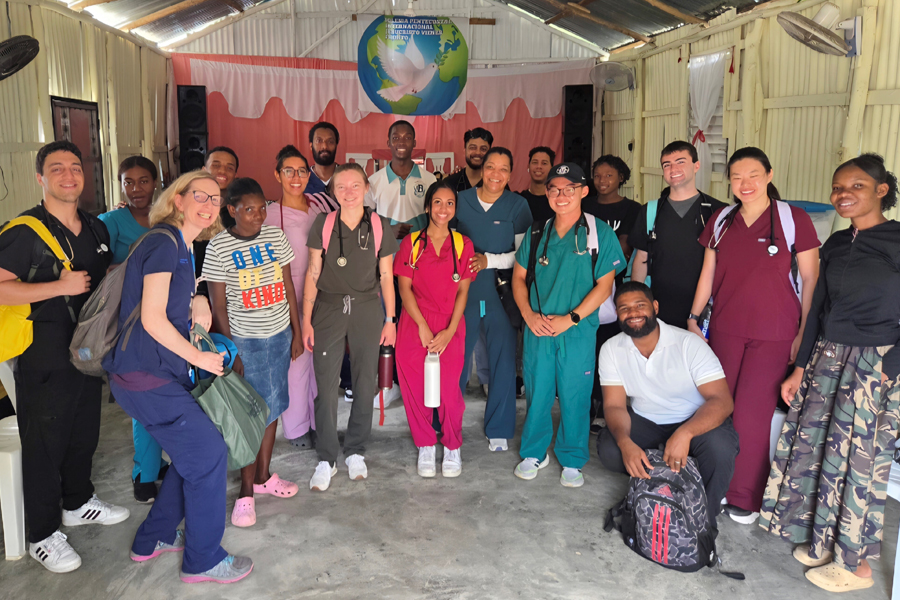
College of Osteopathic Medicine students delivered hands-on care in rural Dominican Republic communities with the medical school’s Center for Global Health.
A Lifelong Learner
Adjunct Instructor of Architecture Efrat Nizan (B.Arch.’ 98) looks ahead to new lessons—for herself and her students.
Faculty Tenures and Promotions for 2026–2027
Several faculty members have been recognized for their outstanding teaching, scholarship, service, and commitment to the university and its students through tenure and promotions.

Ph.D. Student Uses Game Theory to Model Manhattan
Electrical and computer engineering Ph.D. student Helen Wu uses game theory to study the impact of congestion pricing in New York City.

Fulbright Scholar Traces Her Roots
Emmy award-winner and Fulbright Senior Scholar Vanessa Botelho (B.F.A. ’95) is writing a historical memoir about Anglo-Indian identity.