Students Present Cancer Research
On April 18, undergraduate College of Arts and Sciences students Soham Raval, Ryan Dong, and Winnie Yao, as well as Ph.D. student Zakir Hossain, traveled to Western Connecticut State University in Danbury, Conn., to present their academic research posters at the 2026 Sigma Xi Northeast Regional Research Conference.
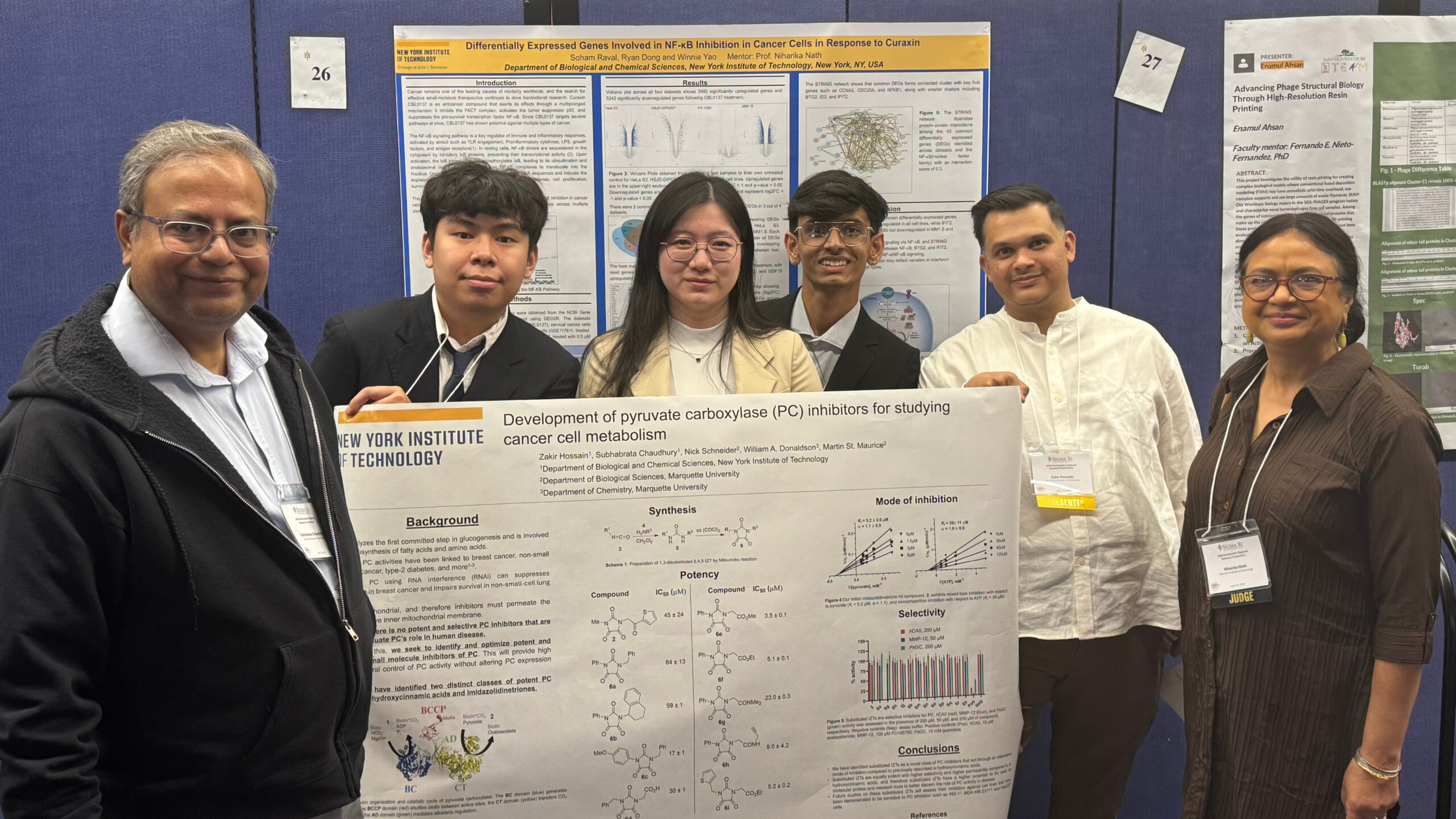
The event was biology student Dong’s first experience presenting scholarly work, and he is grateful for the opportunity. “It gave me the chance to share new ideas, receive feedback, and contribute to conversations that can strengthen both the research itself and my growth as a student scientist,” he says. “My experience pursuing this study showed me how research can be used to better understand disease mechanisms, which further motivates my goal of building a career in healthcare and research.”
Under the mentorship of Professor of Biological and Chemical Sciences Niharika Nath, Ph.D., who served as a judge for the conference’s poster session, Dong and biotechnology students Raval and Yao investigated the molecular mechanisms of the curaxin compound (anticancer agent) known as CBL0137. This specific compound is notable for its ability to trigger cancer cell death.
For their study, the students focused on identifying differentially expressed genes (genes that show significantly different activity levels) involved in NF-κB inhibition across multiple cancer datasets. NF-κB inhibition refers to stopping a trigger in the body that activates inflammation and keeps cancer cells alive.
The team identified key genes such as BTG2 and IFIT2, suggesting new regulatory pathways linked to inflammation and tumor suppression. Their work contributes to understanding how curaxin CBL0137 suppresses cell survival signaling pathways.
Raval, the study’s presenting author, says his group received feedback from different perspectives, “which helps me to improve my research.” The work only deepened his interest in biotechnology and cancer biology, “especially in understanding gene expression and pathways. It also gave me more clarity about my future direction.”
While Nath herself engages in advancing cancer research, she is “passionate about mentoring New York Tech’s biology and biotechnology majors,” including first-generation students. “I aim to steer my students toward research and communication through publications and conference presentations,” Nath says.
Chemistry Ph.D. student Hossain, mentored by Assistant Professor of Biological and Chemical Sciences Subhabrata Chaudhury, Ph.D., presented his research on developing selective inhibitors targeting pyruvate carboxylase (PC), a key metabolic enzyme implicated in cancer progression.
His work builds on imidazolidinetriones (IZTs), a novel class of compounds first discovered by his research group and further expands their potential as PC inhibitors. These compounds exhibit improved potency, selectivity, and cellular permeability compared with earlier PC inhibitors. In addition to serving as valuable probes for studying cancer cell metabolism, IZTs also show promise as advanced leads for the development of future cancer chemotherapeutic agents.
“I’m working to advance New York Tech’s chemistry Ph.D. program,” Chaudhury explains. “At the same time, my research group of graduate and undergraduate students has built a strong, structure-guided drug discovery program through collaborations both within and beyond New York Tech. This effort is helping train the next generation of researchers in the biomedical sciences.”
Sigma Xi, which hosted the conference, is a scientific research honor society for interdisciplinary studies in the sciences and engineering. The academic event offered an opportunity for attending students and professionals to engage in conversation about study and research opportunities, as well as network with Sigma Xi researchers from across the Northeast.
Dong reflects: “Research is not just a study on paper, but a way for scientists to come together, share ideas, learn from one another, and build on discoveries that can make a real impact.”
Professors Niharika Nath and Subhabrata Chaudhury contributed content to this story.
More News
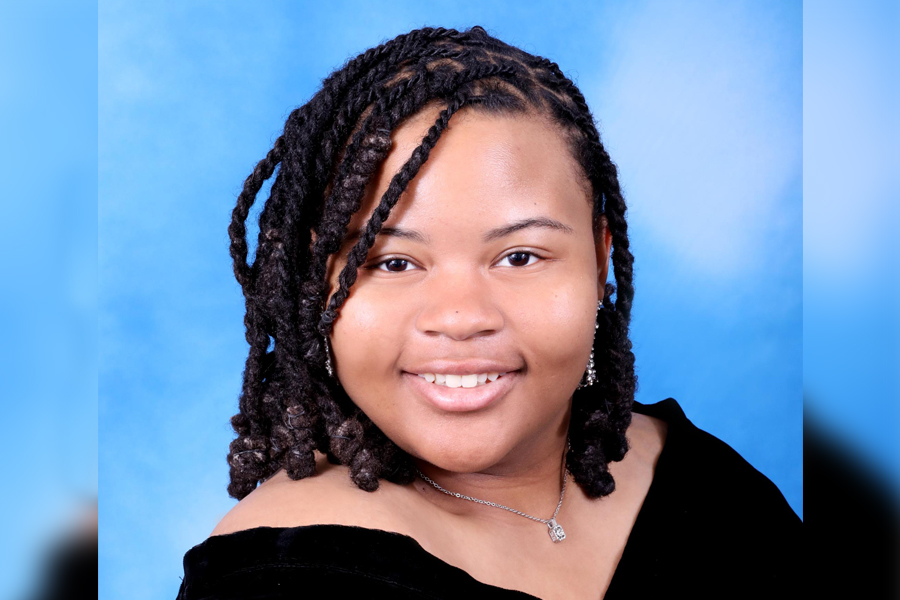
Chemistry With a Side of Art
Chemistry student Makayla Napper looks forward to exploring her field while still making time for her creative hobbies.
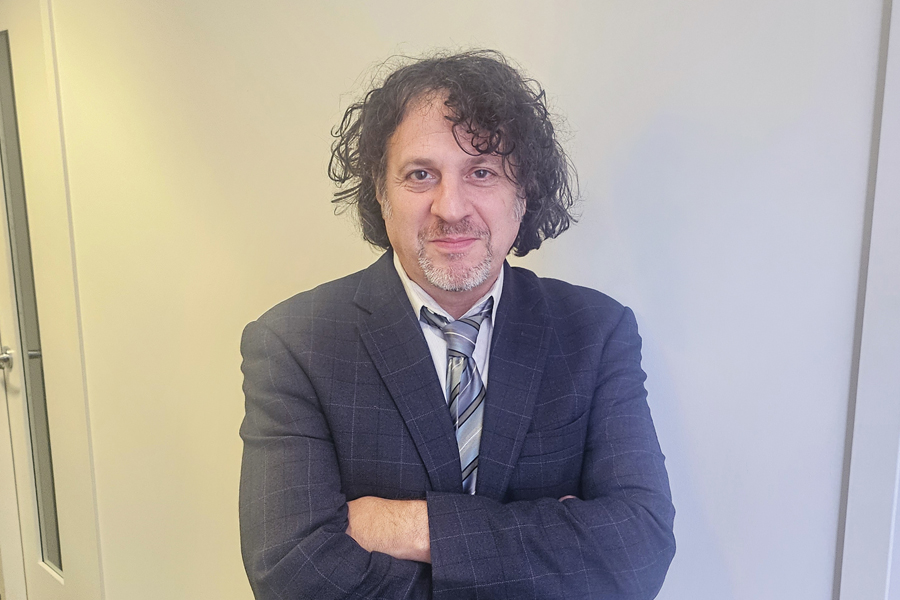
Bringing Literature to Life
Professor of Humanities and New Your Tech’s second Distinguished Professor Jonathan Ezra Goldman dispels myths of the 1920s—and the myths students tell themselves.
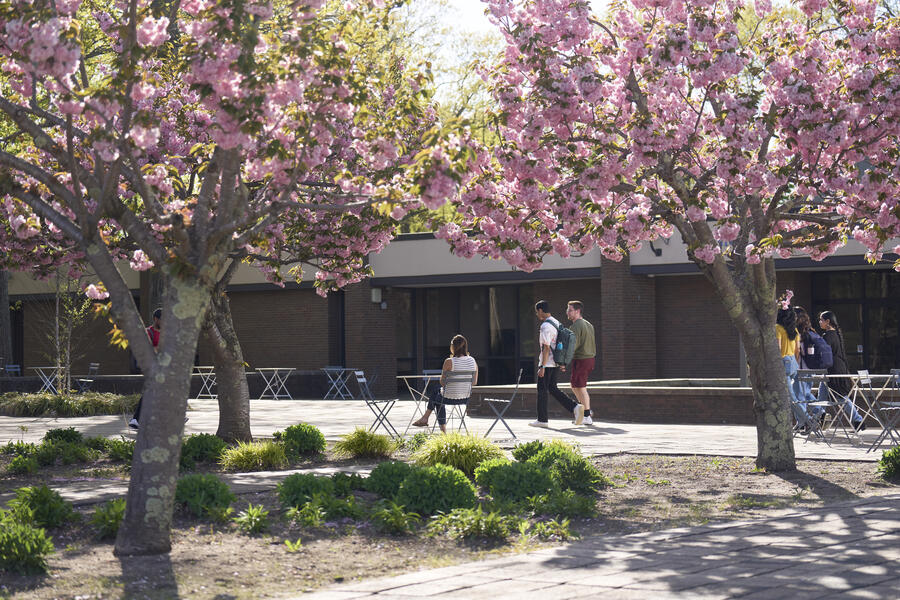
New York Tech To Be Ranked Among National Universities
For the 2027 U.S. News & World Report annual rankings, New York Tech will be included in a new ranking category—National Universities.
Exploring How AI Tools Can Improve Lung Cancer Detection
Research by Assistant Professor Robert Alexander, Ph.D., and student Talia Lilikakis assesses how AI tools can most effectively alert radiologists of the possible presence of a nodule.
Convocation 2026: Success in a Time of Change
At the annual faculty and staff convocation, New York Tech President Jerry Balentine reflected on the accomplishments over the past year and presented his vision for the future.
Robust Research
New York Tech’s commitment to research paves the way for important and groundbreaking work. Meet three Ph.D. students whose work may improve disaster response, recovery after muscle and bone injuries, and anticancer therapies.