Rediscovering Her Calling
Perry Rosen recalls being five years old when she first made the rounds with her father, a rheumatologist, through one of the U.S. Department of Veterans Affairs’ hospitals. She describes watching him speak with patients, gather their histories, and work toward diagnoses as fascinating—like solving a mystery where the outcome could improve someone’s life.

The first-year College of Osteopathic Medicine (NYITCOM) student is pursuing a master’s degree in medical simulation and a Doctor of Osteopathic Medicine, a pathway offering her a constant sense of discovery.
However, her journey to medical school was not linear.
Rosen earned a bachelor’s degree in economics from New York University (NYU) in 2014, followed by a career in the art world and motherhood to twin boys. When the twins had health concerns requiring appointments with specialists, moments spent beside the exam table resurfaced the interest in medicine instilled in her as a child.
“I found myself increasingly interested in the diagnostic process and the collaborative effort behind helping patients and families navigate uncertainty. During the COVID-19 pandemic in 2020, that interest turned into action,” says Rosen, who volunteered with Meals on Wheels, enrolled in a vaccine trial, and donated plasma for research after recovering from COVID-19.
She sought every opportunity to learn more about medicine, including participating in remote shadowing, speaking with physicians about their careers, and taking part in Cornell University’s Practicing Medicine program. When her local hospital allowed volunteers to return, she was among the first wave back.
Those experiences cemented Rosen’s years-long desire to pursue a career as a physician. After obtaining a postbaccalaureate pre-medical certificate from NYU, she took things a step further and browsed full-time medical school programs, ultimately choosing NYITCOM for its flexible structure and proximity to her New York City home.
At NYITCOM, Rosen will soon begin her master’s degree thesis. Her project will focus on developing and implementing a simulation-based medical educational program and evaluating its effectiveness, including measuring changes in learners’ confidence before and after participating in the training. Through this work, she aims to publish both the protocol and her findings so that the program can be shared and potentially implemented more broadly.
“The prospect of helping train medical students and practicing clinicians—even while I am still in training myself—is incredibly exciting,” she says.
Beyond clinical practice, Rosen hopes to remain involved in research. In early March, she was the lead author on a paper published in the American Medical Association’s JAMA Network Open. The study analyzed trends in pediatric nicotine exposures and raised important questions about how such incidents might be prevented, like whether device-level safety features could help reduce accidental exposures in children.
Rosen’s role for this paper began with conducting a comprehensive literature review to identify prior findings and gaps in research, as well as helping determine the appropriate methods for the study. She also helped analyze the dataset, interpret the findings, and draft the initial manuscript.
This is not the first time Rosen has published a study on pediatric poisoning, with past works investigating pediatric opioid-related poisoning. Studying these trends helps poison centers and emergency physicians better understand how children are being exposed to harmful products and what types of exposures are becoming more common. Understanding these patterns can help guide both clinical decision-making and public health prevention strategies.
With her first year of medical school nearly complete, Rosen says her curriculum is shifting toward learning about specific pathologies—an exciting transition as she is eager to enter clinical rotations in her third and fourth years of study. At this stage of her training, she is keeping an open mind and exploring different fields she may want to pursue in residency. She is certain, though, that she wants to work in a specialty that allows her to see a wide variety of cases, incorporate procedural skills, and work closely with patients in a clinical setting.
“I’m especially excited by how AI empowers researchers to integrate clinical insight with massive biological datasets. This high-level analysis makes it increasingly possible to tailor therapies to each patient rather than rely on a one-size-fits-all approach.” Rosen reflects. “Staying focused on what I need to accomplish each day allows me to be fully present with my family afterward, which keeps me grounded and motivated.”
More News
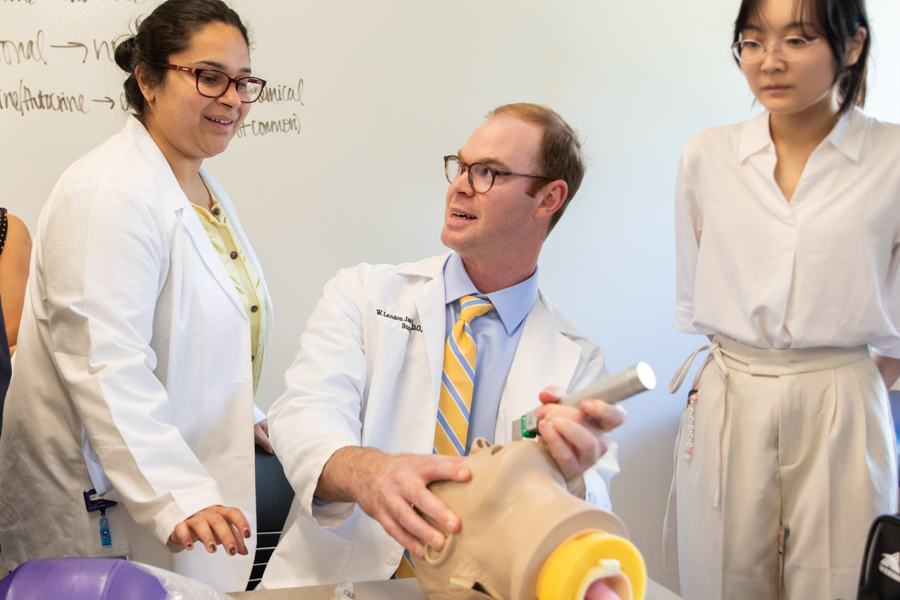
Alumnus Joins NYITCOM-Arkansas Faculty
William “Landon” Jackson, (M.S. ’21, D.O. ’21) has returned to his alma mater to serve as an assistant professor in NYITCOM-Arkansas’ Department of Clinical Sciences.
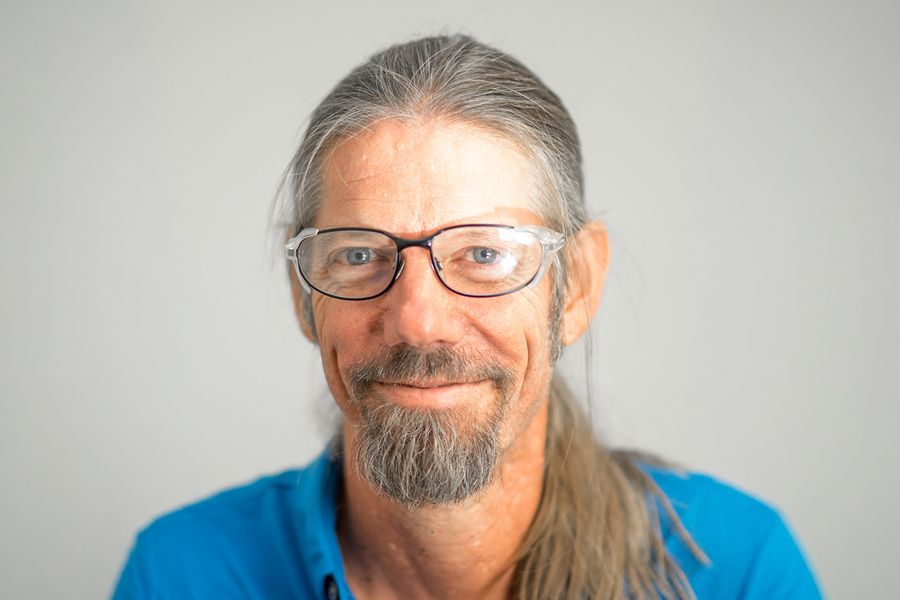
Forward-Thinking Design
Associate Professor of Architecture Clarke Snell, M.Arch., uses technology to link form and performance.
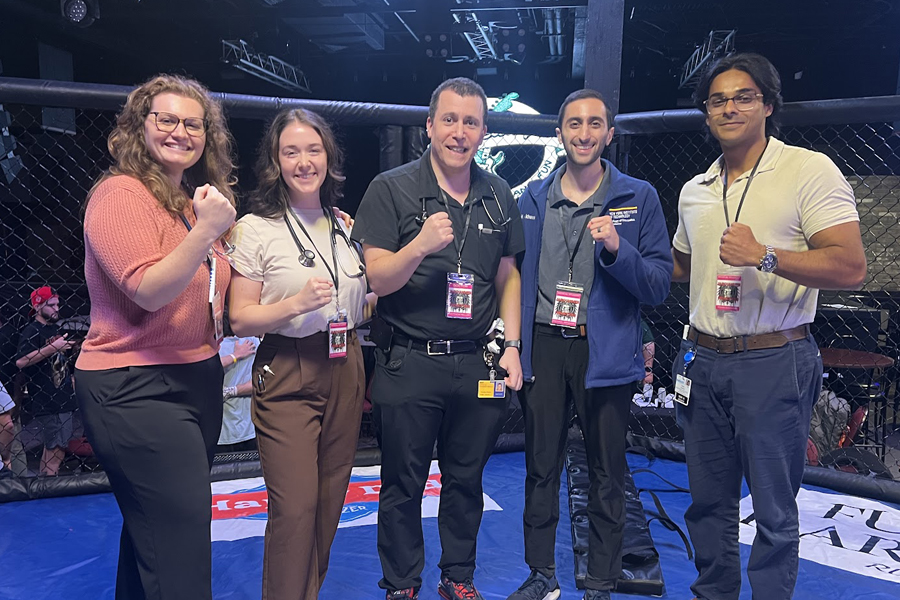
Students Step in to Help Save a Life
Students from the College of Osteopathic Medicine and the School of Health Professions provided life-saving medical care to a young mixed martial arts athlete.
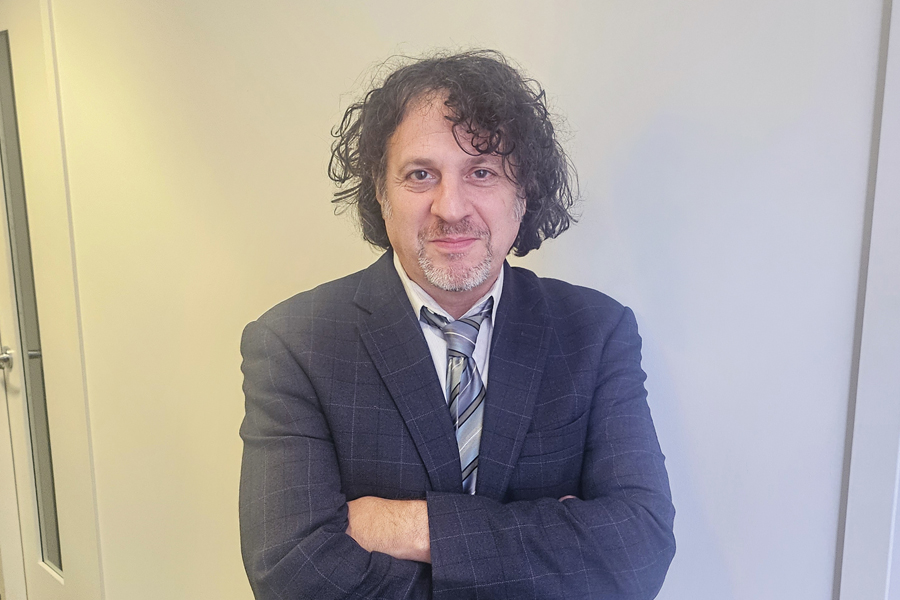
Bringing Literature to Life
Professor of Humanities and New Your Tech’s second Distinguished Professor Jonathan Ezra Goldman dispels myths of the 1920s—and the myths students tell themselves.
An Explorer, Through and Through
Associate Professor of Management Kevin O’Sullivan, D.Sc., teaches skills so students can adapt to change with agility.
A Head Start in Architecture
Architecture student Satish Doobay’s ongoing internship with an alumna’s firm is helping prepare him for a future in the field.