Using Architecture to Help People
When Chana Rhodes, a fifth-year architecture major, got her assignment to design a community center on the Lower East Side of Manhattan, she set out to create an inviting place for people to gather.
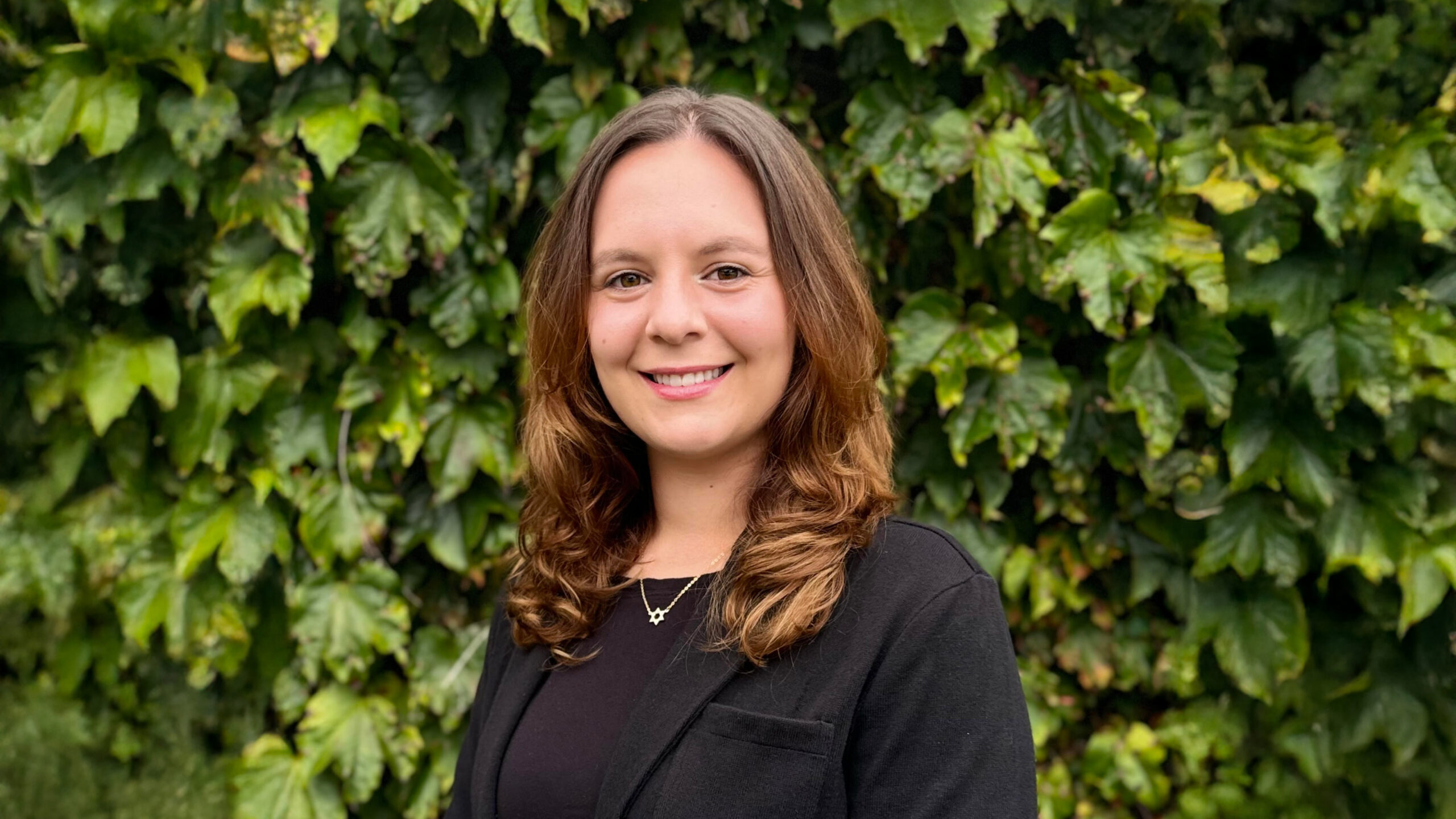
Then, she took the assignment to the next level, designing a welcoming space for animals and insects, too. These outside-the-box ideas earned her the 2024 Common Bond Scholarship from the American Institute of Architects Center for Architecture.
“I designed the roof to make the most of the building, to make it friendly for animals—birds, butterflies, and bees specifically,” Rhodes says. “They need a habitat where they can make a stop while they’re migrating, so I added flowers and greenery specific for certain species that would come that way. I bought some butterflies to observe what else they would need in their habitat and, as a result, I added some mesh to my design so the butterflies could hang onto it.”
Of course, the community center was primarily meant for humans, so Rhodes considered what would be important for people to have in that space. A lobby, classrooms, bathrooms—all the expected features—but Rhodes wanted her design to be more sustainable and environmentally friendly than the architecture of the past.
“When I got the assignment, I thought, ‘Wait, another building in the city? We have enough.’ So, I thought about how I could make a building that didn’t look like a building,” Rhodes says. For example, she designed a basement so the building would have plenty of square footage but could be shorter and less intrusive. She also brainstormed sustainable features with humans in mind—for example, keeping people cool during the summer months.
“Air-conditioned (AC) spaces can be harmful for everybody, so I designed a passive ventilation system,” explains Rhodes, who is currently an architecture intern at the engineering firm STV Inc. “I designed the building in a way that needs less AC and uses less energy. It’s more eco-friendly.”
Now in her fifth year, she’s beginning her thesis project, focusing on coastal architectural designs. Rhodes, who received the 2024 H2M Edward J. Fulford Scholarship Award at the 16th Annual Alumni and FRIENDS Reception, says she wants to make spaces that welcome everyone in all parts of the local community.
“I want to make sure everyone is heard and finds a space for themselves,” Rhodes says. “I am Orthodox Jewish, so I come from a minority part of the community. At the forefront of my design lens, I’m always thinking about what type of people and animals would be inhabiting these spaces, so I can build with intentional design. My focus is on how I can take care of the creatures that are living in these places while implementing architecture.”
“Chana is committed to making a difference in the world,” says Gertrudis Brens, M.Arch., teaching assistant professor and chair of architecture. “She is a student with very strong work ethics, and her work is evidence of how much care is invested.”
“I came to architecture with a curious, open mind. What can I build to help people? For example, the Belt Parkway is always congested, and I always think, ‘I could get to school 30 minutes earlier if they designed this differently,’” Rhodes says. “My classes gave me space to explore what I was interested in—ecology, animals, plants, and people. I came to architecture because I wanted to help people.”
By Ashley Festa
More News
A Passion for Games, a Vision for Business
College of Engineering and Computing Sciences student Cody Ortiz helps his father run a florist shop, an endeavor that inspired him to become an entrepreneur, too.

Building Machines…and a Future
Mechanical engineering student Anthony Vazquez Rivas aspires to a career in HVAC, but it’s the projects he’s worked on along the way at New York Tech that inspired him to decide on the specialty.
Natural Talent
Future architect and Honors College student Ayodele Washington’s interests lie in sustainability, and she intends to design and develop buildings that are better not only for humans but for the planet.
A Lifelong Learner
Adjunct Instructor of Architecture Efrat Nizan (B.Arch.’ 98) looks ahead to new lessons—for herself and her students.

Fulbright Scholar Traces Her Roots
Emmy award-winner and Fulbright Senior Scholar Vanessa Botelho (B.F.A. ’95) is writing a historical memoir about Anglo-Indian identity.

Where Medicine and Artificial Intelligence Converge
As a first-year medical student, Sungjoon Hong worked on research that focuses on ways AI can be used to help comfort and heal the human body.