Student Wins Best Presentation in Puerto Rico
For five days in February, third-year student Talia Lilikakis was among several students who traveled to Puerto Rico with Assistant Professor of Psychology and Counseling Robert Alexander, Ph.D., for the Annual Meeting of the Society of Thoracic Radiology. There, Lilikakis earned an award for Best Student Oral Scientific Presentation.
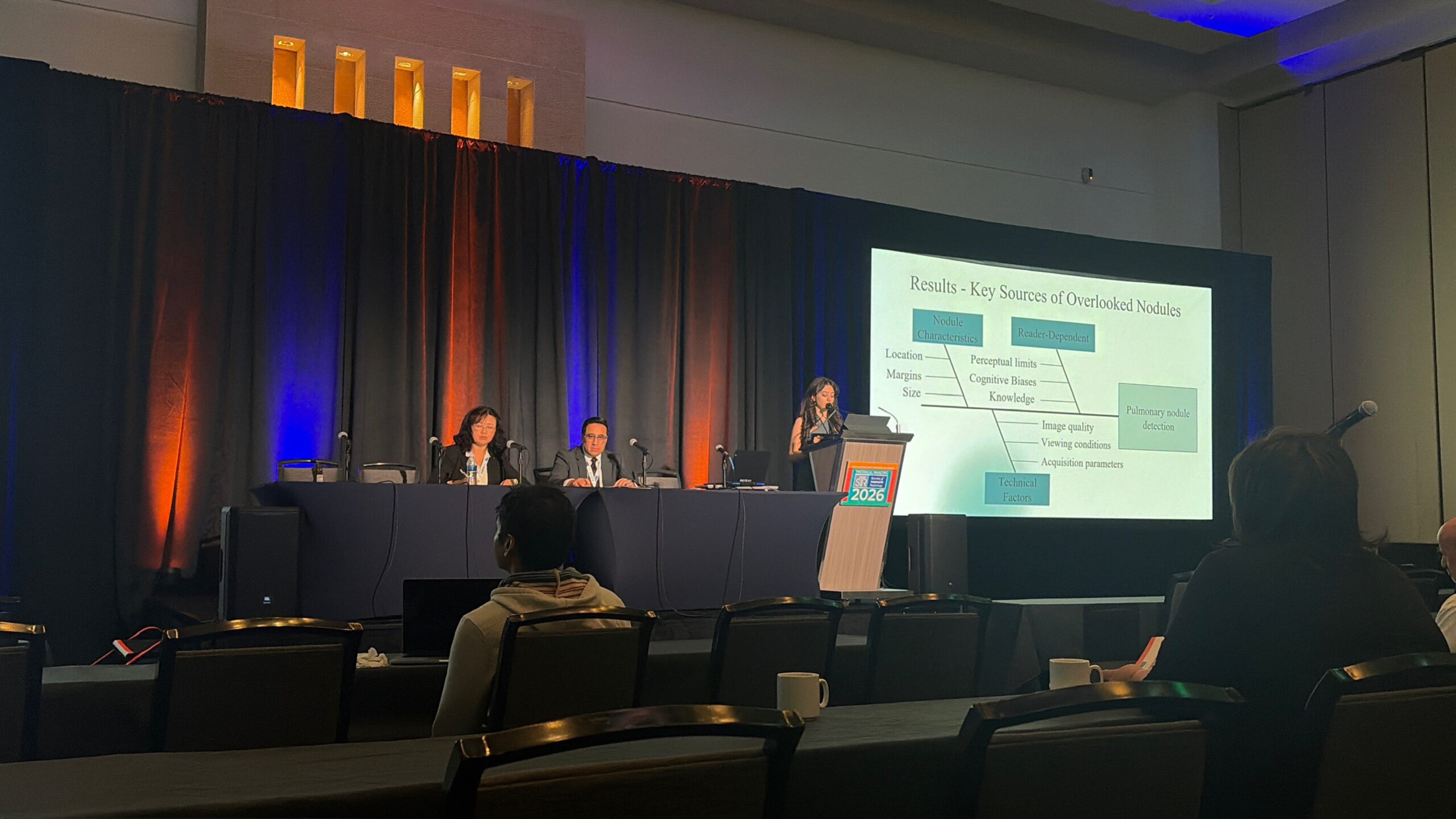
During the conference’s third day, Lilikakis, an undergraduate student in the life sciences/ osteopathic medicine (B.S./D.O.) program, presented her research, “Nodules on CT: Factors Leading to Detection Errors,” based on her work with Alexander and radiologists. Her presentation centered on the reasons why radiologists miss pulmonary nodules on CT scans. The study aims to raise awareness of those reasons to help prevent future errors through methods such as a systematic approach and review of challenging areas in an image.
“I felt like a part of the scientific community and proud to know that real clinicians were listening to my work and valued what I had to say,” she says. “My work might help radiologists become aware of potential challenges and help them adopt strategies that could improve their accuracy.”
Working in the Lab
When she wasn’t prepping for her presentation, Lilikakis worked with her peers from Alexander’s Human Factors and Neuroscience (HFAN) research lab, Audrie Saad, Jana Radwan, and Ayesha Mulla, conducting hands-on data collection as part of a National Institutes of Health grant Alexander received in 2025. The four-year award supports eye movement research that examines how radiologists interact with data from artificial intelligence (AI) tools and addresses a leading cause of medical error—missed detections in radiology. At the Puerto Rico conference, the group of students set up an eye tracker and recruited participants to collect data on site.
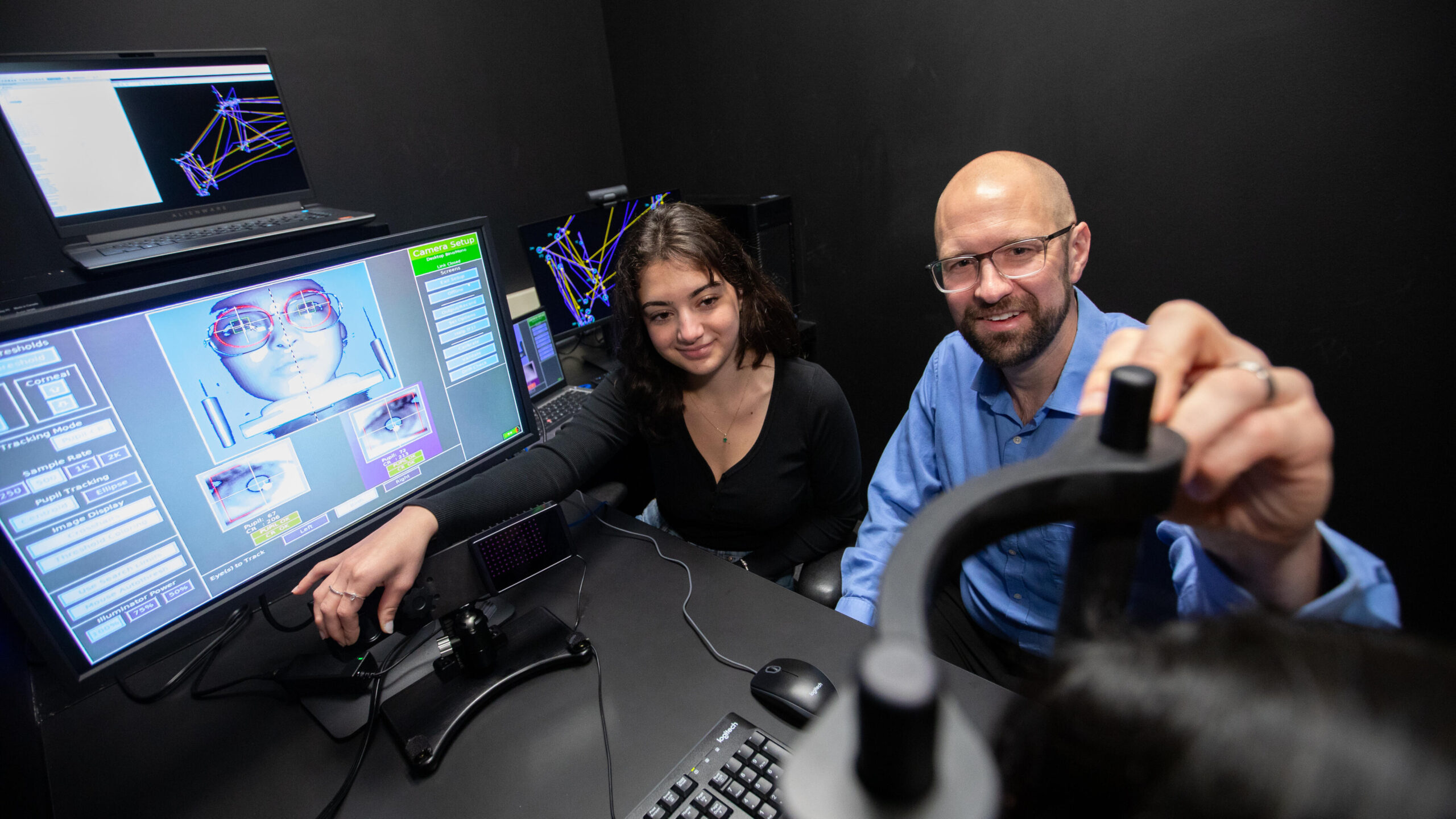
Lilikakis is an HFAN lab research coordinator on the New York City campus, managing scheduling and communication of HFAN lab participants and student research assistants, as well as mentoring two fellow pre-medical students. These responsibilities are in addition to several ongoing lab research projects, but she handles them all with passion and enthusiasm.
“I expect that Talia will have her name on more than four papers over the next few years,” Alexander says. “She has been extremely productive, and I’m very proud of her for the work she’s been doing.”
Now, Lilikakis is part of an HFAN lab experiment investigating whether providing cues before a chest X-ray image can assist in diagnosing pulmonary nodules. Using some information from the students’ eye-tracking data collection during the Puerto Rico conference, this experiment’s results can help radiologists understand how to best use AI as a preliminary screening tool before reading images. If AI’s cues improve radiologists’ diagnostic accuracy, then AI can serve as an effective first-screening tool to guide radiologists on where to find abnormalities in an image.
Lilikakis is also contributing to several literature reviews in the lab, including one examining relationships between fixational eye movements in patients with ADHD and another on Parkinson’s disease and fixational eye movements.
While she helps draft the manuscript for the Parkinson’s review paper, Lilikakis “effectively ‘owns’ the ADHD project,” Alexander explains. “She has the authority to make decisions about our day-to-day activities related to this ADHD paper and is guiding the other students in conducting the work.”
As her third undergraduate year wraps up before shifting to study at the College of Osteopathic Medicine, Lilikakis is excited to begin her medical studies in the fall. She plans to pursue either neurology or radiology when she enters residency training, but she is keeping an open mind should another specialty pique her interest.
“My time at the conference in Puerto Rico is one of my most memorable experiences ever, and I look forward to indulging in my passion for medicine both academically and professionally,” she says. “I look forward to starting medical school and gaining new experiences.”
More News
Understanding Sanctuary Cities
Teaching Assistant Professor Michael Izady, Ph.D., led a Dean’s Digital Café conversation about sanctuary cities.
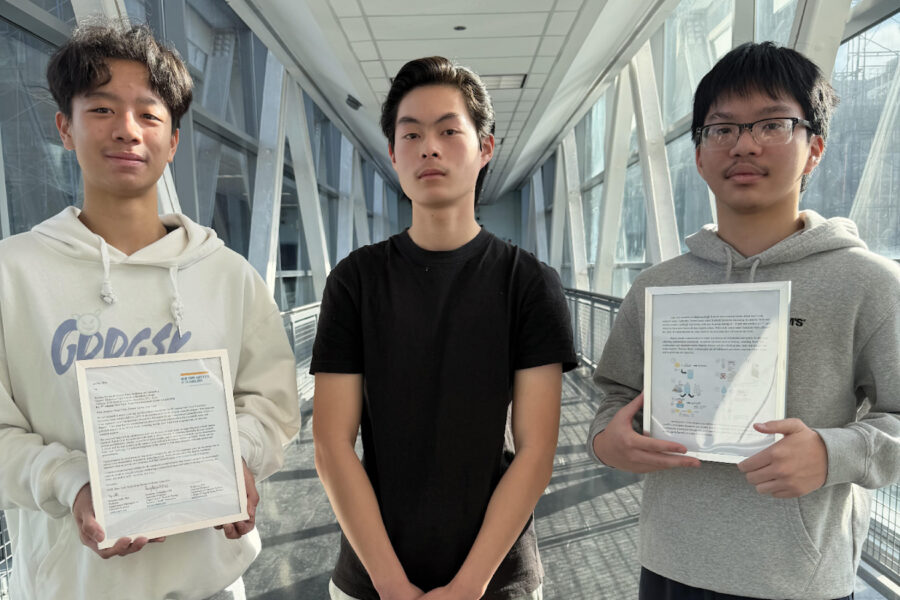
Promoting Early Engagement in Research
New York Tech recently completed the ninth year of its Mini-Research Grants Awards program to encourage high school students to pursue STEM fields.
Reversing Bone Loss After Spinal Cord Injury
People with spinal cord injury may lose up to 41 percent of their bone mass in the first year. A new study by the College of Arts and Sciences’ Hesham Tawfeek, MBBCh, seeks to repair this damage.
Beyond the Human Machine
Biology student Justin Tin seeks to understand what’s running “under the hood” in the human body so he can someday help prevent patients from suffering physiological changes.
Going With the Flow
One lesson Nanda Lahiri-Mushtaq (B.S.’ 05) took with her since graduating from New York Tech is to think outside the box.
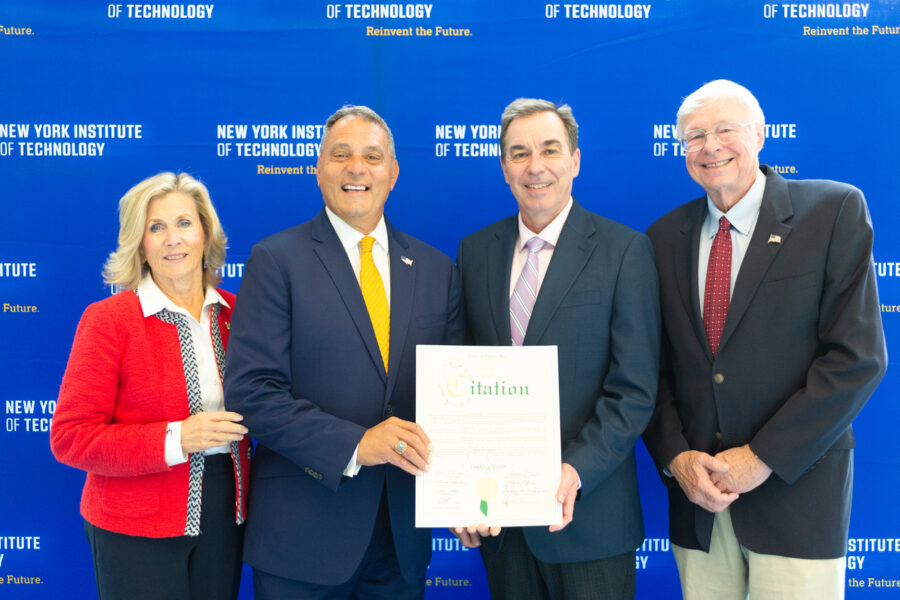
Startup Tech Central Officially Opens
Members of New York Tech and the local community gathered to celebrate the grand opening of Startup Tech Central, a resource for students to transform ideas into real-world impact.