NIH-Funded Research Achieves Key Milestone
Federally funded research from the laboratory of Maria Alicia Carrillo Sepulveda, Ph.D., BSN, has produced new findings that advance understanding of the relationship between menopause and cardiovascular disease risk.
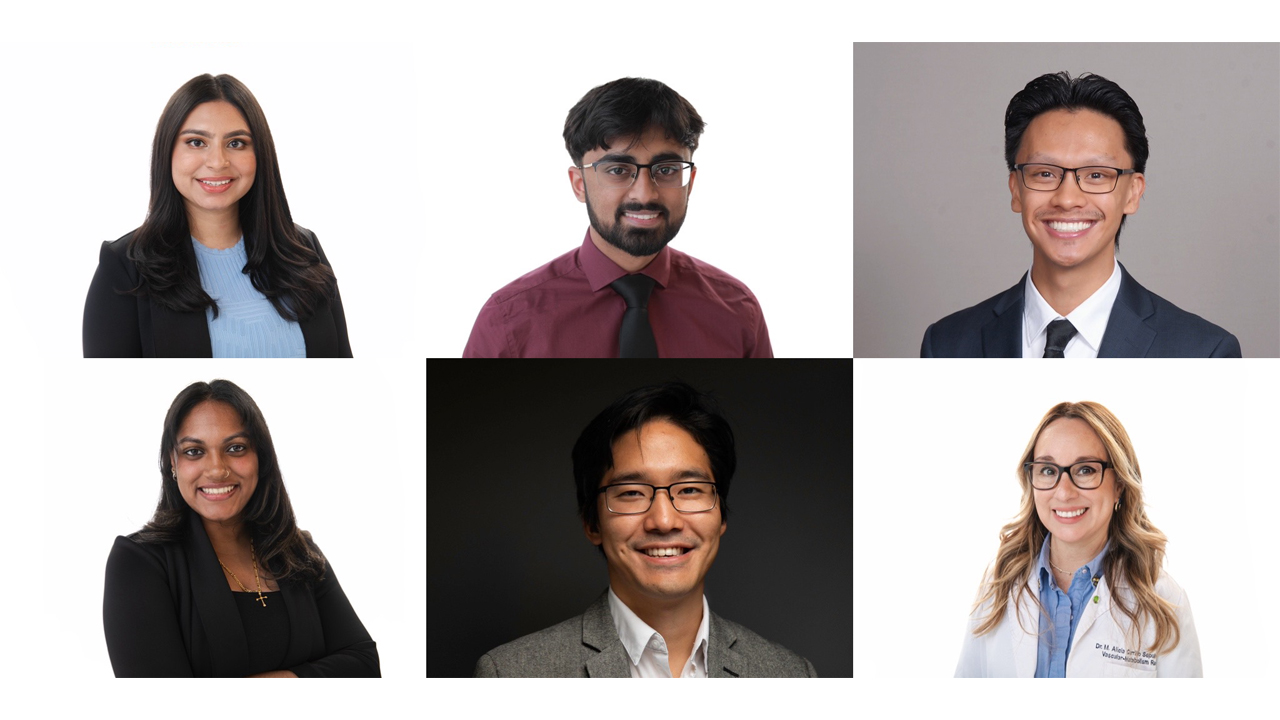
Supported by a Research Enhancement Award (R15 grant) from the National Heart, Lung, and Blood Institute (NHLBI) of the National Institutes of Health (NIH),[1] Sepulveda, a vascular physiologist, and a team of student researchers have published new findings in the American Journal of Physiology – Heart and Circulatory Physiology. Their study explores why cardiovascular disease risk increases after menopause, and yields new insights into how proteins linked to obesity and cardiometabolic disease may also drive cardiovascular risk after menopause.
The publication underscores the strength of student mentorship at the College of Osteopathic Medicine (NYITCOM). Three medical students—Nefia Chacko, Mohit Shah, and Christian Jude-Aspiras—served as co-authors, along with New York Tech alumna Reia Thomas (B.S. ’25), who is entering NYITCOM’s Biomedical Sciences, M.S. program, and Associate Professor of Anatomy Aki Watanabe, Ph.D. Notably, Chacko, a 2024 recipient of the American Heart Association Student Scholarship in Cardiovascular Disease, serves as the paper’s first author.
Experts estimate that only 15 percent of women receive effective treatment for menopause. If left unaddressed, weight gain caused by menopause often leads to obesity, a major risk factor for cardiovascular disease. Using a female rodent model, the researchers examined blood levels of a hormone called asprosin, which helps to regulate how the body uses energy. Elevated asprosin levels have been linked to conditions like obesity, diabetes, and heart disease. In comparing animals with and without menopause-like changes, the researchers found that post-menopausal animals had higher levels of asprosin and arterial stiffness. These findings may help explain the increased risk of heart disease during this stage of life. The team expects their findings will lead to further investigations into asprosin as a potential biomarker for heart disease after menopause.
“This publication reflects the scientific productivity of NIH-supported research at NYITCOM and advances our understanding of asprosin as a potential cardiometabolic mediator in women. It also demonstrates the value of embedding medical students in rigorous, federally funded research, a core mission of the R15 mechanism and a training investment with long-term impact on physician-scientists,” says Sepulveda.
Since joining NYITCOM in 2014, Sepulveda has provided many medical and undergraduate students with opportunities to enhance their academic experiences through scientific training in cutting-edge preclinical research. Sepulveda has mentored more than 35 medical and undergraduate students, providing hands-on training in federally funded cardiovascular research. Of those, 22 have gone on to co-author peer-reviewed publications, and five have earned American Heart Association scholarships, among the most competitive awards available to student researchers in cardiovascular science. Chacko is among several participants in NYITCOM’s Academic Medicine Scholars program from Sepulveda’s laboratory to receive AHA scholarships in recent years. Other recipients include Jac Lun Lin, Nicole Maddie (D.O. ’24), Risa Kiernan (D.O. ’23), and Benjamin Kramer (D.O. ’19).
[1] This work was supported by the National Heart, Lung, and Blood Institute of the National Institutes of Health under Award Number 1R15HL165328-01A1. The content is solely the responsibility of the authors and does not necessarily represent the official views of the National Institutes of Health.
More News
New York Tech To Be Ranked Among National Universities
For the 2027 U.S. News & World Report annual rankings, New York Tech will be included in a new ranking category—National Universities.
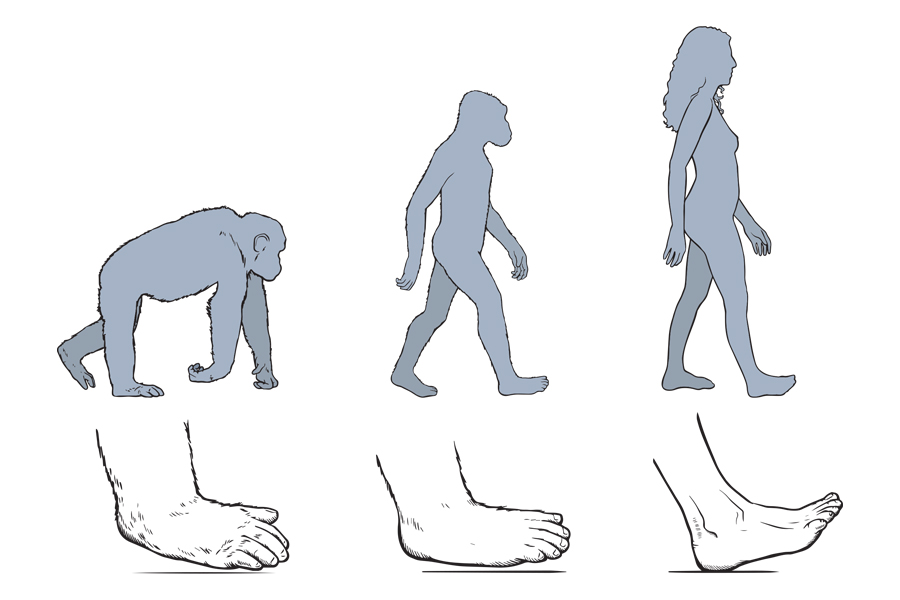
The Evolutionary Significance of Humans’ Unique Heel-Toe Walking Pattern
Associate Professor of Anatomy Nathan E. Thompson, Ph.D., contributes to research unveiling clues to the origin of humans’ stride pattern.
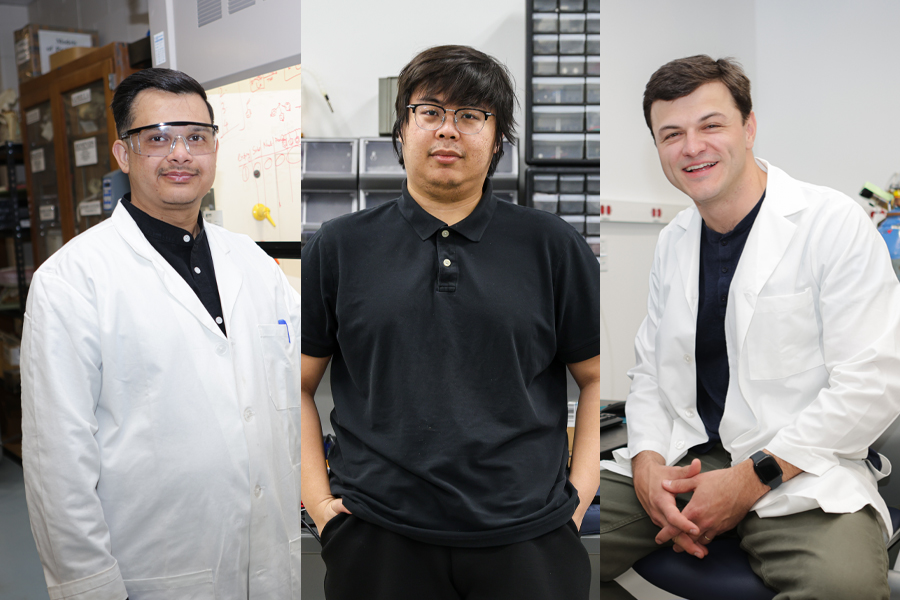
Robust Research
New York Tech’s commitment to research paves the way for important and groundbreaking work. Meet three Ph.D. students whose work may improve disaster response, recovery after muscle and bone injuries, and anticancer therapies.
NYITCOM-Arkansas’ Rajagopalan Receives $573K NIH Grant for Cardiovascular Disease Research
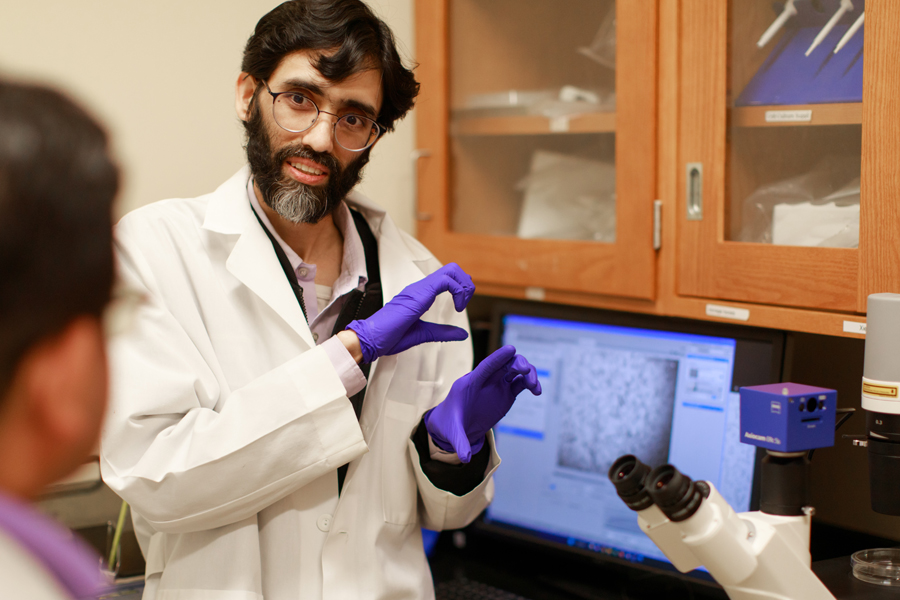
The funding will further Associate Professor Viswanathan Rajagopalan’s research regarding the impact thyroid dysfunction has on cardiovascular disease.
NYITCOM Student Receives American Heart Association Scholarship
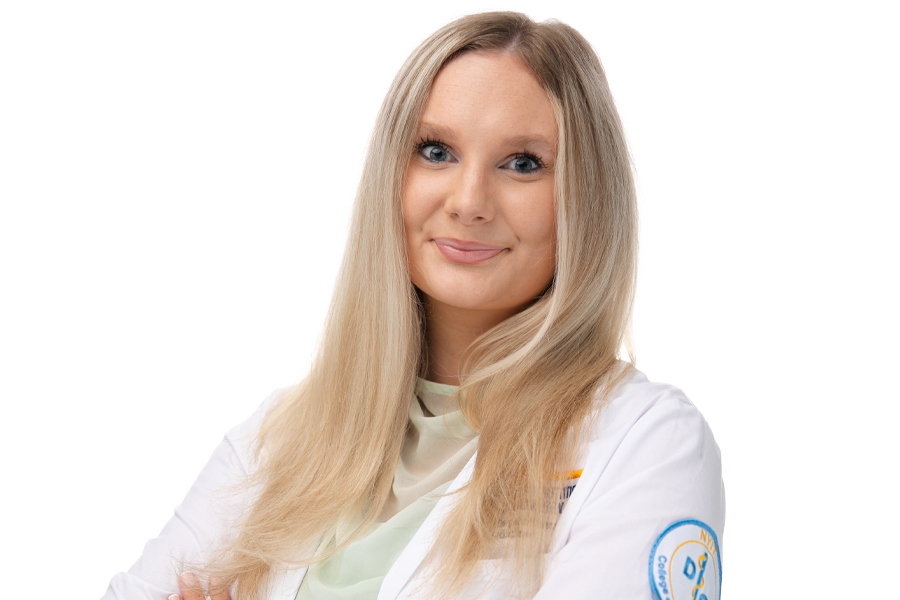
A student researcher from the College of Osteopathic Medicine (NYITCOM) has secured the prestigious Student Scholarship in Cardiovascular Disease from the American Heart Association.

Fellows’ Field Notes: Bofan He and Christine Lee
Edward Guiliano Global Fellowship recipients Bofan He and Christine Lee reflect on their experiences as they traveled to conduct academic research.