Two Medical Students Test AI Research in the Study of Endometriosis
Last summer, Milan Toma, Ph.D., associate professor of osteopathic manipulative medicine (OMM) at the College of Osteopathic Medicine (NYITCOM), gave a presentation on campus about artificial intelligence (AI) and medicine.
Toma, who has published more than 30 peer-reviewed studies on the subject, told the medical students in attendance about opportunities to conduct AI-led research in areas of interest to them.
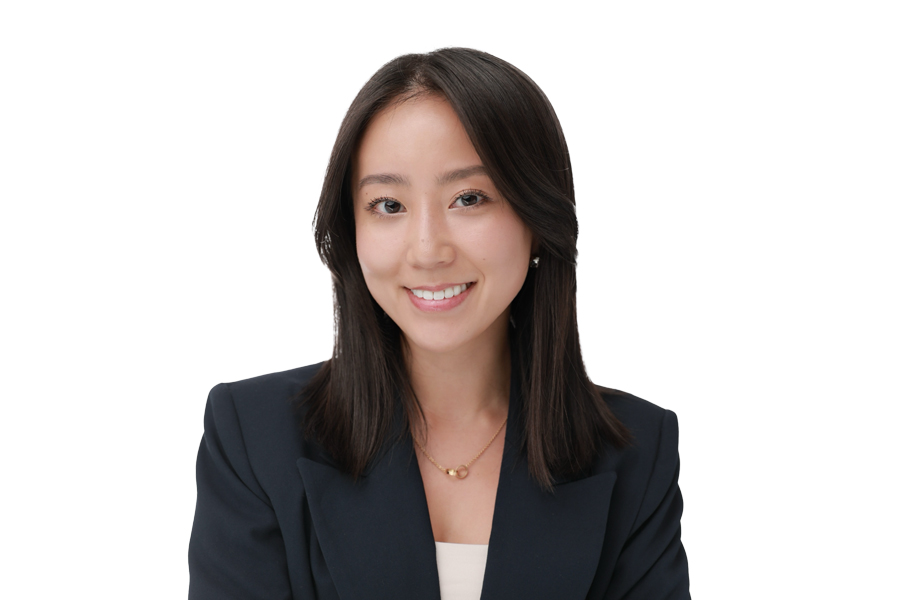
This piqued the curiosity of Sarah Landman (OMS II) and Rachel Lee (OMS II). “We both walked away from his presentation thinking this is really cool and an option that we didn’t even know was available,” Landman recalls. Not only would they have the chance to conduct research, but they would also get to work with emerging AI tools that could impact the study of medicine in the future.
Both knew that they wanted to focus on an obstetrics-gynecology-related subject (ob-gyn). “It’s hard as students to get involved because of the lack of research in women’s health to begin with,” Lee explains. “This would be an opportunity for us to do research that we could control in a way.”
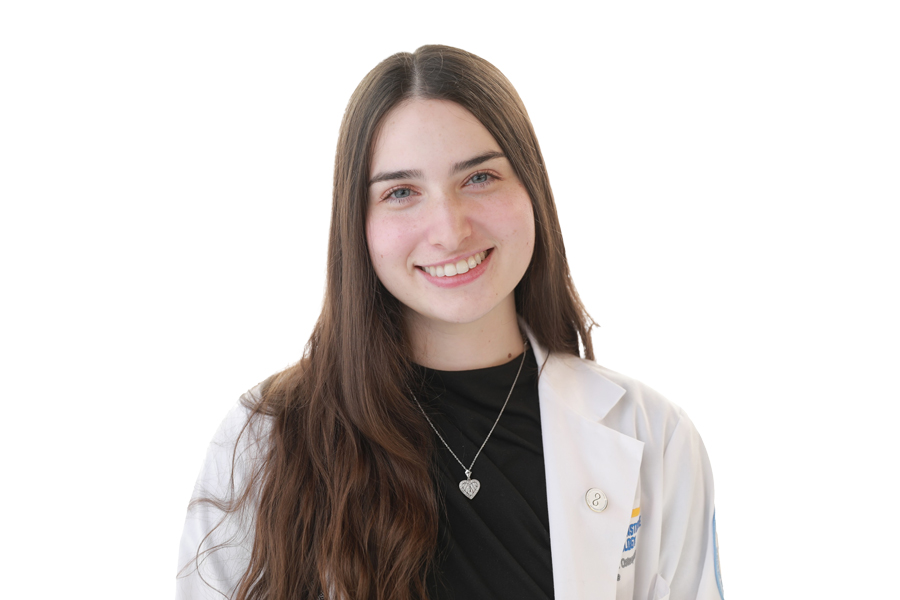
The two brainstormed ideas and decided they wanted to focus on endometriosis, a chronic disease in which tissue grows outside of the uterus, causing severe pain and inflammation. Endometriosis can also be a factor in infertility. Currently, there is no cure; the disease is managed through medication and sometimes surgery. About one in 10 women around the world suffers from endometriosis.
The disease is hard to pin down. At the moment, a surgical biopsy is the only way to diagnose it. “Rachel had been shadowing an ob-gyn, and she learned that endometriosis was very understudied,” Landman says. “The average endometriosis diagnosis takes seven to 10 years since symptoms are so vague and can be confused with other pathologies and diseases.”
Landman and Lee wanted to see if there was a correlation between specific clinical symptoms and the actual diagnosis. If there was, perhaps it could lead to faster and less invasive diagnoses. They brought the idea to Toma, and he agreed to work with them.
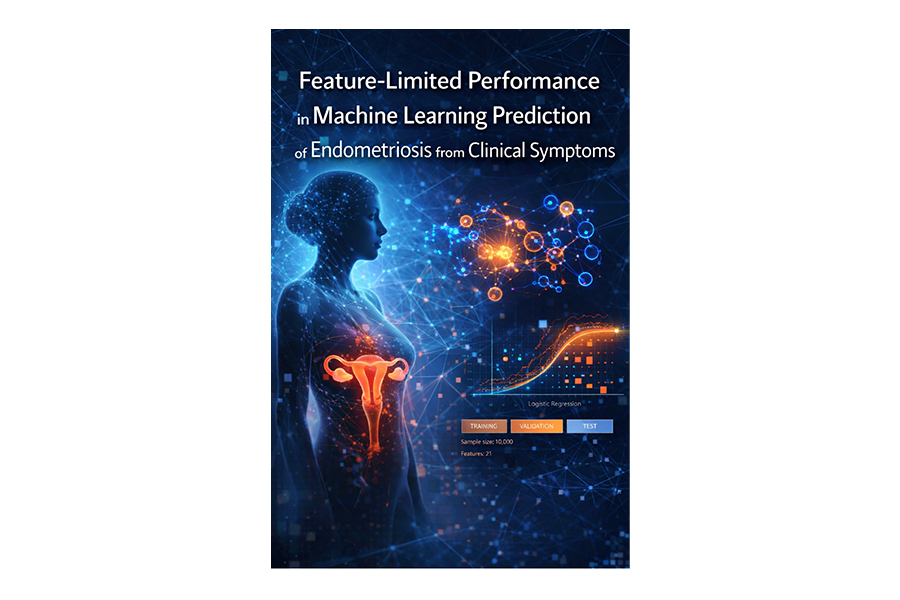
Thus began about six months of discovery that culminated in a paper published in February 2026 in the European Society of Medicine. Titled “Feature-Limited Performance in Machine Learning Prediction of Endometriosis from Clinical Symptoms,” the paper reveals the opportunities, limitations, and frustrations of researching endometriosis through AI models.
Using AI to examine the symptoms and diagnoses of a disease was a new experience for Landman and Lee. “The only research I’ve ever known is either completely clinical-based or you’re at the bench doing science experiments,” Lee says. “I didn’t even know that you could do research with just AI platforms and patient data sets that were readily available.”
They relied on Toma’s expertise in AI research, but for the most part, he gave them free rein on the project. “Dr. Toma was super helpful. He was there as a resource to guide us to start work with AI and then interpret the data sets we acquired,” Lee says.
Toma assured them that the platform they used was not important; rather, asking appropriate questions and training the platform to look for specific data were the keys to a successful outcome. Landman and Lee used ChatGPT. They also took advantage of resources available through New York Tech, including MATLAB (a tool for technical computing), which helped them to analyze data.
“We wanted to see if there were symptoms that were more diagnostic,” Lee says. “We used the data sets online and gave those to AI and tried to train it to see if, with all of the math and science, it could see correlations.”
Toma navigated Landman and Lee through roadblocks along the way, the biggest one being how to train the AI models with the dearth of information available. “Because endometriosis is so underresearched, the data sets we were working with were minimal,” Lee explains. “And the data we had wasn’t high-quality. So, our process wasn’t as smooth sailing as some of the others Dr. Toma has worked with. But he helped us through that.”
Because of the lack of clinical research on endometriosis, Landman and Lee had to work with a data set of rather general clinical symptoms like body mass index, pain level, and age. “After using five different models to try to train the data set and not getting clinically significant results, we saw that the data itself was limited and not the models,” Landman explains. In other words, too little information was available to determine if a diagnosis could be given based solely on symptoms.
This was disappointing to Landman and Lee. “As much as we wanted there to be a tangible result, at the end of the day, we can’t manipulate data,” Lee says. “We just don’t have enough data about endometriosis, and it needs to be studied more.”
Still, she and Landman declare the project a success. “The more awareness we can bring to even just the lack of present research is a step in the right direction,” Lee says. “Unfortunately, that’s just how women’s health in general has been for so long. For example, women present differently than men during heart attacks. That wasn’t known until recently because most of the research on heart attacks had only been done on men.”
Landman and Lee are still deciding on their medical specialties, but they are interested in focusing on women’s health, including maternal-fetal health and high-risk pregnancies. Landman is also drawn to anesthesia and emergency medicine. In the meantime, they’ll continue to bolster their practical and research knowledge with resources offered at NYITCOM, including the MATLAB and free online mini courses on clinical research.
No matter the paths they choose, they say they will use their research experience with Toma as inspiration. “It was easy to be frustrated [by our research project],” Landman says. “But no result is a result because it’s showing a gap in the field. And maybe someday we’ll be the ones to fill it.”
By Diane DiPiero
More News
New York Tech To Be Ranked Among National Universities
For the 2027 U.S. News & World Report annual rankings, New York Tech will be included in a new ranking category—National Universities.
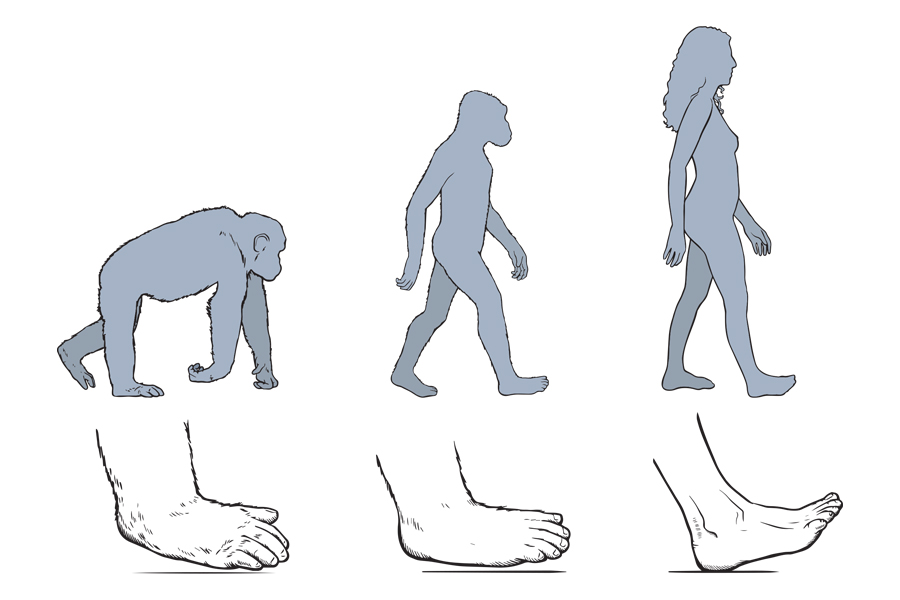
The Evolutionary Significance of Humans’ Unique Heel-Toe Walking Pattern
Associate Professor of Anatomy Nathan E. Thompson, Ph.D., contributes to research unveiling clues to the origin of humans’ stride pattern.
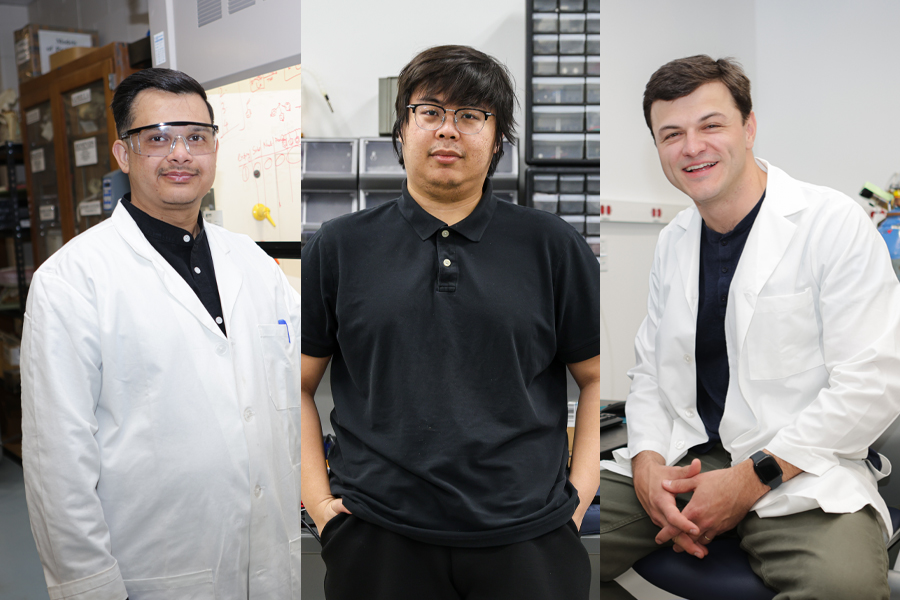
Robust Research
New York Tech’s commitment to research paves the way for important and groundbreaking work. Meet three Ph.D. students whose work may improve disaster response, recovery after muscle and bone injuries, and anticancer therapies.
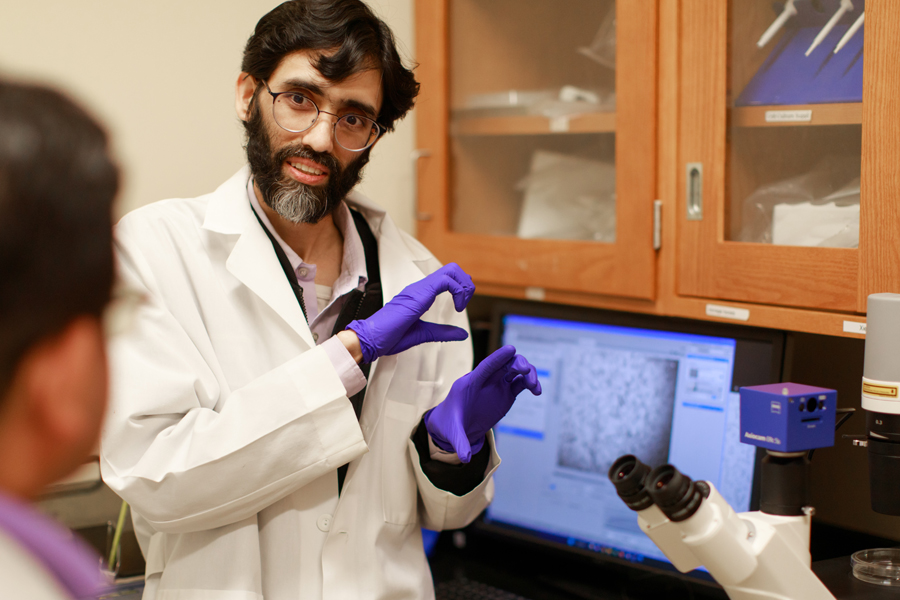
NYITCOM-Arkansas’ Rajagopalan Receives $573K NIH Grant for Cardiovascular Disease Research
The funding will further Associate Professor Viswanathan Rajagopalan’s research regarding the impact thyroid dysfunction has on cardiovascular disease.
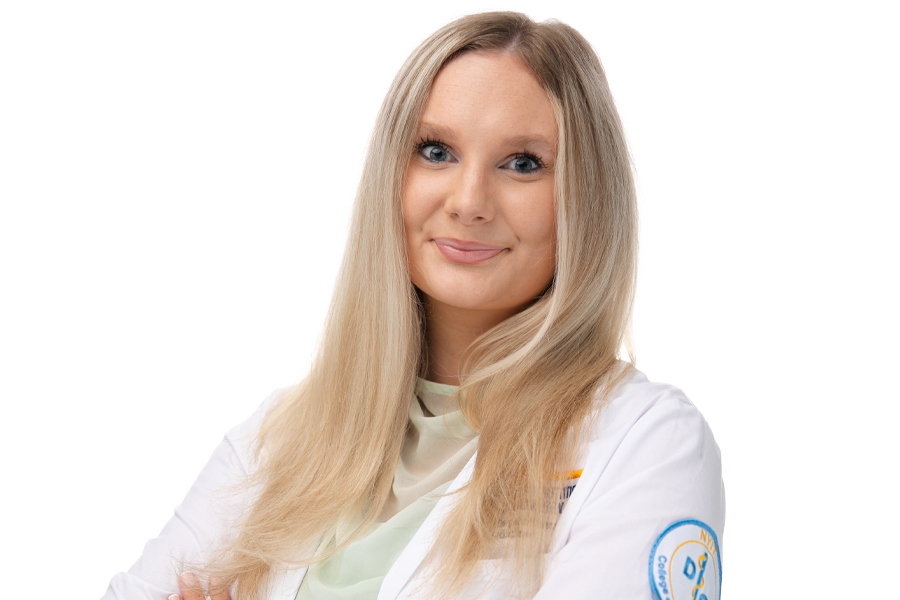
NYITCOM Student Receives American Heart Association Scholarship
A student researcher from the College of Osteopathic Medicine (NYITCOM) has secured the prestigious Student Scholarship in Cardiovascular Disease from the American Heart Association.

Fellows’ Field Notes: Bofan He and Christine Lee
Edward Guiliano Global Fellowship recipients Bofan He and Christine Lee reflect on their experiences as they traveled to conduct academic research.