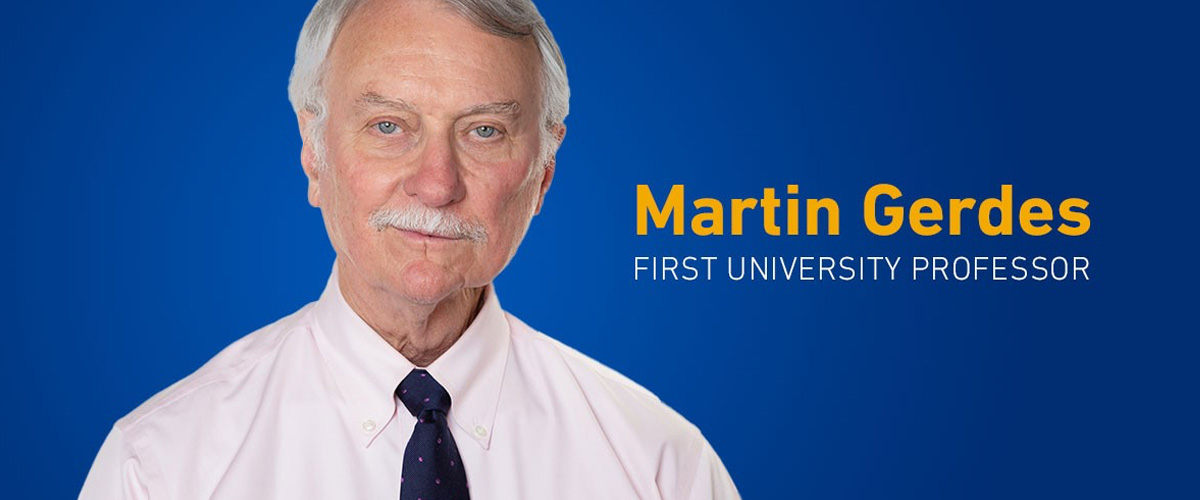
Gerdes Named New York Tech’s First University Professor
Professor Anthony (Martin) Gerdes, Ph.D., chair of biomedical sciences at the College of Osteopathic Medicine (NYITCOM), has achieved the distinction of being named New York Institute of Technology’s first university professor, effective in the new academic year.
The title of university professor is often found at many top research universities to recognize select full-time faculty who have accomplished an extraordinary scope of scholarly research and are highly regarded in their fields. At New York Tech, this designation, as appointed by President Hank Foley, Ph.D., is a three-year term.
“Establishing a university professorship supports our goals of becoming a Carnegie-classified Research 2 university within the next six years,” said Provost and Executive Vice President Jerry Balentine, D.O., pointing to the university’s recent investments in research activities, including the recruitment of Jared Littman, Ph.D., as New York Tech’s first vice provost for research.
Gerdes took the helm of NYITCOM’s Department of Biomedical Sciences in January 2011. That same year, he received nearly $1.8 million in funding from the National Institutes of Health (NIH) to investigate the link between heart failure and an underlying thyroid hormone imbalance. Since then, under Gerdes’s tutelage, 10 other principal investigators in the department have secured a total of $7,749,602 in NIH funding, as well as NYITCOM’s first grant from the United States Department of Defense.
“Given Professor Gerdes’s unwavering commitment to the success of our faculty and students, as well as his own impressive body of thyroid and cardiovascular research, Provost Balentine and I strongly felt that he was deserving of this distinction,” said NYITCOM Dean Nicole Wadsworth, D.O. “His efforts to recruit and mentor rising stars in the field of biomedical research has had a positive downstream effect for both NYITCOM and the university at large, including substantial NIH funding, faculty publication in high-impact journals, and opportunities for student researchers to work alongside renowned scientists.”
Over his nearly 40-year research career, Gerdes has received more than $30 million in NIH funding, authored more than 120 papers, and served on the editorial boards of multiple scientific journals. His studies have helped advance the understanding of how heart muscle cells respond to virtually every condition, from normal aging to heart diseases like hypertension and cardiomyopathy.
His research contributions have also garnered the attention of others in the cardiology field. In July 2017, the International Academy of Cardiology presented him with the Hans-Peter Krayenbuehl Memorial Award. Two months later, he was elected as a fellow of the International Academy of Cardiovascular Sciences.
When asked why he ultimately chose to continue his illustrious career at New York Tech, Gerdes said, “I saw a diamond in the rough and wanted to make it shine. I owe this award to the wonderful recruits who chose to join me.”
Gerdes’s appointment as the institution’s first university professor follows the naming of Michael Hadjiargyrou, Ph.D., as New York Tech’s first distinguished professor in 2022.
More News

Faculty and Alumni Publish New Books
New publications from members of the New York Tech community explore topics and interests across the fiction and nonfiction genres.
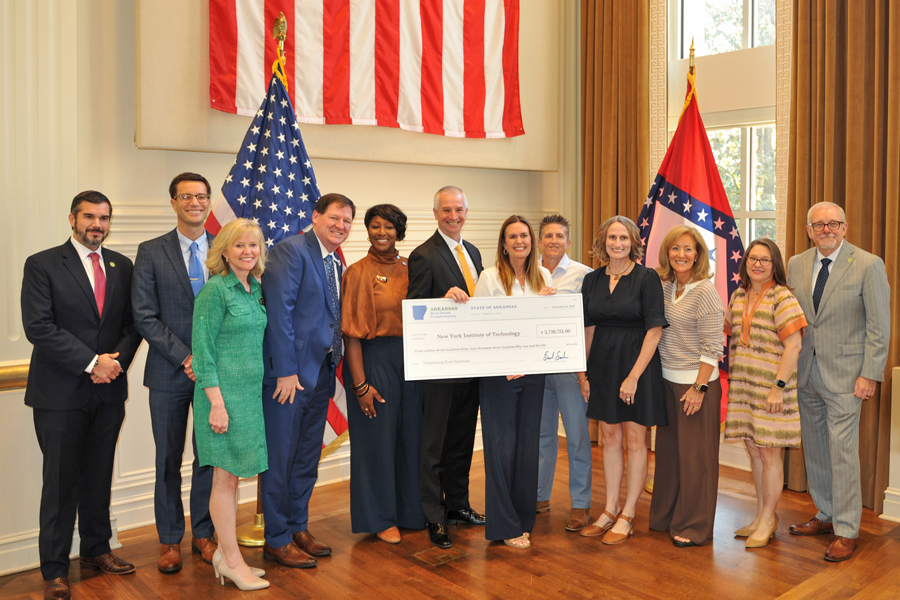
NYITCOM-Arkansas Receives Two Grants for New Residency Program, EMS Training Initiative
Two Rural Health Transformation Project grants, totaling $3.7 million, will support health education programs at the College of Osteopathic Medicine at Arkansas State University (NYITCOM-Arkansas).
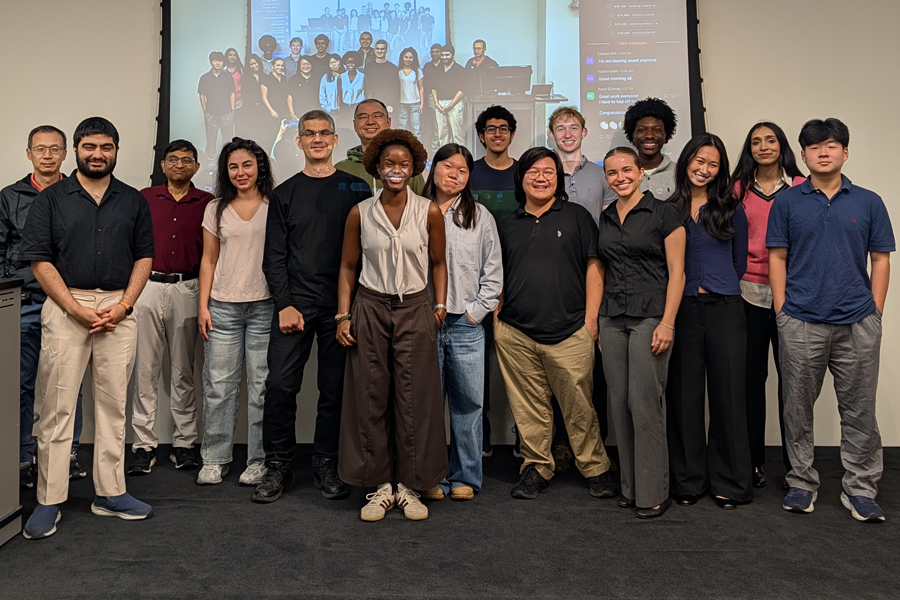
The Domino Effect
New York Tech’s Research Experiences for Undergraduates program has spent more than a decade turning summer research opportunities into lasting careers, helping build the university’s research reputation along the way.
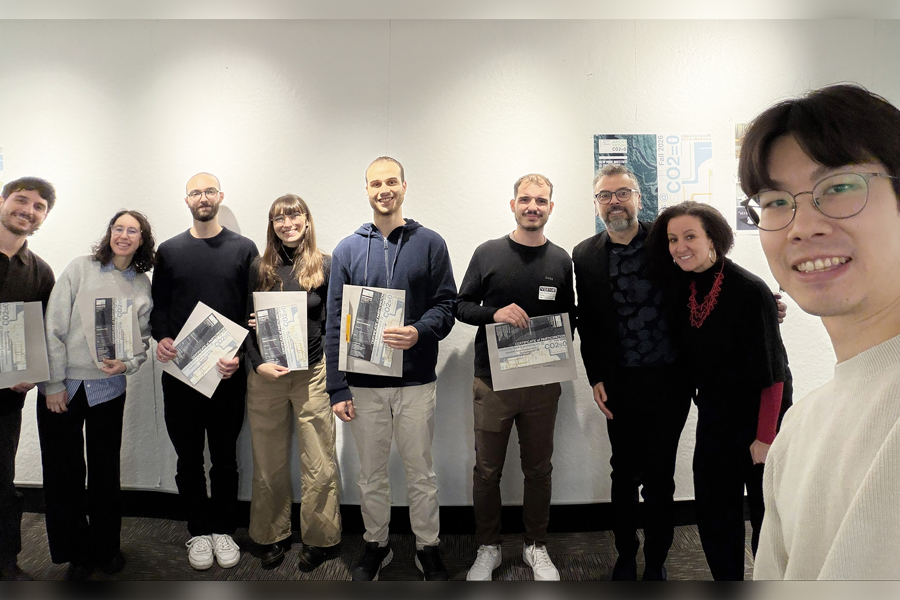
International Collaboration: School of Architecture and Design and IUAV
Graduate architecture students from Università Iuav di Venezia (IUAV) in Venice participated in a week-long atelier on the New York City campus, while School of Architecture and Design students traveled to Venice for a 17-day workshop.
Alumnus Joins NYITCOM-Arkansas Faculty
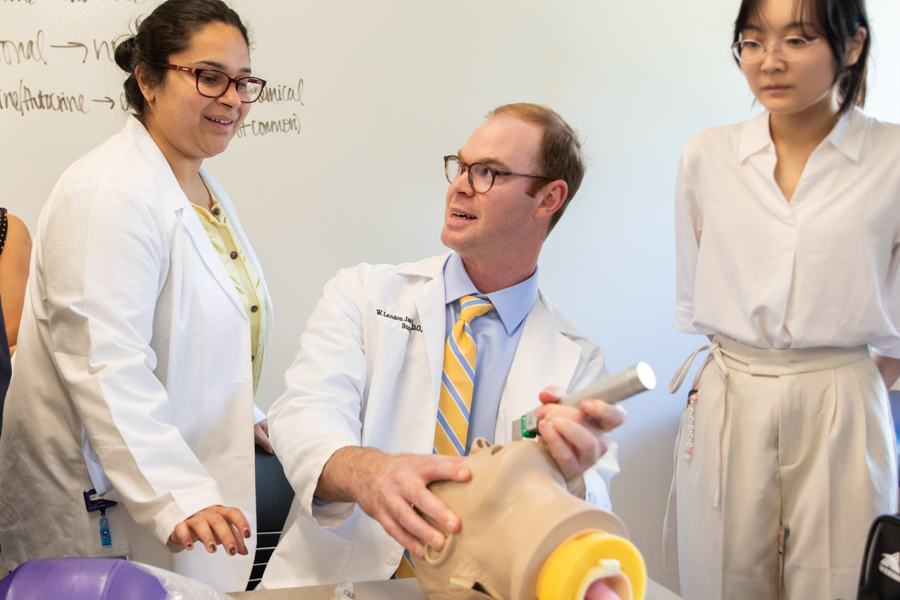
William “Landon” Jackson, (M.S. ’21, D.O. ’21) has returned to his alma mater to serve as an assistant professor in NYITCOM-Arkansas’ Department of Clinical Sciences.

Forward-Thinking Design
Associate Professor of Architecture Clarke Snell, M.Arch., uses technology to link form and performance.