Future Physicians Provide Care in the Dominican Republic
For one week in June, a group of College of Osteopathic Medicine (NYITCOM) faculty and students traveled to the Dominican Republic, where they visited and provided medical services to rural, resource-limited communities.
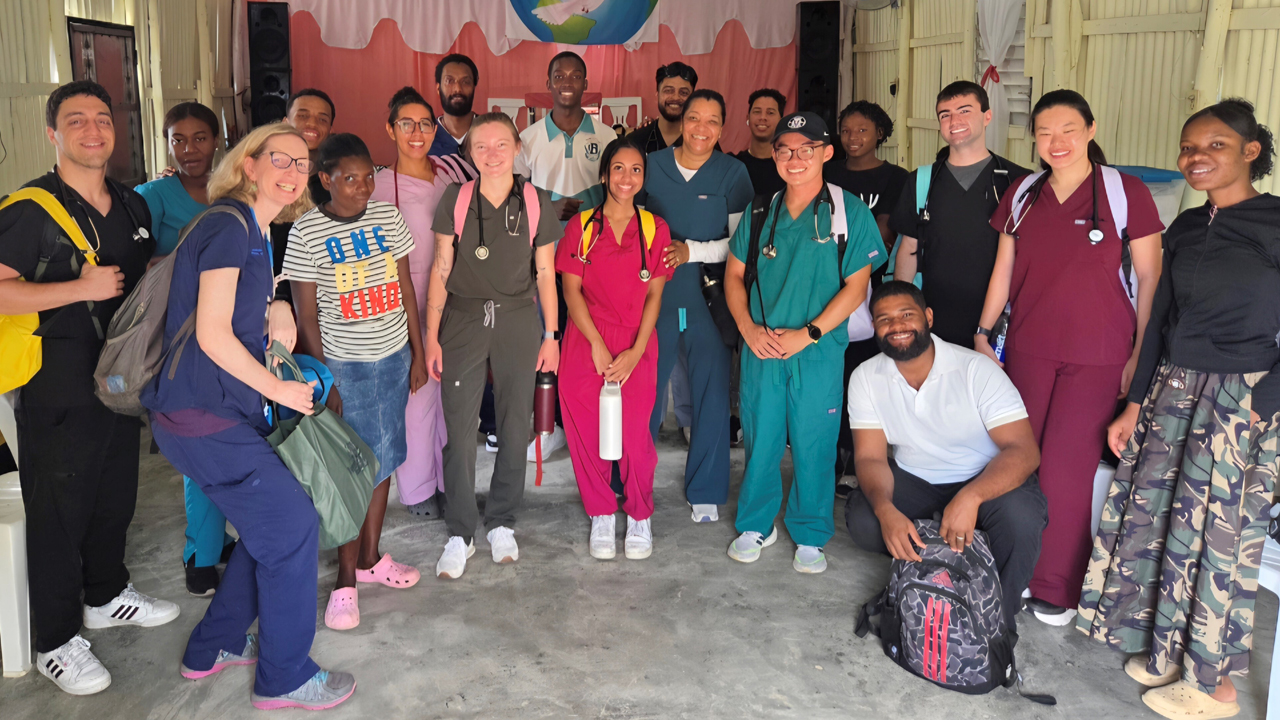
These service-learning trips, offered annually by the Center for Global Health, provide students with the opportunity to learn about foreign healthcare systems, assist with treating patients in medically underserved areas, and develop cross-cultural skills to care for future patients at home and abroad.
This year’s experience took place in and around the nation’s capital, Santo Domingo. From June 15 through 23, 10 osteopathic medicine students—Delaney Babineau, Reeju Bhowmick, Joseph Daly, Remi Gucker, Tamer Mustafa, Yaron Nassir, Christopher Pantelias, Elianna Sanchez, Reeja Thomas, and Khai Ton—delivered care and shared their expertise with local physicians and patients.
Guiding them in their service were Associate Professor of Osteopathic Manipulative Medicine Reem Abu-Sbaih, D.O., Assistant Professor of Clinical Specialties Isabela Romao, M.D., and recently retired Center for Global Health Director Lillian Niwagaba, Ph.D.
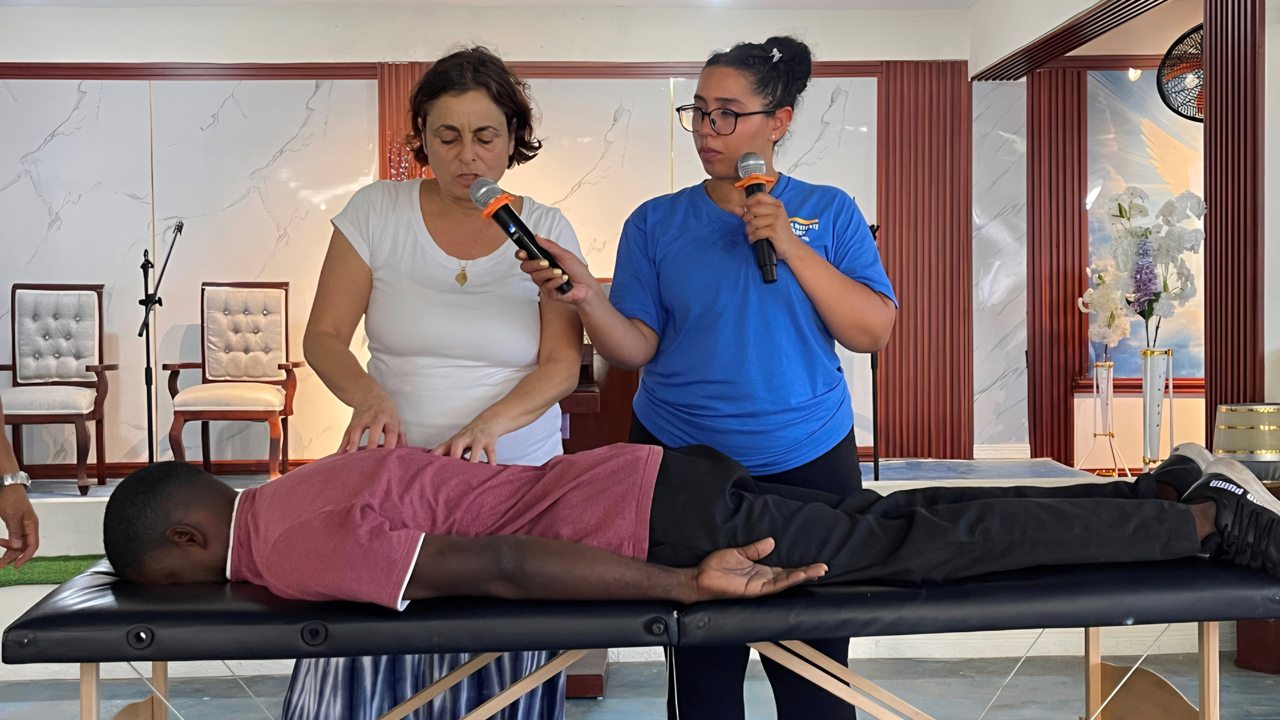
“The trip was an incredible opportunity to provide compassionate, patient-centered care while empowering local communities through education,” says Romao. “It was equally meaningful for our students, who gained invaluable clinical experience and a deeper understanding of global health and service.”
Abu-Sbaih gave the students professional instruction in osteopathic techniques that they quickly put into practice with patients on site. Students subsequently lent their expertise to local physicians, who were eager to learn new methods to care for those in their area.
Additionally, the NYITCOM travelers transformed local places of worship into temporary medical clinics, where patients received evaluations, counseling, and medications for commonly untreated health challenges like hypertension, malnutrition, and parasitic infections.
“Caring for patients at the clinic led me to realize the importance of treating the patient through a holistic lens and listening to one’s personal story during their time of need,” says Pantelias, who partnered with Daly to lead a hands-on first aid class for residents, teaching participants practical skills and giving them the confidence to respond to common medical emergencies.
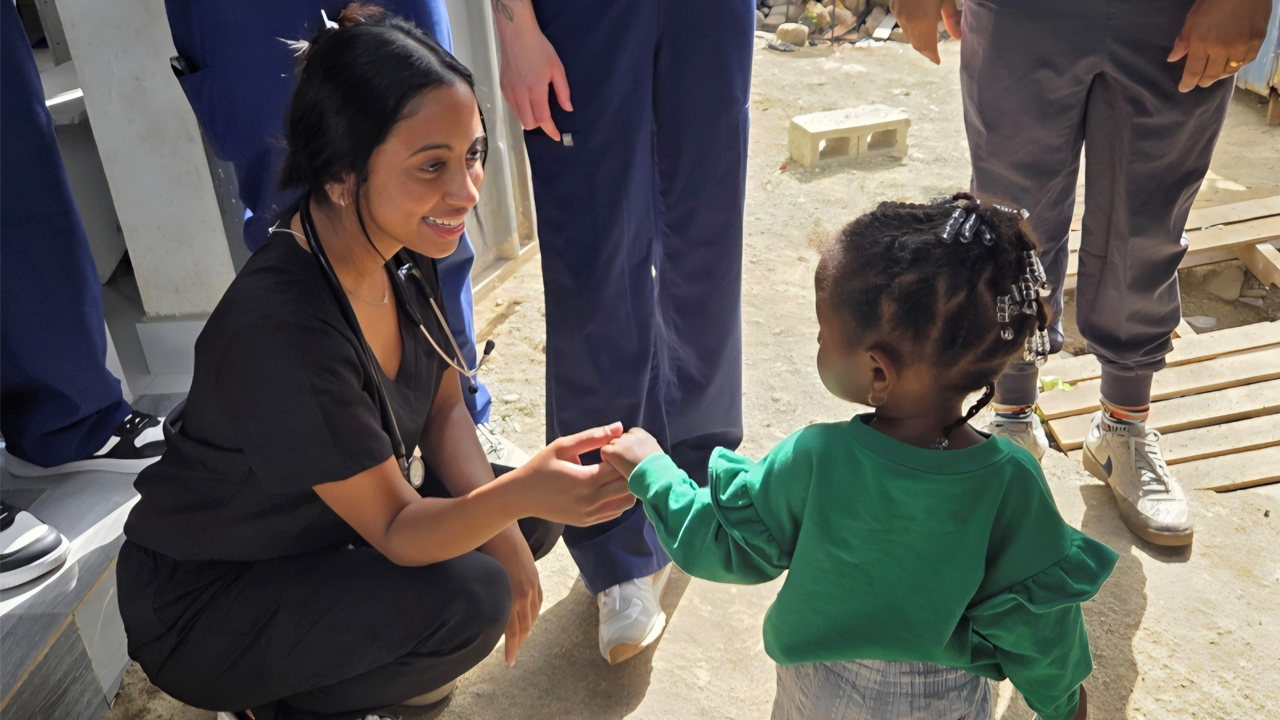
In another community, the group learned of the local population’s high rate of teenage pregnancy and provided education and counseling to young girls, encouraging them to remain in school and continue their education.
“With creativity and compassion, we can make healthcare accessible to those who need it most,” says Sanchez, who demonstrated osteopathic techniques to local physicians with Abu-Sbhai. “Compassionate care isn’t only about how we treat patients. It’s about creating opportunities for people to access care in the first place.”
Faculty and students also made home visits within a local Haitian community, where many individuals fear deportation if they seek medical services, thus limiting their access to healthcare. Along with prescribing medications, the group emphasized the importance of proper hydration, medication adherence, and preventive health education.
For Pantelias, traveling to patients’ houses on the trip’s final day and providing families in low-resourced communities with medical care was an experience he’ll never forget. “Visiting patients’ homes and listening to the stories they told about their way of life highlighted the importance of gratitude within the field of healthcare and of always accepting any help offered throughout one’s clinical or personal journey, no matter how small.”
Gucker adds that truly understanding health comes from witnessing firsthand different lived experiences and cultures. “Seeing what resources locals had to work with helped explain why certain medical conditions were more prevalent. I gained a new perspective that I wouldn’t have had otherwise.”
By Isabela Romao
More News
Alumnus Joins NYITCOM-Arkansas Faculty
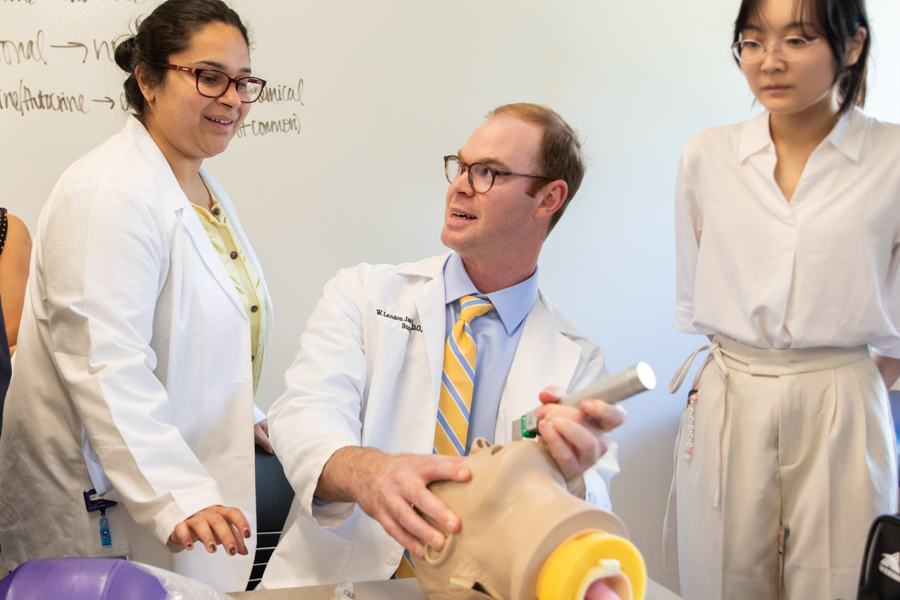
William “Landon” Jackson, (M.S. ’21, D.O. ’21) has returned to his alma mater to serve as an assistant professor in NYITCOM-Arkansas’ Department of Clinical Sciences.
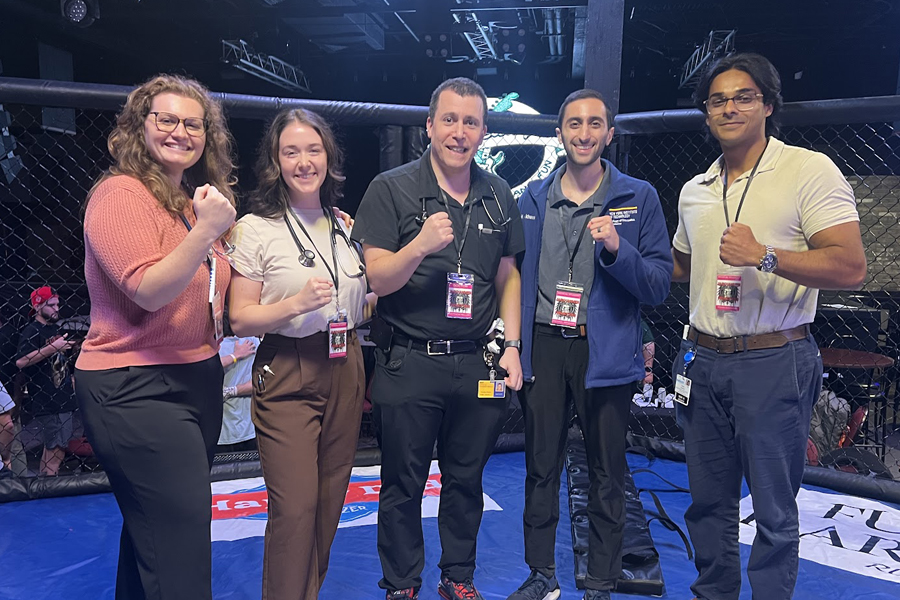
Students Step in to Help Save a Life
Students from the College of Osteopathic Medicine and the School of Health Professions provided life-saving medical care to a young mixed martial arts athlete.
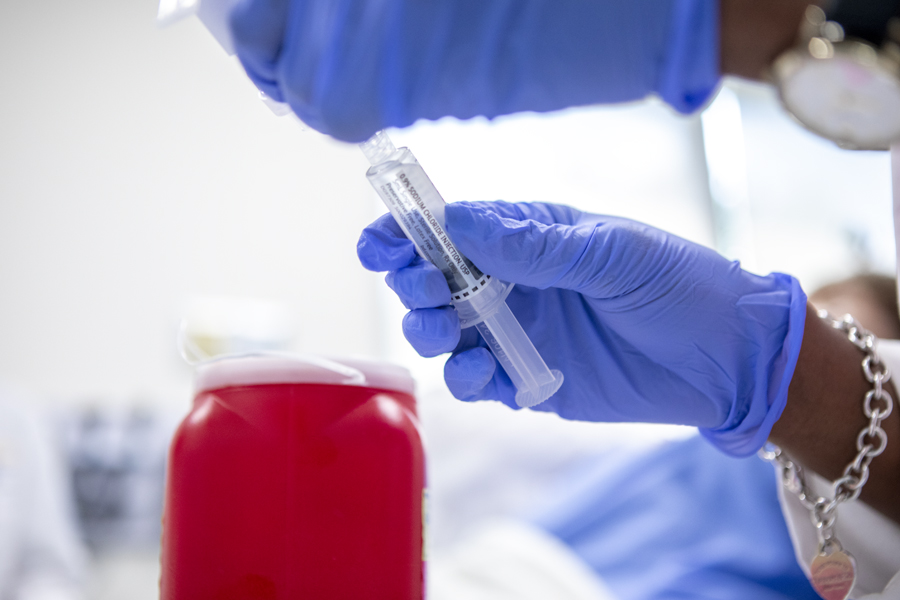
A Flu Season Primer
A family medicine physician shares insight to help inform the university community about the flu and the importance of the flu vaccine.
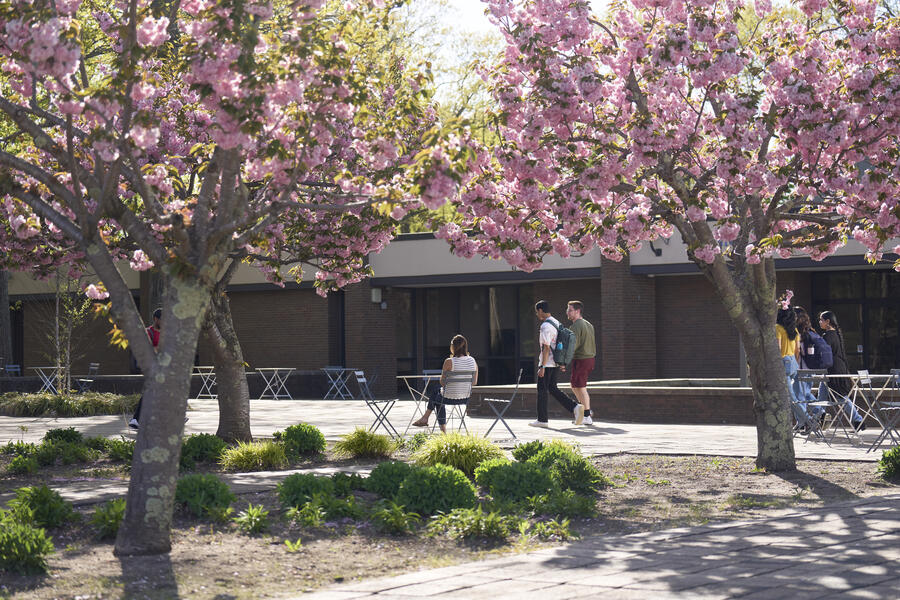
New York Tech To Be Ranked Among National Universities
For the 2027 U.S. News & World Report annual rankings, New York Tech will be included in a new ranking category—National Universities.
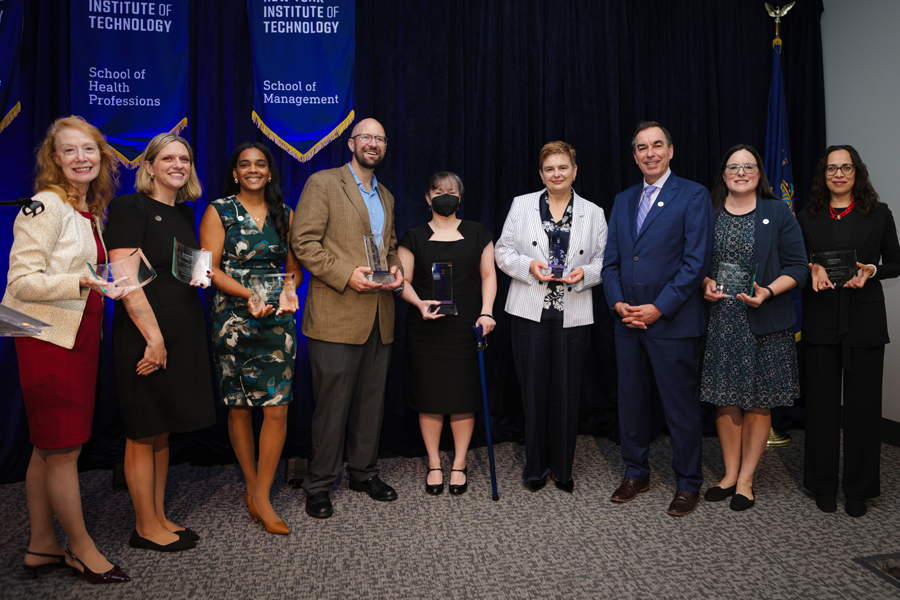
Convocation 2026: Success in a Time of Change
At the annual faculty and staff convocation, New York Tech President Jerry Balentine reflected on the accomplishments over the past year and presented his vision for the future.
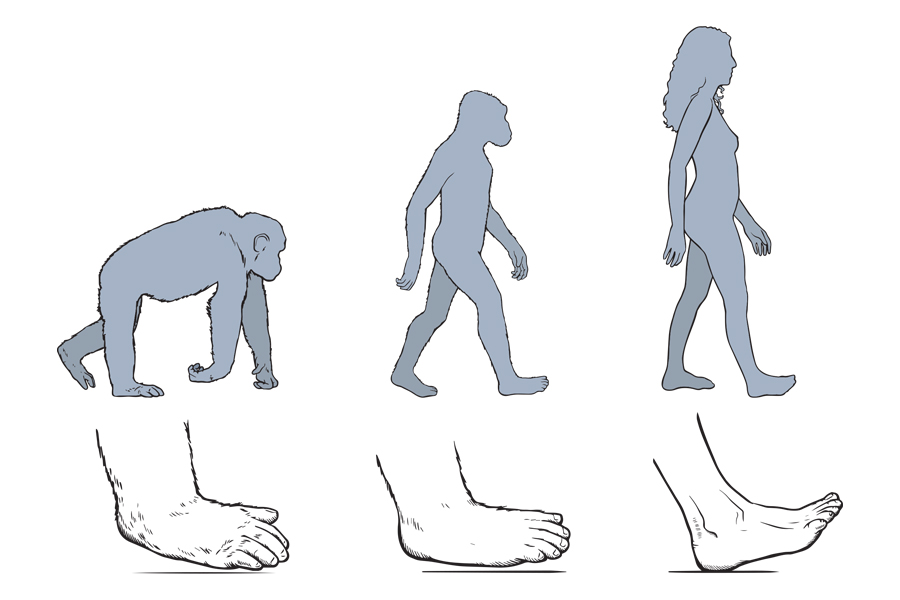
The Evolutionary Significance of Humans’ Unique Heel-Toe Walking Pattern
Associate Professor of Anatomy Nathan E. Thompson, Ph.D., contributes to research unveiling clues to the origin of humans’ stride pattern.