Driven by ‘Why’
Individuals with autism spectrum disorder (ASD) may find the unfamiliar, like new scents, to be disorienting and uncomfortable. In a recent study led by third-year medical student Kassandra Sturm, new findings could help uncover the neurological source affecting the sense of smell in ASD.
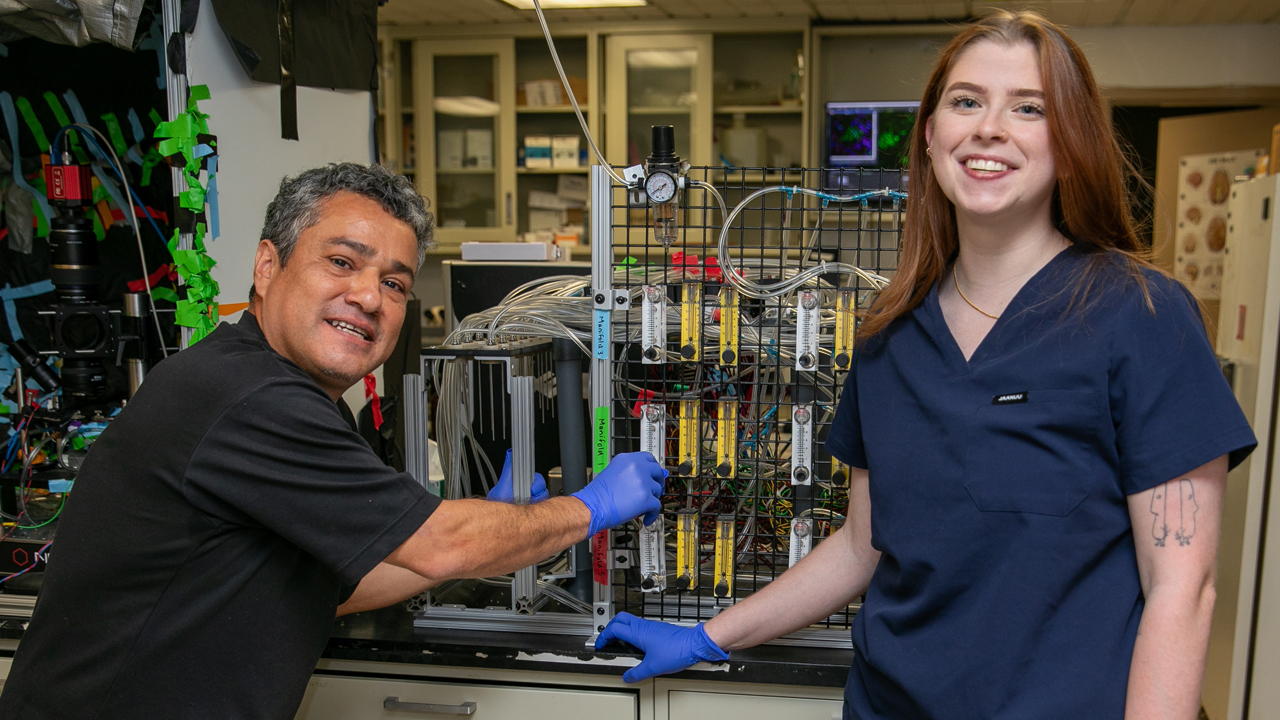
Growing up, Sturm’s parents challenged her to always ask “why” and think critically. This mindset drew her to study biology and neuroscience in college, fields she says are “full of unanswered questions.” As an undergraduate biology student at the University at Albany, she joined a student-run hotline program helping others in a direct, personal way. Her mantra to question things, coupled with exposure to others’ personal stories, led her to conclude that medicine is her “ideal intersection of a love of science and desire to connect with others. It is a field that allows for lifelong learning while making a tangible difference.”
At the College of Osteopathic Medicine, Sturm put her conclusion into practice and worked alongside her mentor, Associate Professor of Biomedical Sciences Gonzalo Otazu, Ph.D., in his lab to uncover a better understanding of sensory deficits in ASD, as well as possible targets of future therapeutics. Her work, published in the journal eNeuro, builds on Otazu’s previous research that discovered behavioral deficits in the ability to filter background odor and identify targeted scents.
While Otazu’s investigation left the source of these deficits unknown, in this latest paper, Sturm points to output circuits in the brain’s olfactory bulb as a potential culprit. In the olfactory bulb, scent signals are transmitted to other parts of the brain for further processing. The lab’s findings could lead to therapies targeting those circuits, potentially providing new treatments for sensory issues in ASD.
“A common approach to developing new therapeutics is to compare neural activity in mouse models of autism with that of neurotypical mice,” Sturm says. “In our study, we instead looked at neural activity within the same mouse model of autism—comparing times when the animals performed well on a task to times when their performance was poor. We found that reduced activity was linked to better performance, suggesting a potential target for interventions aimed at stabilizing neural responses in autism.”
Along with training the mice to perform the behavior used in the study, Sturm also developed the study’s procedural protocol. Simultaneously, she gained self-discovery as the lab work taught her “that things rarely go as planned and solutions often require persistence. Learning to navigate challenges and failures has strengthened my resilience and ability to approach problems in a methodical way,” she reflects.
Sturm is especially passionate about research to lessen challenges with novel stimuli, as individuals in her own family have navigated those struggles. As she continues studying the topic, she hopes to reduce the daily obstacles faced by the ASD population and envisions her career as a research physician, integrating clinical experiences from her patient care with her scientific studies. She says, “I aim to translate discoveries from the lab into interventions that improve patient outcomes and bridge the gap between scientific understanding and clinical impact.”
More News
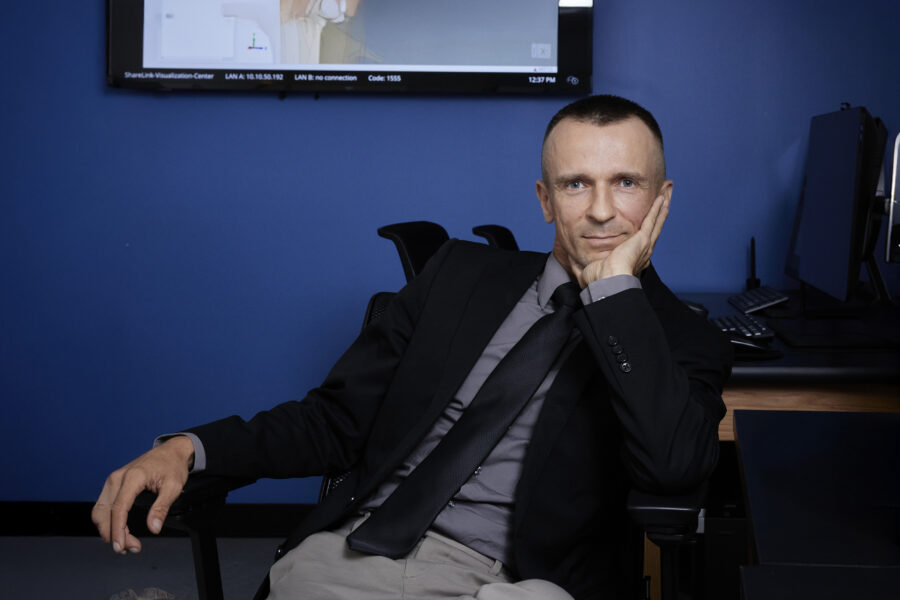
Not All AI is Built to Diagnose
A new study by researchers at the College of Osteopathic Medicine reveals how general-use AI platforms make serious mistakes when it comes to analyzing medical results.
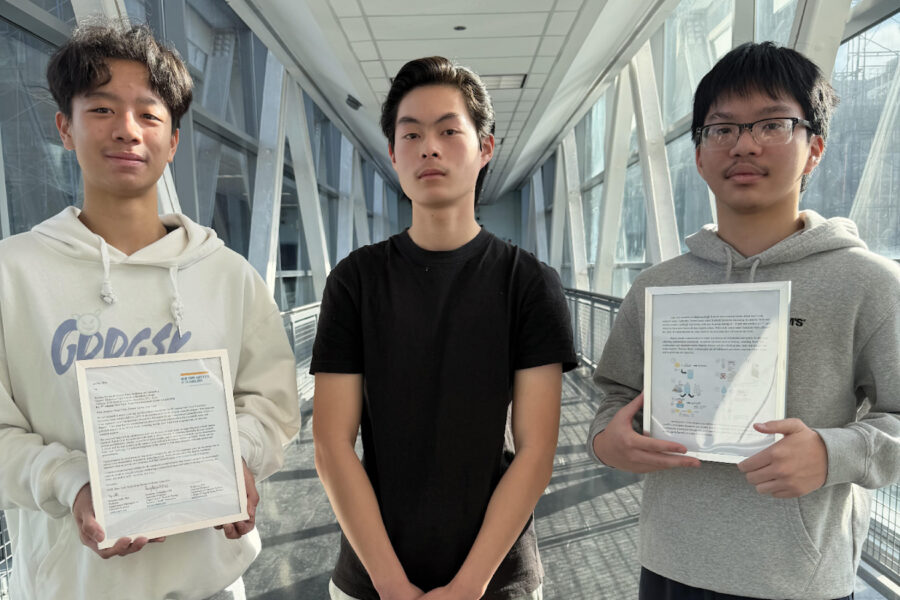
Promoting Early Engagement in Research
New York Tech recently completed the ninth year of its Mini-Research Grants Awards program to encourage high school students to pursue STEM fields.

Reversing Bone Loss After Spinal Cord Injury
People with spinal cord injury may lose up to 41 percent of their bone mass in the first year. A new study by the College of Arts and Sciences’ Hesham Tawfeek, MBBCh, seeks to repair this damage.
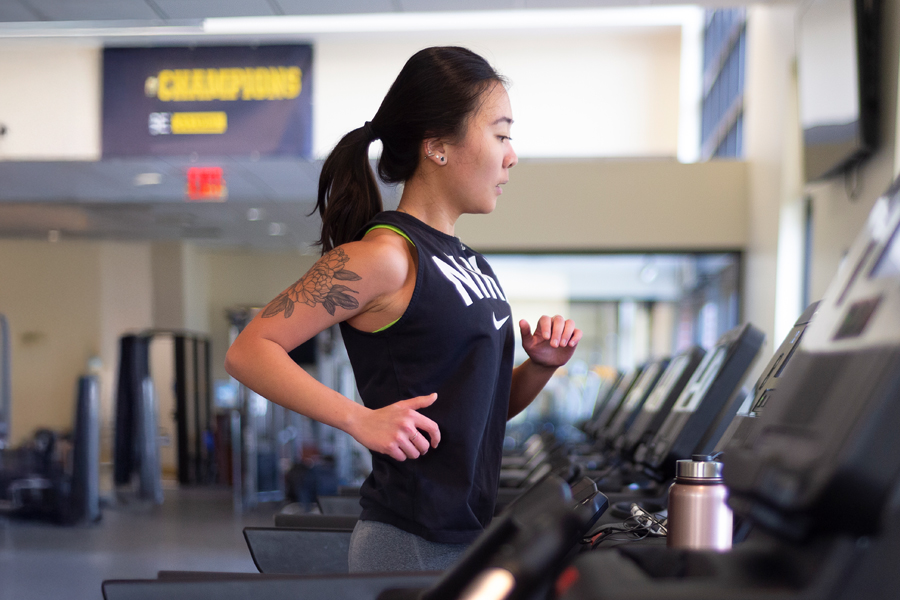
Uncovering the Body’s Fat-Burning Strategy—It’s Math-Driven!
A new study by an NYITCOM-Arkansas researcher finds that the body calculates which fat to burn, choosing those that produce the most usable energy while consuming the least oxygen.
When Rehab Meets Robotics
A study co-authored by John P. Handrakis, D.P.T., Ed.D., and graduates of the physical therapy program finds that a wearable robotic device could help stroke survivors get back on their feet.
Realistic 3-D Colon Model Shifts Paradigm for Drug Development
Assistant Professor Steven Zanganeh, Ph.D., is striving to further improve the model he developed to open the door to drug development for cancer and other conditions.