Bird Flu Explained
In light of the United States Food and Drug Administration’s announcement that traces of bird flu have been discovered in one in five samples of pasteurized cow’s milk, board-certified infectious disease physician Carl Abraham, M.D., assistant professor at the College of Osteopathic Medicine (NYITCOM), shares insights on what the general public should know.
Abraham, an NYITCOM-Arkansas faculty member and a practicing physician, explains how the virus is transmitted and whether Americans should be concerned about the dairy products in their homes.
What is bird flu?
Bird flu, or avian influenza, infects more than 100 species of wild birds. It is rare for these strains of influenza to infect humans, although there are increasing reports of bird flu cases in other mammals such as tigers, polar bears, elephants, seals, mink, and pet dogs and cats. In birds, it causes a respiratory illness that is categorized as either highly pathogenic or low pathogenic. Pathogenicity relates to how sick the infected animal is, and highly pathogenic avian influenza has the ability to spread beyond the respiratory tract to infect multiple organs, often resulting in death in birds within 48 hours.
How does it spread?
Birds, including wild birds and farmed and industrial poultry, spread avian influenza in nasal mucus, saliva, and feces. Avian influenza is very contagious in birds, and wild birds can infect domesticated birds and vice versa. Migratory birds distribute the infections globally, making prevention extremely difficult. Infections spread rapidly in dense populations, for example, in industrial poultry growers.
In 2022, an outbreak in the United States killed more than 50 million chickens, not including many more millions that were killed (culled) by farmers to prevent spread. There have been two human avian influenza documented in the United States. Both cases had extensive exposure to infected mammals, and the spread in the mammals listed above has been occurring more frequently and widespread over the last several years. Spread to mammals other than humans appears to occur after eating infected birds.
Why is the virus now being discovered in cow’s milk?
The genes of influenza viruses frequently mix in each animal that is infected with different strains of the virus. This gene mixing, or recombination, can result in influenza viruses that are able to act in new ways, for example, infect new species, cause new symptoms, and worsen the severity of illness. Presumably, a recent recombination event has made an avian influenza transmissible to and between domesticated cattle.
Since this is a highly pathogenic strain (H5N1), it is not surprising that the virus is spreading beyond the respiratory tract into mammary glands and, thus, cow’s milk. Since pasteurization destroys influenza viruses, it’s also not surprising to find fragments of the virus in milk, but these fragments contain too little of the virus to cause illness or spread infection. H5N1 influenza is not the only virus that can have fragments present in cow’s milk, and that is why pasteurization is so important.
What might this discovery tell us about disease transmission?
Influenza has a complicated replication cycle within multiple species that frequently causes recombination events. Even those influenza viruses that normally infect humans (not avian influenzas) begin their replication cycles in birds and pigs. The new abilities gained by viruses after recombination events can contribute to the spread among new species and this is apparently what has occurred this year in domesticated cattle. Not only has H5N1 gained the ability to infect and spread beyond the respiratory tract in cattle, but it has also gained the ability to spread among cattle to infect the herd.
The outbreak is spreading rapidly in the United States. This is very worrisome. The more cattle that are infected, the more recombination events occur. If the right recombination event, or series of recombination events, increases the severity of illness or death rate in cattle, the supply of dairy products and beef would likely be affected.
Should Americans avoid consuming milk or dairy products?
So far, there is no evidence to suggest that pasteurized cow’s milk or dairy products are unsafe for humans. Certainly, everyone should avoid unpasteurized milk or dairy products. This is especially true for newborns, those with suppressed immune systems, and those who are pregnant.
There is a lot we don’t know, and parents should stay alert for notifications from the Centers for Disease Control and Prevention (CDC), as recommendations may change based on newly available information. Dogs and cats should not eat wild birds, especially waterfowl, although the risk to hunting dogs appears low. A frightening scenario would be a recombination event that allows H5N1 to cause severe illness and spread rapidly in people, which would have the potential to cause a pandemic. Thankfully, this has not occurred.
This interview has been edited.
More News

NYITCOM-Arkansas Receives $1.5 Million Grant for Maternal Health Initiative
NYITCOM-Arkansas will use the grant to extend its clinical services focused on rural maternal healthcare access.
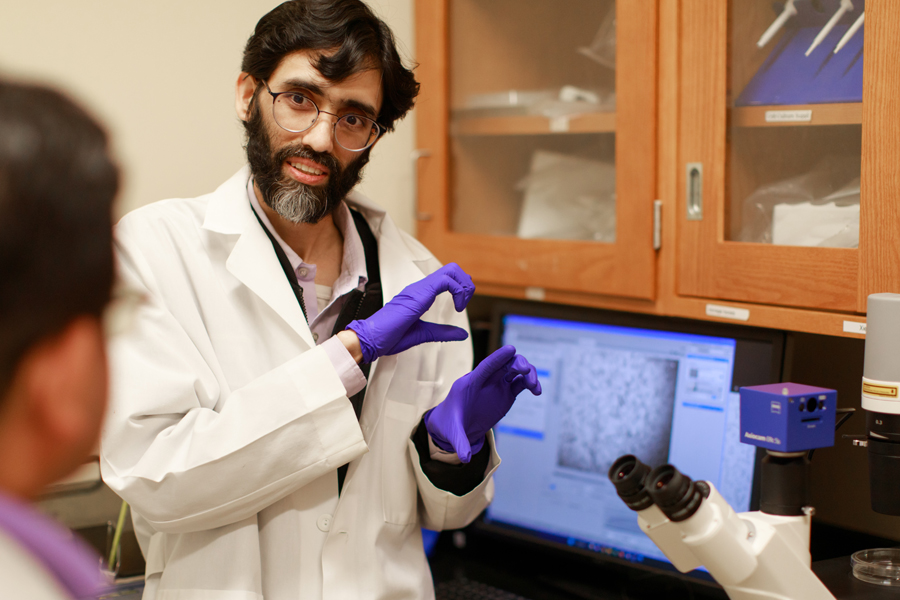
NYITCOM-Arkansas’ Rajagopalan Receives $573K NIH Grant for Cardiovascular Disease Research
The funding will further Associate Professor Viswanathan Rajagopalan’s research regarding the impact thyroid dysfunction has on cardiovascular disease.

NYITCOM Class of 2030 Receives White Coats
The College of Osteopathic Medicine (NYITCOM) welcomed the Class of 2030 with White Coat ceremonies on Long Island and in Jonesboro.

Leading the Way
NYITCOM-Arkansas marks 10 years of commitment to medicine as campus leaders pave the road to a healthier future.

Hooding 2026: From Students to Doctors
NYITCOM graduates were welcomed into the medical profession at Hooding Ceremonies on Long Island and in Arkansas.

Match Day 2026: The Road to Residency
NYITCOM’s Class of 2026 joined thousands of soon-to-be physicians across the country in discovering where they will complete their residency training after graduation.