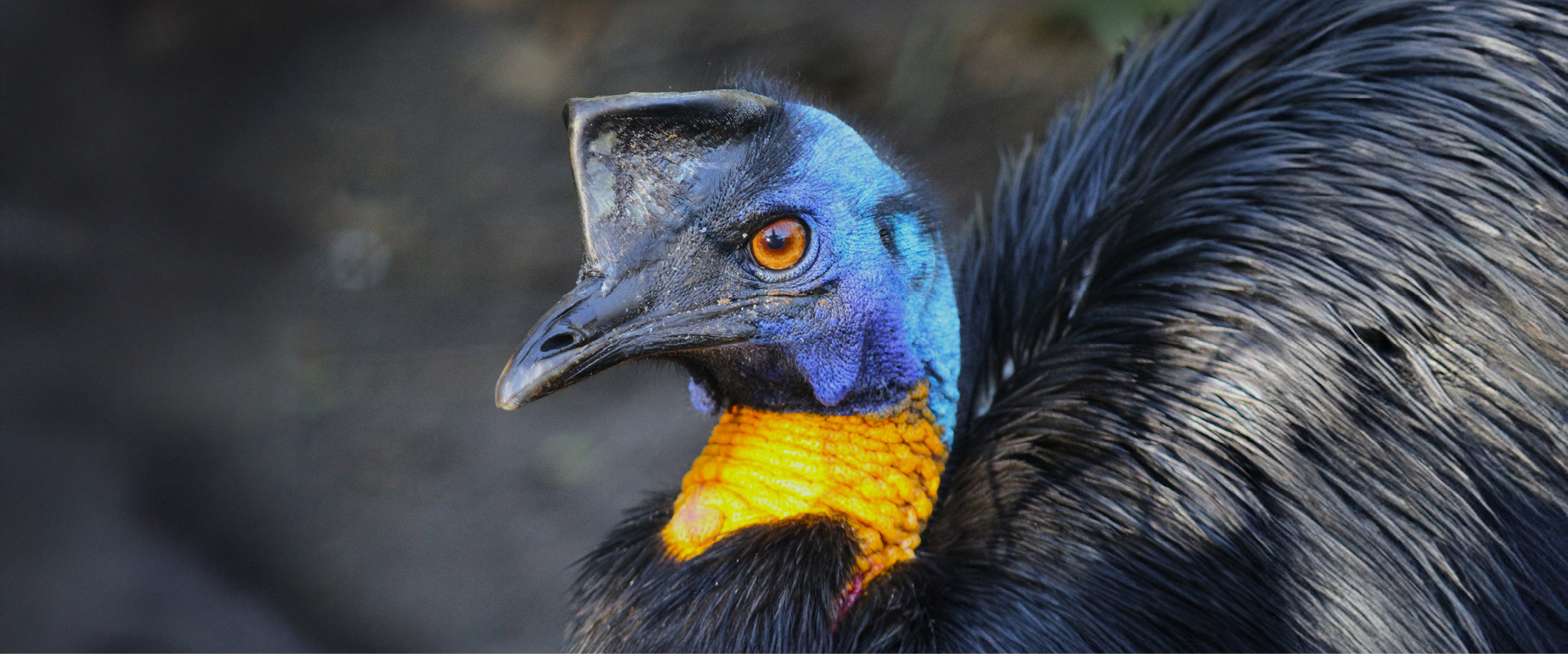
The Cassowary’s Impact on the Rainforest
An anatomy professor at the College of Osteopathic Medicine at Arkansas State University (NYITCOM-Arkansas) recently published a study that has the potential to provide significant insight into a bird species that plays an impactful role in rainforest conservation.
Todd Green, Ph.D., an assistant professor of biomedical sciences at NYITCOM, is one of the world’s most published experts on cassowaries, large, flightless birds that are anatomically similar to ostriches and emus.
Cassowaries are considered one of the closest-living relatives of prehistoric dinosaurs, making them an ideal subject for paleontologists like Green, who has published six papers involving the study of cassowary anatomy. His most recent work, which was published in Ornithology, examines the anatomy of the casque the birds possess on their heads, which distinguishes the three cassowary species.
“We believe cranial anatomy plays a key role in the behavior of these birds,” Green says. “What is this strange thing on their head? What’s it used for? Answering these questions provides stepping stones to decipher the function of the casque and the role it plays in these birds’ behavior.”
Cassowaries grow to six feet tall and live in the rainforests of Australia and New Guinea. They are mainly solitary animals that have large territories where they eat a number of tropical fruits. The birds naturally aid the dissemination of many rainforest plants as they roam their habitat.
“They swallow their food whole, and when they defecate, the intact fruit seeds are distributed in a built-in pile of fertilizer,” Green says. “We know cassowaries to be the primary seed disperser in that part of the world. If cassowaries were to become extinct, a lot of the rainforests they inhabit may disappear because of the relationship they have in helping to germinate and disperse these seeds. That’s why it’s so important that we learn more about them so we can potentially help them thrive.”
Green’s previous studies on cassowaries have been published in The Anatomical Record, the Journal of Anatomy, the Journal of Zoo and Wildlife Medicine, and the Zoological Journal of the Linnean Society. He’s optimistic that his work will not only lead to a better understanding of cassowary anatomy and behavior but will also spark an interest in the relatively obscure birds.
“Most people don’t even know they exist,” Green says. “Because so few people are familiar with cassowaries, we hope the beautiful illustrations in this paper may help people become interested in these animals and become more involved in their conservation.”
Green, a self-described “dinosaur kid,” developed a keen fascination for cassowaries at a very young age when he first read about them in an issue of Zoobooks. While working on his undergraduate degree at Colorado State University, he became involved in emu research and eventually earned an opportunity to work with cassowaries at a Florida ranch that raised the birds in captivity.
During that time, Green was connected with a paleontologist at Oklahoma State University Center for Health Sciences (OSUCHS) who also had an interest in cranial anatomy. Green was admitted to Oklahoma State’s Ph.D. program, where he continued to study cassowaries but also spent time teaching anatomy to medical students at OSU College of Osteopathic Medicine.
Green had long been interested in a career as a paleontologist, with his particular draw to bird species that are closely connected to many dinosaur species. During his time at OSUCHS, he learned that many paleontologists split their time between research and teaching anatomy at medical and veterinary schools, which proved to be a great fit for him.
“It can be difficult to make a living as a paleontologist, but we can use our expertise in comparative anatomy to teach future doctors like I do now,” Green says. “It’s very fulfilling to help people train to become future physicians while pursuing my passion for research. It’s the perfect fit.”
By Casey Pearce
More News

New York Tech To Be Ranked Among National Universities
For the 2027 U.S. News & World Report annual rankings, New York Tech will be included in a new ranking category—National Universities.

New York Tech Commemorates 25th Anniversary of 9/11
The New York Tech community commemorates the 25th anniversary of September 11 through opportunities to remember those we lost and honor the first responders and members of our military.
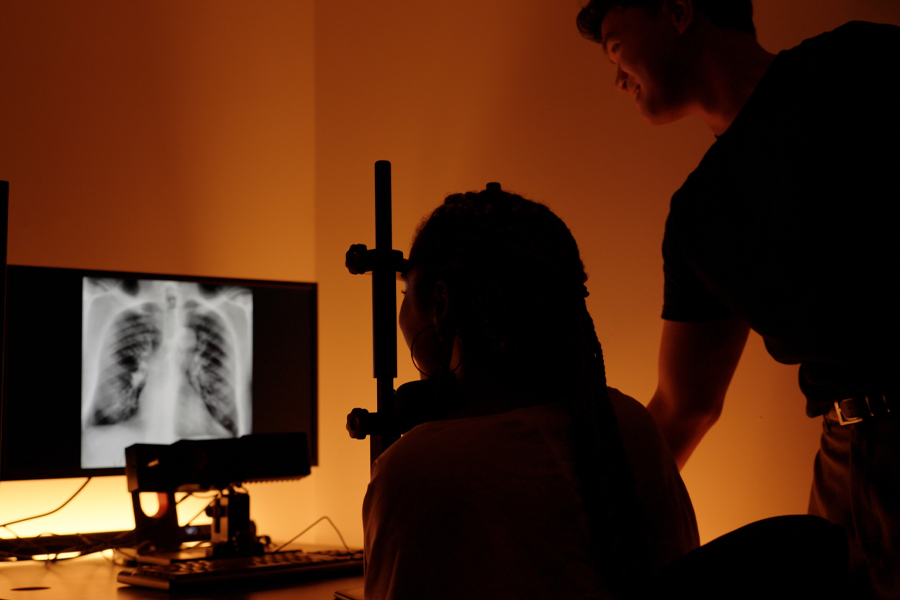
Exploring How AI Tools Can Improve Lung Cancer Detection
Research by Assistant Professor Robert Alexander, Ph.D., and student Talia Lilikakis assesses how AI tools can most effectively alert radiologists of the possible presence of a nodule.
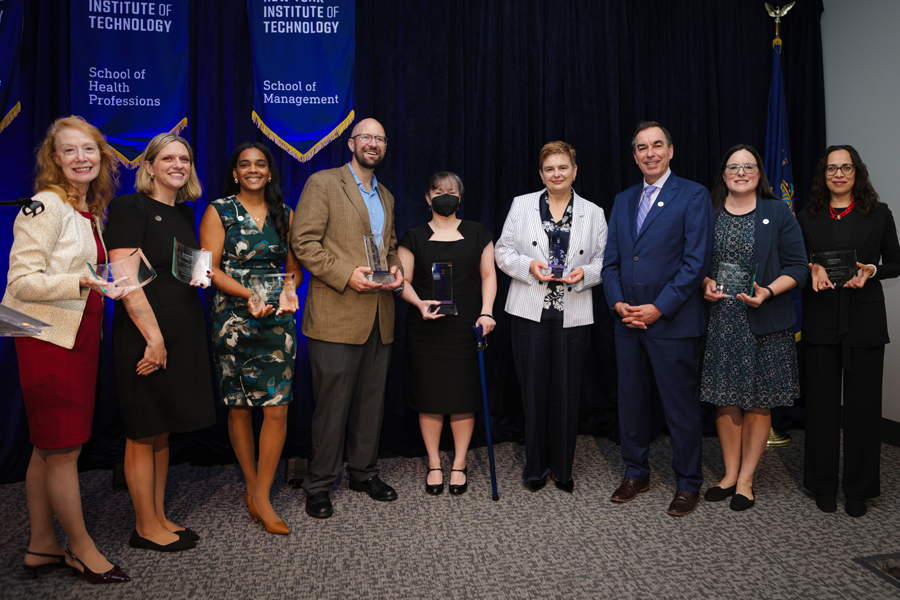
Convocation 2026: Success in a Time of Change
At the annual faculty and staff convocation, New York Tech President Jerry Balentine reflected on the accomplishments over the past year and presented his vision for the future.
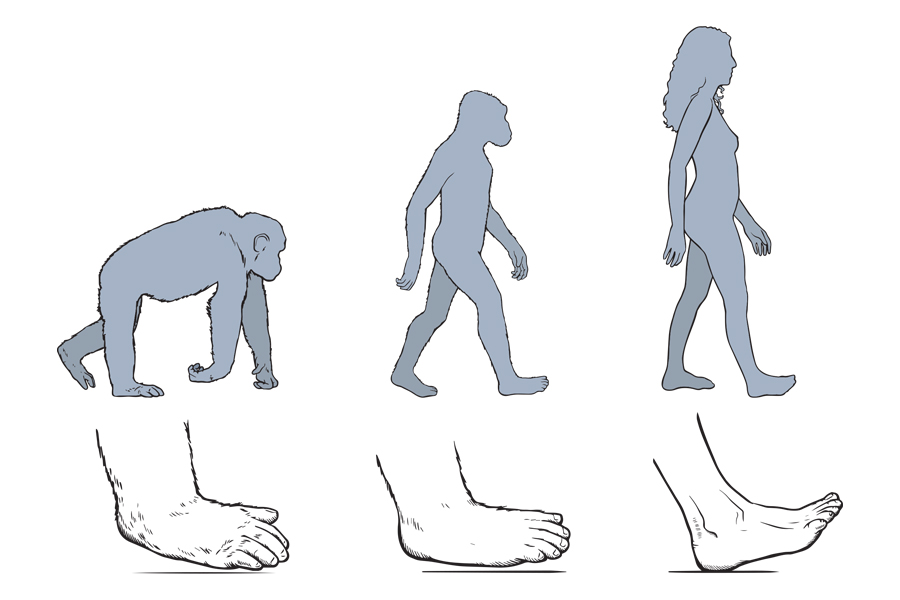
The Evolutionary Significance of Humans’ Unique Heel-Toe Walking Pattern
Associate Professor of Anatomy Nathan E. Thompson, Ph.D., contributes to research unveiling clues to the origin of humans’ stride pattern.
Robust Research
New York Tech’s commitment to research paves the way for important and groundbreaking work. Meet three Ph.D. students whose work may improve disaster response, recovery after muscle and bone injuries, and anticancer therapies.