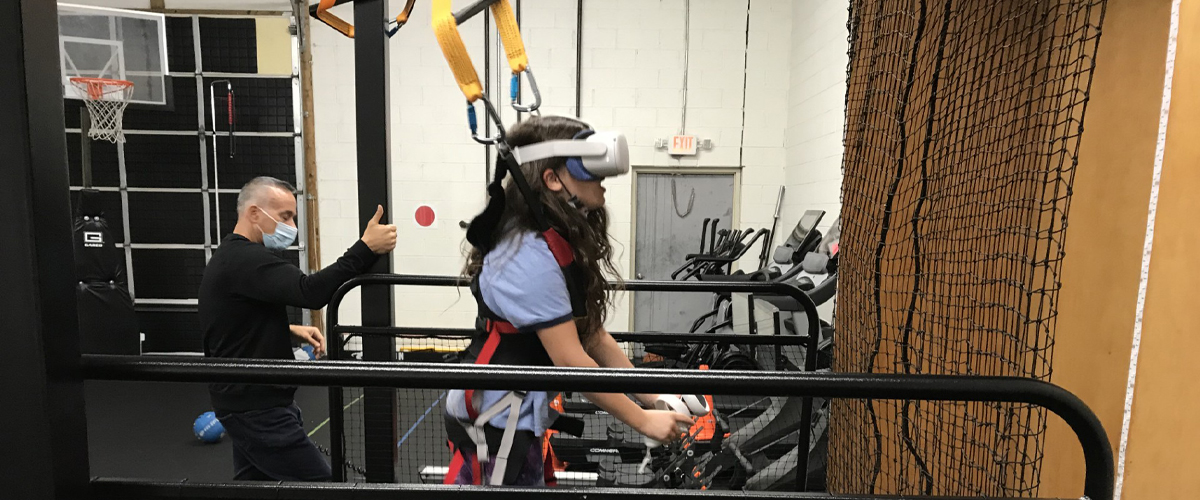
Study: VR Helps Children With Autism Participate in Exercise and Sports
An innovative new study led by Associate Professor of Occupational Therapy Alex Lopez, J.D., OT/L, FAOTA, finds that virtual reality (VR) can motivate children and adolescents with autism spectrum disorder (ASD) to participate in more physical activity and exercise.
Due to delays in development, poor motor coordination, hypersensitivities, and difficulties with motivation and focus, children and adolescents with ASD may be uninspired and discouraged from partaking in physical activity, including sports. Unfortunately, this can lead to further impairments in health and social skills.
That’s where Lopez and his research team come in, including College of Osteopathic Medicine (NYITCOM) student Noah D. Chernik, alumnus Santiago Gonzalez (O.T.D. ’24), and NYITCOM Associate Professor and neuroscientist Randy Stout, Ph.D. Their new study, published on November 19 in the journal Frontiers in Virtual Reality, successfully demonstrates that “exergaming,” or using technology—like VR—to turn physical activities into a game, could help more children with ASD come off the sidelines and stay active.
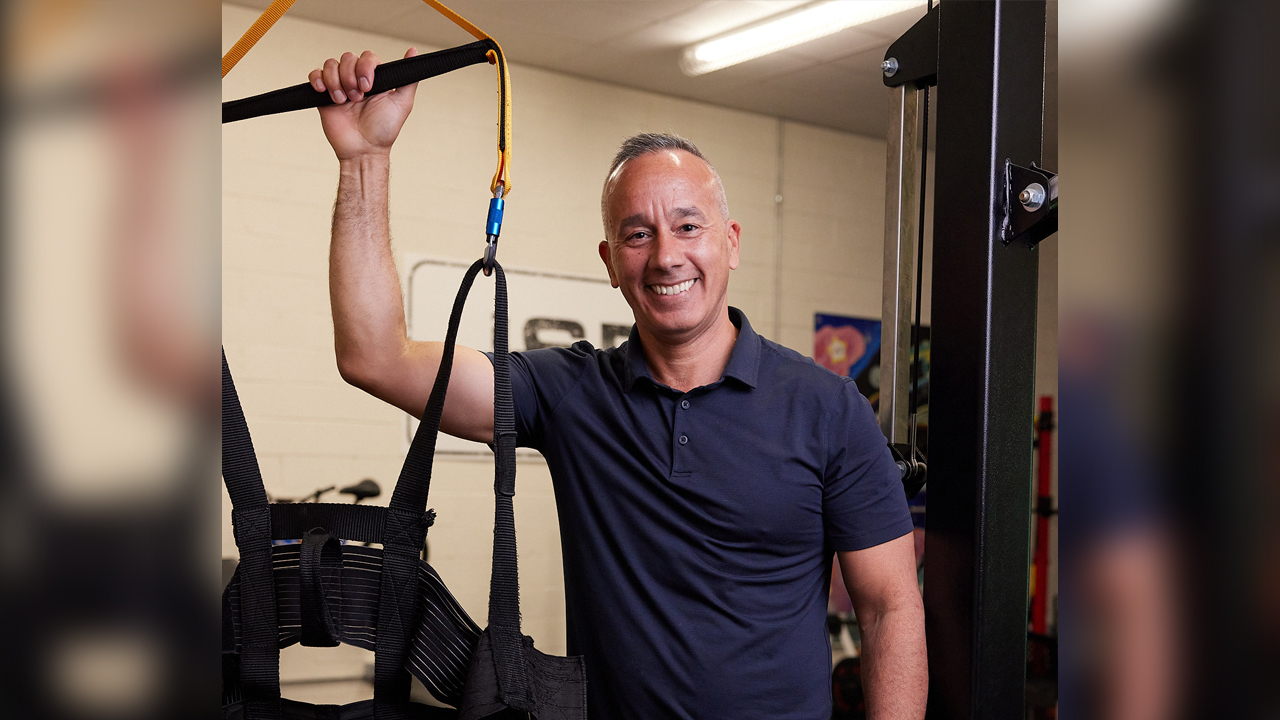
The research took place at Inclusive Sports and Fitness (ISF), a nonprofit gym in Holbrook, N.Y., founded by Lopez, which helps children with developmental and intellectual disorders through occupational therapies and targeted exercise interventions. Here, researchers collected data and examined how exercising with VR affects actual energy expenditure and perceived exertion during exercise in children with ASD.
Study participants included 11 children and adolescents ages 8 to 19 diagnosed with Level One ASD. Each participant completed structured exercise programs, including two treadmill walking trials: one with a VR headset (playing the immersive game Beat Saber) and one without VR. Researchers then assessed actual exertion using metrics like oxygen consumption, metabolic rate, and other factors, versus perceived exertion, a subjective rating of the level of tiredness at multiple times during exercise.
When the children and adolescents exercised with VR, their workouts were significantly more energetically costly (about 9 to 12 percent higher across metrics) than exercise without VR. However, despite their actual exertion being higher with VR, the participants did not perceive the exercise as more demanding. In fact, they showed a greater tolerance for physical activity and were able to complete the exercises at higher intensities without feeling more fatigued. The researchers note this may be explained by multiple factors, including VR acting as a distractor, the novelty of exercising with VR, or the effects of dual-task cognitive and motor activity. Nonetheless, their findings reveal the powerful benefits of incorporating VR in exercise and therapy programs for children with ASD.
“Our research highlights the power of immersive virtual reality as an effective tool for engaging neurodiverse athletes in meaningful exercise, fitness training, and sports participation,” says Lopez. “By integrating VR into performance-based interventions, we’ve demonstrated how technology can amplify motivation, support sensory needs, and create more accessible pathways to movement and wellness.”
Lopez and his co-authors believe that additional studies with larger populations will expand on these findings and further demonstrate how VR can provide occupational therapists and other healthcare professionals with a valuable tool for assisting neurodiverse populations.
“Virtual reality is an underappreciated tool for research on human behavior and motor control. New York Tech students, alumni, and faculty are building upon our recently published research in Frontiers by developing new virtual reality applications, purpose-built for exergaming research at Inclusive Sports and Fitness. There is a great deal of exciting research in this area coming soon from New York Tech,” says Stout, who added that these continuing studies with VR, exercise, and autism are supported by the Hyman Family Foundation and other donors.
More News
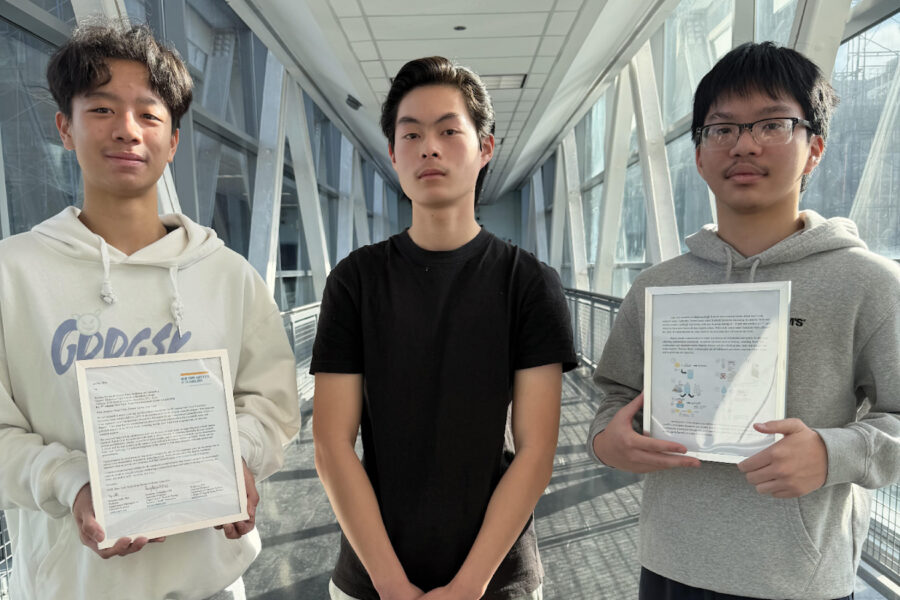
Promoting Early Engagement in Research
New York Tech recently completed the ninth year of its Mini-Research Grants Awards program to encourage high school students to pursue STEM fields.

Reversing Bone Loss After Spinal Cord Injury
People with spinal cord injury may lose up to 41 percent of their bone mass in the first year. A new study by the College of Arts and Sciences’ Hesham Tawfeek, MBBCh, seeks to repair this damage.
Uncovering the Body’s Fat-Burning Strategy—It’s Math-Driven!
A new study by an NYITCOM-Arkansas researcher finds that the body calculates which fat to burn, choosing those that produce the most usable energy while consuming the least oxygen.
When Rehab Meets Robotics
A study co-authored by John P. Handrakis, D.P.T., Ed.D., and graduates of the physical therapy program finds that a wearable robotic device could help stroke survivors get back on their feet.

Realistic 3-D Colon Model Shifts Paradigm for Drug Development
Assistant Professor Steven Zanganeh, Ph.D., is striving to further improve the model he developed to open the door to drug development for cancer and other conditions.

Beyond the Human Machine
Biology student Justin Tin seeks to understand what’s running “under the hood” in the human body so he can someday help prevent patients from suffering physiological changes.