Students Propose Solutions to Commuting Challenges
Last fall, two sections of Data 101: Making Sense of a Data-Oriented Society teamed up with nonprofit CommuterLink, supporting the New York State Department of Transportation’s Statewide Mobility Services (NYSDOT SMS), to identify possible solutions to common challenges that commuting students face.
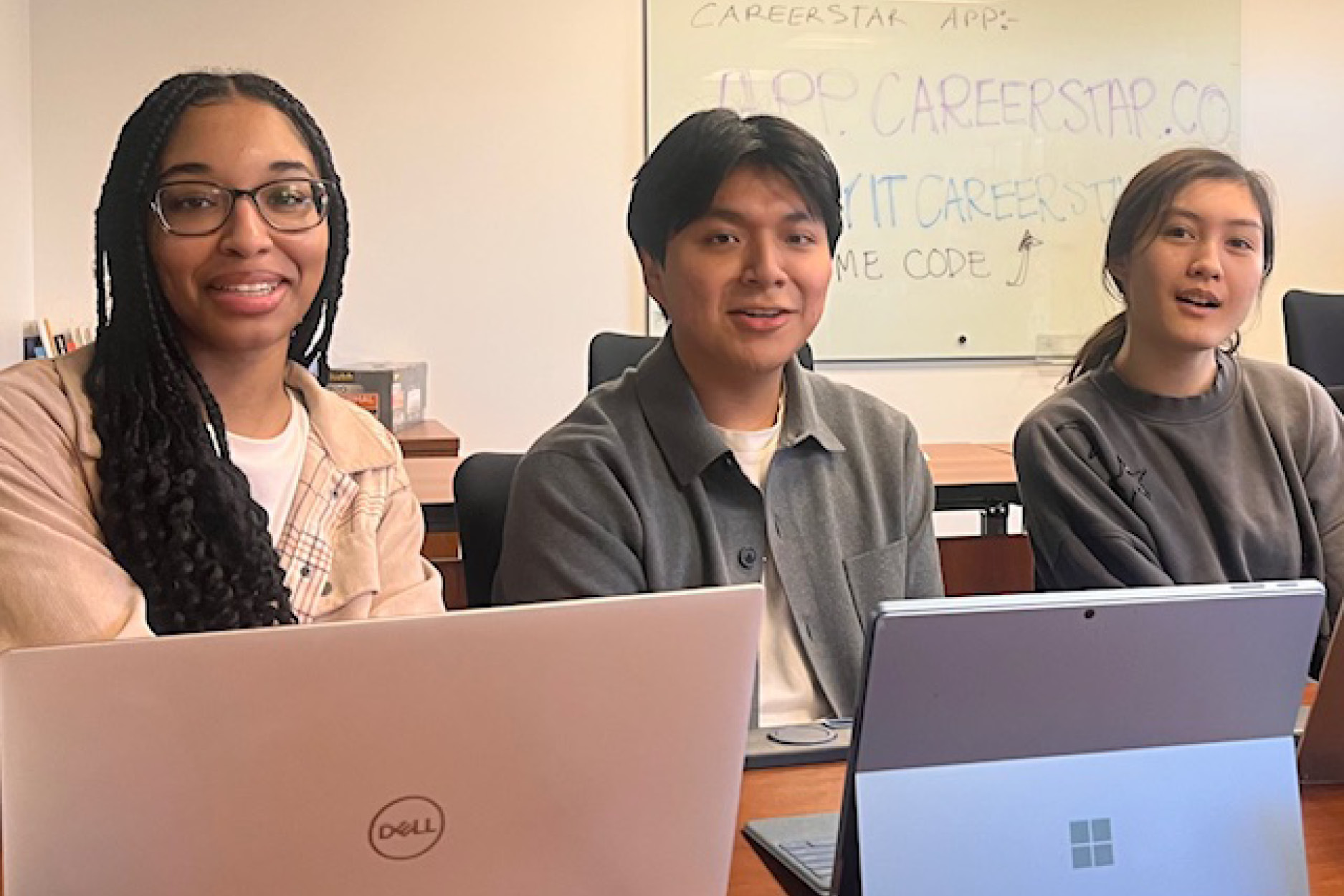
This spring, Office of Career Success and Experiential Education’s Senior Director Amy Bravo, M.A., led her Data 101 cohort on the New York City campus in acting on those recommendations.
The class was divided into five groups to find ways of enhancing their peers’ transportation experiences, including amplifying current New York Tech transportation resources (Team 1); securing transit subsidies to make commuting more affordable (Team 2); enhancing micro-transit (bikes, scooters, etc.) access on both New York campuses (Team 3); enhancing the Long Island campus shuttle services (Team 4); and increasing carpooling on the Long Island campus (Team 5).
Creating Means for Change
As they tackled their assigned tasks, Team 2 secured 127 student signatures supporting Long Island Rail Road (LIRR) fare reduction for New York Tech students. Through a LinkedIn connection, Bravo and team member Latoya Deleon met with Metropolitan Transportation Authority LIRR Chief of Staff Hector Garcia, Jr. to discuss the best ways to advocate for change. On April 30, the team logged into Zoom and presented their petition to the MTA board.
“I have value as a student and can be a voice for change,” says Deleon, an interior design major. “For change to happen, it isn’t enough to say how it’s affecting me. I also need to say how this change will affect the next person.”
While there was no indication from the board that any immediate action would take place, the students committed to attend monthly board meetings to support their case, gain more petition signatures, expand the petition to nearby universities whose students desire similar outcomes, and encourage New York State Senator Chuck Schumer to revisit proposed legislation from 2015 that would help provide discounted transit fares for college students.
To provide the university community with streamlined access to information, two students from Team 1, Aleeza Ejaz and Maria Krawiec, worked with New York Tech’s Academic Technology Services (ATS) to promote commuter resources, including creating a course inside the Canvas learning management system, which serves as a comprehensive hub for transportation, sustainability, and campus resources. Impressed with the students’ capabilities in learning and developing the Canvas course, Jennifer Lawlor, ATS manager of online and instructional technologies, offered Ejaz and Krawiec summer internships, which they have accepted.
“Creating the Canvas course was interesting because of the impact I knew it would eventually make on the New York Tech community,” says Ejaz, a computer science student. Architectural technology student Krawiec adds, “I can see myself continuing to work on further improving student resources.” Among the other teams’ activities, students explored the concept of smart transportation, identified both internal and external stakeholders, and developed solutions designed to benefit not only their peers but also the broader community.
Creating Means for Change
Wrapping up their Data 101 journey on May 15, the five teams presented their work to NYSDOT SMS representative Jennifer Covello (B.S. ’97) ofCommuterLink, as well as Director of Experiential Education Adrienne McNally, M.S., who coordinated the semester-long project with NYSDOT SMS.
“I’m so grateful to have had a role in helping students grow in both their skills and their understanding of community challenges and how they can drive change,” Covello says. “It’s wonderful to see the positive impacts of this service-learning project on students.”
The experiential project with NYSDOT SMS was a service-learning project designed to have students engaged in community service to meet classroom learning objectives and societal concerns. Service-learning helps students better understand the community and its needs as they practice being civically and politically engaged, refine their professional skills, secure résumé-worthy experience, and gain confidence. Data 101, a mandatory class for first-year New York Tech students, teaches basic statistical concepts, including how to identify reliable data and to think critically about how to extract meaning from data. Students also learn about various biases, including social biases, how they affect data gathering and analysis, and how to address these biases.
More News
Intern Insight: Mansi Santosh Tikam
M.B.A. student Mansi Santosh Tikam spent her summer interning with MetroPlusHealth, where she learned what it means to be a marketing professional.
Officers Cook at 12th Annual Cast Iron Chef
This year’s Cast Iron Chef cooking competition welcomed teams of local law enforcement officers for an evening of culinary fun.
The Domino Effect
New York Tech’s Research Experiences for Undergraduates program has spent more than a decade turning summer research opportunities into lasting careers, helping build the university’s research reputation along the way.
International Collaboration: School of Architecture and Design and IUAV
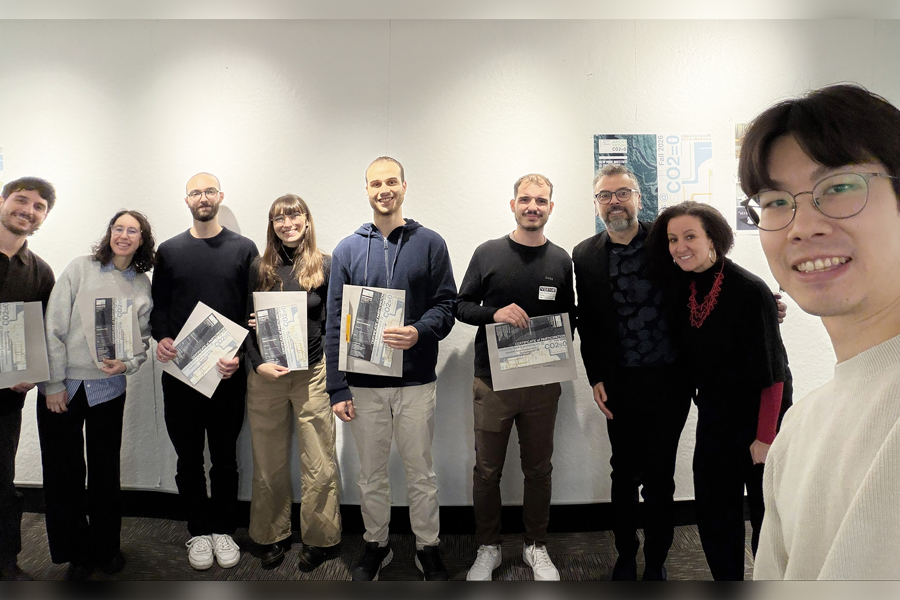
Graduate architecture students from Università Iuav di Venezia (IUAV) in Venice participated in a week-long atelier on the New York City campus, while School of Architecture and Design students traveled to Venice for a 17-day workshop.
Alumnus Joins NYITCOM-Arkansas Faculty
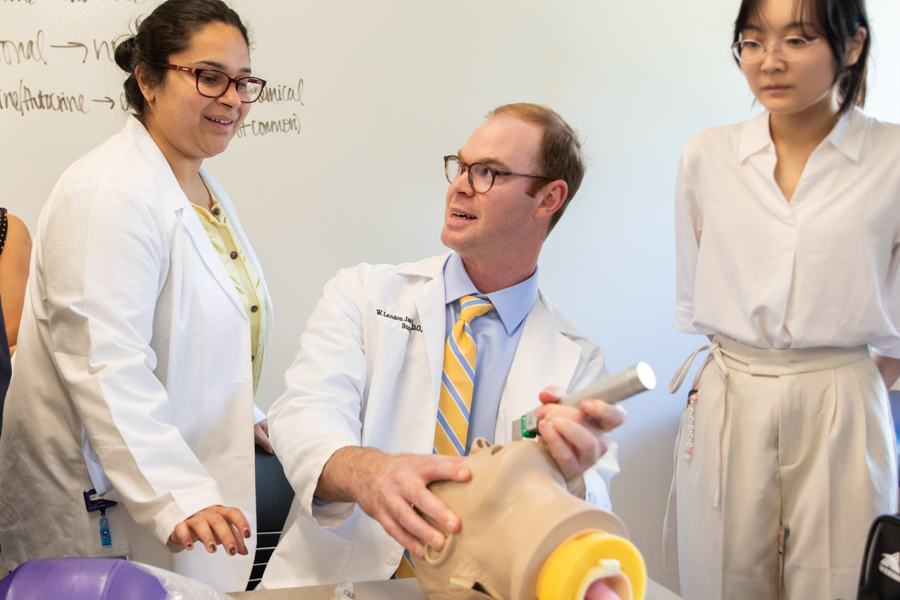
William “Landon” Jackson, (M.S. ’21, D.O. ’21) has returned to his alma mater to serve as an assistant professor in NYITCOM-Arkansas’ Department of Clinical Sciences.

My Co-op Gig: Asghar Kazmi
Computer science student Asghar Kazmi worked for five months at GE Appliances—an experience he says aligned perfectly with his career goals.