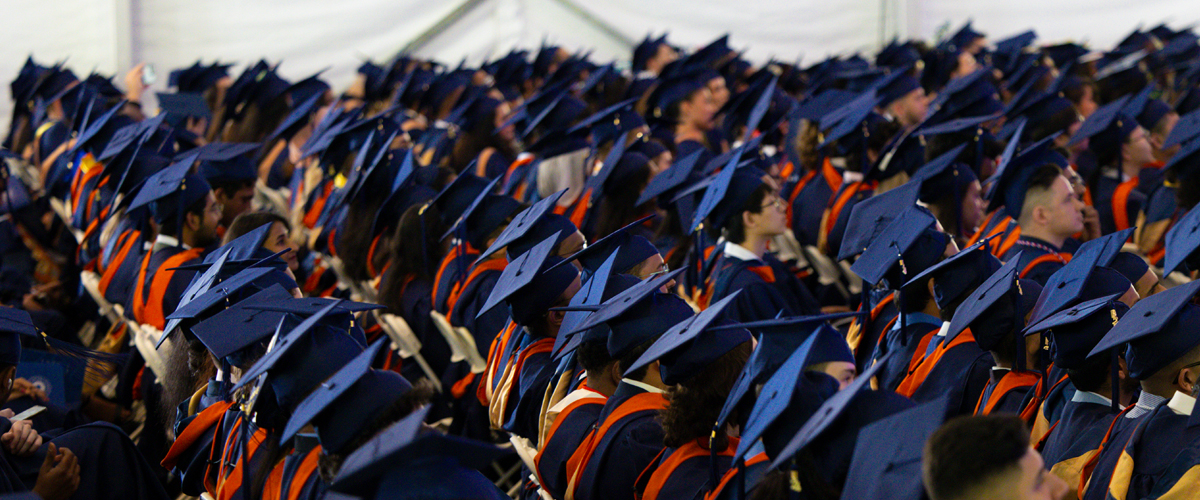
Op-ed: The College Degree Isn’t Dead. But the Wrong Kind Could Cost You $2 Million.
Only 35 percent of Americans now consider a four-year college education “very important,” a steep decline from the 70 percent who said so in 2010.
Families are concerned about rising costs and much remains uncertain about how artificial intelligence (AI) will reshape entry-level job opportunities. Given these pressures, many families increasingly wonder whether a bachelor’s degree, which historically enabled graduates to earn $2 million more over their lifetimes than workers with only high school diplomas, is still a good investment.
The answer depends entirely on the university, writes President Jerry Balentine, D.O., in a Fortune op-ed.
AI tools now handle routine tasks that employers used to assign to junior staff—from software development to auditing and financial analysis. To remain relevant, graduates must move beyond technical execution and develop skills AI can’t replicate: judgment, cross-disciplinary synthesis, and the ability to manage the very tools that might otherwise replace them.
Colleges that help students master those capabilities—including by integrating AI education across all degrees and majors, not just STEM—are still exceptional investments that will pay dividends for decades. However, “the ‘passive degree,’ earned without applying knowledge through internships, research, or hands-on problem-solving, will pay increasingly fewer dividends over time,” he states.
At New York Tech, students pair coursework with applied research, real-world problem-solving, and public-private partnerships. As AI lowers the barrier to launching a business, universities must treat founding and working at startups as a teachable skill. Through our Innovation and Entrepreneurship Academy, students can apply for university venture funds and gain access to mentorship, technical expertise, and the infrastructure needed to launch companies.
Other institutions are making similar bets, alternating academic semesters with paid cooperative education, ensuring students graduate with a résumé rather than solely a transcript.
“So, is a college degree still worth it? Yes—but only if the university is doing its job. In an AI age, the diploma matters less than what students actually did to earn it,” President Balentine concludes.
Read the entire op-ed.
This op-ed is part of a campaign designed to generate awareness and thought leadership for the university on topics of national relevance.
More News

New York Tech To Be Ranked Among National Universities
For the 2027 U.S. News & World Report annual rankings, New York Tech will be included in a new ranking category—National Universities.
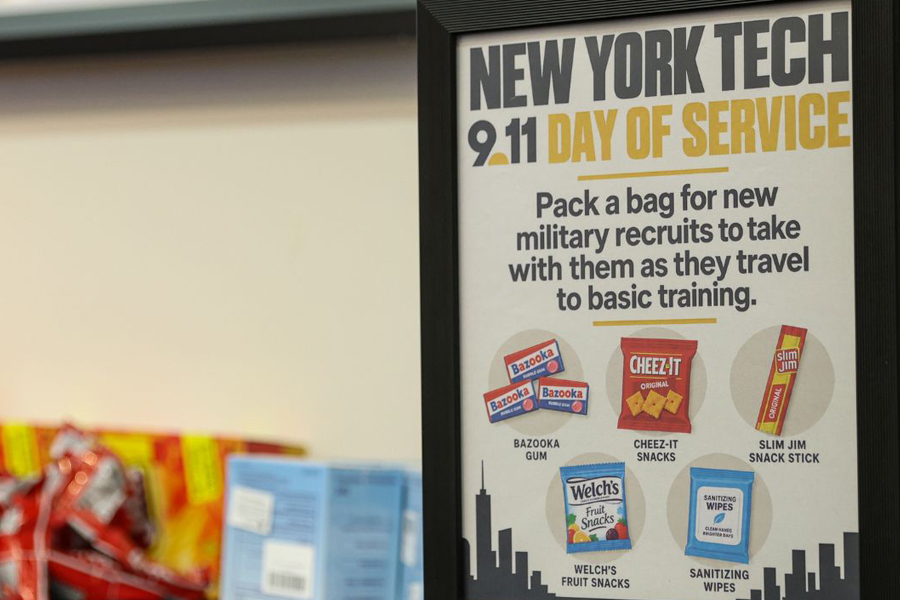
New York Tech Commemorates 25th Anniversary of 9/11
The New York Tech community commemorates the 25th anniversary of September 11 through opportunities to remember those we lost and honor the first responders and members of our military.
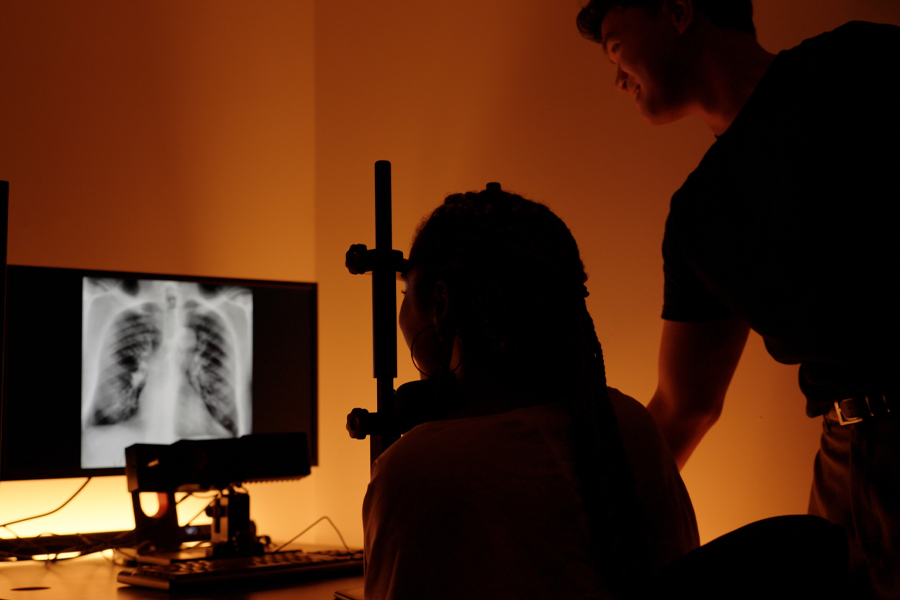
Exploring How AI Tools Can Improve Lung Cancer Detection
Research by Assistant Professor Robert Alexander, Ph.D., and student Talia Lilikakis assesses how AI tools can most effectively alert radiologists of the possible presence of a nodule.
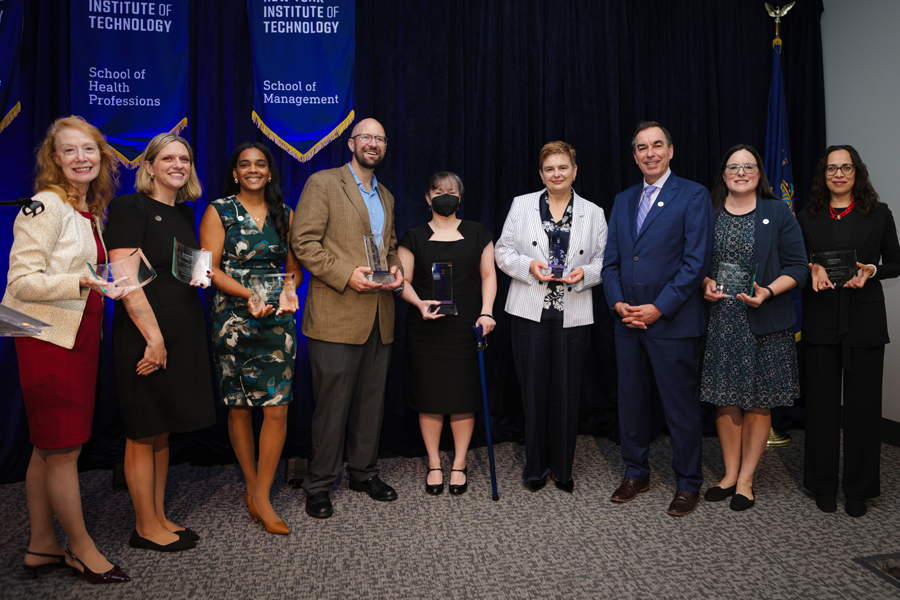
Convocation 2026: Success in a Time of Change
At the annual faculty and staff convocation, New York Tech President Jerry Balentine reflected on the accomplishments over the past year and presented his vision for the future.
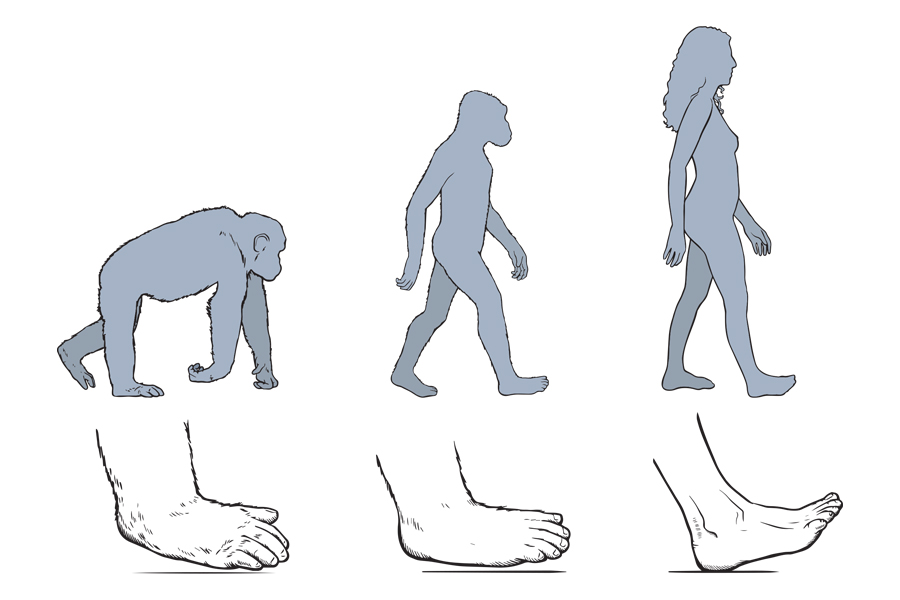
The Evolutionary Significance of Humans’ Unique Heel-Toe Walking Pattern
Associate Professor of Anatomy Nathan E. Thompson, Ph.D., contributes to research unveiling clues to the origin of humans’ stride pattern.
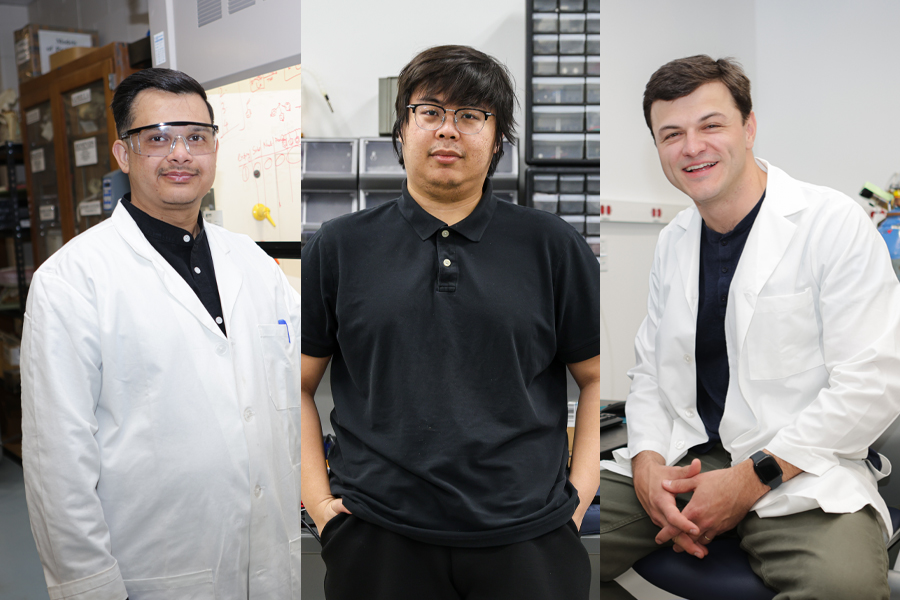
Robust Research
New York Tech’s commitment to research paves the way for important and groundbreaking work. Meet three Ph.D. students whose work may improve disaster response, recovery after muscle and bone injuries, and anticancer therapies.