Alumna Puts Patient Care at the Center of Diabetes Research
People with type 1 diabetes achieve better blood sugar control and quality of life if they manage the disease with an automated insulin delivery (AID) system—consisting of continuous glucose monitoring and an insulin pump—instead of daily insulin injections. Yet for many, the process of starting an AID is lengthy and complicated.

Yllka Valdez (B.A. ’24) is dedicating her postbaccalaureate (postbac) research at the Johns Hopkins University School of Medicine, which she began in spring 2024 after graduating from New York Tech, to understanding why patients with type 1 diabetes are held back from using an AID, which is now considered the standard of care. Valdez began exploring this question after discussing it with her postbac advisors, Nestoras Mathioudakis, M.D., MHS, and Risa Wolf, M.D., both endocrinologists at Johns Hopkins.
“We want to identify the bottlenecks in the process of starting an AID to better understand where delays occur, since ideally patients would receive this beneficial technology as soon as possible,” Valdez says.
In an article that Valdez and her colleagues recently published in an academic journal, the team reported that the median time it took patients with type 1 diabetes patients at the Johns Hopkins Comprehensive Diabetes Center who decide to start an AID system to actually begin the treatment was 89.5 days. “That was a big shocker for us because it was even longer than we expected,” notes Valdez, who is the first author of the study.
The reasons they found for the holdup: long waits for patients who want help selecting an AID system (median 24 days) and then to receive a prescription after the selection visit (median 34 days). Once patients have an AID prescription, there is a long wait to receive training for the system, both among those who opt for an AID selection visit (median 42 days) and those who do not (median 33 days).
To expedite the timeline, both AID selection support and training could be integrated into the appointment when patients decide to start an AID, Valdez says, adding that the Johns Hopkins Comprehensive Diabetes Center hopes these findings will help inform efforts to streamline and standardize future AID acquisition processes.
From Exploring Career Opportunities to Improving Patient Care
Valdez credits the College of Osteopathic Medicine (NYITCOM) with showing her that a career in medicine and science was possible. Growing up the daughter of immigrants in a low-income family, Valdez says that she had only vague ideas of what jobs were out there from television shows, like the detectives she saw on Law & Order. When a teacher at her Long Island high school mentioned the New York State Science and Technology Entry Program (STEP), hosted by NYITCOM, Valdez figured she might as well check it out.
Starting sophomore year, Valdez and other students in the program visited NYITCOM one evening a week for presentations and activities on a range of health, science, and engineering topics. What fascinated her most was the hands-on exposure to human organs and cadavers, which made medicine feel tangible and real. Just as important, because the program had guest lecturers and medical students from many different backgrounds, Valdez saw that becoming a physician was not reserved for a certain type of student and gained confidence that she could pursue the career path.
Valdez appreciated the community of STEP so much that she decided to do her bachelor’s degree at New York Tech. She chose interdisciplinary studies, with a focus on English, humanities, and life sciences, thinking a more well-rounded education could help her understand patients’ perspectives when she became a physician. In a research project during her final semester with former New York Tech professor Seth LeJacq, Ph.D., Valdez found evidence in the academic literature—and confirmed her hunch—that humanities education during clinical training, such as in medical school, helps physicians connect with patients.
A pair of other research experiences in biomedical research labs taught Valdez an important lesson as an undergrad. The first was in summer 2022 through the Johns Hopkins University of Medicine Careers In Science and Medicine Summer Internship Program, when Valdez contributed to a study of interactions between molecules that help regulate cellular energy. The other was in summer 2023 through the Harvard/MIT Equitable Access to Research Training M.D.-Ph.D. Summer Program, when she explored how nasal cells respond to COVID-19 and other respiratory viruses.
What Valdez learned from those experiences was that, while she enjoyed the basic molecular science, she wanted to conduct research that was more directly related to patient care. Exactly the kind of work that she is now doing as a postbac. “I absolutely love being able to integrate research while also being in a patient setting,” Valdez says.
For the new study, Valdez extracted and analyzed data from electronic medical records of 114 adult patients at Johns Hopkins who were diagnosed with type 1 diabetes and started an AID system between May 2022 and March 2025.
Although the study sheds light on the timeline for AID initiation at Johns Hopkins, the results may vary at different diabetes centers because each has its own process for getting patients started, Valdez notes. However, other centers could use this study as a model to explore how to improve their own process, adds Valdez, who, during her postbac, also contributed to academic articles that explored digital diabetes prevention programs and the use of artificial intelligence (AI) and machine learning-based tools to predict or manage prediabetes.
Extending STEM Opportunities to Other Young Students
In addition to the opportunity to do patient-centered research, the postbac research position has given Valdez insight into the career path she wants to pursue. She would like to attend medical school, which she hopes to start in 2027 after completing her current research position.
Once she becomes a physician, Valdez hopes to dedicate a significant portion of her time when she’s not seeing patients doing research to improve patient care, just as her advisors, Mathioudakis and Wolf, do. Valdez also hopes to continue focusing her research on chronic diseases, treatment uptake, and disparities in healthcare.
Thinking about how far she’s come and how much the STEP program at NYITCOM helped her get started, Valdez was inspired to co-found a program called Brain and Spine Scholars in 2023 with a friend who was then an undergraduate at New York University (NYU). The program, which began at NYU and has expanded to Johns Hopkins and other schools, offers summer programs to middle and high school students with backgrounds like Valdez’s that expose them to neuroscience through hands-on clinical workshops, case-based learning, and mentorship from medical students, scientists, and physicians.
“There are so many students in cities like New York City who don’t have resources or knowledge about how to pursue a career in STEM (science, technology, engineering, and math),” Valdez says. “Having lived that experience myself—and being able to go to institutions like New York Tech, Johns Hopkins, and Harvard—it’s a rite of passage at this stage to be able to pass down the torch.”
By Carina Storrs, Ph.D.
More News

The Problem Solvers
Meet four alumni who use their lived experiences as inspiration for entrepreneurship.
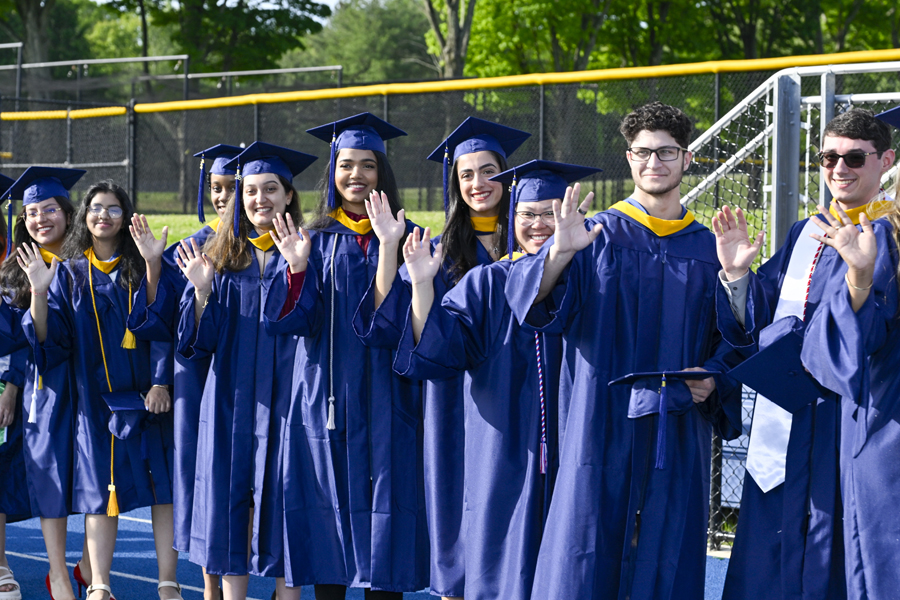
Congratulations, Class of 2026!
On May 17, graduates, family members, and friends joined faculty, staff, and administration at New York Institute of Technology’s Long Island campus to celebrate its 65th annual commencement.
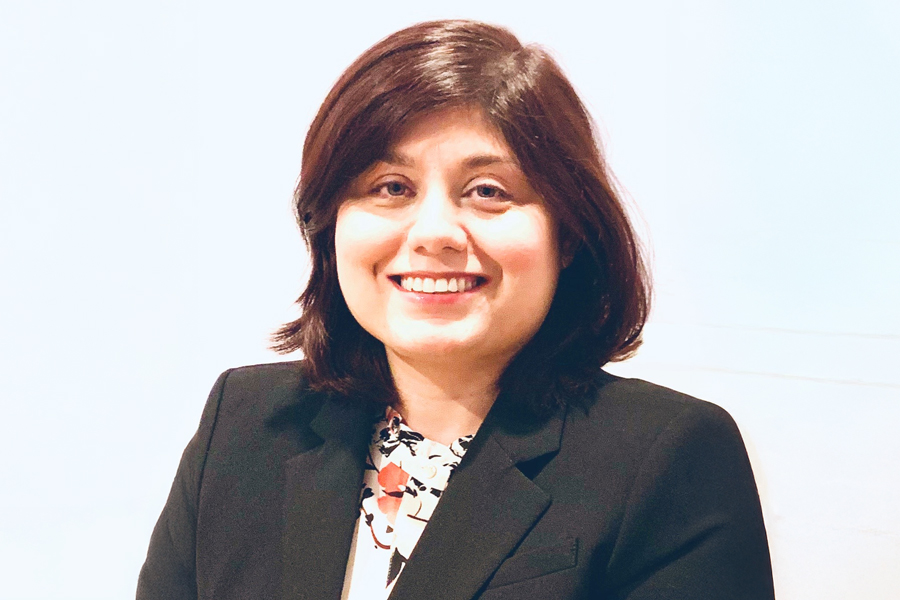
Going With the Flow
One lesson Nanda Lahiri-Mushtaq (B.S.’ 05) took with her since graduating from New York Tech is to think outside the box.
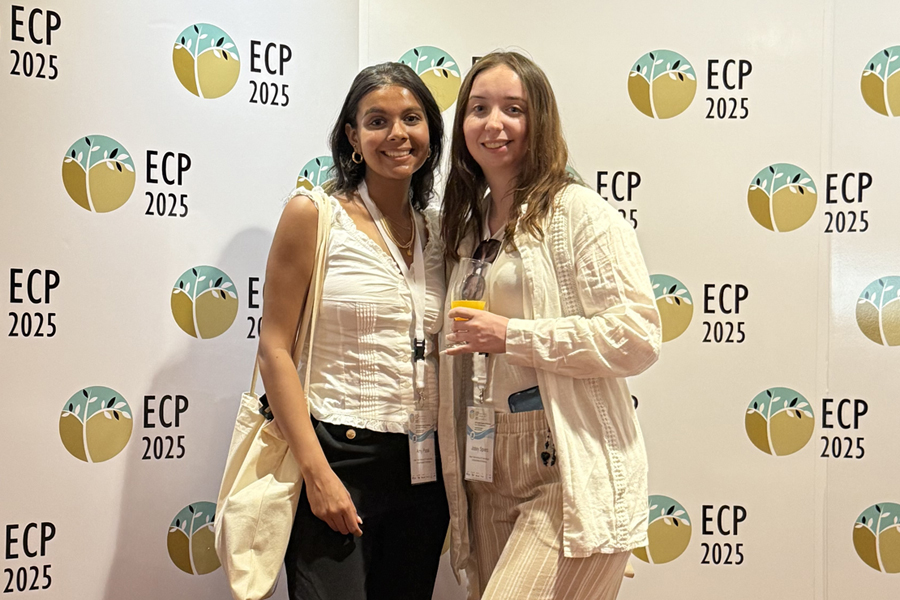
Psychology Alumni Present Research in Cyprus
Over the summer, recent psychology alumni Josey Spiers (B.S. ’25) and Amy Patel (B.S. ’25) presented their work at the European Congress of Psychology in Paphos, Cyprus.
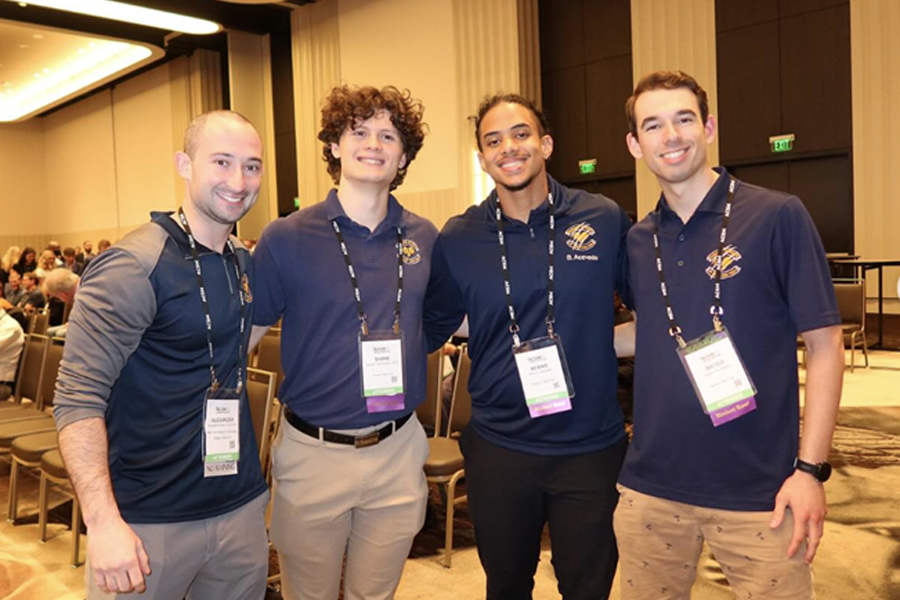
Dedicated to the Pursuit of Knowledge
Students and alumni from the College of Arts and Sciences, School of Health Professions, and College of Osteopathic Medicine shared research findings at impressive industry conferences.
Cheers to the Class of 2025!
On May 18, graduates, family members, and friends joined faculty, staff, and administration at New York Institute of Technology’s Long Island campus to celebrate its 64th annual commencement.