Engineering Faculty to Collaborate with BNL Scientists
This summer, five faculty members from the College of Engineering and Computing Sciences will participate in Brookhaven National Laboratory’s Visiting Faculty Program, engaging in research collaborations with esteemed scientists and helping to strengthen research capacity and build long-term partnerships.
Faculty members were selected to participate based on their employment at an accredited university that is also an emerging research institution, as well as their accomplishments, interests, experience, and quality of their submitted research proposal co-developed with a Department of Energy laboratory researcher. They include:
- Karrer Alghazali, Ph.D., assistant professor of electrical and computer engineering
- Reza Khalaj Amineh, Ph.D., associate professor of electrical and computer engineering
- Maryam Ravan, Ph.D., research associate professor of electrical and computer engineering
- Xueqing (Summer) Huang, Ph.D., associate professor of computer science
- Wei Zeng, Ph.D., assistant professor of mechanical engineering
“The Visiting Faculty Program is a highly competitive United States Department of Energy-funded program,” notes Dean of the College of Engineering and Computing Sciences Babak D. Beheshti, Ph.D. “Participation in this program not only advances individual research agendas but also creates a powerful pipeline for student engagement, collaborative grants, and institutional visibility at one of the nation’s premier research laboratories.”
Kicking off on June 1, the 10-week program will group participants with scientific and engineering staff to work on a project of mutual interest. Those faculty members new to the program, including Alghazali, Huang, and Zeng, will follow the Research Collaboration track, designed to help university professors increase their research competitiveness and elevate their students’ learning and research. As returning faculty, Amineh and Ravan have the option to follow the Teaching Initiative track and will develop ideas for course content, certificate programs, seminars, modules, and learning resources to foster connections between STEM curriculum and students’ career opportunities.
Brookhaven National Lab is among 15 participating Department of Energy national laboratories across the United States. The labs collectively welcome roughly 100 faculty to the highly selective Visiting Faculty Program’s summer term.
“Congratulations to our faculty on this outstanding achievement and for continuing to represent our college at the highest level,” Beheshti says.
Brookhaven Lab is one of 10 national laboratories overseen and primarily funded by the U.S. Department of Energy’s Office of Science. The research facility’s Upton, N.Y., campus is home to seven Nobel Prize-winning discoveries and more than 75 years of transformative science and technology solutions addressing energy, environmental, and nuclear challenges.
More News
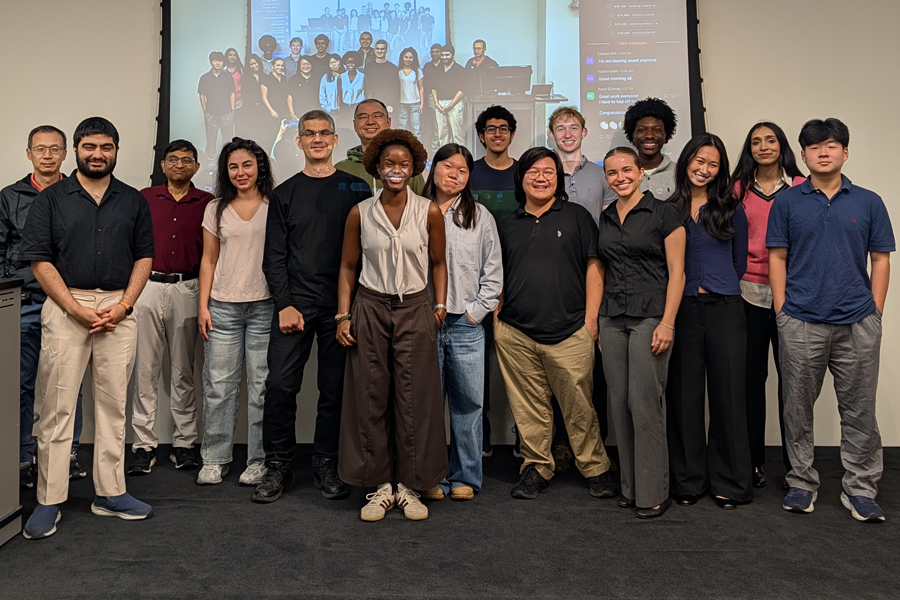
The Domino Effect
New York Tech’s Research Experiences for Undergraduates program has spent more than a decade turning summer research opportunities into lasting careers, helping build the university’s research reputation along the way.
New York Tech To Be Ranked Among National Universities
For the 2027 U.S. News & World Report annual rankings, New York Tech will be included in a new ranking category—National Universities.
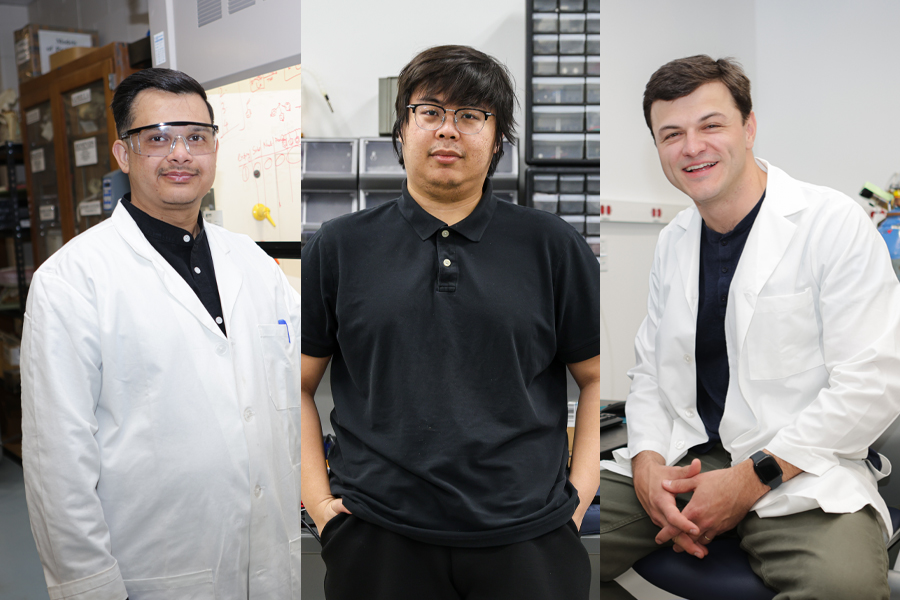
Robust Research
New York Tech’s commitment to research paves the way for important and groundbreaking work. Meet three Ph.D. students whose work may improve disaster response, recovery after muscle and bone injuries, and anticancer therapies.
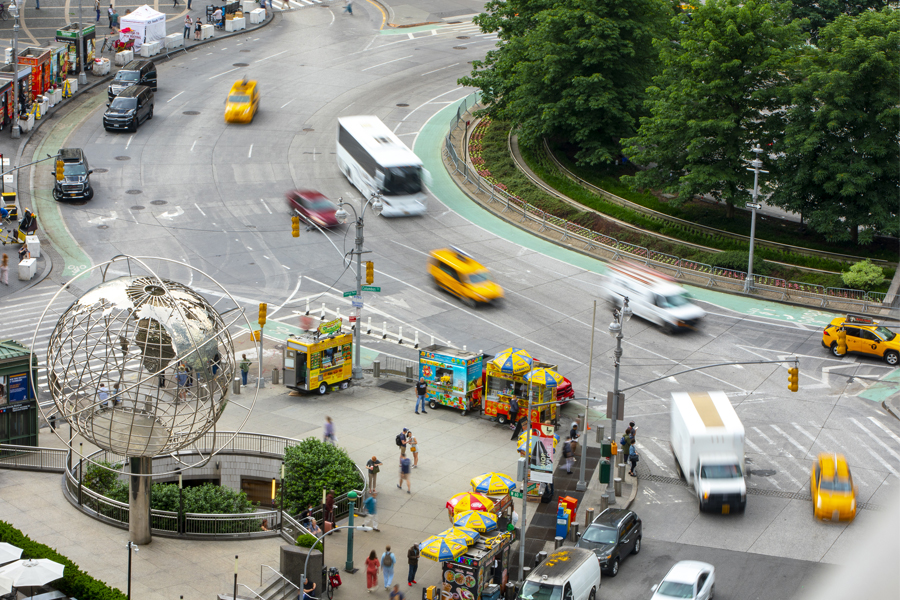
Ph.D. Student Uses Game Theory to Model Manhattan
Electrical and computer engineering Ph.D. student Helen Wu uses game theory to study the impact of congestion pricing in New York City.
Fellows’ Field Notes: Bofan He and Christine Lee
Edward Guiliano Global Fellowship recipients Bofan He and Christine Lee reflect on their experiences as they traveled to conduct academic research.
A SOURCE for Impressive Student Research
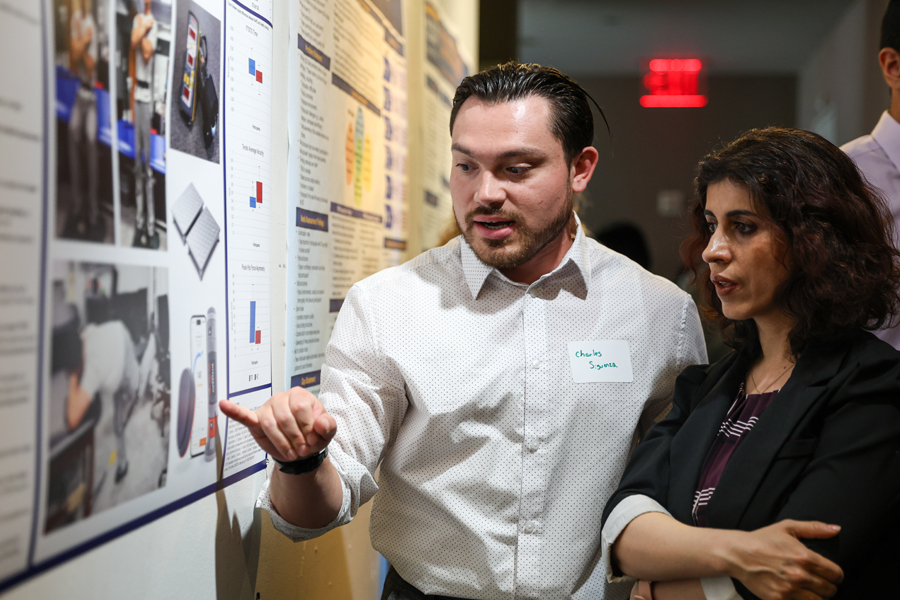
New York Tech’s 23rd Annual Symposium of University Research and Creative Expression (SOURCE) featured hundreds of students’ research and scholarly work.