Advancing Understanding of Cognitive Impairments
Research by a faculty member at the College of Osteopathic Medicine (NYITCOM), funded by a grant from the National Institutes of Health (NIH), could improve understanding of brain cell function and help to deliver a new type of treatment for intellectual disability.
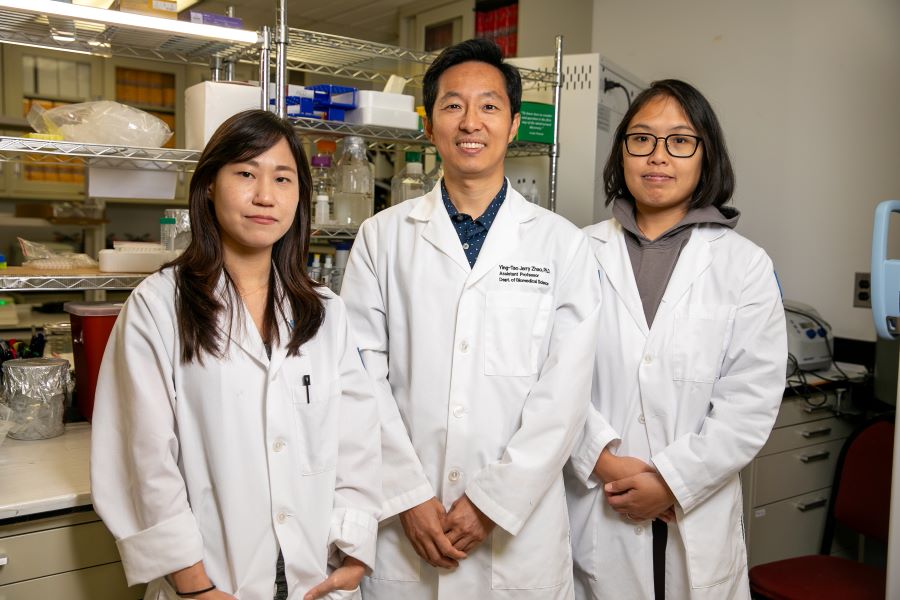
Pictured: Lead researcher Jerry Yingtao Zhao, Ph.D. (center), Postdoctoral Fellow Sohyun Moon, Ph.D. (left), and Senior Research Associate Hiu Ham “Ada” Lee (right).
Approximately seven million people in the United States have intellectual disability, a brain condition that limits the ability to learn everyday tasks and life skills. In children, intellectual disability can lead to delays in social development and needing help beyond the expected age with daily activities such as bathing and brushing one’s teeth. While some adults with the condition lead independent lives, many require support from caregivers throughout their lifetime.
The causes of intellectual disability include genetic inheritance, childbirth complications, toxic chemical exposure, and brain tumors, among others. While some medications can improve behavioral and psychiatric effects caused by the condition, treatments for its underlying cognitive impairments remain undiscovered. Now, a new study by NYITCOM Assistant Professor of Biomedical Sciences Jerry Yingtao Zhao, Ph.D., funded by a grant from the National Institute of Neurological Disorders and Stroke of the NIH, could bring scientists one step closer to finding one.
Zhao’s study, published in the journal Glycobiology, investigates how a gene mutation seen in patients with intellectual disability impairs the function of a critical sugar molecule found on the surface of human cells (heparan sulfate). The molecule is believed to help regulate cell-to-cell interactions, including those in the brain, with deficient heparan sulfate levels linked to autism spectrum disorder and overaccumulation linked to Alzheimer’s disease and Parkinson’s disease.
Zhao and his research team used a novel mouse model that featured RNA sequencing, machine learning, and other innovative techniques to analyze the relationship between gene mutation and heparan sulfate activity. They discovered that the sugar activity was lower in mice with the mutation. In addition, these animals displayed impaired brain and memory function when given behavioral tests. The team’s findings suggest that regulating heparan sulfate activity may counteract the gene mutation’s cognitive effects, new information that could provide a crucial building block in developing a cure for intellectual disability in humans.
“Intellectual disability affects many people worldwide, but the current treatment options are limited. Based on genetic findings from human patients, my lab generated a new animal model for intellectual disability and identified novel molecular mechanisms. Thus, our findings provide critical insights into this condition, which may eventually help us to develop a cure,” says Zhao, who is also conducting NIH-funded studies into the role of heparan sulfate dysfunction in Alzheimer’s, autism, and Parkinson’s.
As a next step, Zhao and his team will treat the disease mouse models with small molecule medications to correct the memory and cognitive problems. With positive results from this animal model, Zhao and his team are also planning clinical trials for individuals with intellectual disability.
Zhao’s research team includes Postdoctoral Fellow Sohyun Moon, Ph.D., Senior Research Associate Hiu Ham “Ada” Lee, NYITCOM students Zainab Mubasher and Laiba Ahmed, and alumna Mahima Parappurath (B.S. ’22). Other NYITCOM researchers involved include Associate Professor of Biomedical Sciences Raddy L. Ramos, Ph.D., and former Assistant Professor of Biomedical Sciences Weikang Cai, Ph.D.
Research reported in this publication was supported by the National Institute of Neurological Disorders and Stroke of the National Institutes of Health under Award Number R15NS130456. The content is solely the responsibility of the authors and does not necessarily represent the official views of the National Institutes of Health.
More News
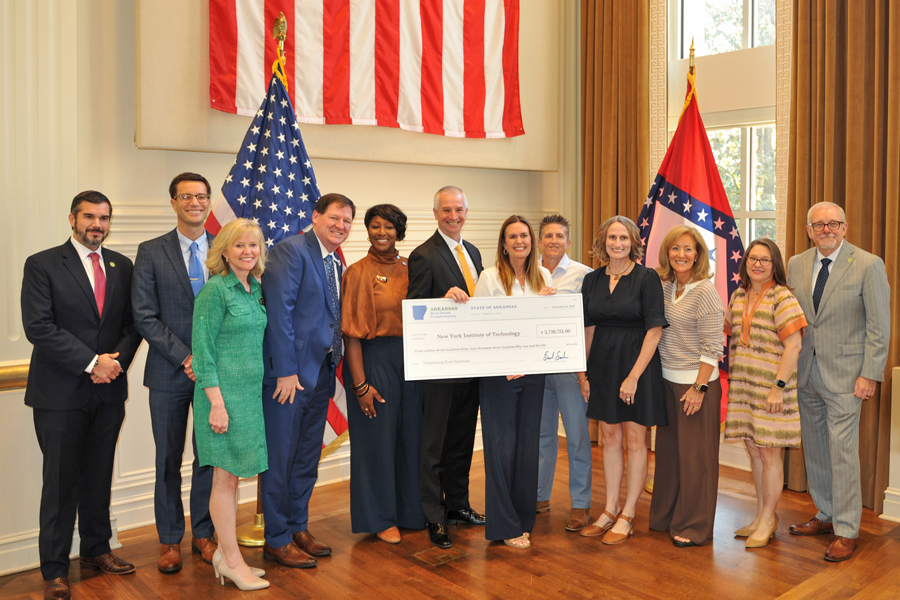
NYITCOM-Arkansas Receives Two Grants for New Residency Program, EMS Training Initiative
Two Rural Health Transformation Project grants, totaling $3.7 million, will support health education programs at the College of Osteopathic Medicine at Arkansas State University (NYITCOM-Arkansas).
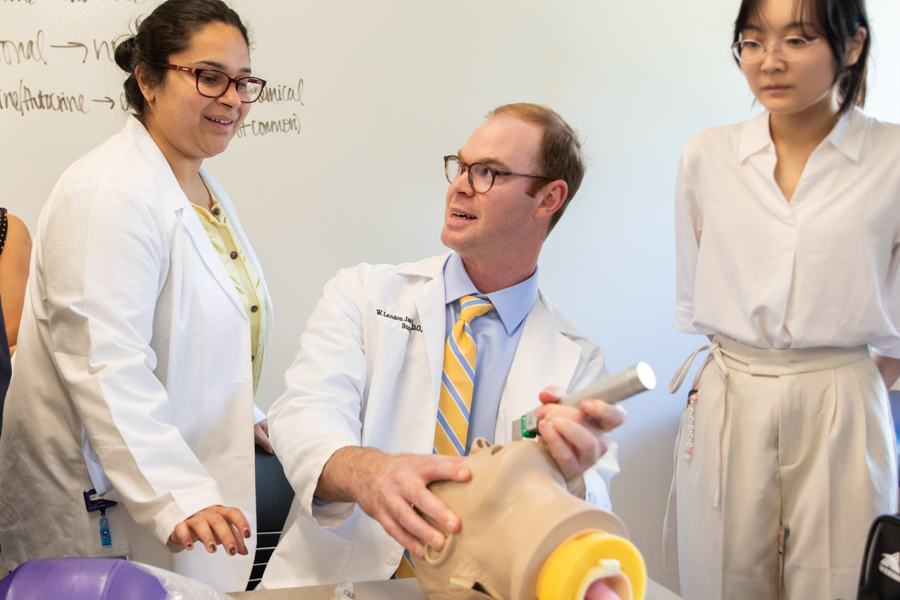
Alumnus Joins NYITCOM-Arkansas Faculty
William “Landon” Jackson, (M.S. ’21, D.O. ’21) has returned to his alma mater to serve as an assistant professor in NYITCOM-Arkansas’ Department of Clinical Sciences.
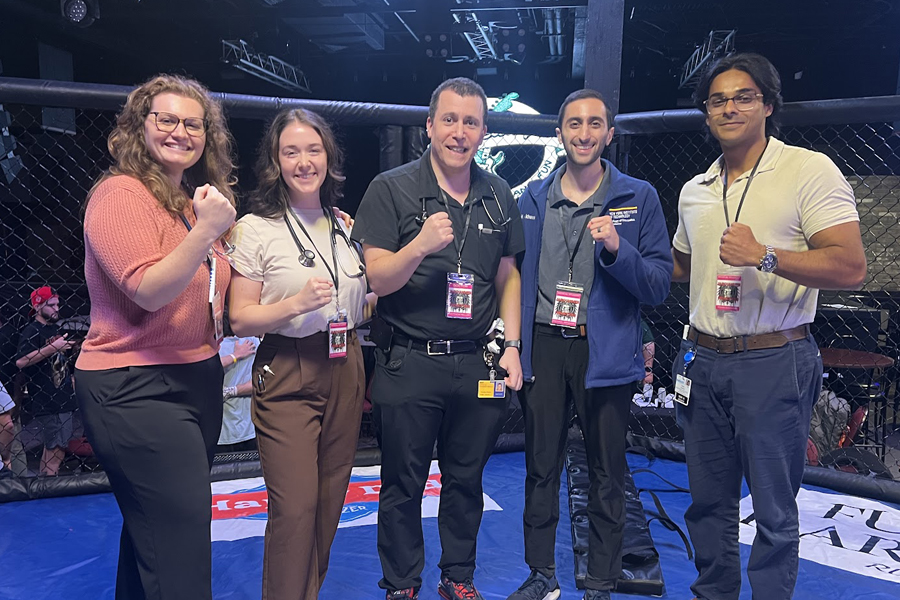
Students Step in to Help Save a Life
Students from the College of Osteopathic Medicine and the School of Health Professions provided life-saving medical care to a young mixed martial arts athlete.
A Flu Season Primer
A family medicine physician shares insight to help inform the university community about the flu and the importance of the flu vaccine.
New York Tech To Be Ranked Among National Universities
For the 2027 U.S. News & World Report annual rankings, New York Tech will be included in a new ranking category—National Universities.
Convocation 2026: Success in a Time of Change
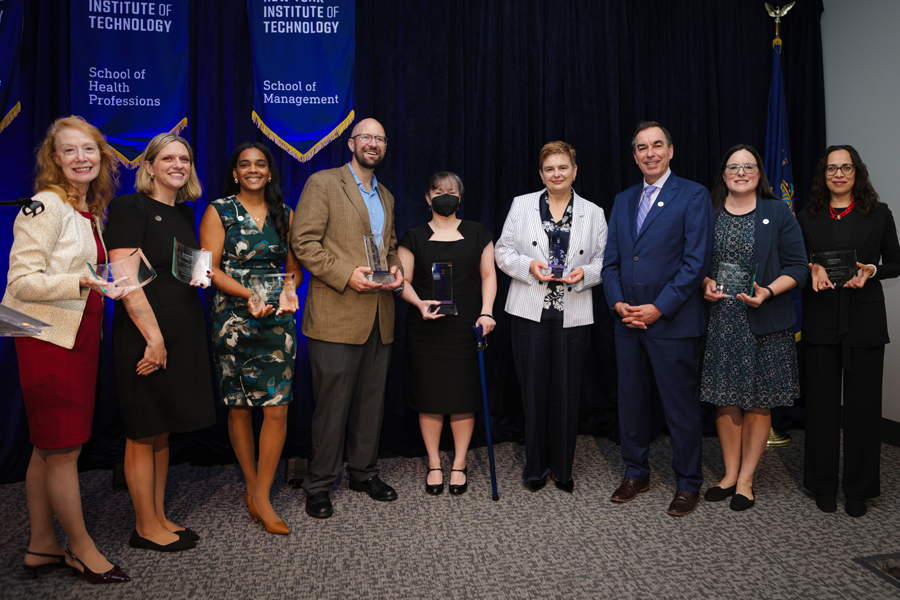
At the annual faculty and staff convocation, New York Tech President Jerry Balentine reflected on the accomplishments over the past year and presented his vision for the future.