Engineering a Cancer Treatment Game Changer
A research team composed of scientists from New York Institute of Technology and the University of California, Irvine (UC Irvine) has developed an artificial human colon with unprecedented realism. The groundbreaking research project stands to bring safer, more effective cancer treatments to market sooner, while providing a new platform for broader disease research.
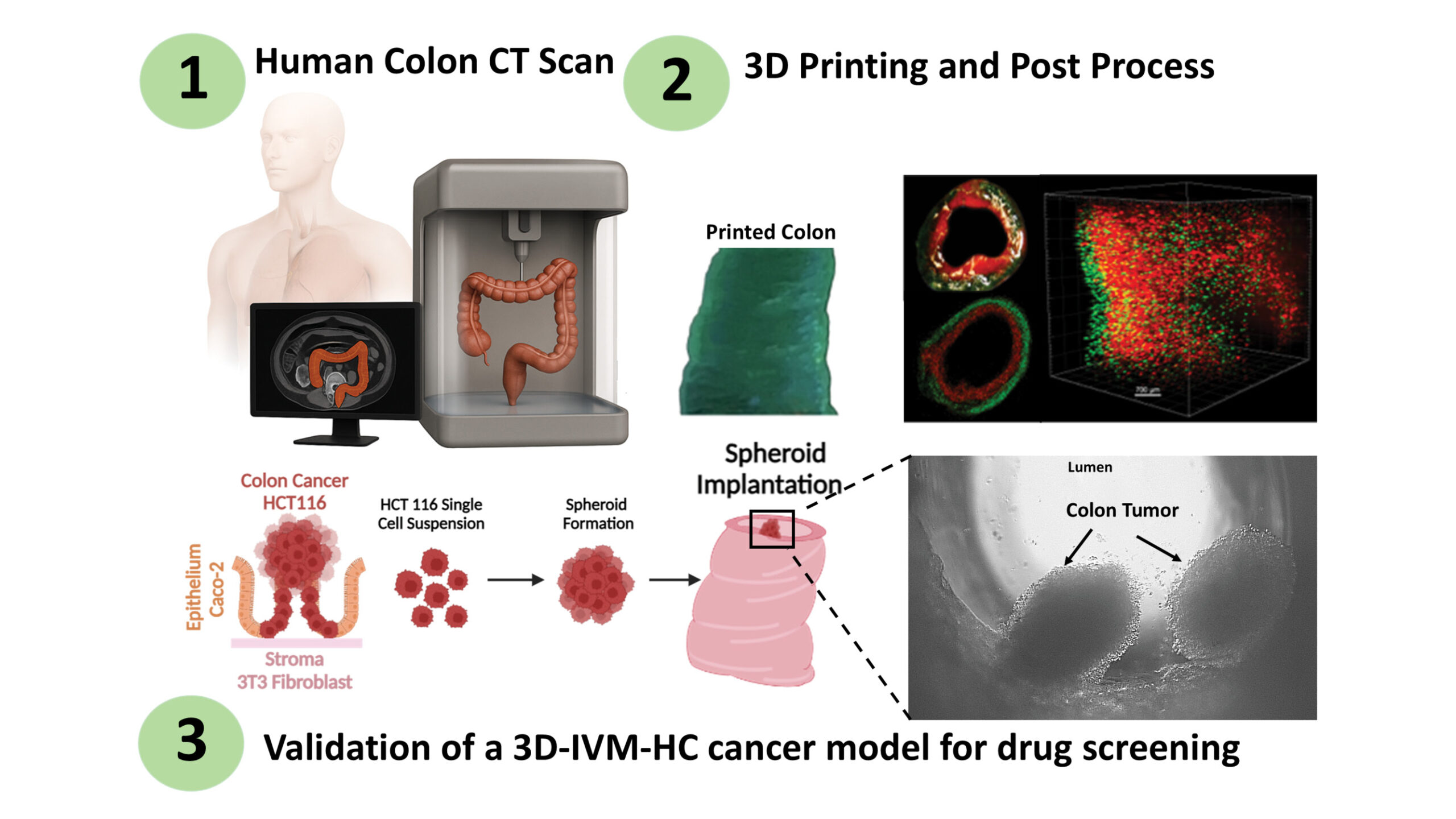
As featured in the journal Advanced Science, the cutting-edge project provides the world’s first functional, drug-testable, 3-D-printed human colon model. In line with recent movements to shift away from animal testing in drug development research, the model offers an alternative testing platform that accurately mimics the structural, mechanical, physiological, chemical, and biological complexities of human colon tissue. Co-led bybioengineer Steven Zanganeh, Ph.D., assistant professor at the College of Engineering and Computing Sciences, the project stands to significantly advance understanding of colorectal cancer and pave the way for highly effective precision therapies by providing a lifelike platform for drug efficacy testing. It also lays the groundwork to create highly realistic models of other human organs.
“This is, to our knowledge, the first model of its kind and represents a true leap forward in biomedical innovation,” says Zanganeh, who ultimately aims to commercialize the prototype. “While this project successfully replicated a human colon, it also opens doors to create functional tissue for virtually any human organ. This breakthrough points to a future in which therapeutic testing can be performed without dependence on traditional cell cultures or animal models, streamlining the path to clinical trials. What once sounded like science fiction is now reality.”
The team used human CT scan data to map the colon’s anatomy in detail, then employed advanced bioprinting with hydrogels to fabricate a model that mimics its principal layers and functions. Within their engineered model, fabricated at UC Irvine, the team also introduced and successfully treated a tumor, creating a new and powerful platform for cancer drug discovery and disease modeling.
“Our 3-D, human-relevant colon model overcomes key limitations of 2-D cell cultures and animal studies. It lets us study disease and drug responses in a way that is far closer to the patient, opening a faster, more reliable path to new therapies,” says Rahim Esfandyar-Pour, Ph.D., assistant professor of electrical engineering and computer science at UC Irvine.
Next, Zanganeh and his research team, which includes doctoral and graduate students from New York Tech’s College of Engineering and Computing Sciences, as well as a student from the College of Osteopathic Medicine, aim to develop additional 3-D tissue models. This includes prototypes capable of withstanding electrical stimulation (recreating conditions that transport substances and molecules across cell membranes) and those replicating immune function. New York Tech student researchers include Engineering, Ph.D. students Armand Ahmetaj and Elahe Zafarvahedian; Bioengineering, M.S. students Ayush Kumar, Gaby Burgos-Crespo, and Yianni Daniil; Bioengineering, B.S. major Anna Dykhno; and medical student Kyle Egan.
“By combining cutting-edge bioprinting with interdisciplinary collaboration, Dr. Zanganeh and his colleagues have opened a new frontier in cancer research. We are proud to see our faculty leading discoveries with the potential to transform medicine and improve lives worldwide,” says Babak D. Beheshti, Ph.D., dean of the College of Engineering and Computing Sciences.
More News

Not All AI is Built to Diagnose
A new study by researchers at the College of Osteopathic Medicine reveals how general-use AI platforms make serious mistakes when it comes to analyzing medical results.
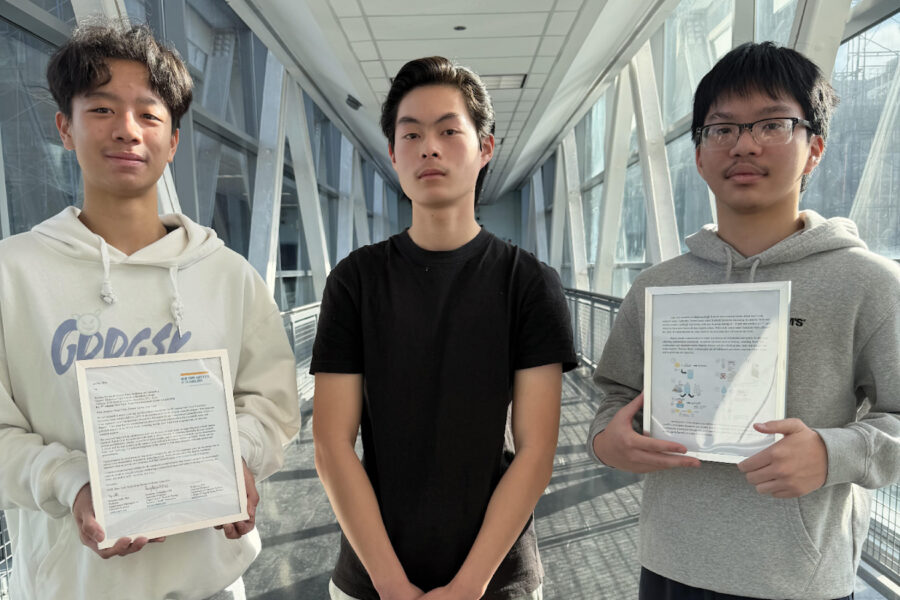
Promoting Early Engagement in Research
New York Tech recently completed the ninth year of its Mini-Research Grants Awards program to encourage high school students to pursue STEM fields.

Reversing Bone Loss After Spinal Cord Injury
People with spinal cord injury may lose up to 41 percent of their bone mass in the first year. A new study by the College of Arts and Sciences’ Hesham Tawfeek, MBBCh, seeks to repair this damage.

Uncovering the Body’s Fat-Burning Strategy—It’s Math-Driven!
A new study by an NYITCOM-Arkansas researcher finds that the body calculates which fat to burn, choosing those that produce the most usable energy while consuming the least oxygen.
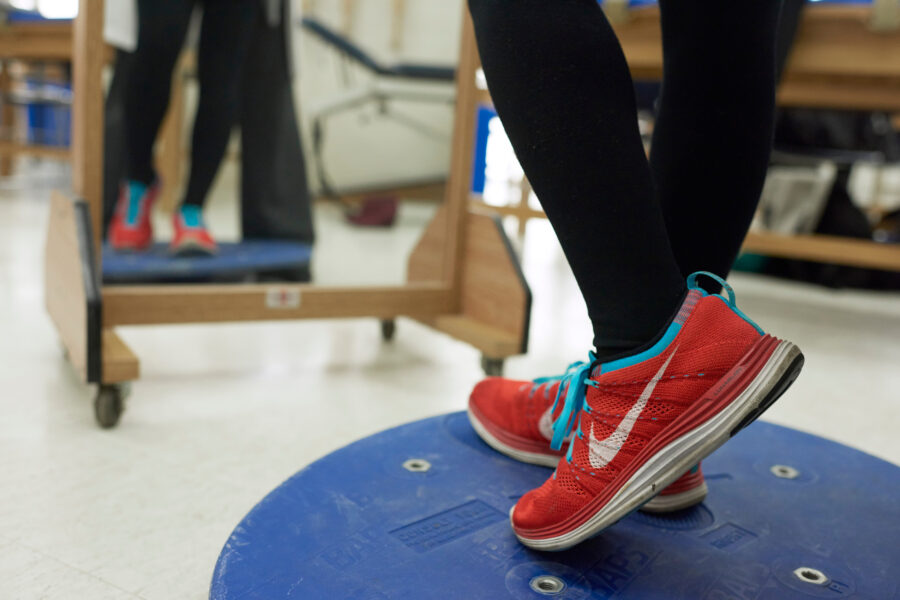
When Rehab Meets Robotics
A study co-authored by John P. Handrakis, D.P.T., Ed.D., and graduates of the physical therapy program finds that a wearable robotic device could help stroke survivors get back on their feet.
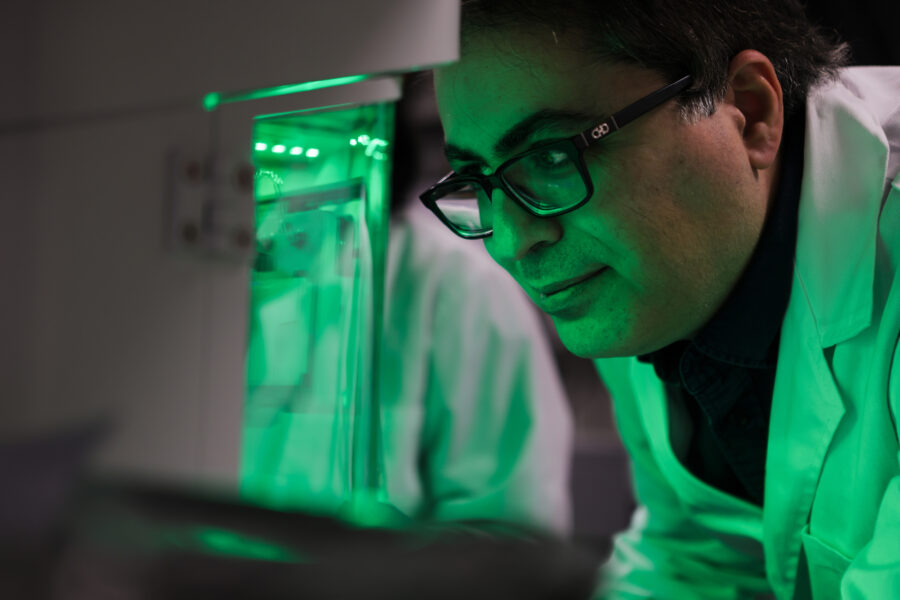
Realistic 3-D Colon Model Shifts Paradigm for Drug Development
Assistant Professor Steven Zanganeh, Ph.D., is striving to further improve the model he developed to open the door to drug development for cancer and other conditions.