Community Building
Photo: Cameron Blaylock
Architect and urbanist Marcus Wilford (B.Arch. ’16), a School of Architecture and Design alumnus and adjunct assistant professor, is no stranger to the Brooklyn-Queens Expressway (BQE).
Growing up in Brooklyn for most of his childhood, Wilford lived by the now crumbling, controversial highway that runs from the Verrazzano-Narrows Bridge in Brooklyn to the Long Island Expressway in Queens built by Robert Moses between 1937 and 1964. “I have asthma,” he says. “These are health problems that are caused by living near a highway or massive infrastructure. Some of my relatives still live near the BQE.”

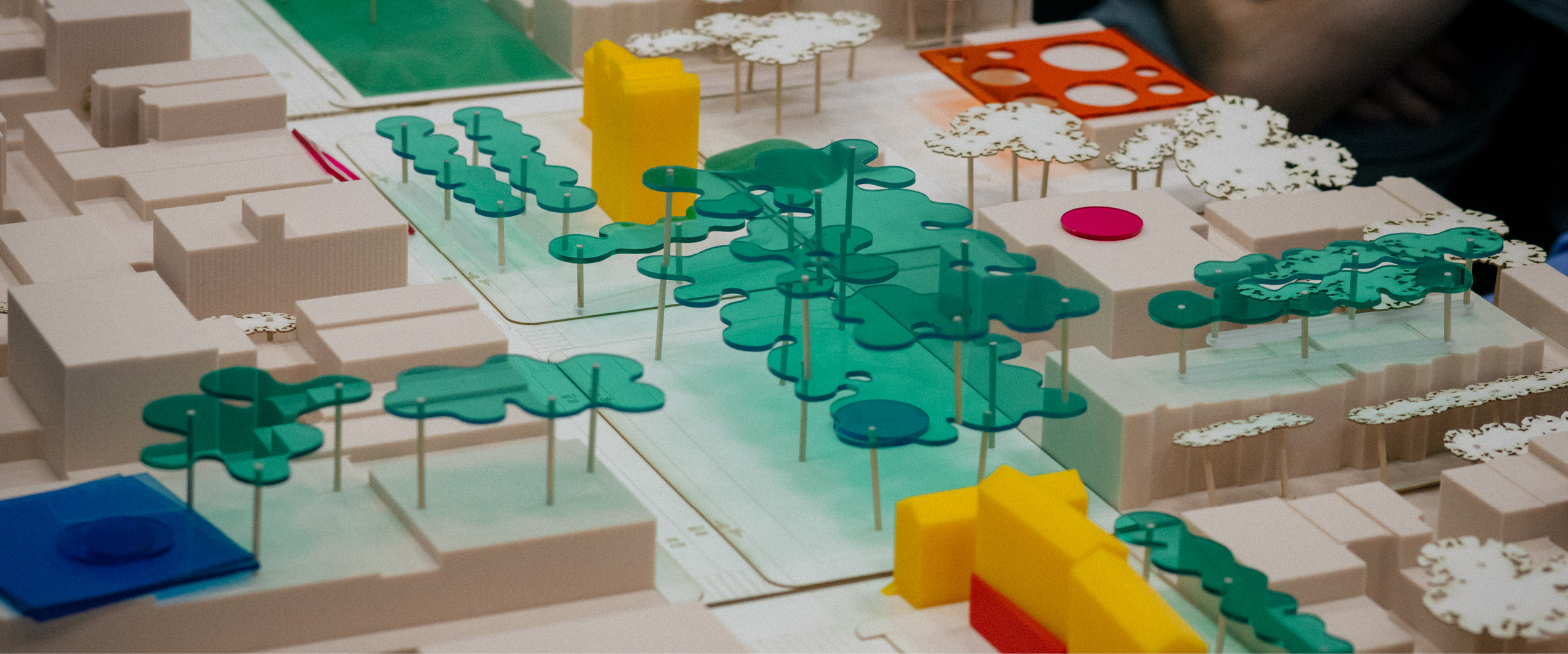
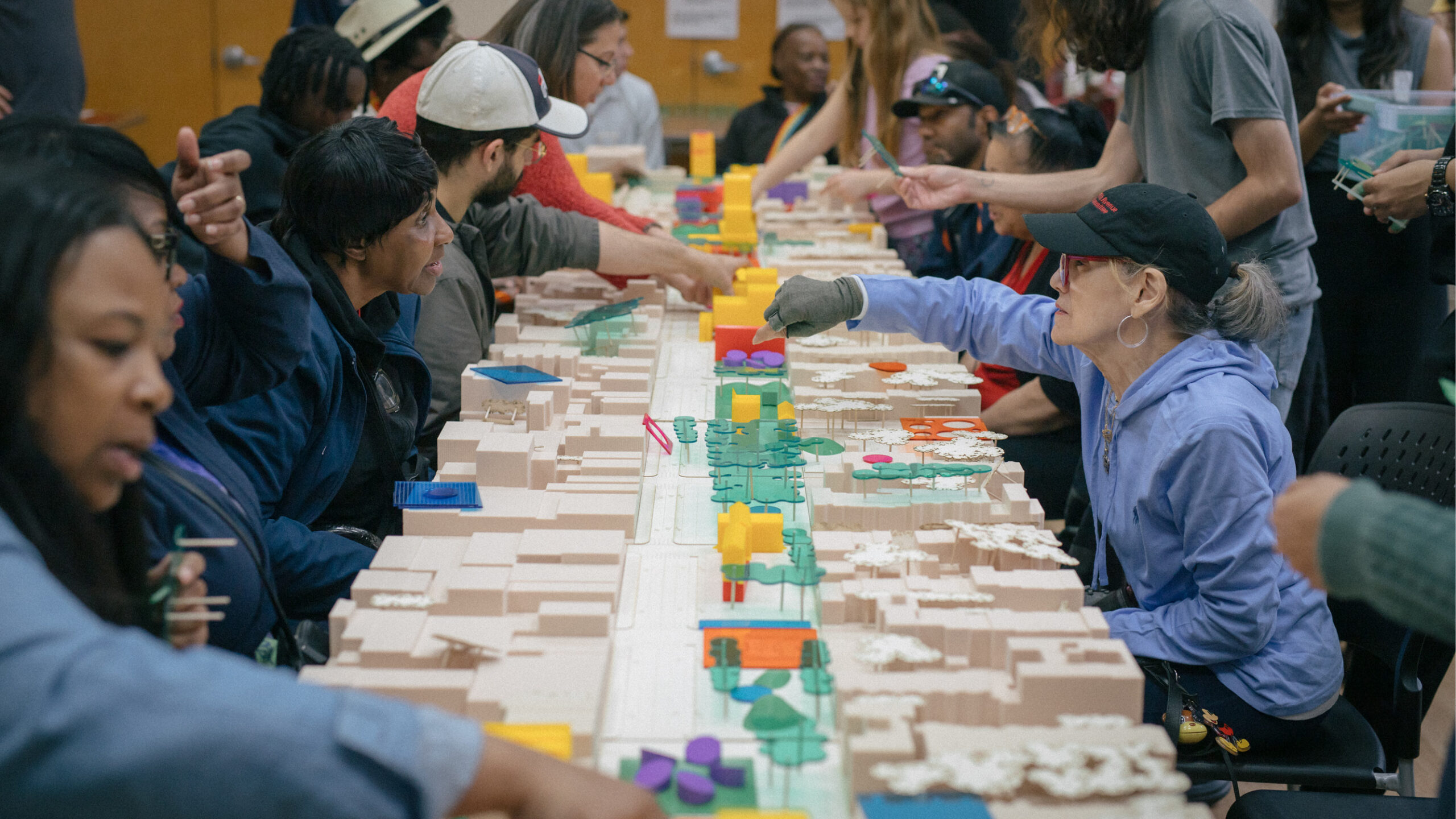
It was this personal experience, along with his professional interests in environmental justice and community engagement, that ultimately led to Wilford’s involvement with the Modeling Community Visions (MCV) for a Future Without the BQE project with the Institute for Public Architecture (IPA). The MCV project is a series of free and open-to-the-public community design workshops that invite residents to reenvision their neighborhoods in a vibrant post-BQE future through large-scale physical models. As part of the IPA’s broader BQE2053 multiyear project that envisions a future without the BQE and highlights the institutional segregation and environmental impacts created by the highway, it brings awareness to the historical exclusion of underserved communities in decision-making about their physical space and gives a voice to those who live near it.
“Modeling Community Visions for a Future Without the BQE asks residents what they might want to see if the BQE were transformed from a polluting six-lane highway to a narrower, tree-lined boulevard with opportunities for mass transit, housing, green space, and more,” says Janet Fink, adjunct associate professor of architecture at New York Tech and executive director of the IPA. Including various housing, civic, industrial, and landscape typologies developed by Wilford, the detailed physical models that can be moved around “inspire residents to imagine, visualize, collaborate, and represent their ideas for a better future for their neighborhoods,” Fink says.
Wilford’s involvement with the IPA began with his 2020 IPA BQE fall fellowship when he “worked on reenvisioning the BQE,” he says. Together with his team, Wilford repurposed a portion of the highway as a mass transit line, which addressed social equity and accessibility issues.
IPA continued raising awareness of the crumbling BQE, holding a full-day symposium in 2023 about the issues and opportunities facing communities along the BQE, with more than 30 speakers, including experts in transportation, highway removal, environmental justice, community, and community land trust. That led to IPA’s 2024 The Story of the BQE film and oral history project, which features a documentary about the BQE and oral histories shared by residents living near the highway.
In looking at ways to work directly with residents affected by the BQE, Fink reached out to her former student, Wilford, to collaborate with the IPA on an innovative hands-on community engagement project, the next crucial step in helping to reimagine the destructive and polluting highway.
“I think the intention was to really push the conversation of how do we remove this highway a bit further and have locals get involved,” Wilford says. “Instead of doing this simple performative act of sticky notes (standard practice in community engagement), why not have stakeholders and residents really shape space through model making?”
Building Support
Wilford, who has worked for well-known firms like BIG (Bjarke Ingels Group) and MASS Design Group and recently launched his own practice, credits his education at New York Tech for shaping his career and preparing him for his role as the lead urban designer and community facilitator for the MCV project.
“New York Tech is a place that has this intersection of technology and how communities and environments are impacted by these technologies; not this blind optimism around technology but thinking about the socio-political implications of technology as well,” says Wilford. “I think that intersection helped me find my niche and led me to focus on a project like this, where infrastructure has an environmental and a social impact. So, this kind of overlap of the high tech and the analog of simply communicating with people, I think, was a wonderful experience that I was able to transfer into my career.”
Having carried on his relationship with the school since graduating, it’s no wonder Wilford, together with Fink, looked to New York Tech for support with the project. In September 2025, the IPA teamed up with the School of Architecture and Design to host a screening of the documentary The Story of the BQE and author Deborah N. Archer who discussed her book Dividing Lines: How Transportation Infrastructure Reinforces Racial Inequality.
The school provided essential technical and educational support throughout this special project. Dean Maria Perbellini, M.Arch., Assoc. AIA, ensured that faculty, students, and Wilford’s team had full access to the Fabrication Labs and its staff, enabling the design and construction of the models. Most importantly, six architecture students actively contributed to the fabrication and assembly of the neighborhood models adjacent to the BQE and later participated in the community workshops, gaining valuable hands-on experience while meaningfully supporting the initiative.
“The BQE project is a powerful reminder of why design matters. I want our students to be part of this conversation and be aware of the impact that they can have as designers on the community,” says Perbellini. “This collaboration reflected the best of what we do in education [at New York Tech] by connecting students, faculty, and community around design that serves people. It’s also about using the creativity, talent, and preparation for our students to be responsible professionals with civic engagement.”
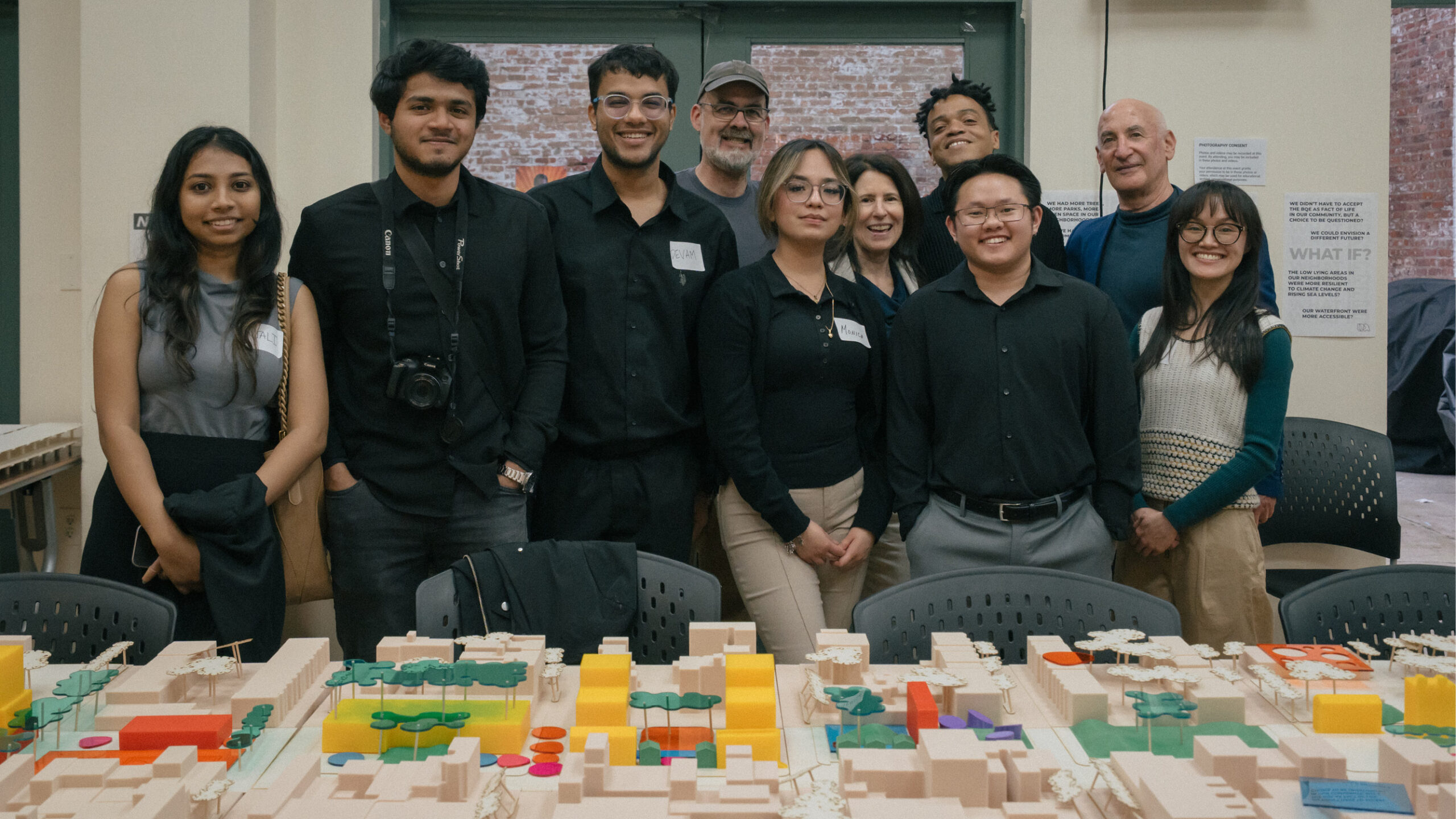
Reflecting on the benefits of their experience, students Monica Pena, Finley Richard, and Anjali Patel noted collaboration, the trial-and-error process of creating exhibition-quality models in a real world, professional setting, and improving their fabrication and model-making skills, along with the power of community-centered design.
“Attending the community workshops was especially meaningful,” says Richard. “Seeing people use the model to express ideas and aspirations for their neighborhood showed me how design can help bridge conversations between professionals and the public. Overall, the project helped me understand both the technical and social sides of architectural work.”
Patel agrees. “Being in the same space as residents, the people who live with the presence of the BQE every day, gave me a deeper understanding of how infrastructure shapes daily life. Listening to their stories, questions, and aspirations helped me see the project beyond the technical side. It emphasized how design can serve as a platform for public imagination and collective decision-making. Overall, the project allowed me to grow not only as a designer but also as someone who hopes to contribute meaningfully to urban communities in the future.”
The hope for the project is to engage with at least three more communities, including Red Hook and possibly Williamsburg in Brooklyn, and one or two neighborhoods in Queens, Wilford says. “We want to make sure we get very diverse voices,” he says.
An Award-Winning Relationship
At the IPA 12th Annual Fall Fête on October 15, Perbellini received the IPA Institutional Partner Award in recognition of her support for the MCV project, another positive outcome of New York Tech’s participation.
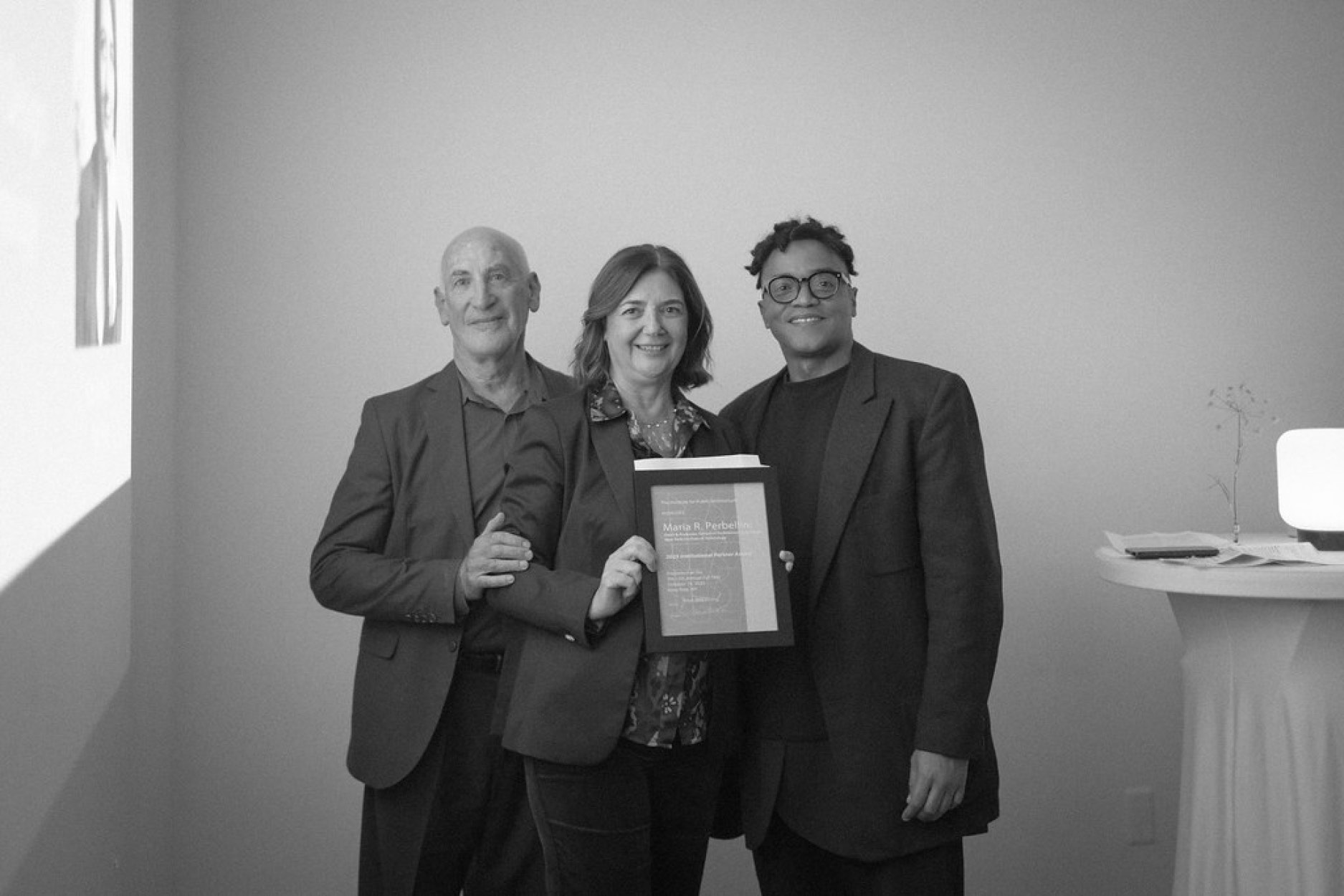
“It gives me such a rewarding feeling because I’m here leading the school, but actually, I’m here to facilitate initiatives and activities that can bring our school and our students out into the world [to connect them more closely with the profession],” says Perbellini. “At New York Tech, we have talent, generosity, and the belief that architecture and design have a power that can make change, so this award is really for the school.”
It was Wilford who introduced Perbellini when she received the award. “Marcus is a young alumnus. Seeing his path come full circle, it was deeply rewarding for me to be introduced by him.”
It’s the power of relationships that Wilford finds rewarding. “New York Tech is an institute that keeps a connection with its alumni,” he says. “They’re always interested in what we’re doing.”
By Joann Plockova
More News
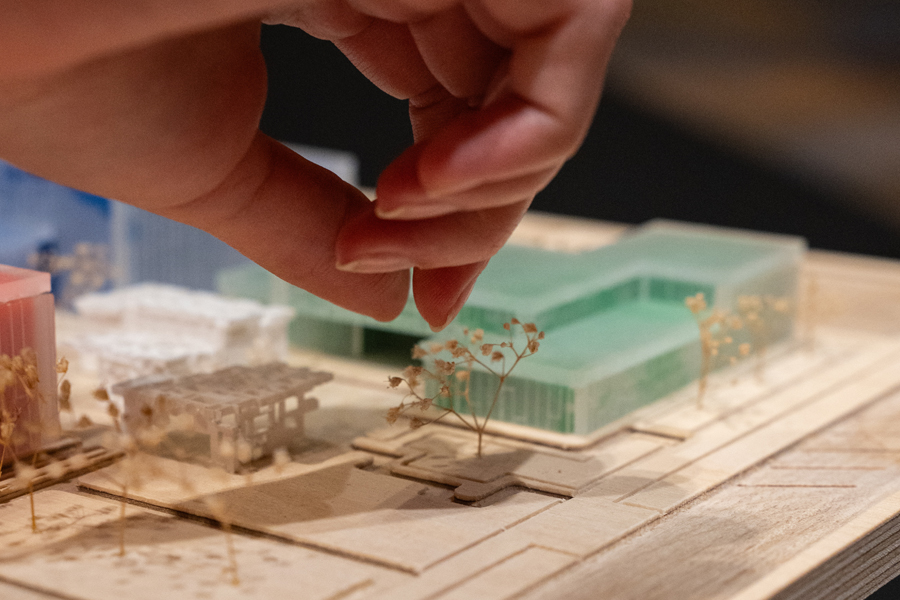
NOMA Competition: Reimagining Kansas City
Twelve architecture students competed in the 2025 Barbara G. Laurie Student Design Competition sponsored by the National Organization of Minority Architects (NOMA) to propose a model for housing that prioritizes those vulnerable to racialized disinvestment.

“Envisioning” More Inclusive Eyewear
As part of a collaborative initiative between New York Tech and the global eyewear company Marcolin, students from the School of Architecture and Design and NYITCOM teamed up to develop potential eyewear solutions for neurodivergent populations.
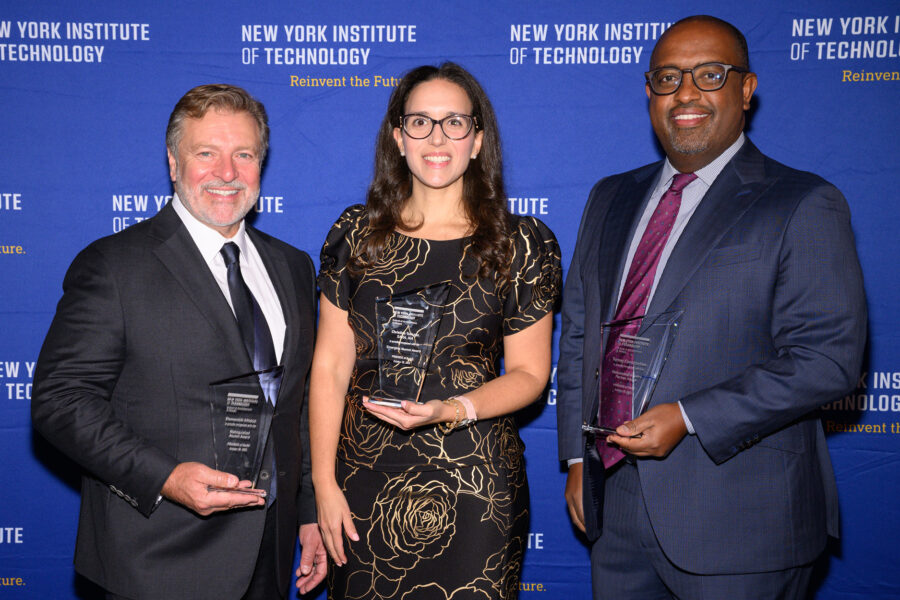
FRIENDS Sets New Fundraising Record
On October 30, the School of Architecture and Design celebrated its 17th Annual Alumni and FRIENDS Reception, raising a record-breaking $550,000 in support of student scholarships, technology upgrades, lectures, study abroad, and new initiatives.
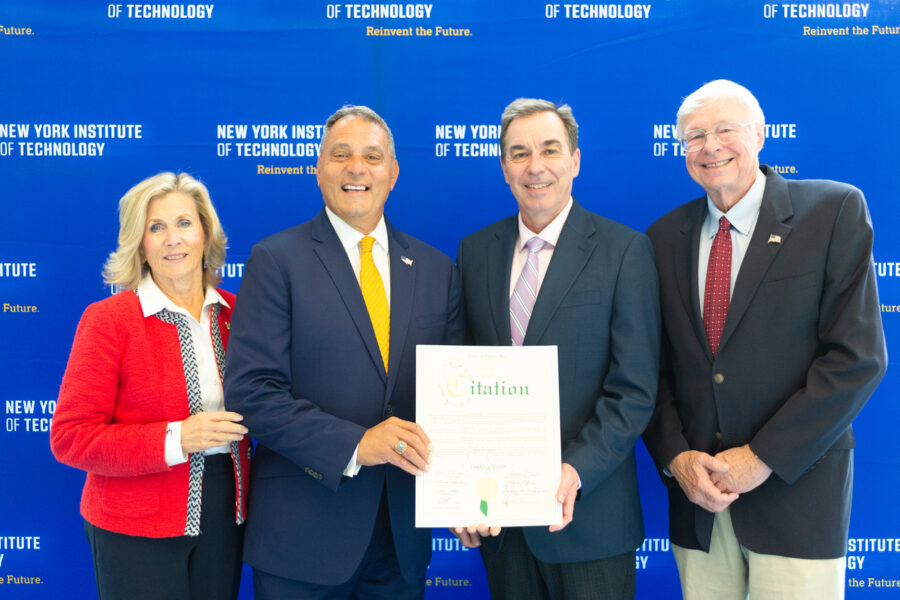
Startup Tech Central Officially Opens
Members of New York Tech and the local community gathered to celebrate the grand opening of Startup Tech Central, a resource for students to transform ideas into real-world impact.
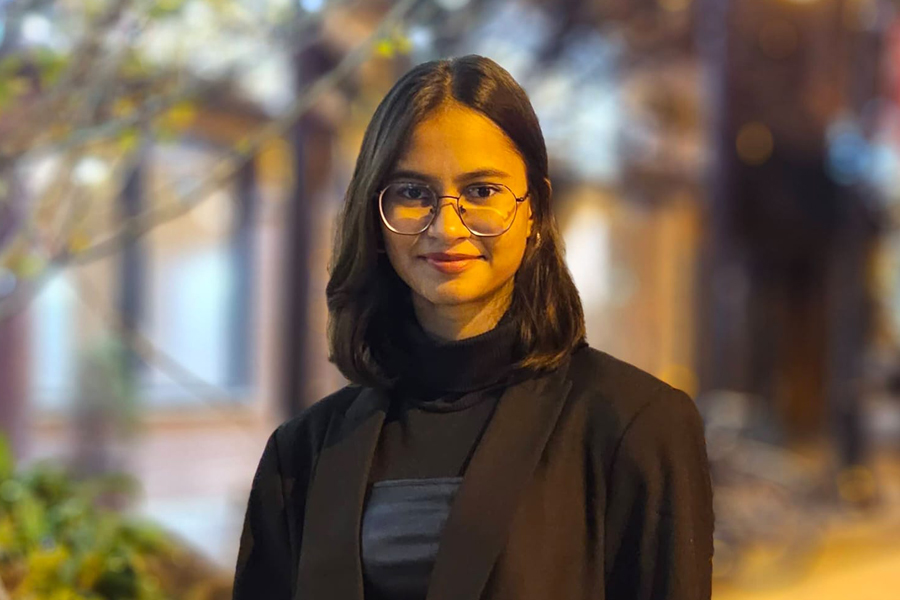
Intern Insight: Shikha Gandhi
Architecture student Shikha Gandhi’s internship with the New York City Department of Environmental Protection offered everything she hoped for as an aspiring sustainable and community-centered architect.
Intern Insight: It Takes Two
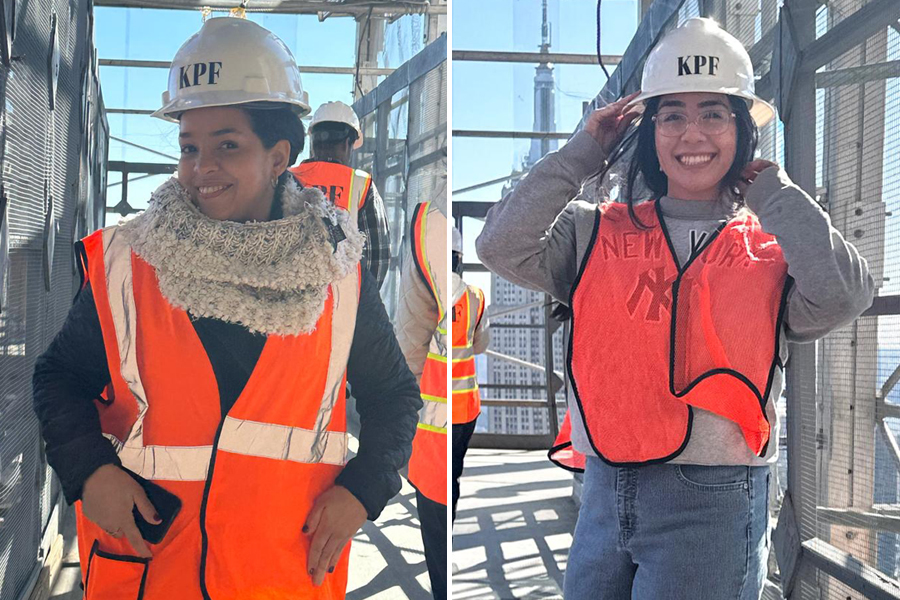
Graduate architecture students Yeisy Batista Perez and Angela Madrigal spent five months interning with the well-known, Manhattan-based architecture firm Kohn Pedersen Fox.