Advocating for Her Health
After her mother and aunt battled breast cancer, College of Osteopathic Medicine student Jeni Sacklow underwent a prophylactic double mastectomy. In observance of Breast Cancer Awareness Month, she talks about her decision and reclaiming control over her future.
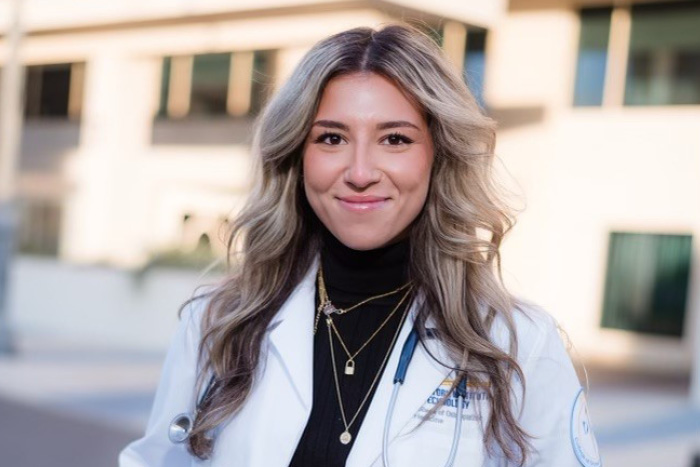
NYITCOM student Jeni Sacklow
When my mother was diagnosed with breast cancer when I was 13, we barely acknowledged it. Cancer felt like something that just happened to people, and it was an unfortunate coincidence that my mother became one of them. She had two surgeries I didn’t fully understand, started long-term medication, and we left it in the past without much discussion. It wasn’t until about six years later, when her sister—my aunt—was diagnosed with breast cancer, that we realized this might not be a coincidence but a pattern.
My aunt’s experience was much more severe. She underwent multiple surgeries, chemotherapy, and radiation. Amid her battle, genetic testing was recommended, which revealed that she carried the PALB2 mutation. This gene, similar to BRCA, is associated with a higher risk of breast, ovarian, and pancreatic cancers. When my aunt tested positive, my mother was also tested retroactively and was positive for PALB2. It was then recommended that my brother and I undergo testing when we turned 25.
When my genetic testing came back positive, it felt like the ground beneath me gave way. For the previous five years, I had been laser-focused on medical school and becoming an orthopedic surgeon. I never anticipated an interruption like this. Conversations with a genetic counselor revealed my lifetime risk for breast cancer was over 70 percent. I had two options—intensive screening every six months or a double mastectomy. Given the demands of residency, constant screening didn’t seem feasible.
I received many comments—some medical and others personal:
“But you’re so young!”
“What about breastfeeding?”
“Won’t they look fake?”
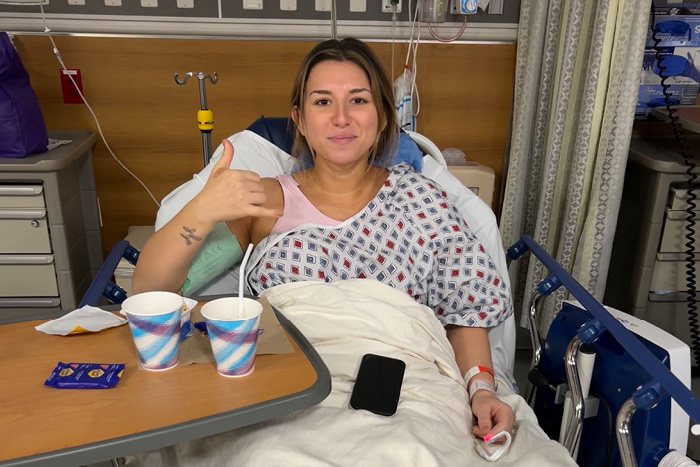
Jeni Sacklow’s decision to undergo a prophylactic double mastectomy wasn’t just about reducing her cancer risk. She wanted to reclaim control over her future.
Despite the noise, I made my decision based on a few core reasons. First, I had seen what chemotherapy and radiation can do, and I didn’t want to leave that as a future possibility. Second, opting for surgery at 26 gave me the best chance for reconstructive options, allowing me to maintain as much of my external anatomy as possible. Most importantly, it freed me to pursue my career without living in fear that breast cancer could derail my plans. Residency is five years of relentless work, and the treatment for breast cancer would throw all of that off course. Additionally, female orthopedic surgeons have a higher risk of breast cancer due to radiation exposure, which only reinforced my decision.
In the end, my decision to undergo a prophylactic double mastectomy wasn’t just about reducing my cancer risk—it was about reclaiming control over my future. While the journey has been challenging—both physically and emotionally—I know that I’ve given myself the best possible chance to live the life I’ve worked so hard to build. This experience has taught me the importance of advocating for my health, making informed decisions, and trusting in my own strength. By sharing my story, I hope to raise awareness about genetic testing and empower others to make decisions that safeguard their health and well-being, no matter how difficult those choices may be.
More News
NYITCOM-Arkansas Receives Two Grants for New Residency Program, EMS Training Initiative
Two Rural Health Transformation Project grants, totaling $3.7 million, will support health education programs at the College of Osteopathic Medicine at Arkansas State University (NYITCOM-Arkansas).
Intern Insight: Mansi Santosh Tikam
M.B.A. student Mansi Santosh Tikam spent her summer interning with MetroPlusHealth, where she learned what it means to be a marketing professional.
The Domino Effect
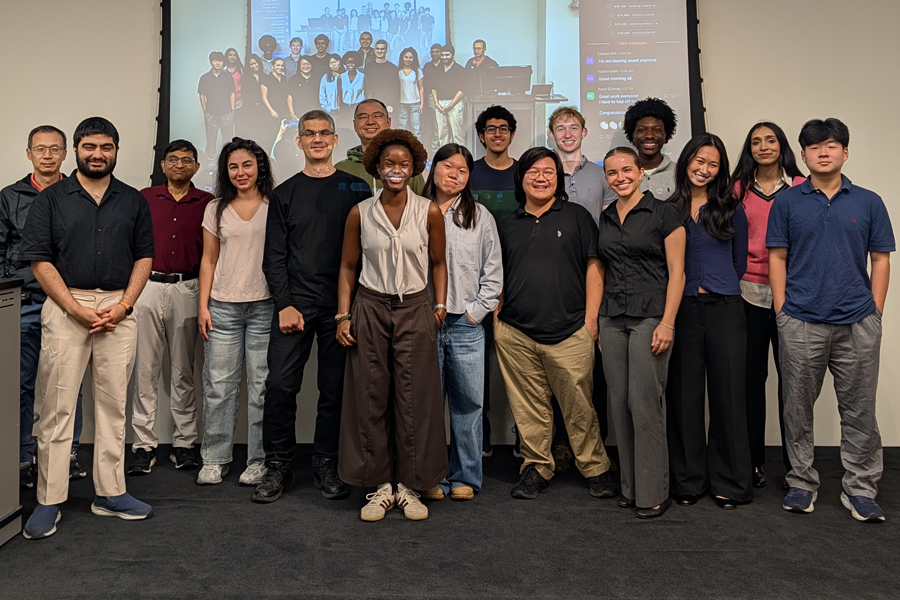
New York Tech’s Research Experiences for Undergraduates program has spent more than a decade turning summer research opportunities into lasting careers, helping build the university’s research reputation along the way.
Officers Cook at 12th Annual Cast Iron Chef
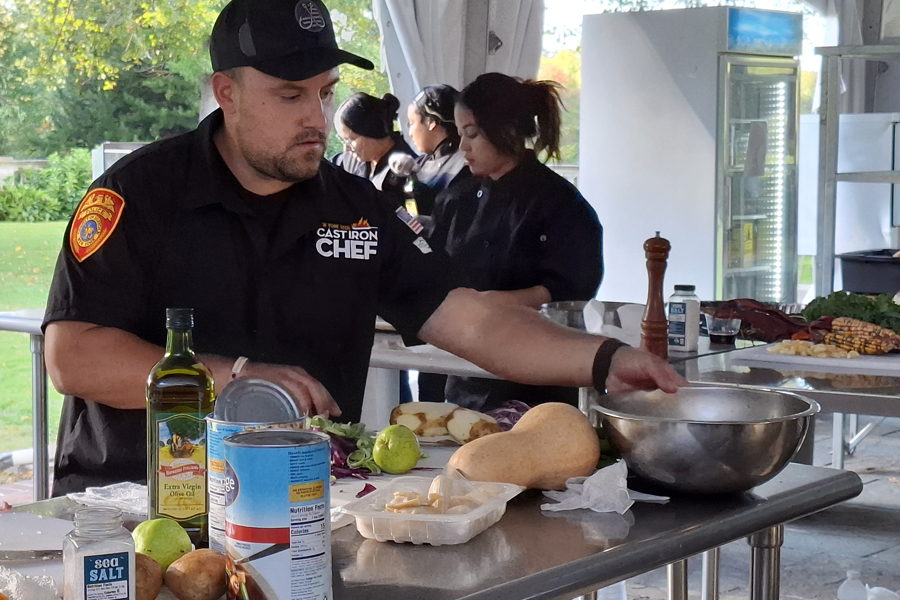
This year’s Cast Iron Chef cooking competition welcomed teams of local law enforcement officers for an evening of culinary fun.
International Collaboration: School of Architecture and Design and IUAV
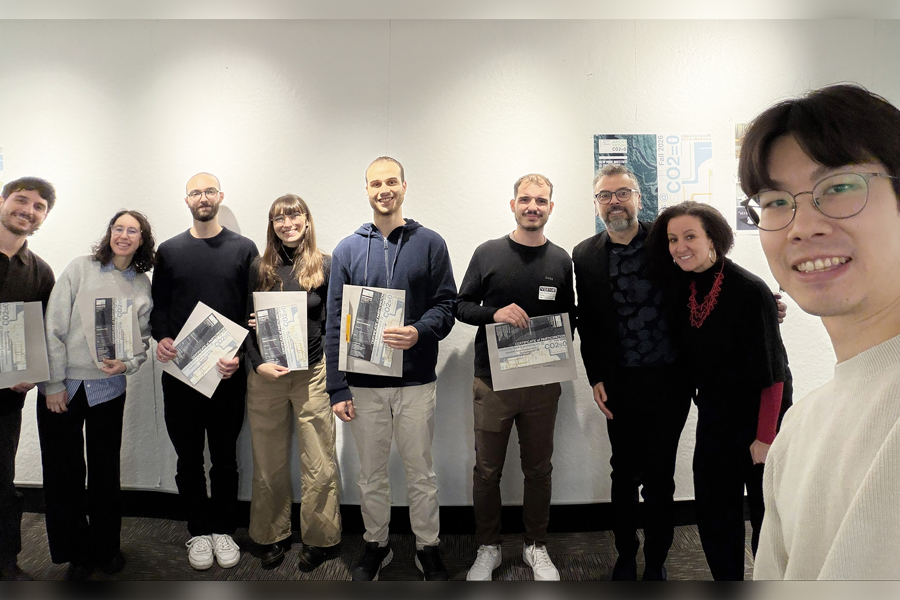
Graduate architecture students from Università Iuav di Venezia (IUAV) in Venice participated in a week-long atelier on the New York City campus, while School of Architecture and Design students traveled to Venice for a 17-day workshop.
Alumnus Joins NYITCOM-Arkansas Faculty
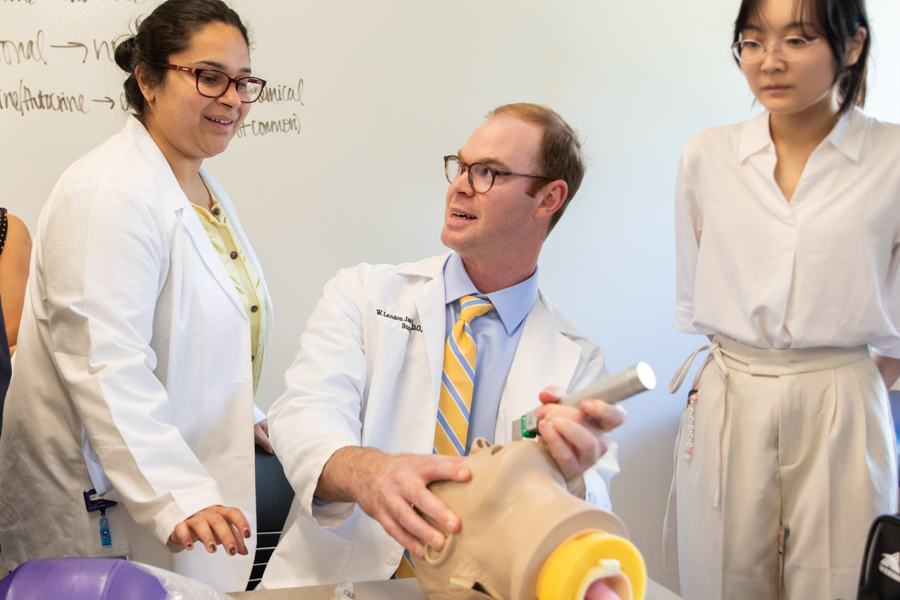
William “Landon” Jackson, (M.S. ’21, D.O. ’21) has returned to his alma mater to serve as an assistant professor in NYITCOM-Arkansas’ Department of Clinical Sciences.