
Successfully Transitioning From Idea to Prototype
Technology-based companies frequently encounter a series of challenges colloquially known as the “valley of death,” which is the period when startups develop ideas—some becoming patent-protected—that later fade away as the entrepreneurs are unable to find a contractor to build their prototype. An early-phase product model is critical to gaining investor support.
New York Tech’s Entrepreneurship and Technology Innovation Center (ETIC) helps companies and entrepreneurs struggling to build functional prototypes, writes Michael Nizich, Ph.D., director of the ETIC, in an article in CXOTech Magazine.
“At the ETIC, we help companies rocket over the valley effectively and affordably, regularly,” Nizich writes. “As a high technology prototyping center with the business acumen to help entrepreneurs meet their investor goals and requests, we’ve identified a few key factors to help entrepreneurs navigate the valley of death and transition into successful investor demos.”
The initial consideration is not to minimize the creation process—“this is a costly plunge into the valley of death that many entrepreneurs do not recover from.” Nizich suggests startups adopt a humble attitude as to how much work must be completed before their idea may come to fruition “and be prepared to see the whole project through regardless of what obstacles may present themselves along the way,” he notes.
The next consideration for entrepreneurs is to ensure their prototyping contractor understands both their business model and the market space they intend to enter. “If the contractor understands your goals and markets early in the process, then they can become a bigger part of the design process earlier, versus being just a tool to be called upon when needed,” he writes.
Finally, Nizich advises it is ideal for entrepreneurs to begin with the finished product in mind and work backwards. As prototyping companies are usually paid hourly, entrepreneurs will incur more costs if they are unsure of what their final product specs will look like. Considering elements such as look, weight, sound, and energy consumption will help to create a product specification more in line with the final version. “This can save you thousands of dollars and countless hours, days, or even weeks of design time and delays if you just think ahead a little.”
Read the full article.
More News

The Domino Effect
New York Tech’s Research Experiences for Undergraduates program has spent more than a decade turning summer research opportunities into lasting careers, helping build the university’s research reputation along the way.

My Co-op Gig: Asghar Kazmi
Computer science student Asghar Kazmi worked for five months at GE Appliances—an experience he says aligned perfectly with his career goals.

New York Tech To Be Ranked Among National Universities
For the 2027 U.S. News & World Report annual rankings, New York Tech will be included in a new ranking category—National Universities.

Convocation 2026: Success in a Time of Change
At the annual faculty and staff convocation, New York Tech President Jerry Balentine reflected on the accomplishments over the past year and presented his vision for the future.
Robust Research
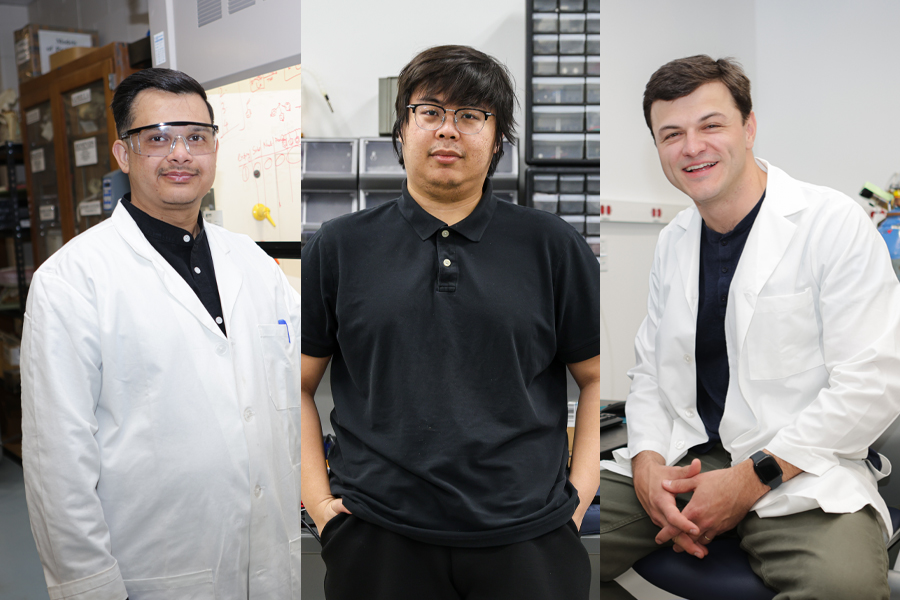
New York Tech’s commitment to research paves the way for important and groundbreaking work. Meet three Ph.D. students whose work may improve disaster response, recovery after muscle and bone injuries, and anticancer therapies.

A Passion for Games, a Vision for Business
College of Engineering and Computing Sciences student Cody Ortiz helps his father run a florist shop, an endeavor that inspired him to become an entrepreneur, too.