International Collaboration: School of Architecture and Design and IUAV
In September, six graduate students from Università Iuav di Venezia (IUAV) in Venice participated in Toward New Landscape, a one-week atelier hosted by the School of Architecture and Design on the New York City campus.
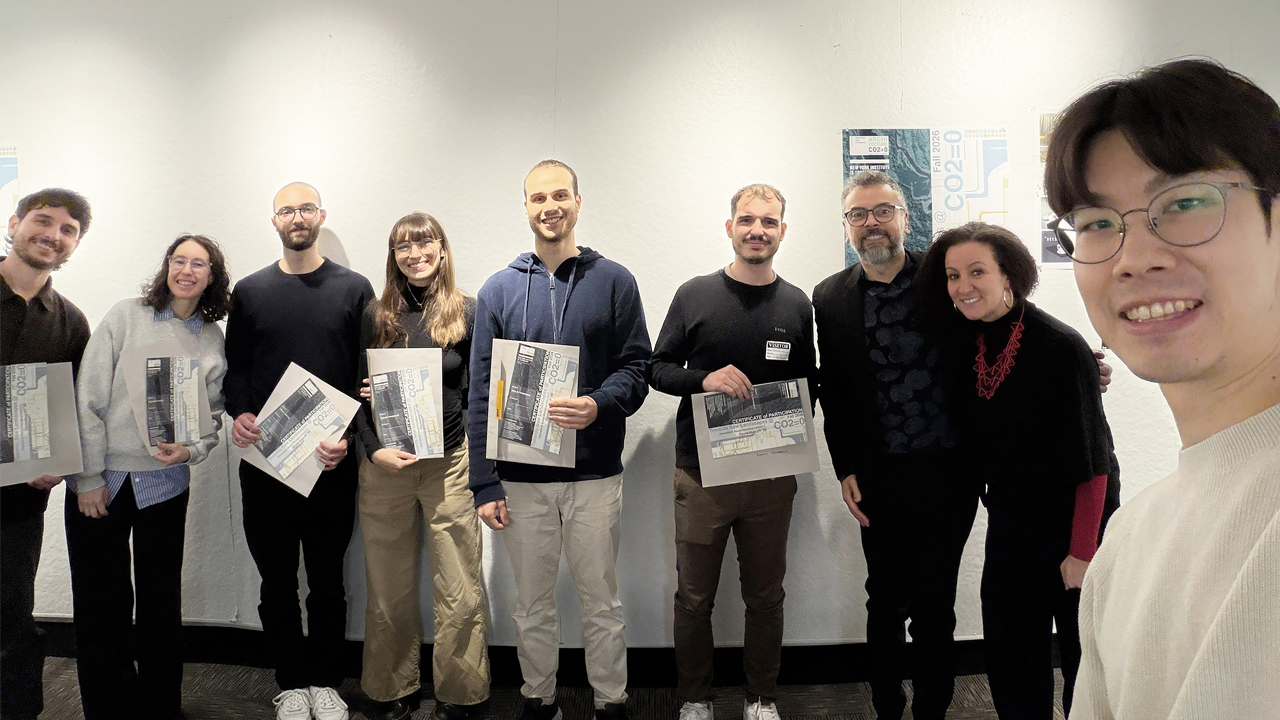
The workshop was led by Associate Dean for Academic Operations and Professor of Architecture Giovanni Santamaria, Ph.D., in collaboration with Director of the Master’s in Urban Design and Associate Professor of Architecture Marcella Del Signore, M.Arch.
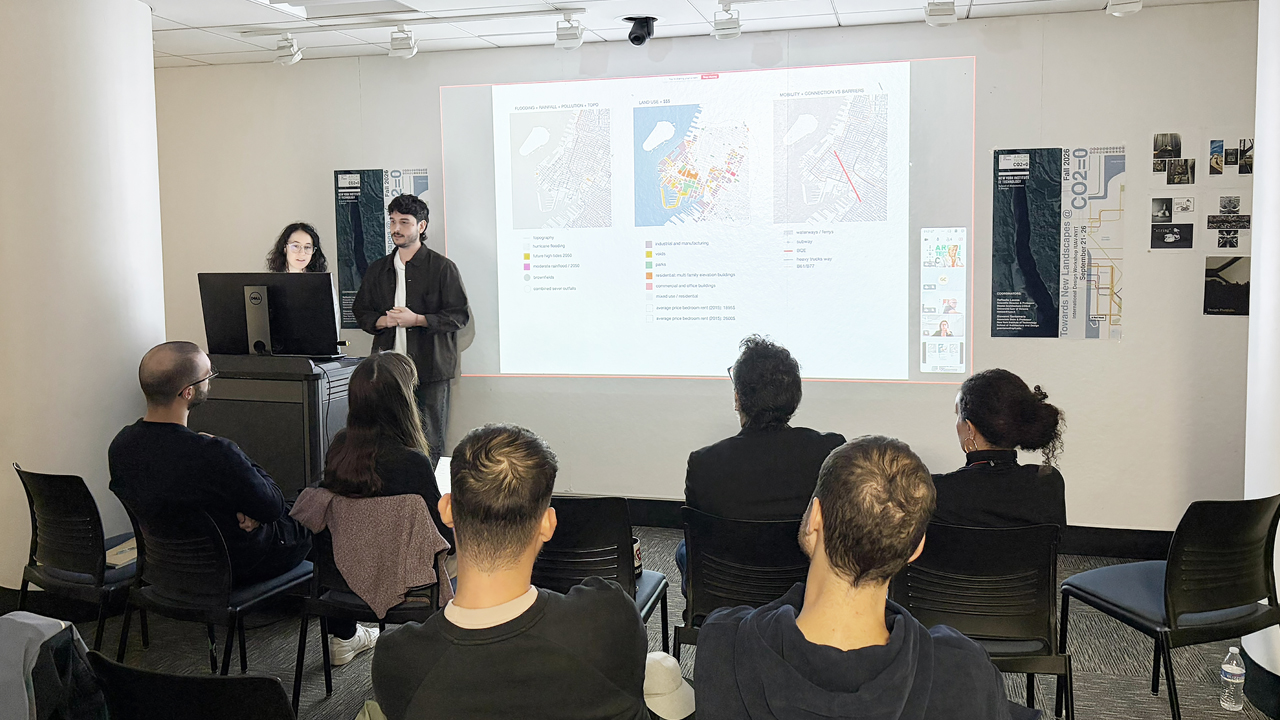
The workshop focused on topics involving environmental vulnerability and sustainable design experimentation. The IUAV students worked in teams of two to survey, analyze, and propose possible scenarios for the future of the waterfront in Red Hook in Brooklyn, N.Y. They investigated issues such as climate change, rising water, and pollution, as well as infrastructural, urban, and social issues. The students created in-depth mapping analysis and strategic plans to approach these issues holistically and systemically, offering opportunities for new sustainable design visions that will improve quality of life and the urban experience of the area, as illustrated in the team’s final presentations.
The September workshop follows the School of Architecture and Design’s participation at the International WAVe 2026 Design Workshop in Venice last July.
Eight New York Tech undergraduate and graduate architecture students traveled to Venice through the school’s Summer Program Abroad, where they attended IUAV’s WAVe 2026 international workshop led by IUAV Scientific Director and Professor of Master of Architecture Raffaella Laezza and New York Tech Teaching Assistant Professor of Architecture Evan Shieh, M.AUD.
The students participated in Sacred Equilibria: The Architecture of New Cosmogonies, a 17-day atelier that brought together 62 students who investigated balance as a sacred natural condition as well as a humanistic value extending beyond strictly religious or cultural definitions. Rather than presenting sacredness as a predetermined collective aspect, the workshop approached it as a process of individual discovery, interpretation, and continuous search in connection with various contexts.
Students moved rapidly between site analysis, conceptual diagrams, drawings, physical models, collages, and animation, culminating in a full-scale collective exhibition at IUAV in Santa Marta that transformed the atelier’s research into a unified spatial installation with approximately 2,400 frottages (drawings created by rubbing graphite over a textured surface) suspended overhead, while more than 100 process and final physical models occupied the floor below.
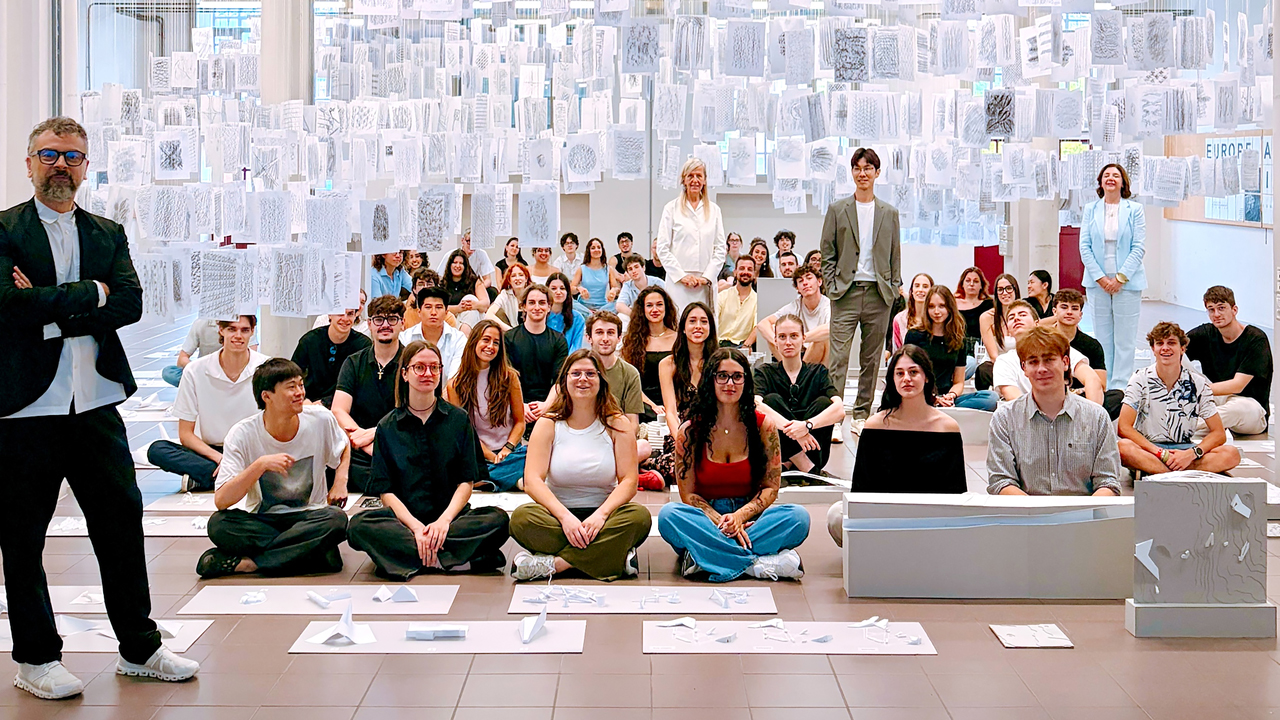
Students worked in eight teams across eight sites: Ouagadougou in Burkina Faso, Red Hook in New York, São Cristóvão in Rio de Janeiro; the Almirante Brown Antarctic Base; Sham Shui Po in Hong Kong; Wentworth Park in Sydney; San Francesco del Deserto in the Venetian Lagoon in Veneto, Italy; and the Apollo 11 landing site at Tranquility Base on the Moon. Each site was paired with one of four elemental lenses: ground, water, air, or landscape.
In both workshops, Venice and New York served as an expanded classroom, offering a direct encounter with a city where ground, water, atmosphere, materials, preservation/transformation, and everyday life remain in constant and visible negotiation.
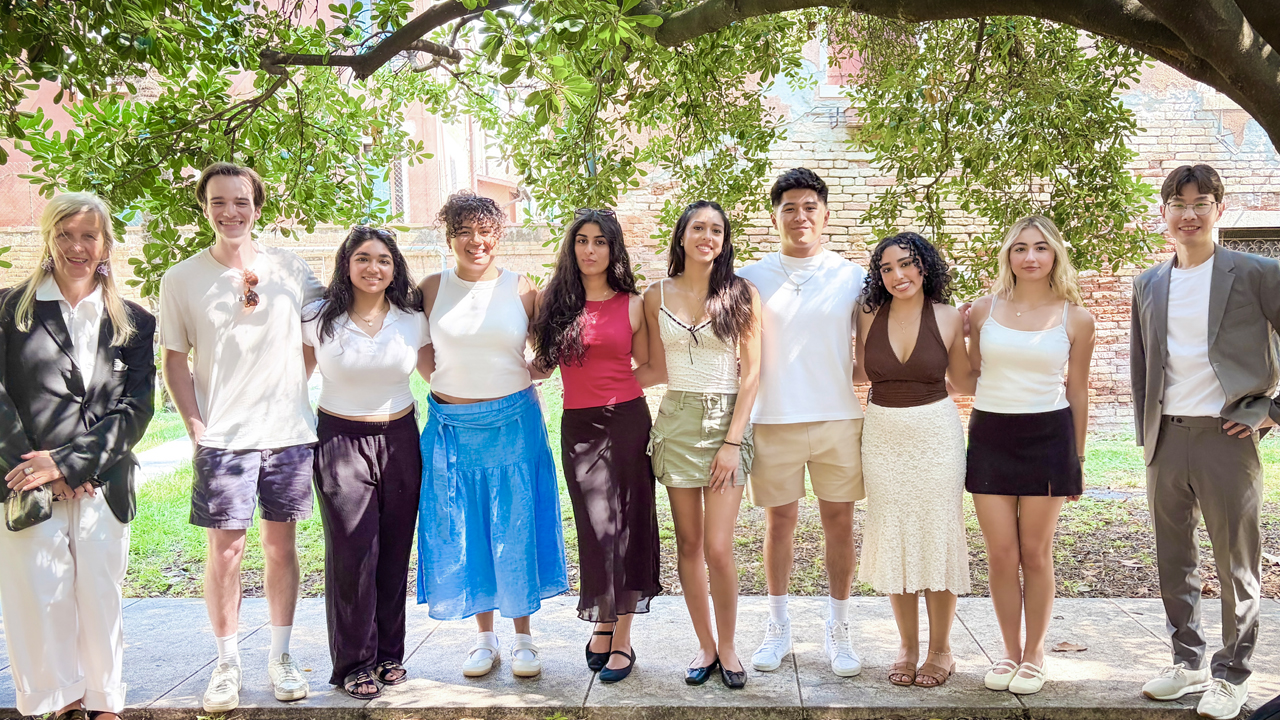
The workshops demonstrate how temporary communities of students and faculty can produce forms of exchange, and how design across scales can serve as a method for connecting distant places, ecological conditions, and shared planetary concerns.
Through this immersive experience, students encountered architecture as both an individual discipline and a collective cultural practice. Both experiences expanded the students’ understanding of site, scale, representation, teamwork, and international design education, while asking them to define their own architectural decisions.
“These collaborative experiences, proactively operating through rethinking and re-designing specific sites, offered students an extraordinary opportunity to experience architecture as a truly global and collaborative discipline,” says Dean Maria Perbellini, M.Arch. “Our collaboration with IUAV provides a valuable platform for students and faculty to exchange ideas, engage different cultural and pedagogical perspectives, and explore architecture in relation to some of the most pressing environmental and societal challenges of our time.”
Participating School of Architecture and Design Students:
- Anjali Arora
- Arianna Asencio
- Annabel Espinal
- Arianna Estell
- Christopher Fauty
- John Mann
- Andreanna Moustakis
- Simran Shah
This article was contributed by Giovanni Santamaria.
More News
Forward-Thinking Design
Associate Professor of Architecture Clarke Snell, M.Arch., uses technology to link form and performance.
A Head Start in Architecture
Architecture student Satish Doobay’s ongoing internship with an alumna’s firm is helping prepare him for a future in the field.
New York Tech To Be Ranked Among National Universities
For the 2027 U.S. News & World Report annual rankings, New York Tech will be included in a new ranking category—National Universities.
Convocation 2026: Success in a Time of Change
At the annual faculty and staff convocation, New York Tech President Jerry Balentine reflected on the accomplishments over the past year and presented his vision for the future.
Intern Insight: Brandon Vasquez
This summer, architecture student Brandon Vasquez interned with Gensler, a globally recognized architecture, design, and planning firm.
Discover Jiangxi: Two Undergraduate Students’ Experience
For two weeks in July, a nursing student and an architecture student studied on the other side of the globe through the Discover Jiangxi program.