Natural Talent
Ayodele Washington, who just finished her freshman year as an architecture student in the School of Architecture and Design, has already built a house with her own two hands.

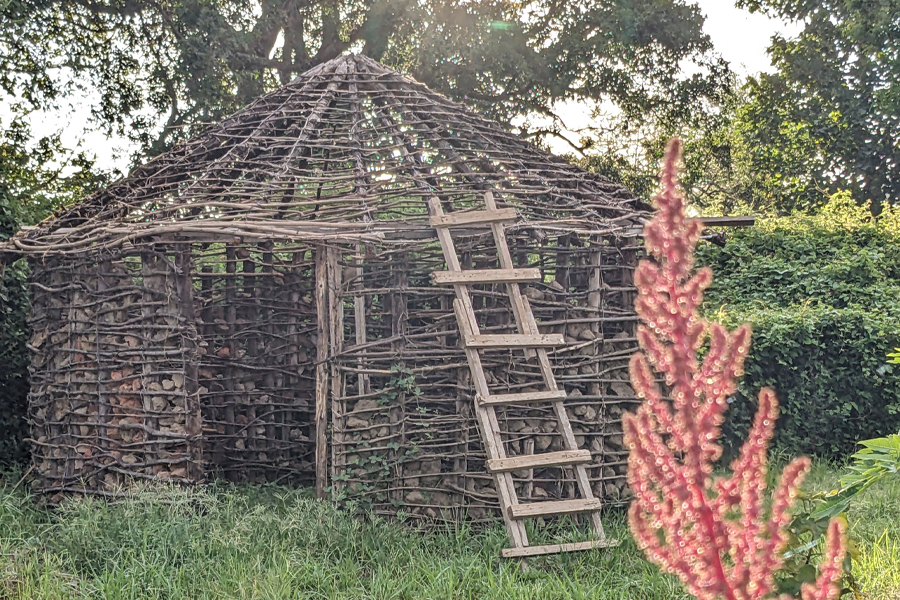
“After my senior year of high school, I was living in Tanzania and noticed traditional building techniques were being replaced by foreign techniques that didn’t fit into the environment,” Washington says. “So I learned about the traditional architecture of the Maasai house, which is basically a mud hut. They have been used for hundreds of years by the Maasai tribes of northern Tanzania and southern Kenya. I wrote about that experience for my application essay for the [New York Tech] Honors College because my interests lie in sustainable buildings.”
As part of the construction experience on her family’s land in Tanzania, Washington learned about the Maasai house’s sustainable aspects. The building materials—including tree limbs, sisal fiber, stones, and mud—are local and easy to find, and the outer mud layer provides temperature control without needing electricity. When properly maintained, the buildings are remarkably sturdy, and as a professional architect, Washington intends to design environmentally conscious buildings that endure.
“In my career, I want to design and develop buildings that are sustainable and better not only for humans but also for the Earth,” says Washington, who is in Tanzania for the summer with her family. “I want to preserve traditional building techniques and try to limit the impacts of climate change.”
During the past academic year, she led a day-long architecture class for middle and high school students in Tanzania as one of her Honors College volunteer requirements. She partnered with the United African Alliance Community Center (UAACC) to set up the Zoom class to introduce the students to architecture as a possible career path.
“I made a presentation about building techniques, and I showed them drawings of the Church of Saint George [a monolithic church in Ethiopia carved from volcanic rock] and other buildings,” Washington says. “We spent time drawing and talked about our thoughts, and I gave them feedback. I worked to make architecture seem within their reach. It was a really fun and impactful experience.”
“Ayodele possesses a natural understanding of architecture’s relationship to environmental conditions and broader sociopolitical issues, approaching historical material with both curiosity and critical insight,” says Marcus Wilford (B.Arch. ’16), an adjunct assistant professor in the School of Architecture and Design. “In my Introduction to Architecture History course, she demonstrated a particular interest in vernacular architecture across Africa, exploring how local building traditions embody cultural values, climatic responses, and social structures. What impressed me most was her desire to extend these lessons beyond the history classroom, actively seeking ways to apply these theories and principles within her design studios and broader architectural thinking.”
Washington says she has found support for this broader way of thinking both from professors and from the university as a whole, particularly in the Honors College.
“The Honors College has helped me to broaden my perspective on the part I can play and the part my career can play in terms of United Nations goals [for sustainability],” says Washington, who wants to be an architect and developer in East Africa after she graduates. “It has helped me think about humanity’s relationship to things outside of architecture, like our relationship with water. That will help with my designs later on.
“It’s really nice to have a community of people in the Honors College with similar goals in mind,” she adds. “My biggest goal is to bridge the gap between sustainability, modern ideals, and traditional architecture to create spaces that honor the earth and the people who live in the area, spaces that aren’t dictated by foreign ideals but instead are dictated by local ideals and are comforting to the people who live there.”
By Ashley Festa
More Features

Forward-Thinking Design
Associate Professor of Architecture Clarke Snell, M.Arch., uses technology to link form and performance.
A Head Start in Architecture
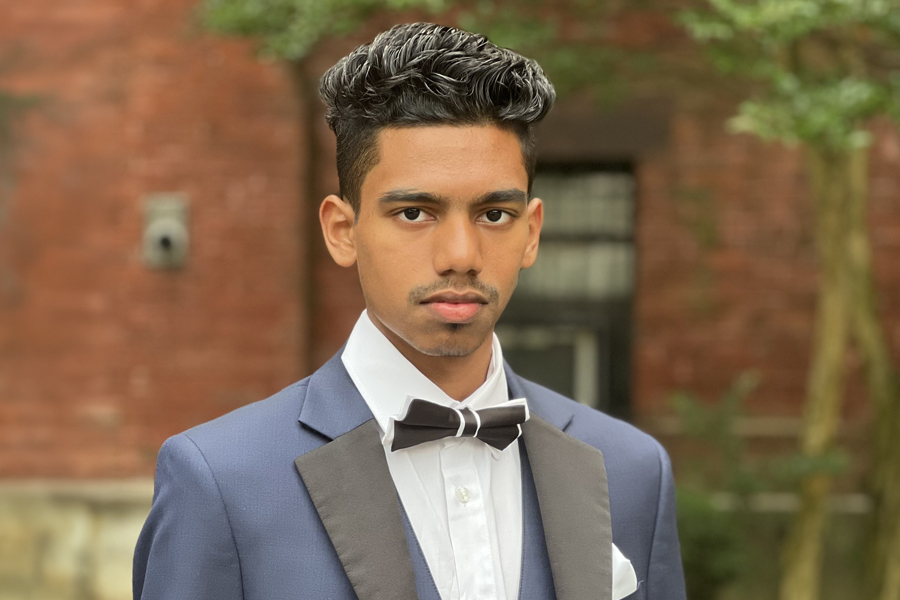
Architecture student Satish Doobay’s ongoing internship with an alumna’s firm is helping prepare him for a future in the field.
A Lifelong Learner
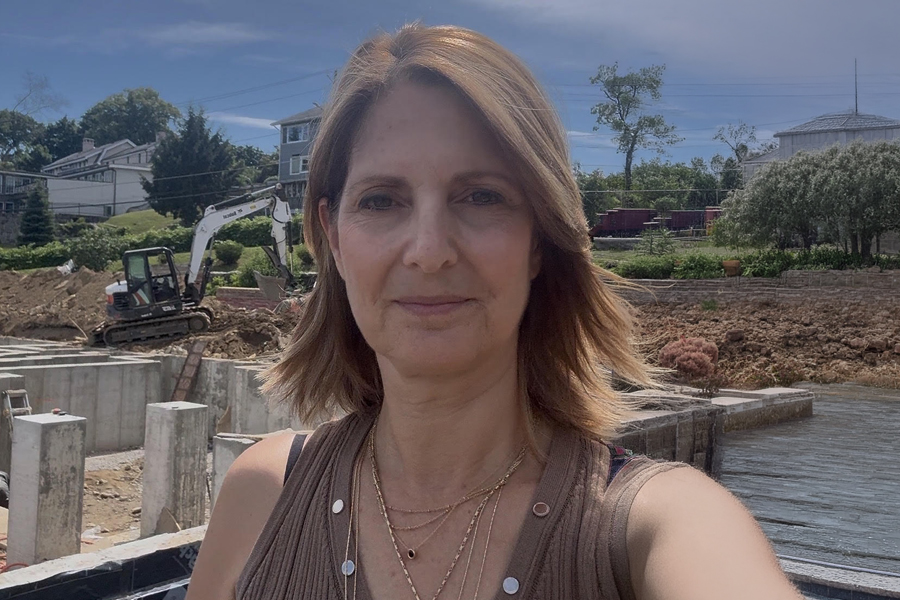
Adjunct Instructor of Architecture Efrat Nizan (B.Arch.’ 98) looks ahead to new lessons—for herself and her students.

Fulbright Scholar Traces Her Roots
Emmy award-winner and Fulbright Senior Scholar Vanessa Botelho (B.F.A. ’95) is writing a historical memoir about Anglo-Indian identity.

Restoring the City
Anita Konfederak (B.Arch. ’85) has spent her career protecting New York City’s skyline.
A Solid Foundation for Success
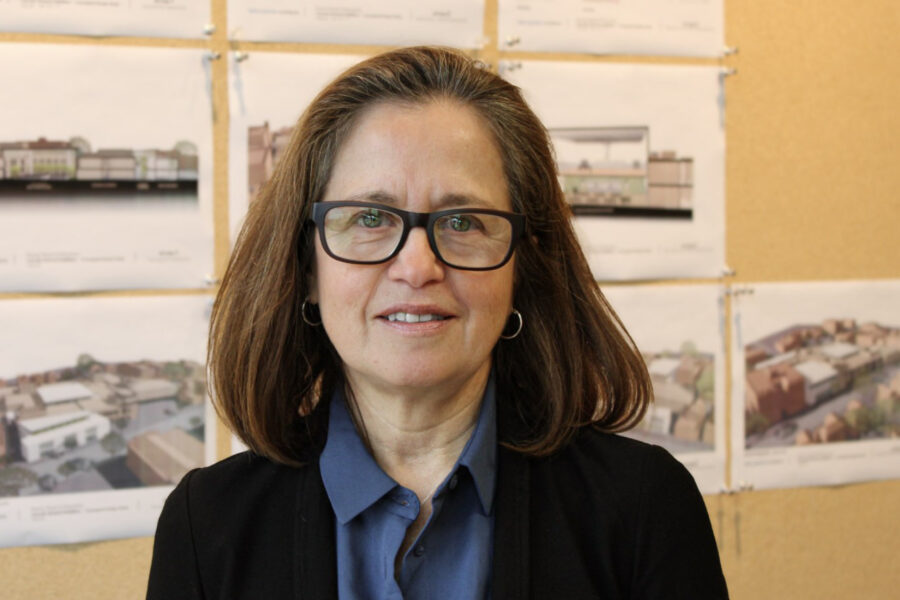
For Elizabeth Pacheco, AIA (B.S. ’86), a passion for drawing led to a longstanding career as an architect.