NYITCOM Debuts Health Policy and Research Symposium
On April 22, the College of Osteopathic Medicine (NYITCOM) hosted its first State of Health Policy and Research Symposium.
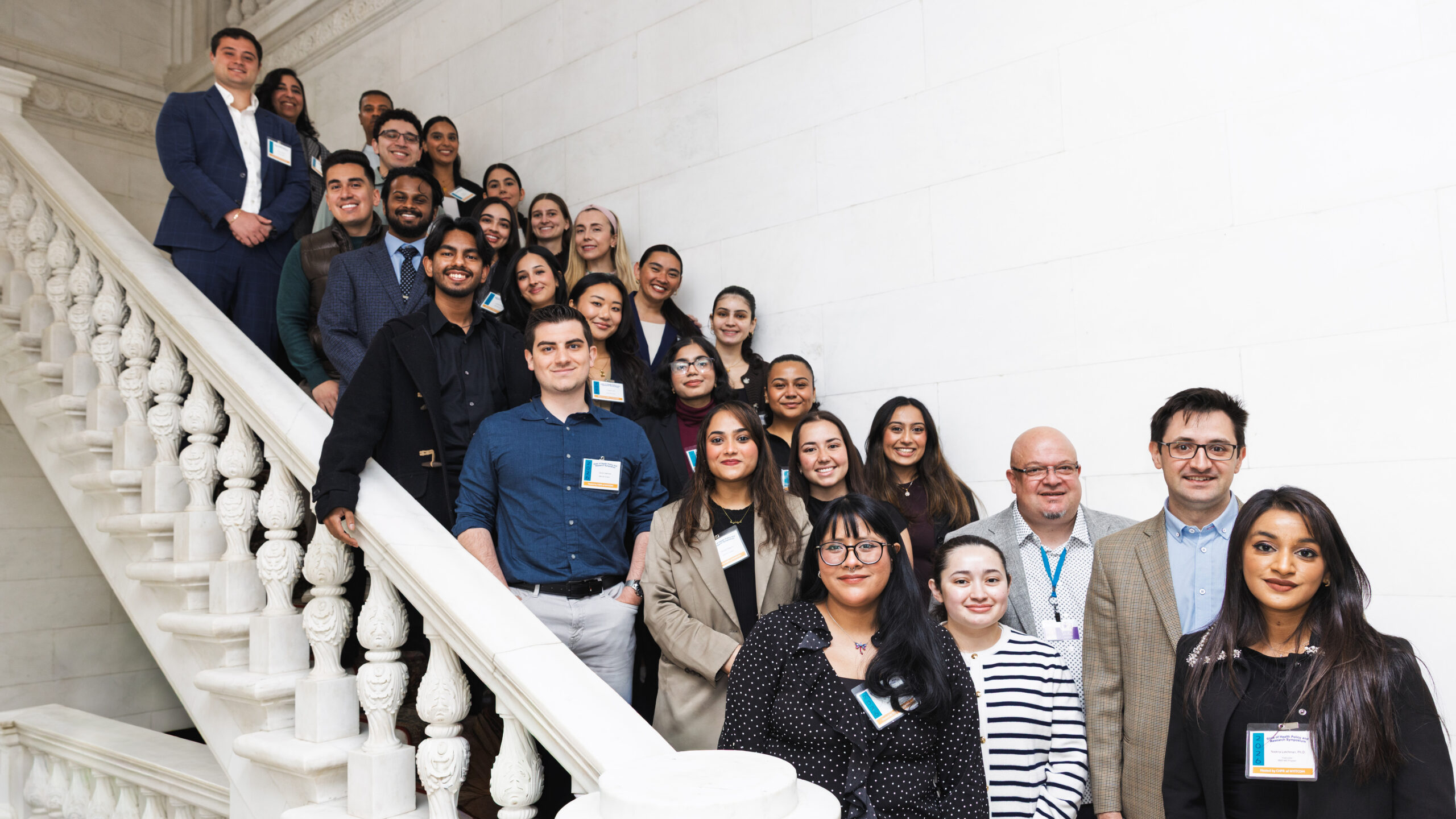
Organized by NYITCOM’s Center for Health Policy Research (CHPR), the event was held at NYIT de Seversky Mansion. Here, NYITCOM students—including students in the Biomedical Sciences, M.S. program—had the opportunity to convene with academic leaders, policy experts, and researchers for interdisciplinary discussions on pressing issues affecting healthcare and the biomedical research landscape.
“As physicians, we have a duty to advocate for the well-being of our patients,” NYITCOM Dean Nicole Wadsworth, D.O., told New York Tech News. “Those who engage in health policy and biomedical research during their medical education are well-positioned to extend their impact beyond individual patients to entire populations—shaping systems, advancing equity, and ensuring that clinical insight informs how care is delivered. These scholarly experiences prepare our students to champion the needs of their future patients and the medical profession as a whole.”
Former President of Mount Sinai Health Network and NYITCOM Dean Advisory Board member Arthur Klein, M.D., moderated the morning panel on health policy, which featured expert insights from esteemed alumnus Joseph A. Puma (D.O. ’85), cardiologist and president of Sorin Medical, and Jordan Lowmark, M.P.H., director of digital health at Sachs Policy Group. The afternoon panel, moderated by CHPR Founding Director and Professor of Biomedical Sciences Joerg Leheste, Ph.D., M.Sc., examined trends and challenges in research. Speakers included Jennifer Tassler, J.D., vice president of government relations and strategic affairs for the Associated Medical Schools of New York, and Paul W. Ference Thurman, D.B.A., associate professor at Columbia University’s Mailman School of Public Health.
During the afternoon’s poster presentation session, research projects by NYITCOM students and faculty mentors covered a wide array of public health and medical issues. Among other topics, projects examined federally funded biomedical research, mental health stressors, measles vaccination, orthopedic treatments, and Alzheimer’s disease, with Leheste serving as a faculty mentor on nearly a dozen studies. Among others, NYITCOM faculty mentors included Brian Beatty, Ph.D., Vladimir Grubisic, M.D., Ph.D., Satoru Kobayashi, Ph.D., Qiangrong Liang, M.D, Ph.D., Kaie Ojamaa, Ph.D., Alfred M. Phreley, Ph.D., Raddy L. Ramos, Ph.D., Randy Stout, Ph.D., and Haotian Zhao, M.D., Ph.D.
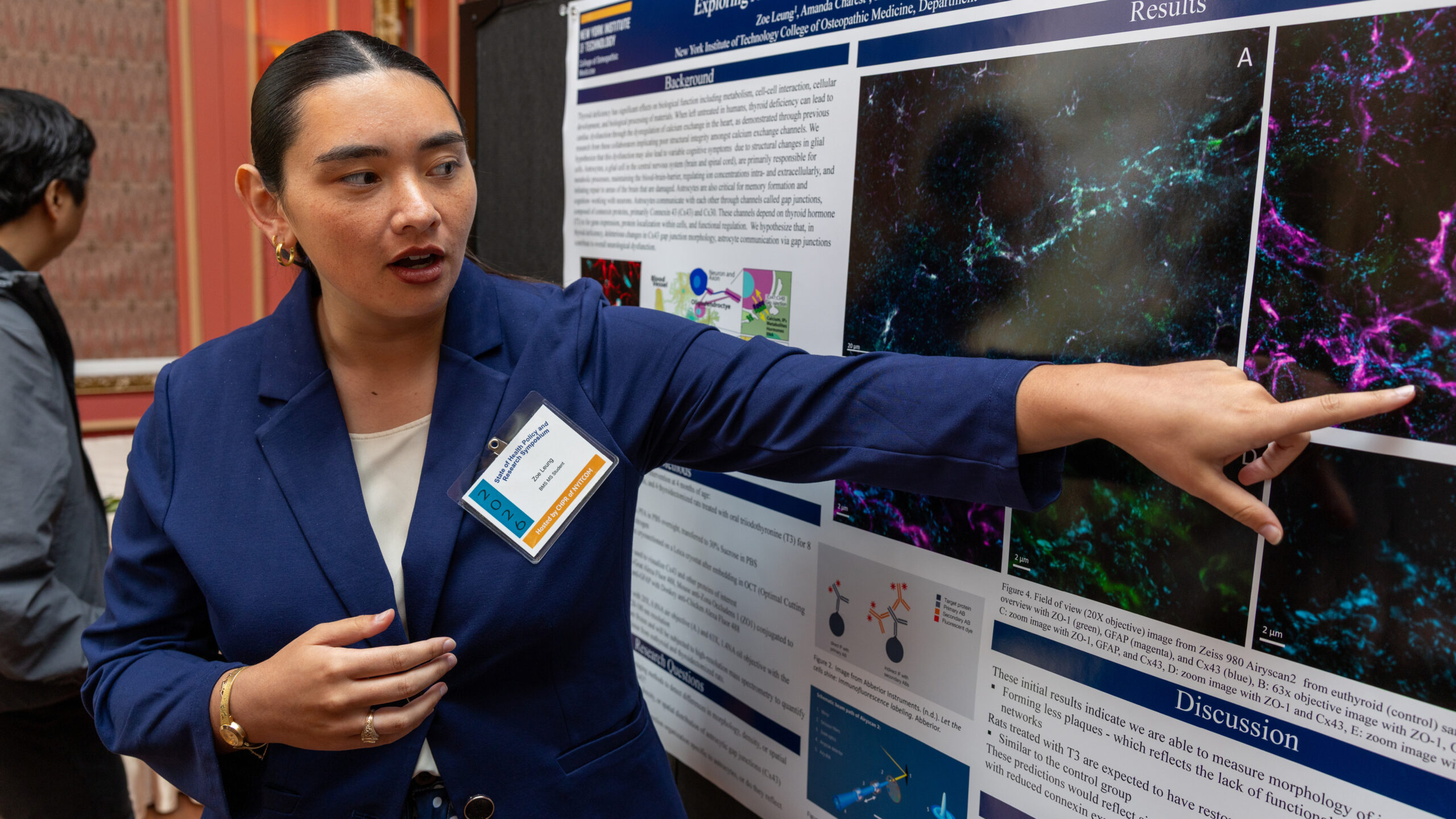
Student researchers who presented findings on behalf of their larger research teams and faculty mentors included:
Emily Angelillo-Burton: “Understanding Choroid Plexus Differentiation Using Organoids Derived from Human Stem Cells”
Robert Colbath: “Measles Resurgence and MMR Vaccine Policy in the United States: A Health Policy Brief”
Chandrema Hossain: “Live Cell Imaging Reveals Upregulation of Mitochondria-Lysosome Contact Dynamics and Lysosomal Motility in Doxorubicin-induced Cardiotoxicity”
Syed Hussainy: “Structural and Pathophysiological Changes in the Enteric Nervous System of 5xFAD Mouse Model of Alzheimer’s Disease”
Anusha Imran (three projects): “Preparation of Human Achilles Tendon Sections Using Cryotome and Cryotape for Histological Analysis;” “Regional Condylar Component Influences Femoral Prosthetic Wear in Total Knee Arthroplasty;” “3-D Topography Reveals Regional Femoral Wear Independent of Patient Demographics in Total Knee Arthroplasty”
Deep Kaur: “Clinical-Based Approach to Understanding Menopause Symptoms”
Palwasha Khan: “Defining the Baseline: Quantitative Mapping of Human Skin Texture Variation with GelSight”
Chloe Kim: “Demographic and Behavioral Determinants of Skin Cancer: A Cross-Sectional Analysis of NHANES 2017–2020”
Dokyeong Kim: “Socioeconomic Trends within Patient Population of Hypertriglyceridemia and Acute Pancreatitis: A 7-Year Study”
Amelia Lam: “Fort Peck Native American Health Education Continuum: Strong Spirits, Healing Paths”
Zoe Leung: “Exploring Astrocyte Morphology in a Thyroid Deficient Model”
Katie Mata: “The Dormant Trigger: Is Parkinson’s a Chronic Intracellular Infection?”
Shwana Noorani: “Bridging Silos: An Interdisciplinary Educational Approach for Ambulatory Care Expansion on Long Island”
Wendy Qu: “Impact of Colonoscopy Timing on Clinical Outcomes in Low-Risk Lower Gastrointestinal Bleeding: A National Retrospective Cohort Study”
Deonarine Rampershad: “Are Binucleate Neurons Present in the CNTNAP2 Mouse Models of Autism?”
Antony and Andrew Rizk: “Whale Carcass Immersion Therapy for Arthritis: A Historical Anecdote Revisited Through Modern Biomedical Lenses”
Jonathan Rodriguez: “Micro CT Evaluation of Alveolar Dimensions That Differ Between Smokers and Non-Smokers”
Cristina Ruiz: “Geographic Information Systems on Long Island: Evaluating Environmental Risk Factors for Autism Spectrum Disorder to Inform Groundwater Policy”
Andres Salazar (two projects): “Surface Topography Analysis of Wear Patterns in Retrieved Resurfaced Patellae;” “Demographic Factors Predict Distinct Surface Wear Patterns in Resurfaced Total Knee Arthroplast Patellae”
Nardine Samuel: “The Impact of NIH Budget Cuts on NIAID-Funded Research and Biomedical Innovation”
Maria Shenouda: “Clinical Characterization and Inpatient Outcomes of Hospitalized Adults with ASCVD and Coded Elevated Lipoprotein(a): A National Inpatient Analysis”
Katelyn Shibilski: “Cortical Representation and Criminality: Assessing Facial Motor Control as a Biomarker for Violent Predisposition”
Suhina Srivastav: “Autonomy vs. Access: Evaluating the Ethical Framework and Legislative Evolution of Medical Aid in Dying”
Solange Tchounwou: “Cutting at the “STEM” (Science, Technology, Engineering, & Mathematics)”
Alisha Tiwari: “When Pediatric Care Ends: How Youth with MEDB Conditions Fare Nationally Versus in New York State”
Suruchi Verma: “Heat of the Crisis: A Health Policy Approach to the Impact of Climate Stressors on Mental Health in Los Angeles County”
Paige Vinch: “From Mentee to Mentor: The Role of Mentorship in Shaping Evidence-Based Medical Students”
Michelle Zhang: “When Demand Outpaces Supply: Impact of Semaglutide Shortages on Diabetes Care Access”
More News
New York Tech To Be Ranked Among National Universities
For the 2027 U.S. News & World Report annual rankings, New York Tech will be included in a new ranking category—National Universities.
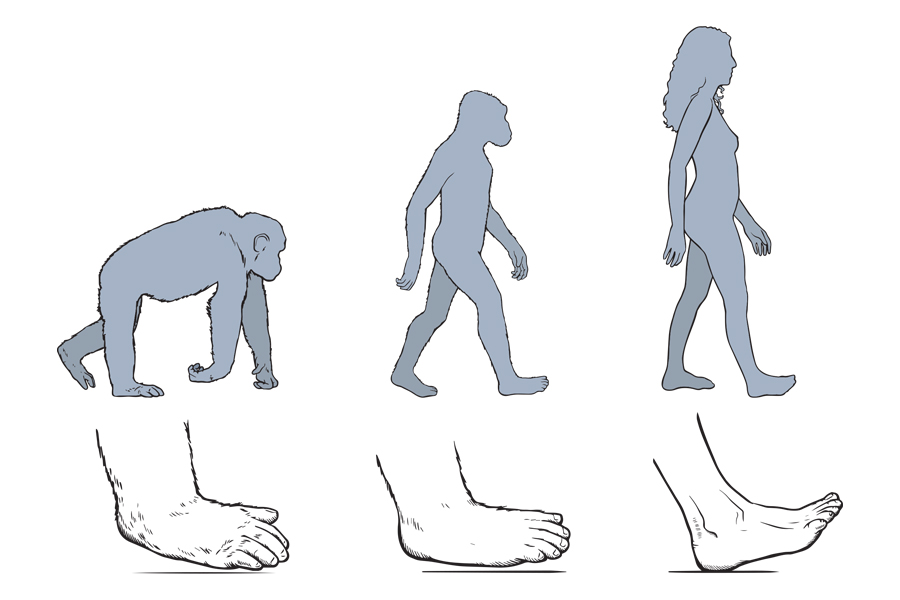
The Evolutionary Significance of Humans’ Unique Heel-Toe Walking Pattern
Associate Professor of Anatomy Nathan E. Thompson, Ph.D., contributes to research unveiling clues to the origin of humans’ stride pattern.
Robust Research
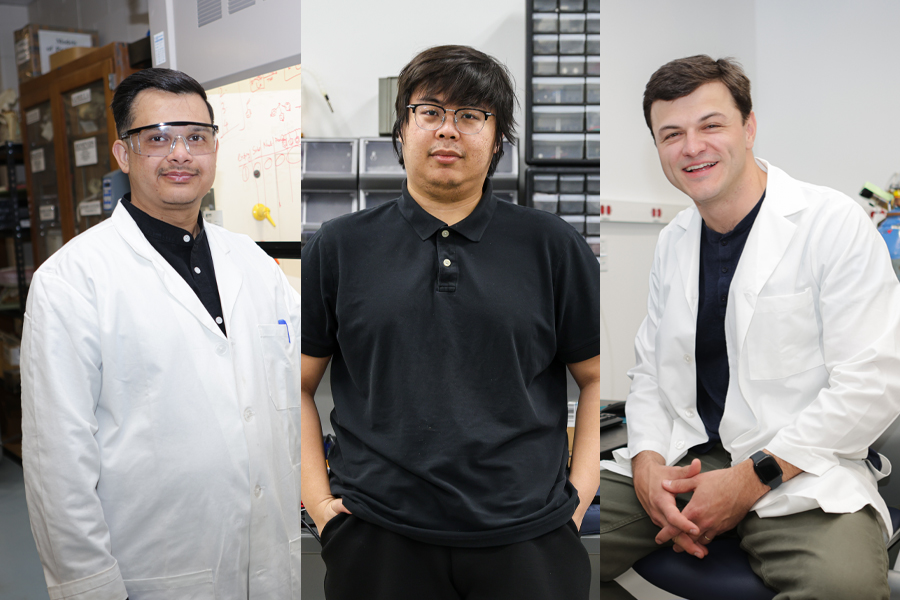
New York Tech’s commitment to research paves the way for important and groundbreaking work. Meet three Ph.D. students whose work may improve disaster response, recovery after muscle and bone injuries, and anticancer therapies.
NYITCOM-Arkansas’ Rajagopalan Receives $573K NIH Grant for Cardiovascular Disease Research
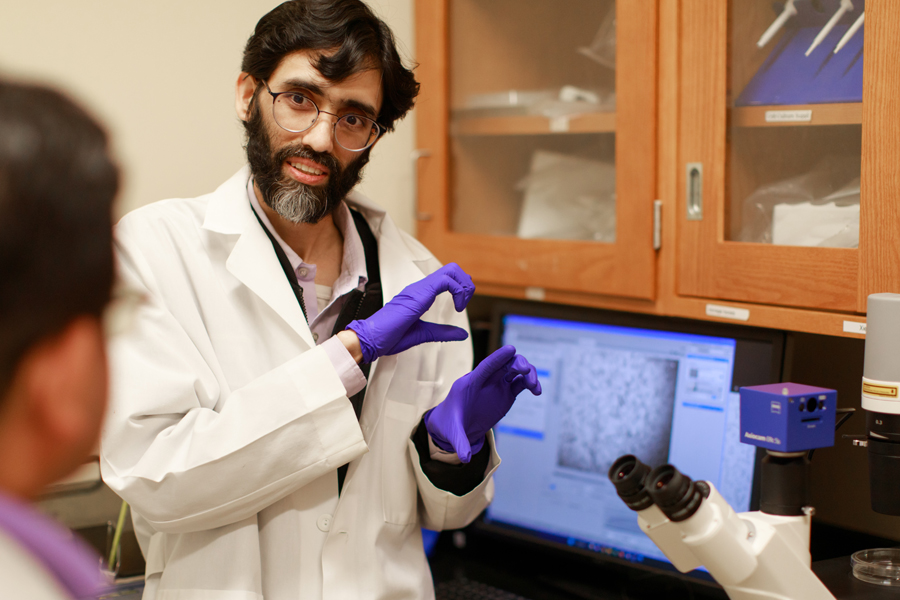
The funding will further Associate Professor Viswanathan Rajagopalan’s research regarding the impact thyroid dysfunction has on cardiovascular disease.
NYITCOM Student Receives American Heart Association Scholarship
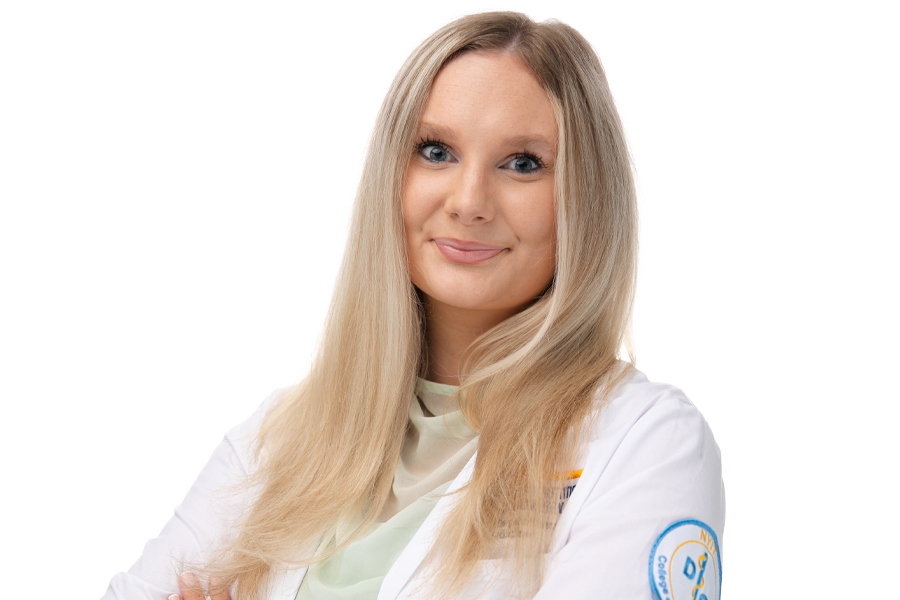
A student researcher from the College of Osteopathic Medicine (NYITCOM) has secured the prestigious Student Scholarship in Cardiovascular Disease from the American Heart Association.

Fellows’ Field Notes: Bofan He and Christine Lee
Edward Guiliano Global Fellowship recipients Bofan He and Christine Lee reflect on their experiences as they traveled to conduct academic research.