
Uncovering the Body’s Fat-Burning Strategy—It’s Math-Driven!
New research by a professor at the College of Osteopathic Medicine at Arkansas State University (NYITCOM-Arkansas) reveals that our bodies are far smarter about using fat for energy than we might expect—a finding that could reshape scientific understanding of fat metabolism.
As reported in the journal BBA Advances, a new study by Assistant Professor and Assistant Director of Educational Research Natarajan Ganesan, Ph.D., suggests that the body doesn’t burn fat at random. Instead, it selectively chooses certain types of fat that produce the most usable energy while consuming the least oxygen. The findings shed new light on the body’s metabolic processes and may lay the groundwork for improving understanding of obesity-linked diseases and weight management strategies.
“If you had to take a long trip with only a small tank of gas, you wouldn’t choose the gas-guzzling car—you’d choose a more fuel-efficient option. Your cells do the same thing by selecting fats that give them the biggest energy return for oxygen available,” says Ganesan. “What I observed using calculations, derivations, and examining thermodynamics is that our body runs on what I call an ‘oxygen economy.’ When oxygen is rate limited, which is basically all the time, our cells preferentially burn fatty acids that give them the most ATP [adenosine triphosphate] (the fuel cells use for energy) per oxygen molecule consumed.”
His mathematical modeling reveals that fat-burning efficiency reaches a “sweet spot,” peaking in fats with only one to two double bonds (where two atoms link tightly). For example, oleic acid, an unsaturated fat and the primary ingredient in olive oil, contains only one double bond, making it an efficient fat-burning source. Fats that match this profile dominate human fat tissue, suggesting that our bodies have evolved to store the most metabolically efficient fats.
“For a long time, we thought of fat metabolism as straightforward: eat fats, store them, burn them when needed, essentially supply and demand. Selective burn and deposition were observed yet incompletely explained,” says Ganesan. “But my model suggests something more complex, thermodynamically driven. If there’s a mathematical pattern governing which fats get burned, and that pattern depends on oxygen and ATP levels, then there must be proteins actively sensing these factors and making decisions in real time.”
He likens this protein activity to a smart thermostat, except instead of sensing temperature, proteins sense oxygen availability and energy status. And instead of adjusting the heat, they flip switches that dictate which fats get burned immediately and which are saved for later.
Continuing his scientific investigation, Ganesan aims to pinpoint the proteins involved in selectively burning fats and how dysfunction in the selection process may contribute to the development of obesity-linked diseases.
More News

Students Step in to Help Save a Life
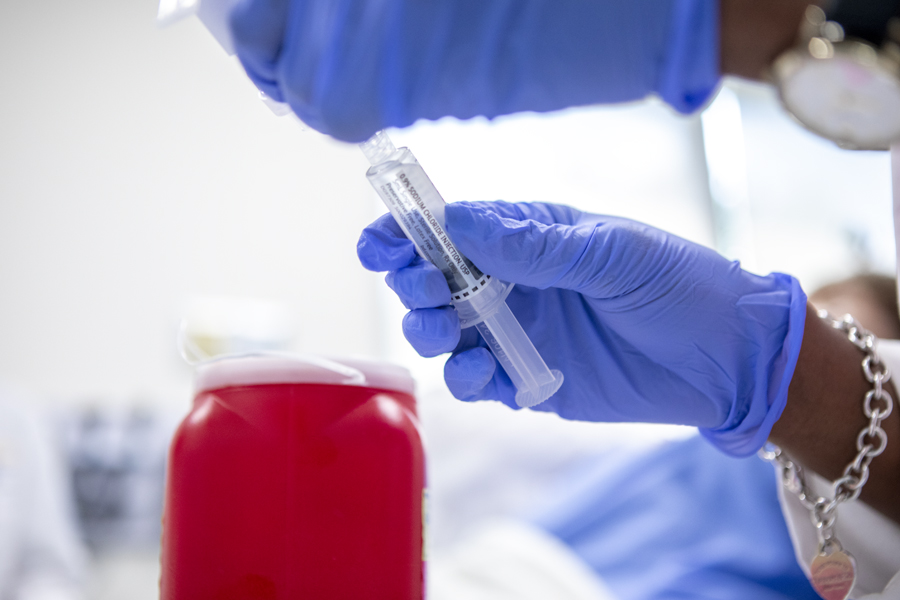
Students from the College of Osteopathic Medicine and the School of Health Professions provided life-saving medical care to a young mixed martial arts athlete.
A Flu Season Primer
A family medicine physician shares insight to help inform the university community about the flu and the importance of the flu vaccine.

New York Tech To Be Ranked Among National Universities
For the 2027 U.S. News & World Report annual rankings, New York Tech will be included in a new ranking category—National Universities.
Convocation 2026: Success in a Time of Change
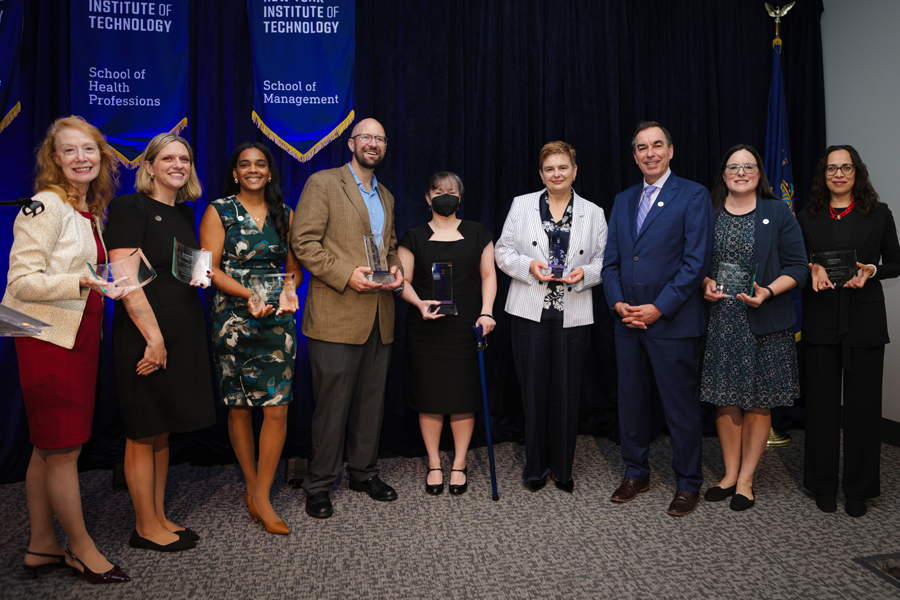
At the annual faculty and staff convocation, New York Tech President Jerry Balentine reflected on the accomplishments over the past year and presented his vision for the future.
The Evolutionary Significance of Humans’ Unique Heel-Toe Walking Pattern
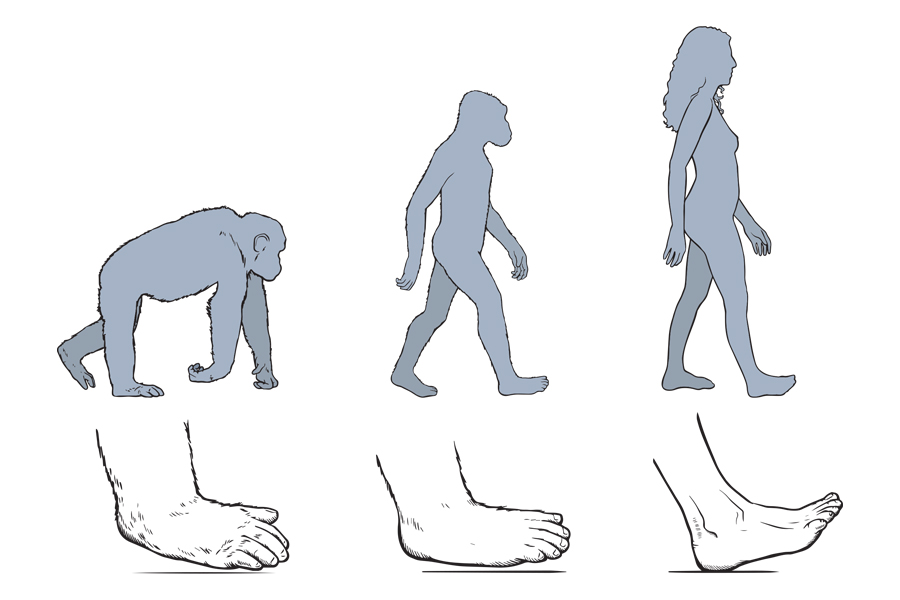
Associate Professor of Anatomy Nathan E. Thompson, Ph.D., contributes to research unveiling clues to the origin of humans’ stride pattern.
Robust Research
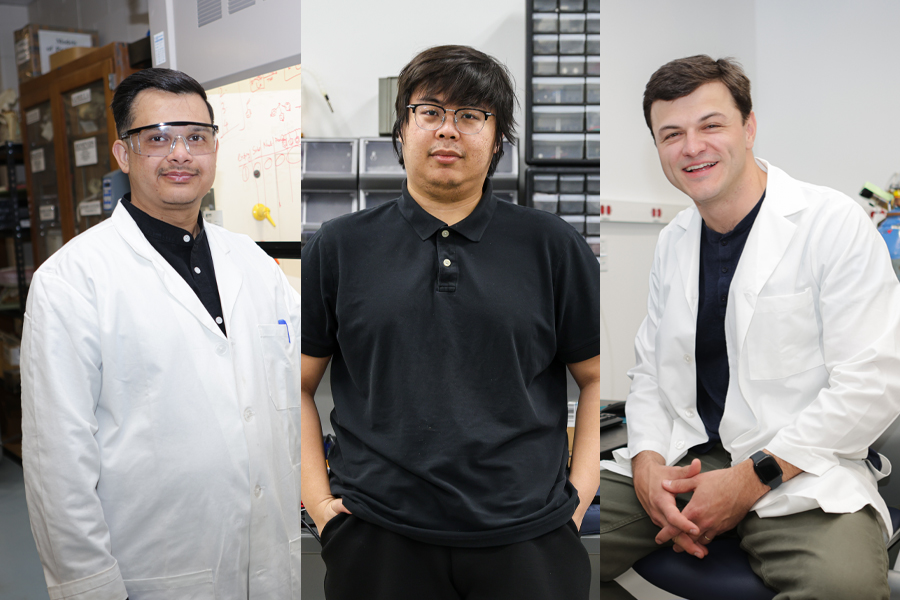
New York Tech’s commitment to research paves the way for important and groundbreaking work. Meet three Ph.D. students whose work may improve disaster response, recovery after muscle and bone injuries, and anticancer therapies.