
Study: Hearing Loss Disproportionately Impacts People of Color
A new study by a researcher from the College of Engineering and Computing Sciences reveals that people of color report a higher incidence of hearing loss.
The findings, published on April 13 in the journal Safety, highlight hearing loss as a public health issue and may help employers reduce occupational hearing loss in an ever-evolving and increasingly diverse workforce.
The Centers for Disease Control and Prevention (CDC) estimates that 22 million Americans are exposed to hazardous noise levels in the workplace each year. Compared to other common health conditions, like diabetes and cardiovascular disease, relatively little is known about the public health burden associated with hearing loss. In addition, the condition tends to go untreated and underreported, especially among individuals of historically underrepresented communities, who face greater barriers to receiving preventative healthcare treatment.
As the average life expectancy in the United States continues to rise, along with an increasing age of retirement, the number of people with hearing loss is expected to grow. While workers with hearing loss are estimated to earn less than those with typical hearing (an average of $35,000 vs. $47,000, respectively), the issue also poses a considerable risk to the United States economy. The cost of lost productivity due to hearing loss is estimated to be as much as $194 billion annually.
A new study by Research Assistant Professor David Nadler, Ph.D., explores how population demographics correlate with hearing loss. His findings could help to heighten awareness of workplace safety and diversity issues.
Using data from the CDC’s National Health and Nutrition Examination Survey, in which participants self-reported on population demographics and hearing quality, Nadler conducted a statistical analysis to assess whether certain populations report a higher incidence of hearing loss. Respondents had previously recorded responses to the CDC’s race-ethnicity variable as either “Mexican American,” “Other Hispanic,” “Non-Hispanic White,” “Non-Hispanic Black,” “Non-Hispanic Asian,” or “Other Race.” Participants also reported data on gender and how they perceived their overall state of health.
Nadler’s statistical analysis showed a significant correlation between hearing condition responses and participants’ race-ethnicity responses. Non-Hispanic White respondents recorded significantly better hearing conditions than the other groups. This finding is consistent with existing literature highlighting this disparity. The findings also showed that females reported better hearing than males, and participants who ranked themselves as “healthier” also reported better hearing.
“Addressing diversity issues may be the foundation for hearing health improvement [in the workplace]. A foundation can be built by promoting diversity in the safety workforce, which may foster innovative ideas, viewpoints, and tactics, ultimately bringing in measurable change,” writes Nadler, whose research focuses on environmental health and occupational safety.
One silver lining, as Nadler notes, is that smartphone apps show promise as a tool for employers to limit noise pollution in the workplace. Apps using a pure tone threshold have shown high sensitivity and specificity in hearing loss detection, allowing companies and managers to measure workplace noise and determine if workers may experience hazardous noise exposure. Using these types of tools, combined with the understanding that social determinants of health impact workers’ risk for hearing loss, can help managers make informed workplace safety decisions to mitigate occupational hearing loss.
“Noise-induced hearing loss attributed to a workplace condition may result in an employee’s eligibility for compensation, so safety managers and human resource professionals need to address this occupational health issue with a toolset as diverse as their workforce,” Nadler concludes.
More Features

A Flu Season Primer
A family medicine physician shares insight to help inform the university community about the flu and the importance of the flu vaccine.
New York Tech To Be Ranked Among National Universities
For the 2027 U.S. News & World Report annual rankings, New York Tech will be included in a new ranking category—National Universities.

New York Tech Commemorates 25th Anniversary of 9/11
The New York Tech community commemorates the 25th anniversary of September 11 through opportunities to remember those we lost and honor the first responders and members of our military.
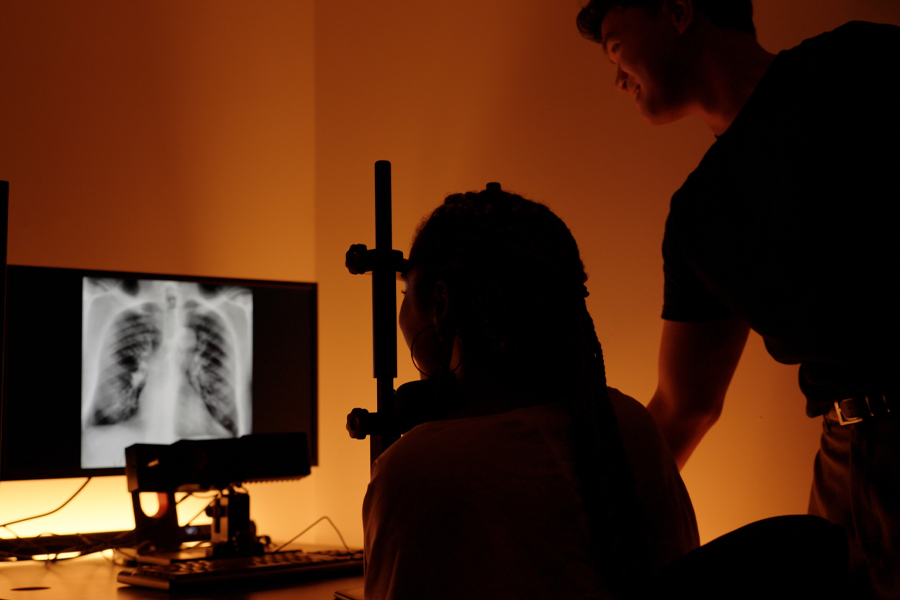
Exploring How AI Tools Can Improve Lung Cancer Detection
Research by Assistant Professor Robert Alexander, Ph.D., and student Talia Lilikakis assesses how AI tools can most effectively alert radiologists of the possible presence of a nodule.
Convocation 2026: Success in a Time of Change
At the annual faculty and staff convocation, New York Tech President Jerry Balentine reflected on the accomplishments over the past year and presented his vision for the future.
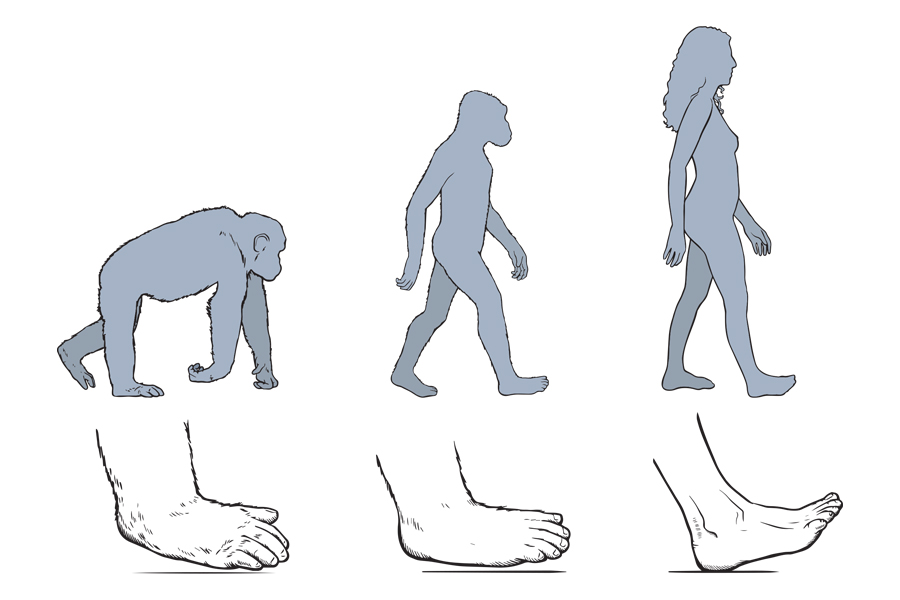
The Evolutionary Significance of Humans’ Unique Heel-Toe Walking Pattern
Associate Professor of Anatomy Nathan E. Thompson, Ph.D., contributes to research unveiling clues to the origin of humans’ stride pattern.