Beyond the Human Machine
March is National Colorectal Cancer Awareness Month. In light of this, New York Tech News is highlighting undergraduate biology student Justin Tin to share information about his research on colon cancer as well as his academic journey at the university.
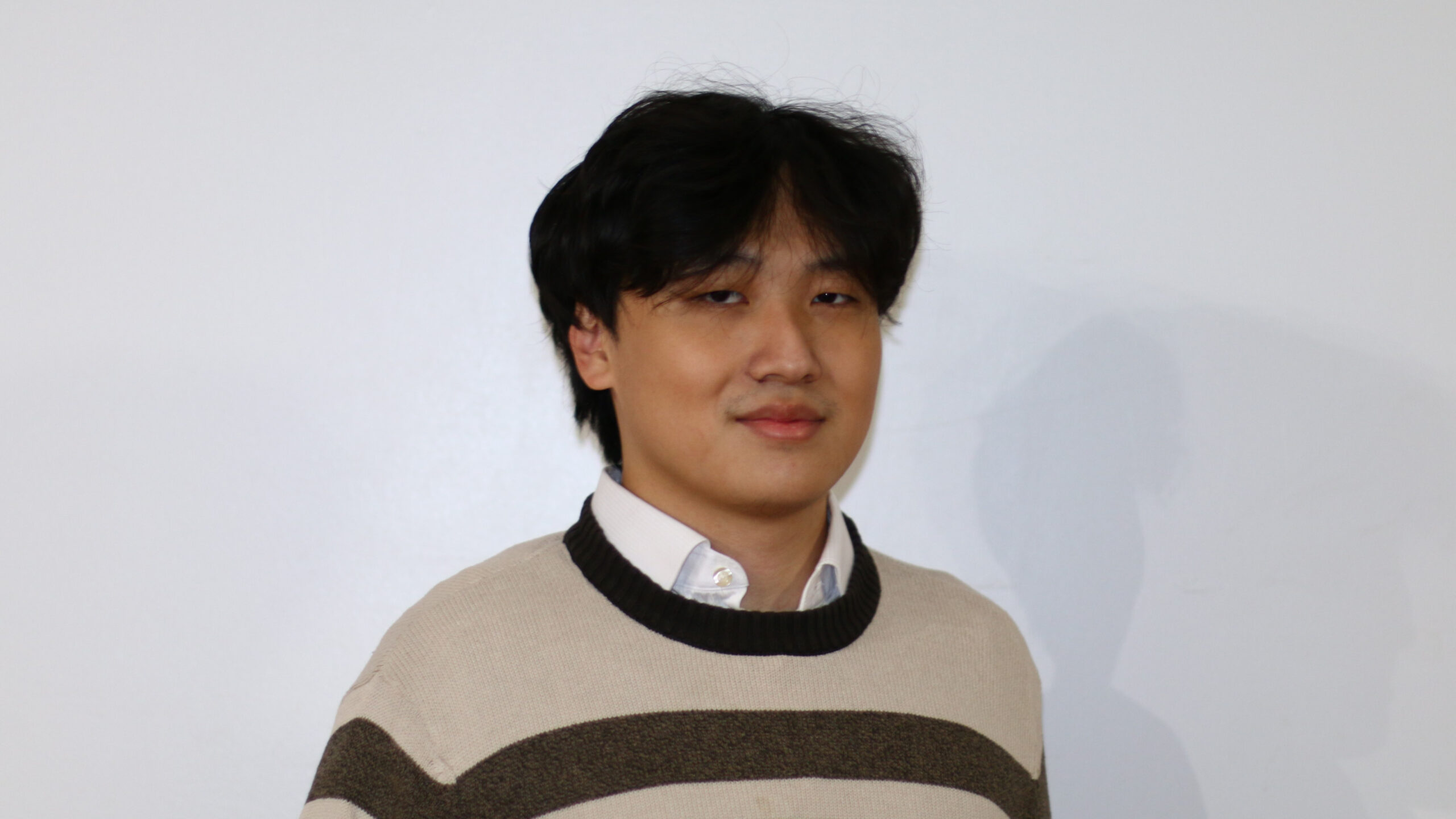
“I’ve always been fascinated by understanding how things work ‘under the hood,’” Tin reflects on his passion for biology. He initially compared the human body to a computer—separate components that fit together to create a functioning system—but his clinical experiences have shown him that medicine requires understanding the person beyond the physiology.
Innovations like the gene-editing technology CRISPR fascinate Tin, but his pursuit of biology at the collegiate level, and later medicine, stems from his belief that “disease doesn’t just cause physical pain, it steals potential.” A witness to several adults in his life with “altered timelines” because of deviations in their physiology, Tin seeks to study the “biological machine” and the tools necessary for intervention and protecting individuals’ lives and aspirations.
On the Long Island campus, Tin is conducting research with Associate Professor of Biological and Chemical Sciences Navin Pokala, Ph.D. Their work investigates the neural mechanisms of decision-making using C. elegans, a tiny, soil-dwelling organism. As they explore how a simple organism’s nervous system processes information to make choices, Tin questions how fundamental neural circuits map onto more complex human behaviors.
“Studying biology gives me a foundation in how the body functions, but working with patients has taught me that understanding physiology is only one part of caring for someone” he says. “I want to understand the molecular ‘how’ and ‘why’ behind fundamental shifts in the body so we can prevent those shifts from occurring.”
Outside the lab, Tin serves as a Student Government Association (SGA) senator representing the interests of the College of Arts and Sciences and sits on the SGA’s Campus Life and Engagement committee. He takes these positions seriously, viewing them as opportunities to listen and advocate. Similar to a physician’s work, his roles center on identifying concerns and actively working to improve the environment where people spend most of their days.
As a medical assistant at Newtown Gastroenterology in Elmhurst, N.Y., he performs administrative duties and assists physicians with patient triage and monitors patients’ post-anesthesia. His training phase at the facility created an opportunity to conduct a research study as he noticed patients with a higher body mass index consistently reported diets high in processed foods. With this observation, he sought to scientifically quantify the trend.
Functioning as lead investigator, Tin collaborated with researchers from Newtown Gastroenterology, Carnegie Mellon University, and the National Autonomous University of Mexico to determine whether the rising consumption of ultra-processed foods is directly linked to the obesity epidemic and, consequently, the increasing prevalence of colon cancer. Tin’s tasks included conceptualization and data curation, as well as defining the study’s scope, extracting necessary data, and playing a central role in writing and editing the manuscript. After one and a half years of research, “Ultra-processed food, obesity, and colon cancer: A systematic review and meta-analysis,” was published in the World Journal of Gastrointestinal Oncology.
“This project helped me connect the experiences of individual patients with broader public health trends,” he explains. “The study reinforced for me how environmental factors influence patient health and strengthened my belief that prevention begins with understanding the context patients live in.”
Tin will soon graduate, and he looks forward to deepening his impact on community health. On his agenda for post-graduation life is improving his Spanish and Mandarin language skills and pursuing a medical degree while continuing to explore how systems and policy shape patient outcomes. He remains open to the direction his training will take him, focusing now on building a strong foundation in patient care.
“I’m excited to become a physician who listens carefully, thinks critically, and recognizes that every patient’s story extends beyond their diagnosis,” he says. “I hope to contribute to improving the systems patients rely on, while never losing sight of the individuals within them.”
More News
Making an Impact
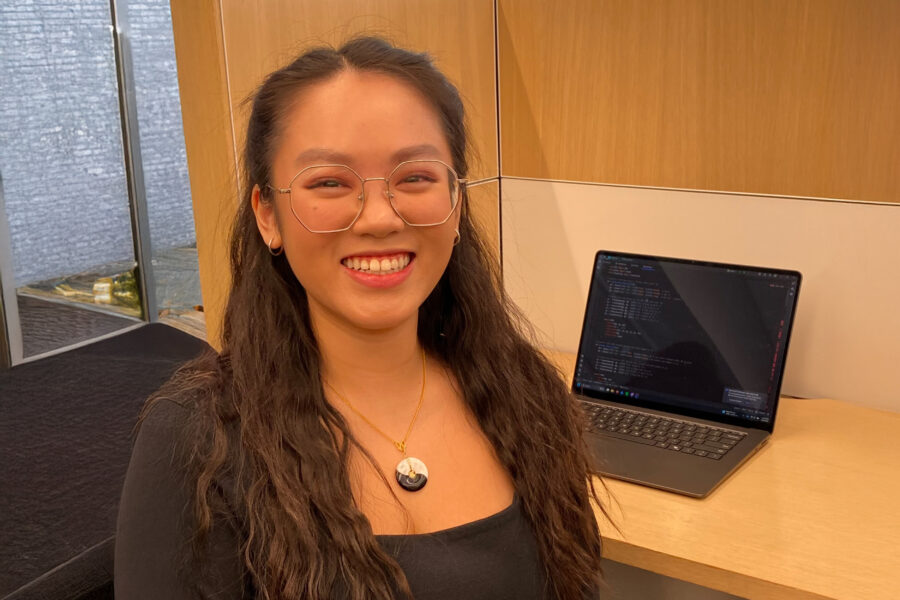
As an ETIC engineer, computer science student Angelina Do is working on a project in partnership with a former NBA star aimed to help children who stutter.
Finding His Balance
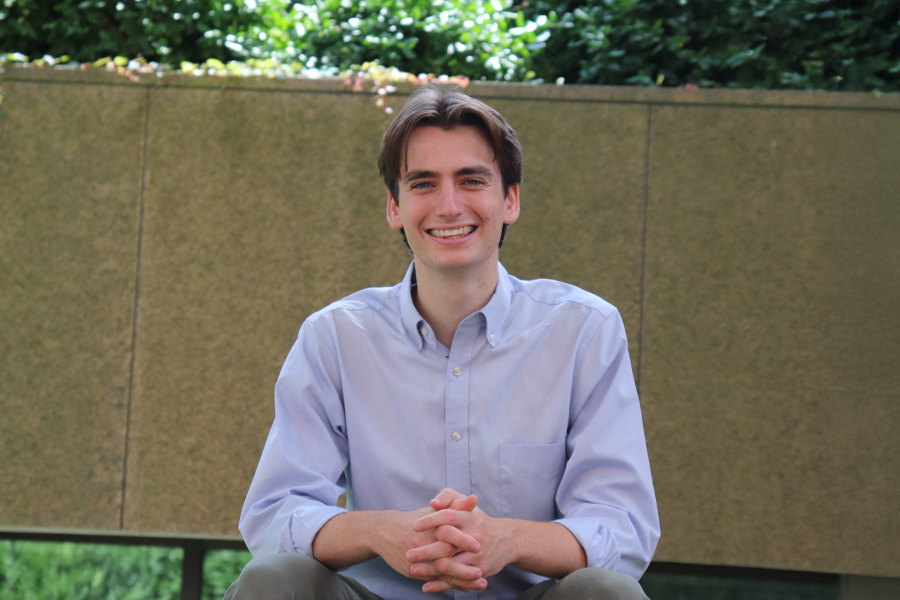
Noah Hoonhout’s piece about navigating life as a medical student was published to a Substack with more than 100,000 readers.
Intentional Technology
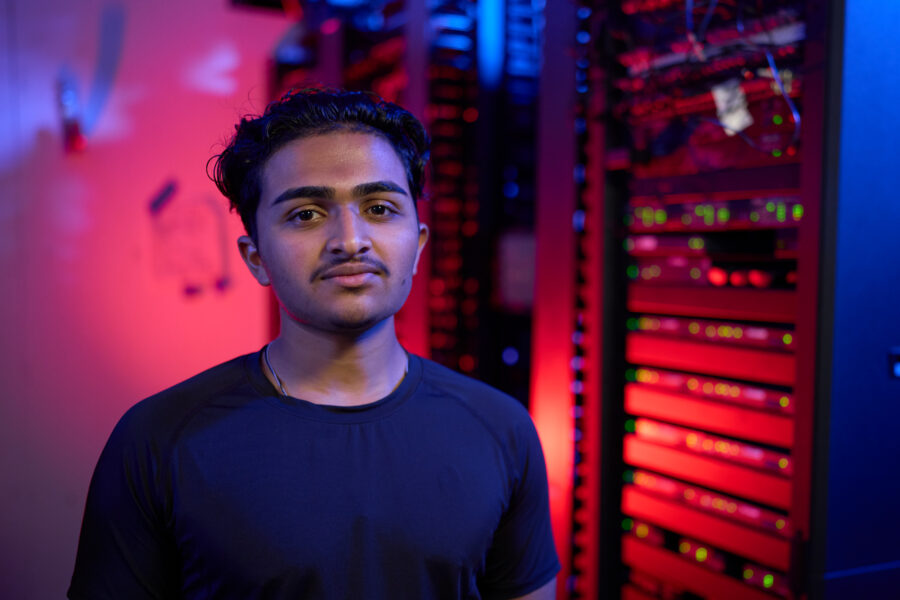
Computer science student Tejas Attavar is putting his tech skills to altruistic use.
The Force Behind the Food
Director of Dining Services Robert Rizzuto keeps New York Tech fed as he oversees NYIT de Seversky Mansion and the campus dining program on Long Island and in New York City.
Her World Through Code
Graduate computer science student Neethu Thalappan Koroth thrives in her field of study while becoming involved in several on-campus projects to deepen her expertise.
A Collaboration Across Continents
Medical student Dongchan (Alex) Lee participated in an academic study at Dong-A University alongside South Korean researchers as they explored possible links between mineral intake and depression.