Call a Doctorate: NYIT Launches First Ph.D. Program
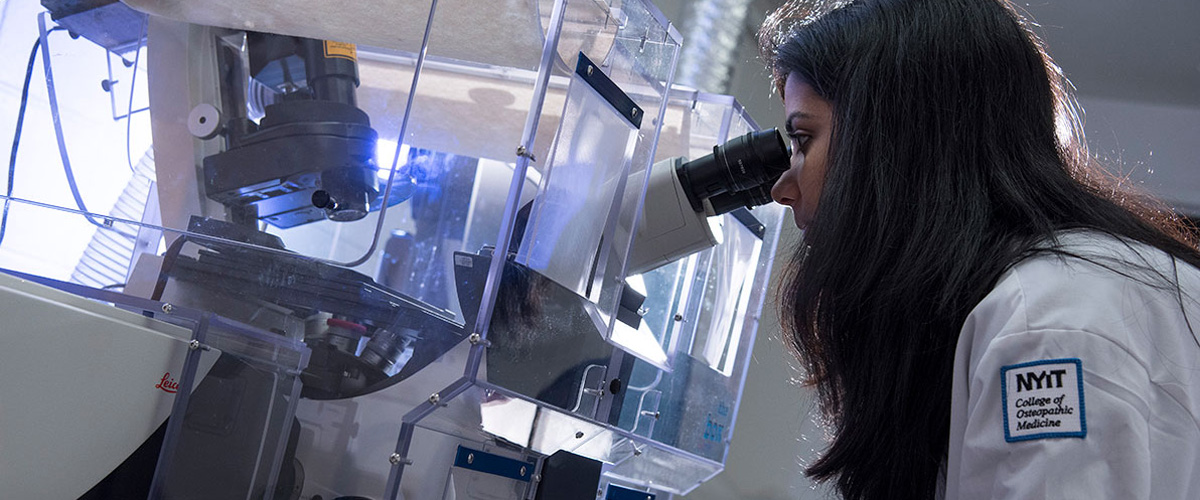
There’s a new doctor in town. In a milestone moment, NYIT will launch its first Doctor of Philosophy (Ph.D.) degree program, the highest academic degree that can be conferred by a university, for the 2019-2020 academic year. The inaugural doctoral candidates will pursue a combined Doctor of Osteopathic Medicine (D.O.)/Doctor of Philosophy (Ph.D.) in Medical and Biological Sciences.
“This is a landmark moment for NYIT,” said NYIT President Hank Foley, Ph.D. “It is a great opportunity for faculty to train new generations of clinical physicians who are fully invested in research that will advance medical science.”
The National Institutes of Health (NIH) finds that of the nearly one million practicing physicians in the United States, only 14,000 (1.5%) reported research as their primary focus. With fewer clinicians pursuing careers as physician-scientists, projected demand will exceed expected supply, and medical innovation is in danger of becoming stagnant.
Many of today’s life-saving medical advancements can be traced to physician-scientists, practitioners of translational medicine who increase the efficiency of therapeutic strategies by bridging the gap between clinical care and biomedical research. With a unique ability to connect insight from their patient interactions to their investigations, these medical professionals can facilitate discoveries to treat and cure human disease.
“This new degree program will ensure a steady supply of highly skilled research physicians who will ensure that medicine continually evolves to solve our most pressing challenges,” said Jerry Balentine, D.O., dean of NYIT College of Osteopathic Medicine (NYITCOM) and vice president for Health Sciences and Medical Affairs.
The highly competitive, seven-year D.O./Ph.D. program begins with students completing the traditional pre-clinical coursework taken by traditional first- and second-year medical students. In years three through five (after D.O./Ph.D. program candidacy has been awarded), Ph.D.-level coursework in biomedical and anatomical systems will supplement the medical school curriculum. During this period, each student will carry out an in-depth research project under the mentorship of an NYITCOM faculty member leading to a doctoral thesis. Upon completion of the Ph.D. degree requirements (90 credits required), students will then fulfill the clinical training required of third and fourth-year NYITCOM students.
Stay tuned for more information about the program as it develops.
More Features
NYITCOM-Arkansas Receives Two Grants for New Residency Program, EMS Training Initiative
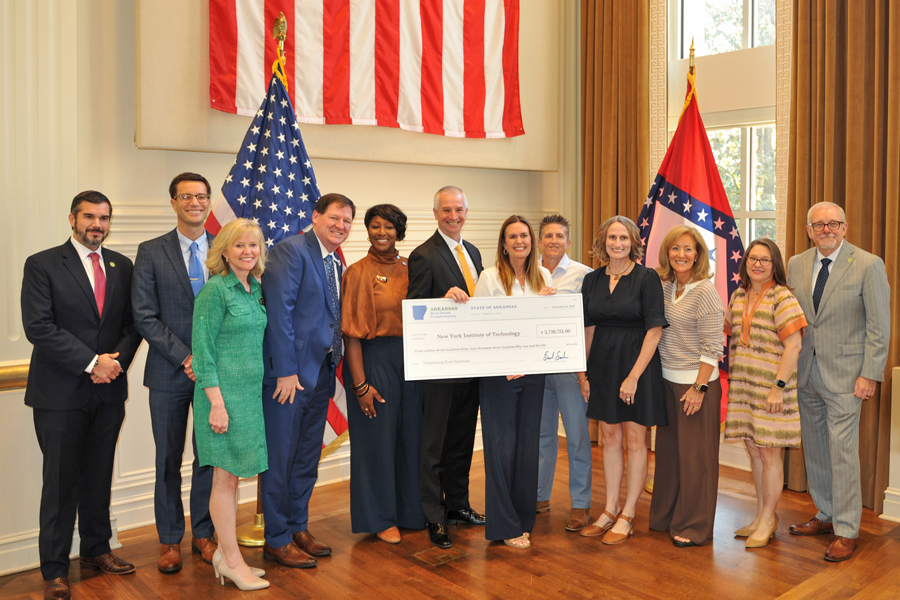
Two Rural Health Transformation Project grants, totaling $3.7 million, will support health education programs at the College of Osteopathic Medicine at Arkansas State University (NYITCOM-Arkansas).
Intern Insight: Mansi Santosh Tikam
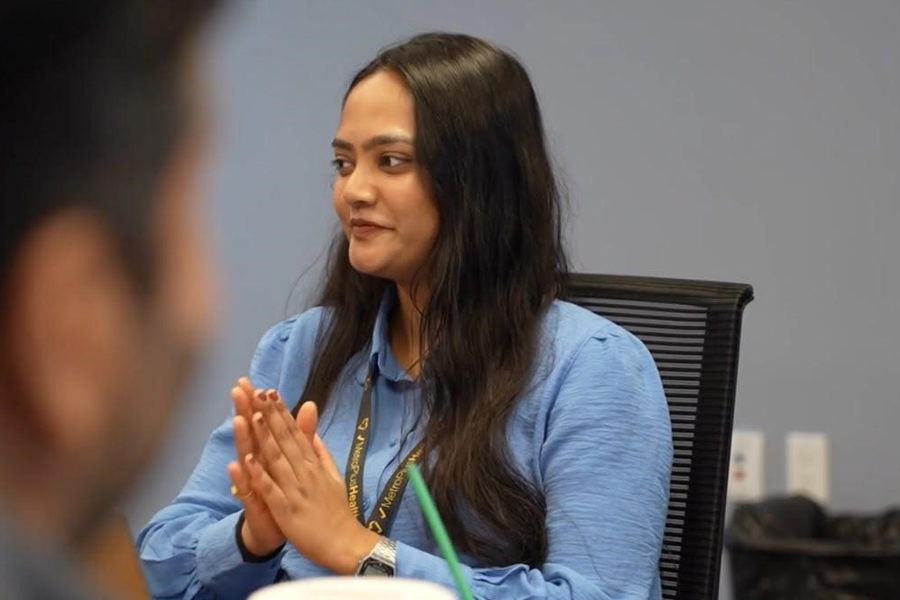
M.B.A. student Mansi Santosh Tikam spent her summer interning with MetroPlusHealth, where she learned what it means to be a marketing professional.
Officers Cook at 12th Annual Cast Iron Chef
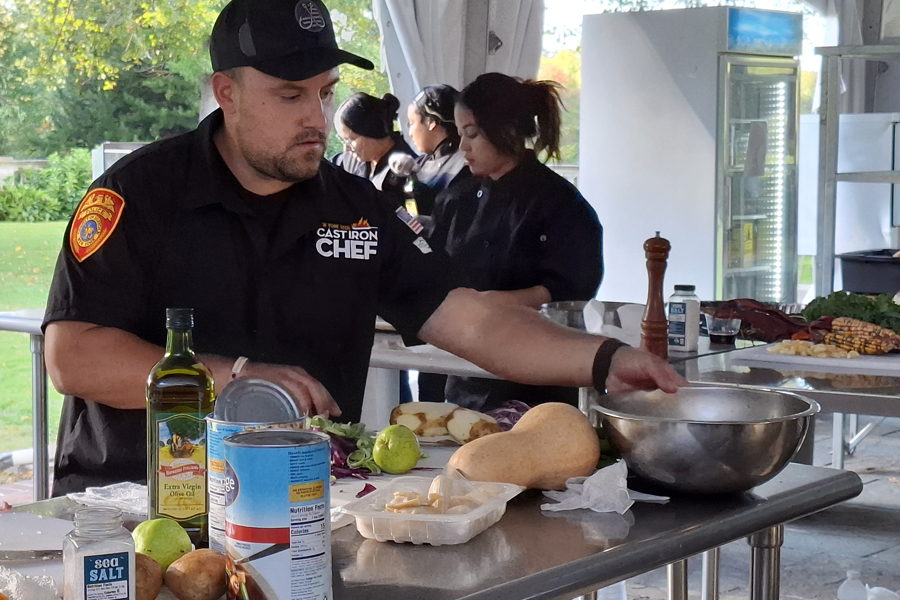
This year’s Cast Iron Chef cooking competition welcomed teams of local law enforcement officers for an evening of culinary fun.
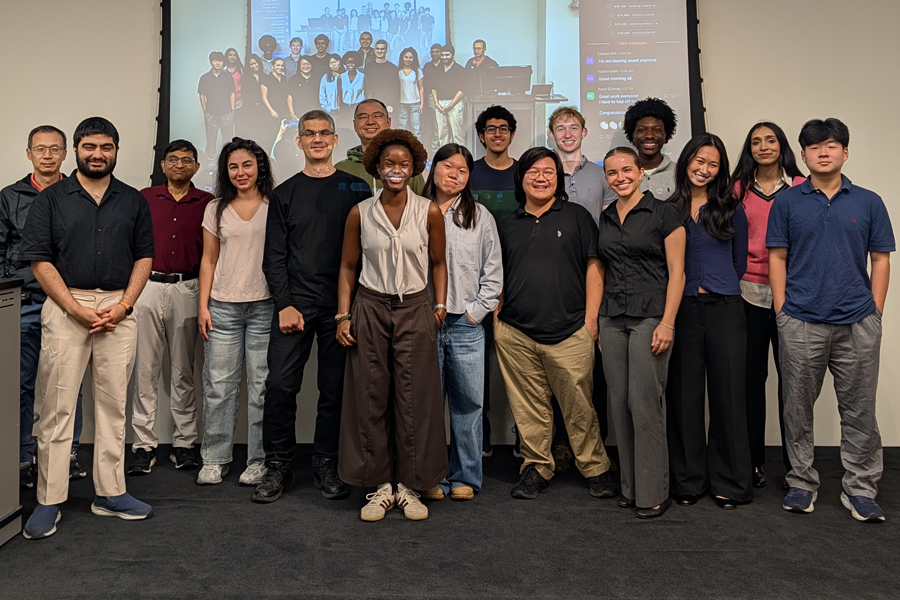
The Domino Effect
New York Tech’s Research Experiences for Undergraduates program has spent more than a decade turning summer research opportunities into lasting careers, helping build the university’s research reputation along the way.
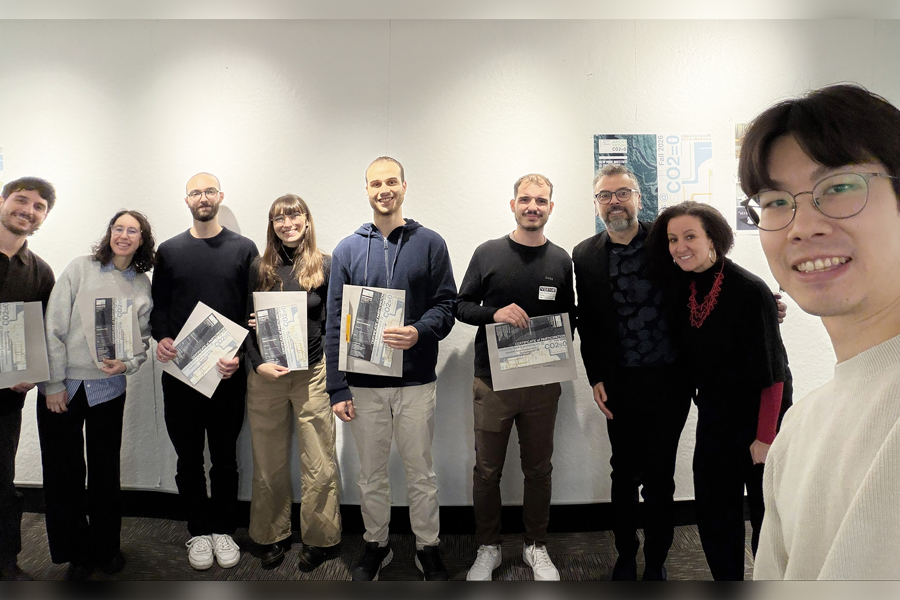
International Collaboration: School of Architecture and Design and IUAV
Graduate architecture students from Università Iuav di Venezia (IUAV) in Venice participated in a week-long atelier on the New York City campus, while School of Architecture and Design students traveled to Venice for a 17-day workshop.
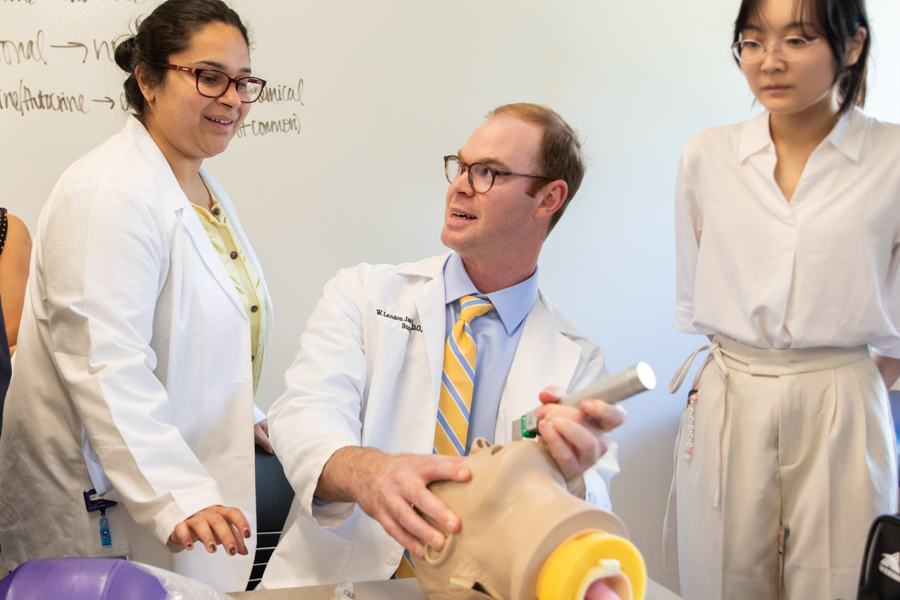
Alumnus Joins NYITCOM-Arkansas Faculty
William “Landon” Jackson, (M.S. ’21, D.O. ’21) has returned to his alma mater to serve as an assistant professor in NYITCOM-Arkansas’ Department of Clinical Sciences.