Where Medicine and Artificial Intelligence Converge
Sungjoon Hong, a student at the College of Osteopathic Medicine (NYITCOM), discovered a pattern in his life that led him toward medicine.
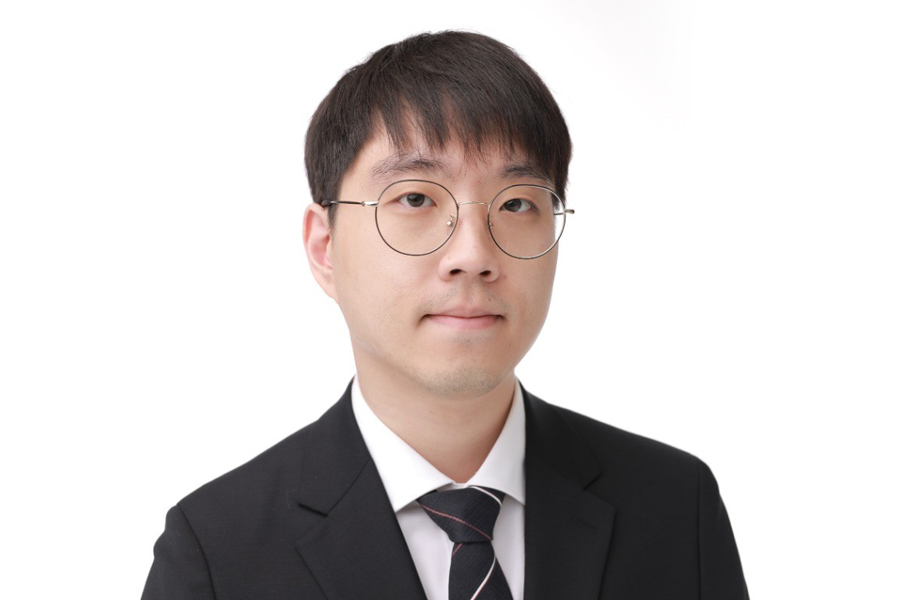
“I had a profound fulfillment when helping people navigate vulnerable situations,” Hong says. “I’m interested in helping people recover and regain function in their lives. Pain management and PM&R [physical medicine and rehabilitation] are well known for those functions.”
As it turns out, he also has a knack for research in artificial intelligence (AI) and technology advancement.
“My interest in the intersection of AI and medicine is tied to my passion for pain management and physical medicine,” Hong says. “These fields are perfect for using AI because we can map out long-term recovery trends and help improve a patient’s quality of life. But I wasn’t familiar with the mechanics of AI when I came to New York Tech.”
The turning point, he says, was during his first semester when he met Associate Professor of Osteopathic Manipulative Medicine Milan Toma, Ph.D., whose specialties include AI-assisted medical diagnostics. “Dr. Toma had an open-door policy for anyone interested in research,” Hong says. “I found the rapidly evolving field of AI fascinating, and I wanted to take ownership of my own project, so I reached out to him.”
“Sungjoon is one of the most self-driven students I’ve worked with,” Toma says. “He joined my lab of algorithmic medicine as a first-year medical student with no prior machine learning experience, and in under a year, he had three publications to his name as first author. His initiative and clarity of thought are exceptional; it has been a privilege to mentor someone with such dedication and intellectual curiosity.”
Hong wrapped up his first year of medical school with three published research articles exploring ways AI can be used to help comfort and heal the human body.
Perhaps his favorite of the three papers, “Deep learning based thermal foot segmentation with probability inversion post-processing for automated epidural block assessment,” published in Frontiers, involves thermography: Hong used a machine learning model to evaluate the change in foot temperature of women in labor who have received an epidural.
Because epidural blocks have a failure rate of up to 12 percent, it’s crucial to confirm their effectiveness. The standard way to confirm that an epidural is working is to apply a pinprick or ice cube to the patient’s feet.
“That can cause discomfort or pain, and it’s stressful for the patient in an already high-anxiety environment,” Hong says.
But datasets collected in the past show that an epidural causes the blood vessels in the lower body to dilate—a physiological response that significantly increases the temperature of the patient’s feet. So, Hong considered how he could use a thermal camera to capture heat radiation from the feet as a noninvasive and stress-free test to check the effectiveness of the epidural.
“I integrated the deep learning model called U-Net to create this machine learning model that acts as a doctor’s automated assistant,” Hong says. “The AI instantly segments the thermal image, identifies the feet, and extracts mean temperatures in real time. It converts a patient’s subjective, abstract feeling into an objective, quantified visual map, which eliminates human error.”
Hong also acknowledges the limitations of using AI in medical settings.
“We need to critically evaluate AI models and understand their true clinical utility. Just because it works in the lab doesn’t mean it is safe and effective in a hospital,” he says. “My priority as a future physician is patient safety. We can’t rely on AI for diagnosing patients yet, but eventually, AI will become as standardized a medical tool as our stethoscope. We must embrace it and learn to use it responsibly.”
By Ashley Festa
More Features
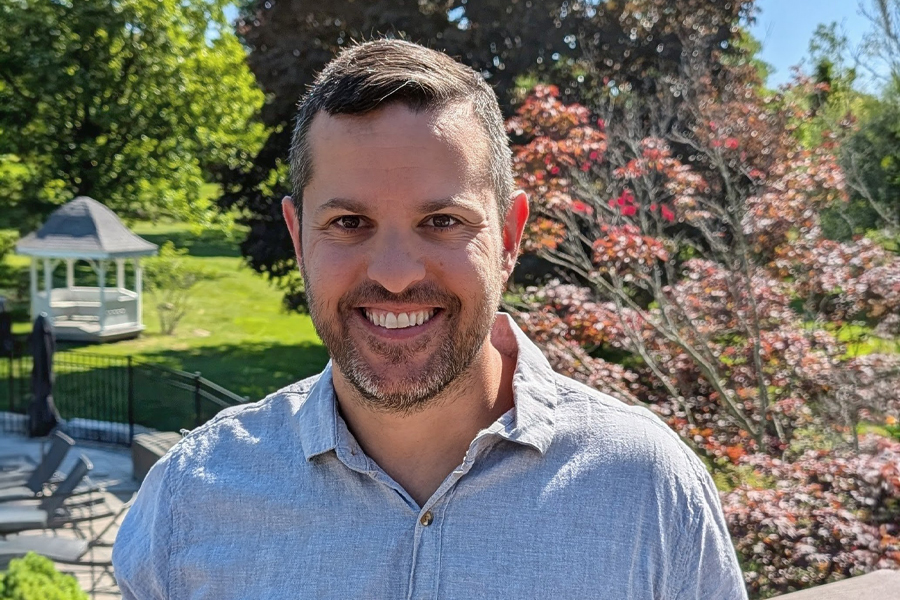
Frankly Speaking
What began as hosting fun gatherings with friends, turned Andrew Tisser (D.O. ’14) into an entrepreneur, starting a mail-order-business pairing hot dogs with cocktail drink mixers.
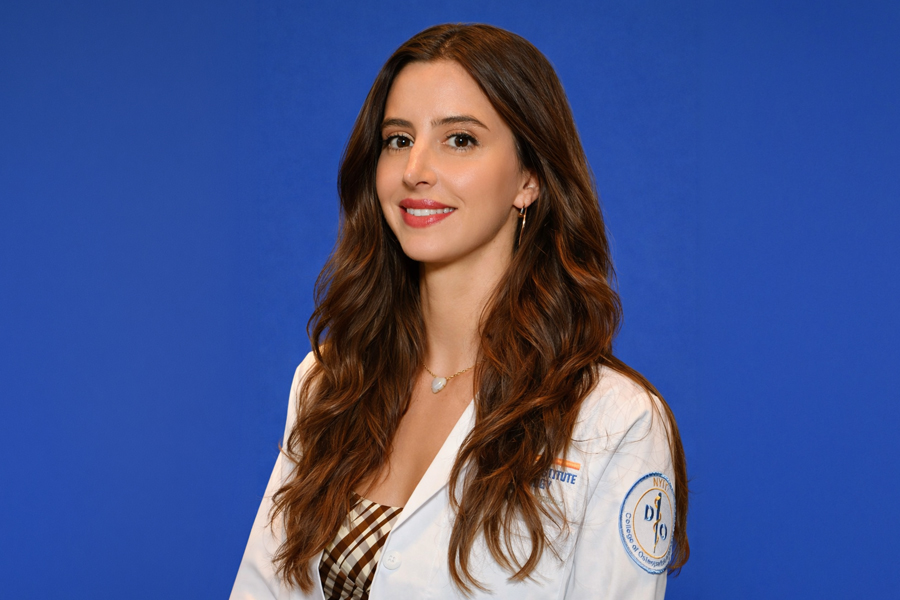
Rediscovering Her Calling
College of Osteopathic Medicine student Perry Rosen is the lead author on a recently published study about pediatric nicotine exposure, but her journey to medical school was not a linear path.
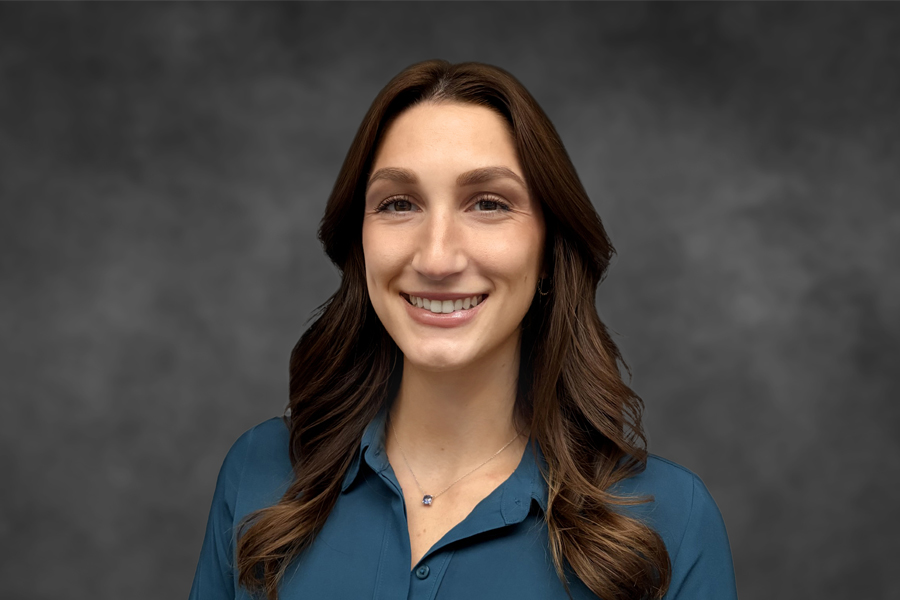
Beyond Science
Doctor of Osteopathic Medicine student and aspiring dermatologist Arianna Falletta believes that beyond science, medicine is about supporting people.
Finding His Balance
Noah Hoonhout’s piece about navigating life as a medical student was published to a Substack with more than 100,000 readers.
A Collaboration Across Continents
Medical student Dongchan (Alex) Lee participated in an academic study at Dong-A University alongside South Korean researchers as they explored possible links between mineral intake and depression.
A Lasting Impression
While being treated for a serious case of viral meningitis by osteopathic physicians, Chris Kyriakides (D.O. ’89) was compelled to pursue the practice and later inspired his children to follow his path.