Jeffrey Raven Appointed to NYC Panel on Climate Change
Associate Professor of Architecture Jeffrey Raven, Ph.D., FAIA, LEED BD+C, has been appointed by the mayor to the fifth New York City Panel on Climate Change (NPCC), an independent advisory board that synthesizes scientific information on climate change and advises New York City policymakers on local resiliency and adaptation strategies to protect against rising temperatures, increased flooding, and other hazards.
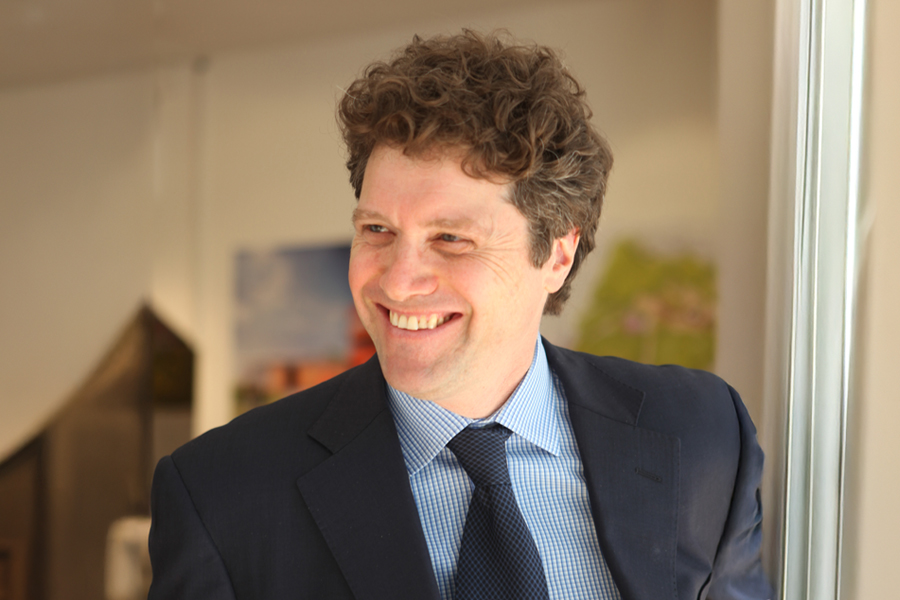
Jeffrey Raven
“With New York City feeling the effects of a changing climate, we need the latest and best climate data to guide critical infrastructure and keep New Yorkers safer,” says New York City Chief Climate Officer and New York City Department of Environmental Protection Commissioner Rohit T. Aggarwala. “The members of NPCC5 bring diverse research backgrounds and expertise, and city agencies at the forefront of climate work have much to gain from their collaboration and knowledge.”
Raven is a specialist in sustainable and resilient urban design whose research is applied in professional practice and disseminated throughout the profession, government, and allied disciplines. He has led a series of urban design research initiatives with the Urban Climate Change Research Network, a global consortium of climate experts, including the development of the Urban Design Climate Workshop (UDCW), a hands‐on, capacity‐building process that engages urban designers, climatologists, policymakers, graduate students, and community experts.
The UDCW projects bring together cross-disciplinary teams of global urban climate experts to configure climate-aligned prototype interventions for strategic urban districts worldwide and draw from evidence-based climate projections to illustrate likely climate impacts from development and rezoning scenarios, while identifying opportunities for integrating cross-sectoral climate mitigation and climate adaptation. Raven has led workshops in New York City, Paris, Naples, Rio de Janeiro, Morocco, Dublin, and Durban in South Africa.
Currently, he is the subject matter lead for the National Science Foundation (NSF) City-as-Lab Supplemental Grant for climate-resilient urban design. The focus of this supplemental grant is climate-resilient urban design research and global urban design climate workshops.
Raven has also led an NSF case study in New York City in collaboration with local experts from the Urban Land Institute, the American Institute of Architects New York Chapter, and New York Tech graduate students that examined net-zero carbon and resilient districts. The Sustainable Urbanisation Global Initiative was a European-American partnership with researchers from Germany, Austria, and the United States, with additional collaboration with the government of Switzerland.
His NPCC nomination was supported by Maria Perbellini, M.Arch., dean of the School of Architecture and Design, and Cynthia Rosenzweig, Ph.D., head of the Climate Impacts Group at NASA Goddard Institute for Space Studies.
“Poorly planned dense neighborhoods amplify flood phenomena and extreme heat. Well-thought-out density can address the challenges posed by rapid urbanization, growing inequality, and climate change,” says Raven. “The challenge lies in the built form and spatial configuration of these urban spaces. Enabling transformative climate action in cities requires expanding on the traditional influence and capabilities of urban planning and urban design.”
After two decades in international urban design practice—often in harsh climates—Raven knew he needed to find strategies to enhance urban health and comfort for local populations. He says he had an epiphany when he studied urban climate science and attended climatology conferences.
“The scientific presentations focused on the impact of three-dimensional urban form, vegetative cover, human-caused emissions, materials, and other topics relevant to our design discipline. Yet, there were few architects in the room,” he says. “There, I saw the need for urban designers to collaborate with urban climate scientists. This is the genesis of much of my work.”
More News
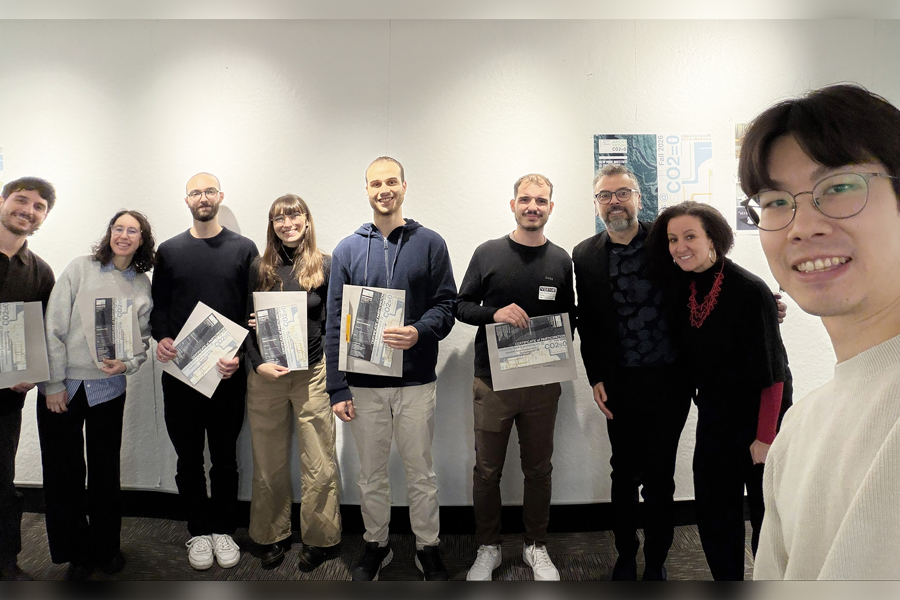
International Collaboration: School of Architecture and Design and IUAV
Graduate architecture students from Università Iuav di Venezia (IUAV) in Venice participated in a week-long atelier on the New York City campus, while School of Architecture and Design students traveled to Venice for a 17-day workshop.
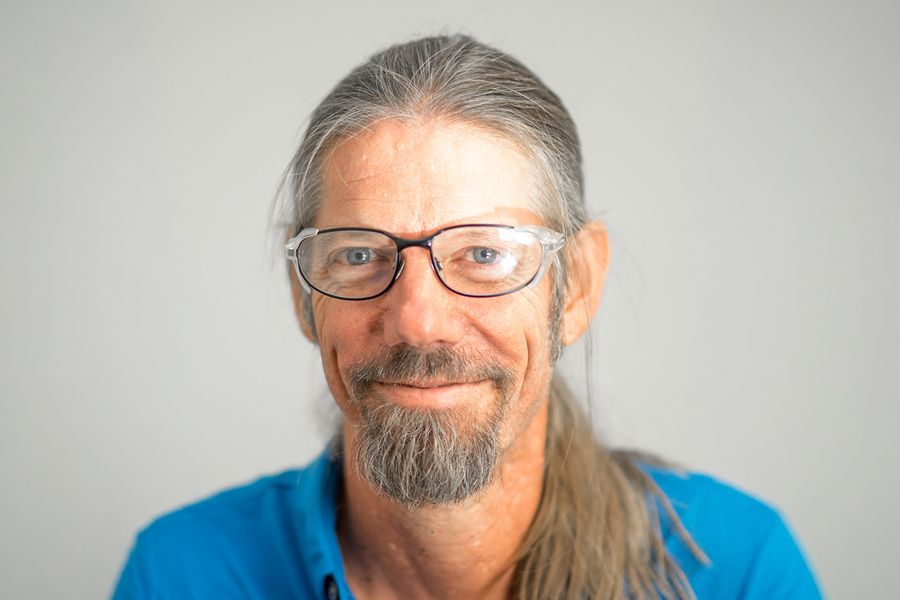
Forward-Thinking Design
Associate Professor of Architecture Clarke Snell, M.Arch., uses technology to link form and performance.
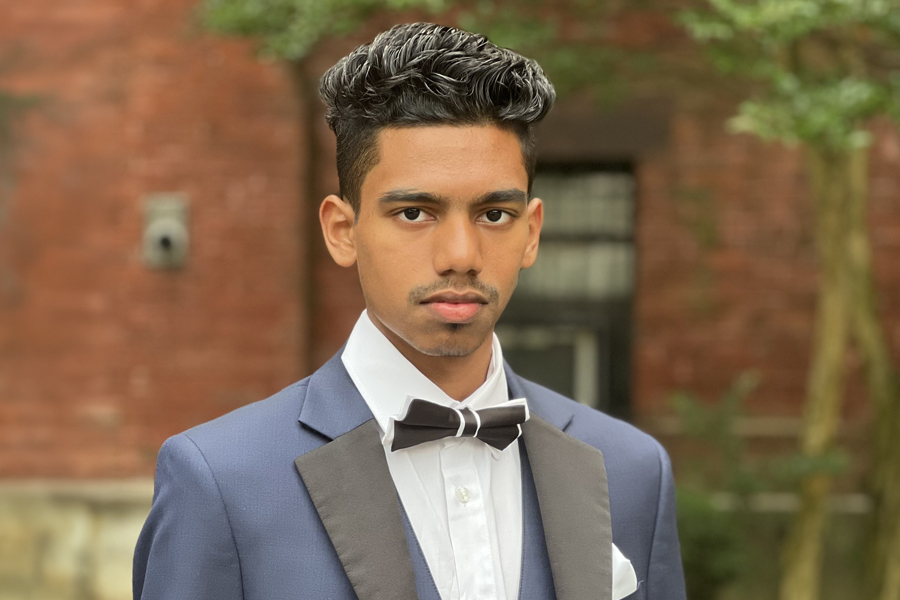
A Head Start in Architecture
Architecture student Satish Doobay’s ongoing internship with an alumna’s firm is helping prepare him for a future in the field.
New York Tech To Be Ranked Among National Universities
For the 2027 U.S. News & World Report annual rankings, New York Tech will be included in a new ranking category—National Universities.
Convocation 2026: Success in a Time of Change
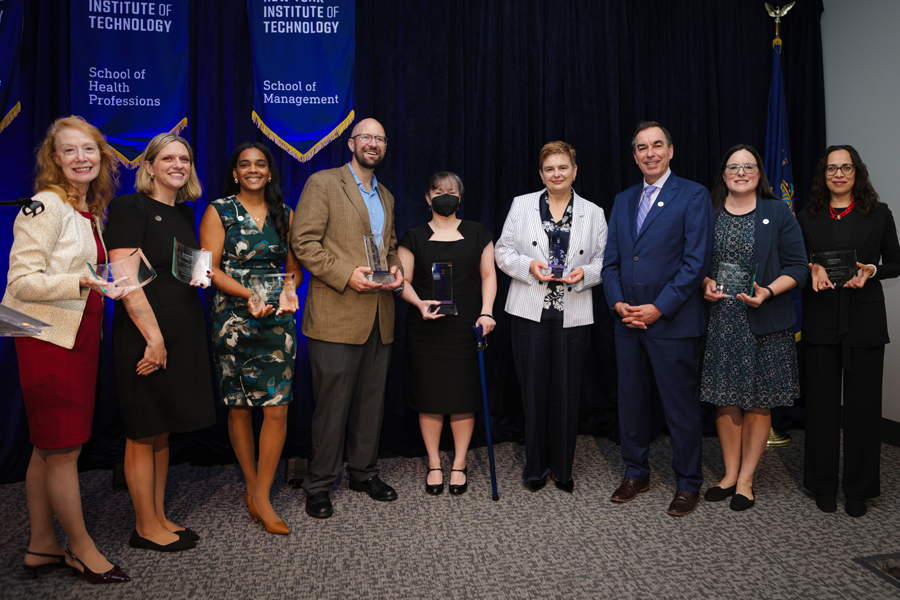
At the annual faculty and staff convocation, New York Tech President Jerry Balentine reflected on the accomplishments over the past year and presented his vision for the future.
Intern Insight: Brandon Vasquez
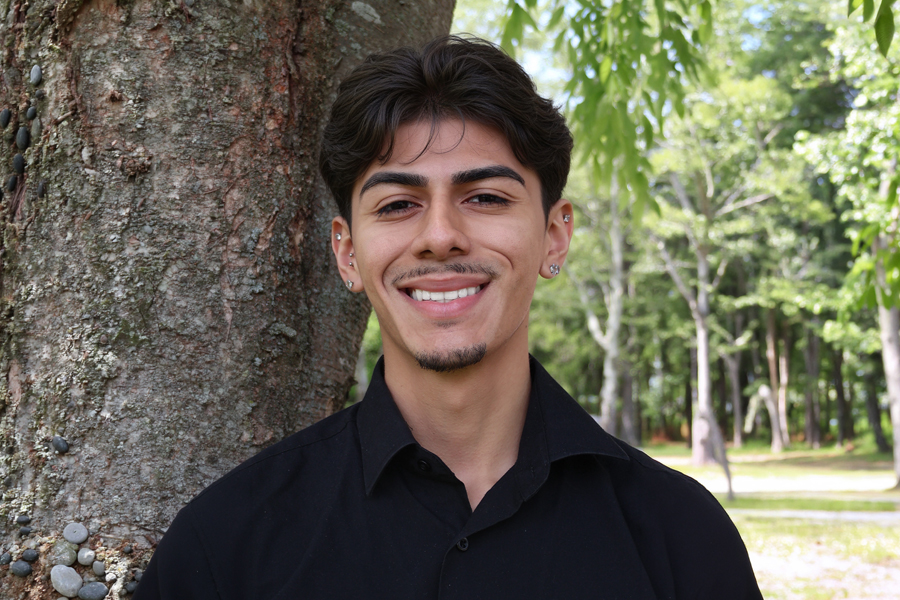
This summer, architecture student Brandon Vasquez interned with Gensler, a globally recognized architecture, design, and planning firm.