The Power of Faith
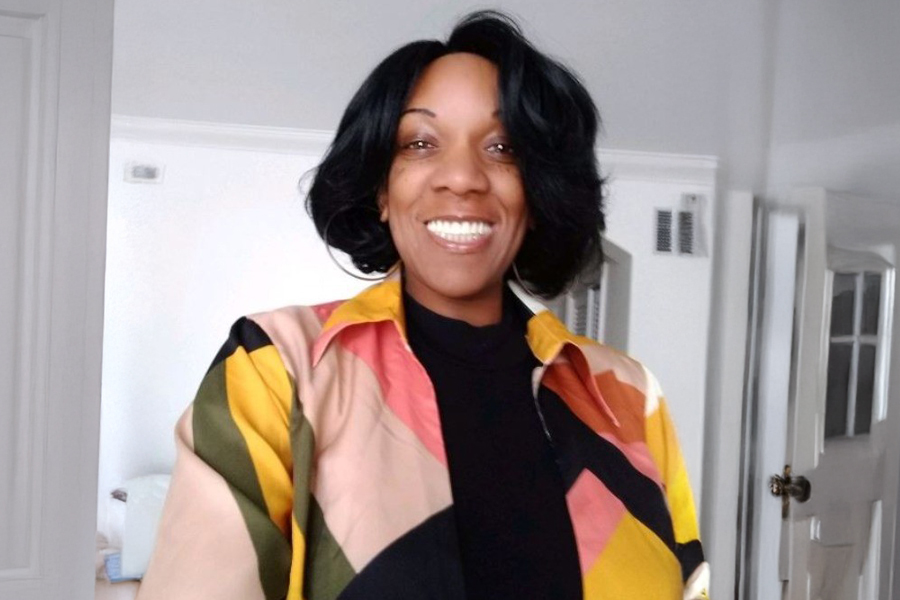
For Women’s History Month, Tanya Patterson-Stanley, assistant director of financial aid at the College of Osteopathic Medicine, shares the story of her mother, who overcame challenges and instilled in her the power of faith.
Growing up in Montgomery, Ala., during the 1930s meant navigating a landscape scarred by colorism, racism, sexism, and deep socioeconomic and educational divides. For a child, the question of “Why?” must have echoed endlessly.
My mother was the eldest child of a father with a sixth-grade education and a mother who had picked cotton alongside her siblings and knew hardship intimately. Her days were filled with chores far removed from the conveniences of modern life. There were no washing machines or dryers, only scrub boards, lye soap, and boiling water on a potbelly stove. Indoor plumbing was a luxury; baths were shared, and an outhouse served as the family’s restroom.
The fight for civil rights and against segregation was a constant backdrop. Home and school offered little respite. It was the insidious “isms” that threatened to define her, to limit her aspirations beyond what her parents, shaped by their own experiences, could imagine. It was the taunts of classmates who mocked her complexion, calling her “not Negro,” “ugly,” and “stupid.” It was the terror of white men chasing her and her friends home, the ever-present threat of rape and death hanging in the air. And it was the pressure from her strict father, who pushed her relentlessly to master reading and arithmetic.
Faith is her anchor, drawing her to church six days a week. This faith fueled her courage to participate in the bus boycotts, walking miles to school rather than submit to injustice. Deep within, a quiet voice whispered of her worth, her intelligence, her capabilities, her beauty. She clung to that voice.
After graduating high school, she faced another difficult choice: marriage or a career in nursing. She chose marriage, a decision which took her to the bustling streets of New York City. But the ghosts of the past lingered. In Harlem, prejudice didn’t wear white sheets; it wore suits and uniforms, and it existed in the subtle and not-so-subtle interactions of daily life. She was labeled “mulatto” or “spic,” facing discrimination even within her own community. Yet, her faith continued to sustain her, reminding her, “You are enough.”
Today, the sting of past rejections remains, but she shares her story as a testament to resilience, a beacon for her children. She wants us to see our own beauty and know that no one can diminish their worth unless they allow it. Through her experiences, she imparts lessons learned, sharing the wisdom of choices made and paths not taken. My mother has given me such a non-judgmental perspective. She is often quoted as saying, “One person or even several people do not define a group of people. God put good and bad in everyone, and if you try hard enough, you can see the good.” This helps when I am challenged by people who want to pigeonhole me in a box of what or who I should be. She is a remarkable woman, a living example of the power of faith and the enduring truth that with God, all things are possible.
More News
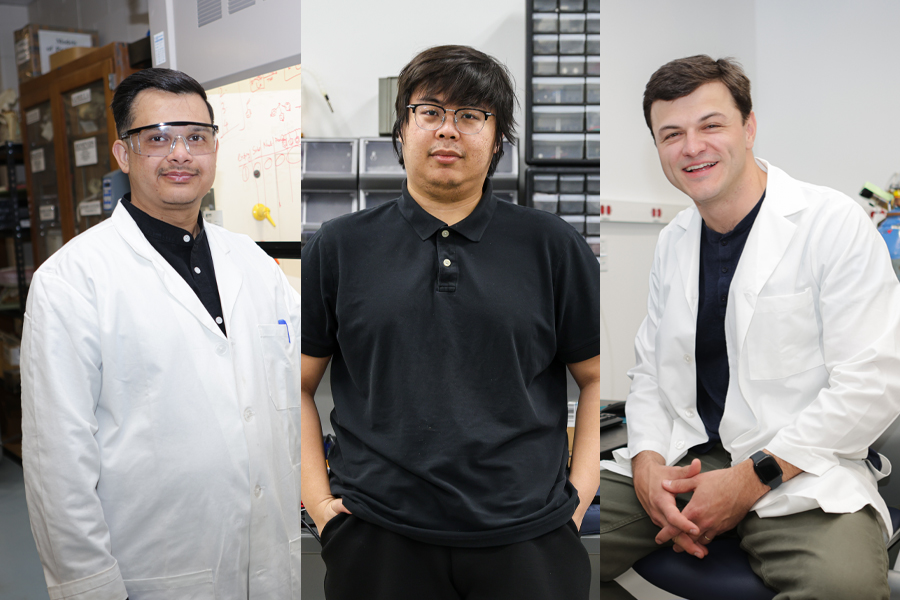
Robust Research
New York Tech’s commitment to research paves the way for important and groundbreaking work. Meet three Ph.D. students whose work may improve disaster response, recovery after muscle and bone injuries, and anticancer therapies.
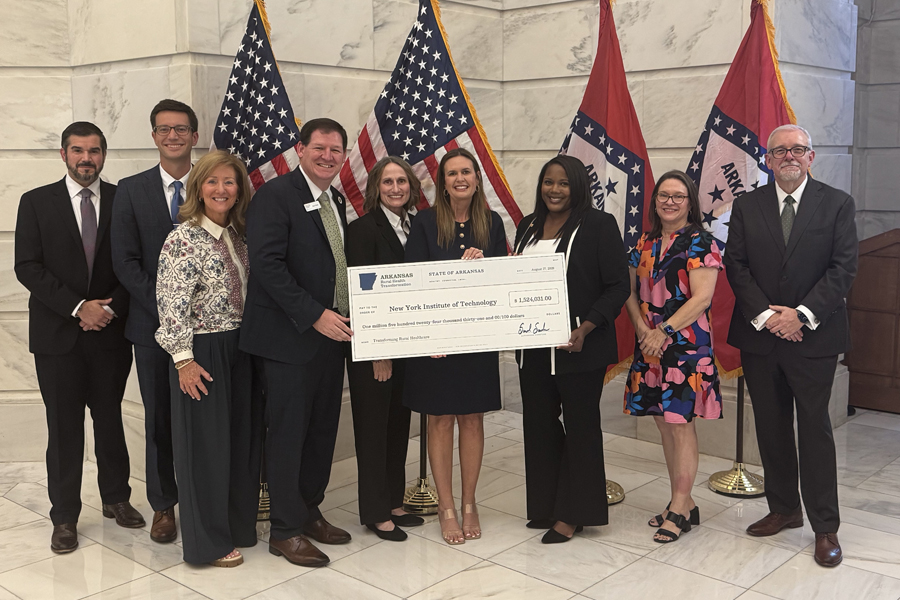
NYITCOM-Arkansas Receives $1.5 Million Grant for Maternal Health Initiative
NYITCOM-Arkansas will use the grant to extend its clinical services focused on rural maternal healthcare access.
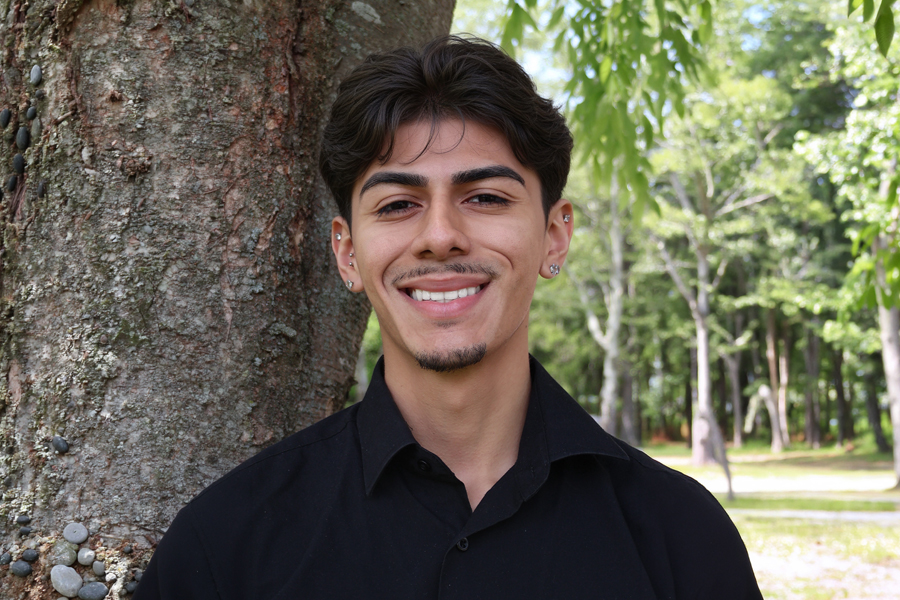
Intern Insight: Brandon Vasquez
This summer, architecture student Brandon Vasquez interned with Gensler, a globally recognized architecture, design, and planning firm.
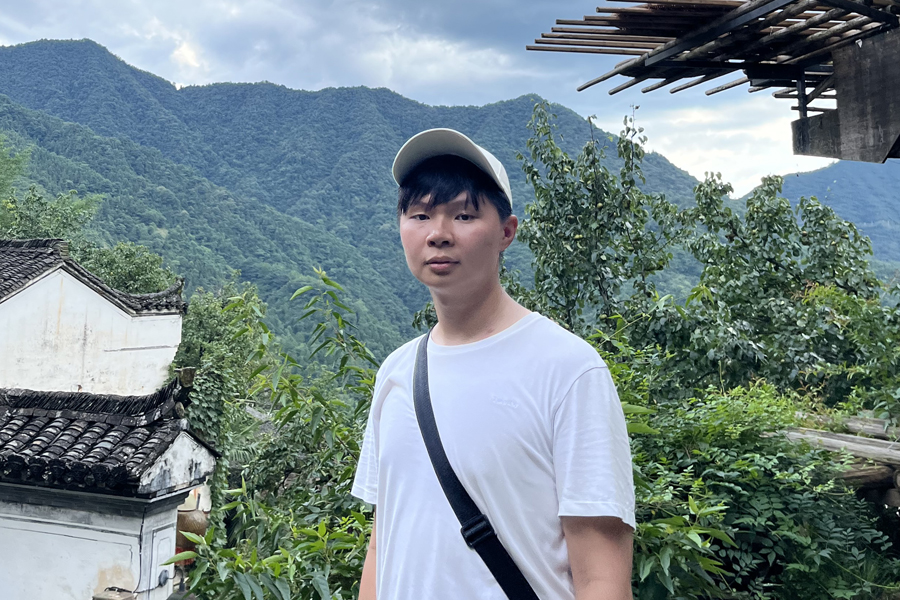
Discover Jiangxi: Two Undergraduate Students’ Experience
For two weeks in July, a nursing student and an architecture student studied on the other side of the globe through the Discover Jiangxi program.
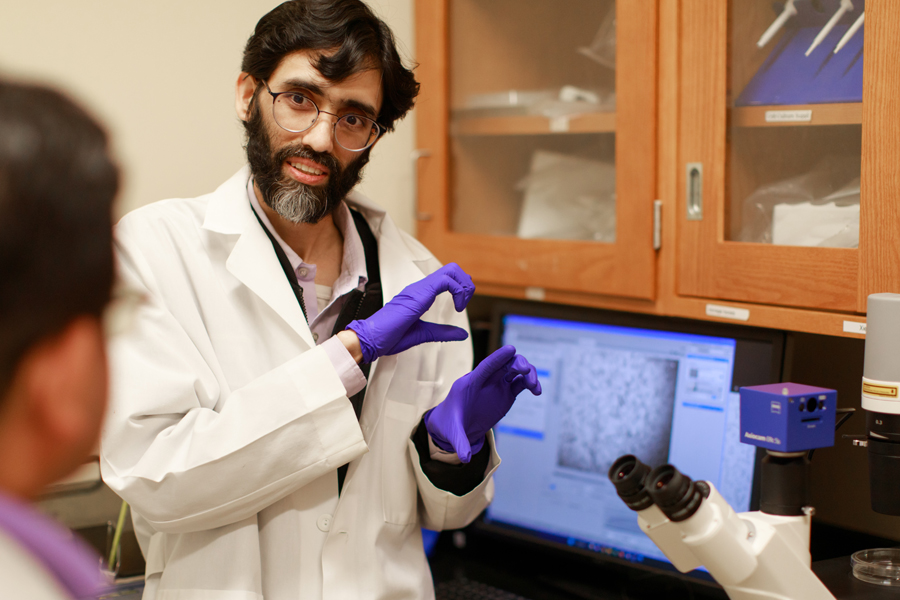
NYITCOM-Arkansas’ Rajagopalan Receives $573K NIH Grant for Cardiovascular Disease Research
The funding will further Associate Professor Viswanathan Rajagopalan’s research regarding the impact thyroid dysfunction has on cardiovascular disease.

Helping Children Manage Back-to-School Anxiety
Cognitive neuroscientist Robert Alexander, Ph.D., assistant professor of counseling and wellness, reminds parents to know the signs of potential anxiety in children as the new school year approaches.