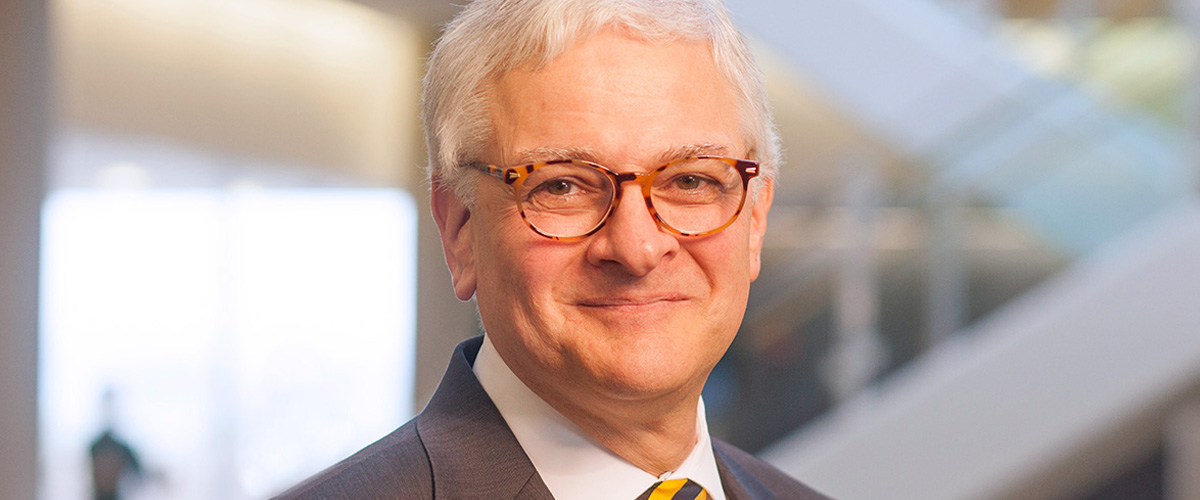
Meet Henry C. “Hank” Foley: NYIT’s Fourth President
On June 1, Henry C. “Hank” Foley, Ph.D., will officially take the helm as NYIT’s fourth president. The announcement of his appointment was made on March 29 following a seven-month national search.
Foley comes to NYIT from University of Missouri-Columbia (MU) where he has served as interim chancellor since November 2015. He joined MU in 2013 as executive vice president for academic affairs and was responsible for growing the school’s academic and research expertise. Foley, who holds 16 patents, has also served as a tenured professor of chemistry at MU and a professor of chemical and biochemical engineering at Missouri University of Science and Technology.
Foley recently shared some insights with The Box about his new role, his favorite patent, and his hidden talents.
Welcome to NYIT! What are you most looking forward to here?
Everything! Being in New York and working with faculty, staff, and students to make NYIT an even more well-known and respected institution of higher education.
What is the first thing you plan to do when you arrive?
To meet everyone. In addition to faculty and staff, I want to meet with students and student leaders—I want to absorb as much information and data as I can. It is also very important to communicate with the campuses in Arkansas, Vancouver, Nanjing, and Abu Dhabi. All this will take time, but it is an incredibly important investment in our future and in improving our academic renown. We want to be the best at producing value for our graduates.
What surprised or impressed you once you started to get to know NYIT?
I love the European, polytechnic plan on which NYIT is based; it emphasizes useful higher education. Degrees in technological fields have been such effective mechanisms for social mobility for over a century that it gives me great satisfaction to be at an “Institute of Technology.” I love the humanities and the fine arts very much, and I support education in these disciplines, but my first love as an educator is in science, engineering, technology, and business.
You hold 16 patents—which ones are your favorites?
Great question! One of my first was written with my first graduate student, Dr. Sourav Sengupta. We designed and built the first fast flow plasma reactor for downstream etching of materials, like silicon, with atomic hydrogen. It worked really well. Dr. Sengupta did the actual work. He was my very first Ph.D. student. He has had a fantastic career as a scientist at DuPont, and the patent has been cited more than 150 times. I’d love to pick up where we left off on this right now, but I can’t… Maybe someday?
What do you value most about your own college experience?
The most important aspect of my undergraduate experience was how I learned how to teach myself. That awareness and adaptability is more crucial than ever for today’s college students, where professions and careers change rapidly, mostly due to technology. The ability to wield technology and adapt, while maintaining a profound sense of curiosity and thirst for new knowledge, is what I plan to cultivate in NYIT students.
If you hadn’t gone into academia, what career would you have pursued?
If I had not been so moved by the Challenger disaster, I might have stayed in corporate life. I enjoyed it very much, but after the space shuttle went down, I felt a strong and compelling pull toward teaching and research.
Can you tell us a little about your background?
I was born and raised in and around Providence, R.I. I met my spouse, Dr. Karin Foley, at Purdue while we were first-year graduate students. I have two beautiful adult daughters, and I am eminently proud of them.
What is the best piece of advice you’ve received?
Never attribute to malice that which may simply be a matter of ignorance, a lack of knowledge, or under-developed social skills. This has been so helpful to me.
Who do you consider your mentors?
Everyone.
Any hidden talents or other things readers may be surprised to learn about you?
While I have never had time to practice or to develop it, I’m sort of a natural on the clarinet and similar wind instruments. And when I had a sailboat, it was named “Intensity.” I love to be outdoors, and I hope to get back on my paddleboard here!
More Features

Faculty and Alumni Publish New Books
New publications from members of the New York Tech community explore topics and interests across the fiction and nonfiction genres.
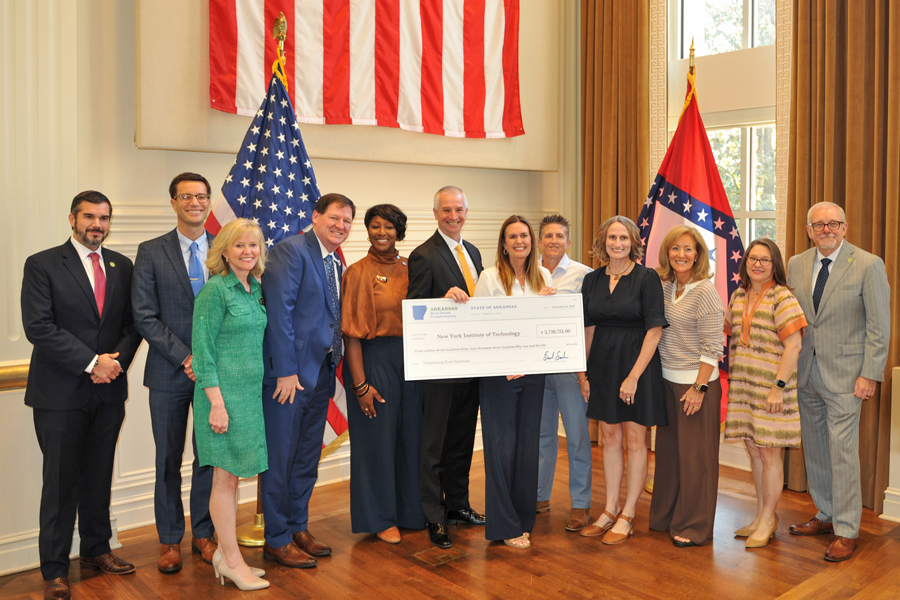
NYITCOM-Arkansas Receives Two Grants for New Residency Program, EMS Training Initiative
Two Rural Health Transformation Project grants, totaling $3.7 million, will support health education programs at the College of Osteopathic Medicine at Arkansas State University (NYITCOM-Arkansas).
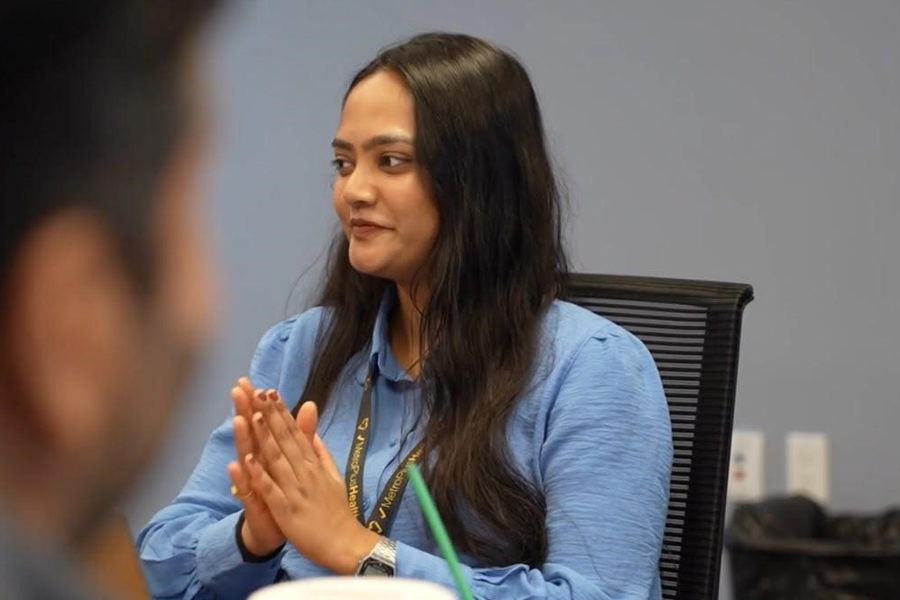
Intern Insight: Mansi Santosh Tikam
M.B.A. student Mansi Santosh Tikam spent her summer interning with MetroPlusHealth, where she learned what it means to be a marketing professional.
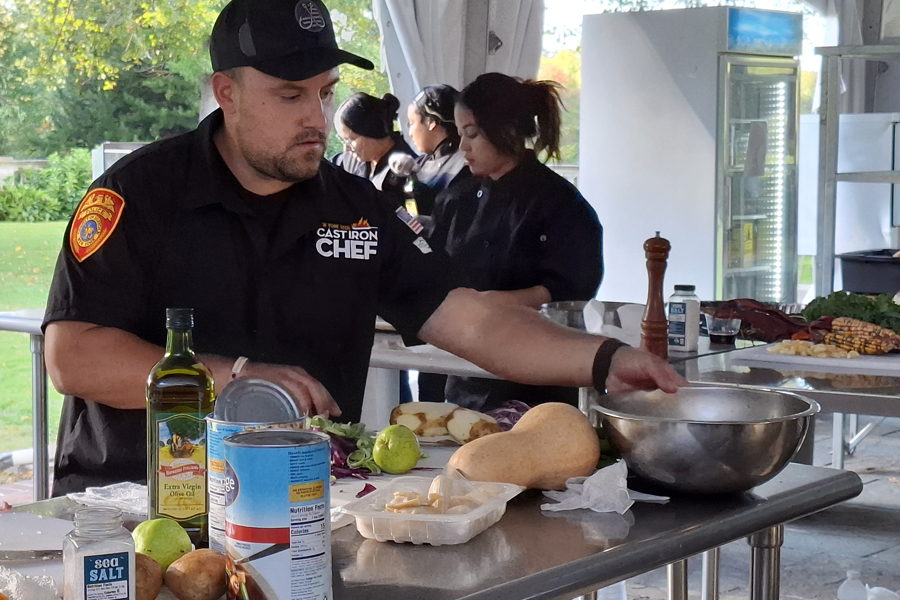
Officers Cook at 12th Annual Cast Iron Chef
This year’s Cast Iron Chef cooking competition welcomed teams of local law enforcement officers for an evening of culinary fun.
The Domino Effect
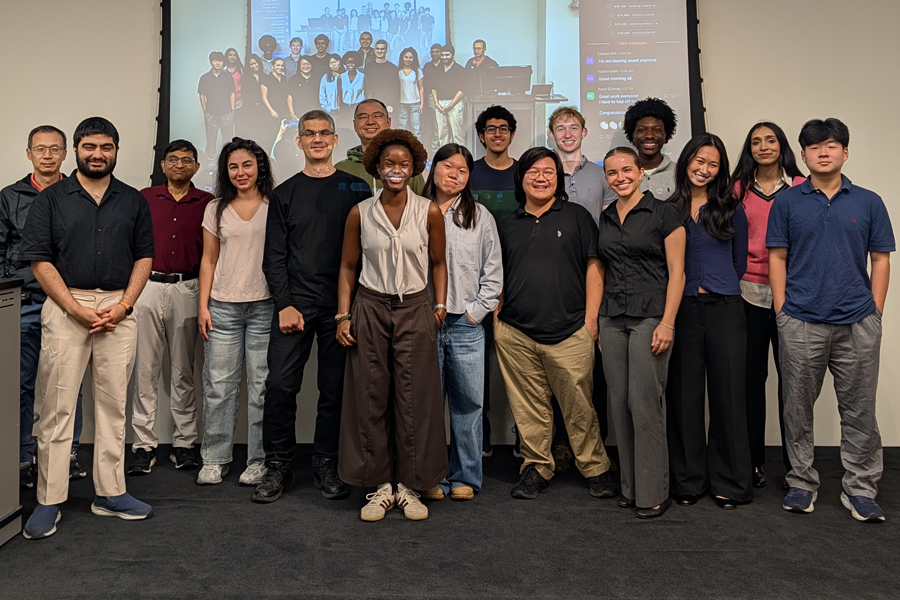
New York Tech’s Research Experiences for Undergraduates program has spent more than a decade turning summer research opportunities into lasting careers, helping build the university’s research reputation along the way.
International Collaboration: School of Architecture and Design and IUAV
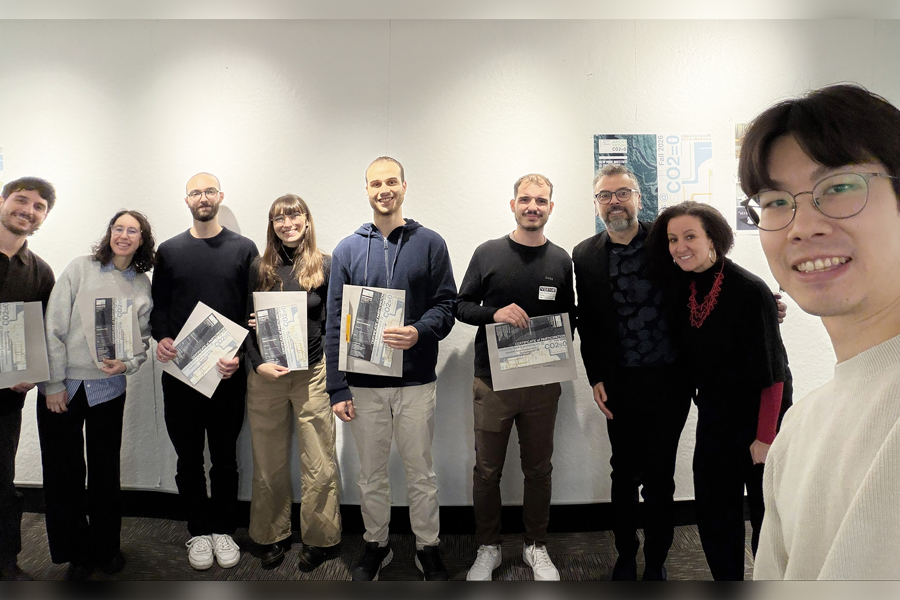
Graduate architecture students from Università Iuav di Venezia (IUAV) in Venice participated in a week-long atelier on the New York City campus, while School of Architecture and Design students traveled to Venice for a 17-day workshop.