Confidence and Community
Architecture student Jacqueline Taylor holds up her notebook to show a sketch. Along with lines, arrows, and triangles in black ink, there is a series of connecting, interacting swirling lines in blue and orange. This was the starting place for her semester-long third-year design studio project.
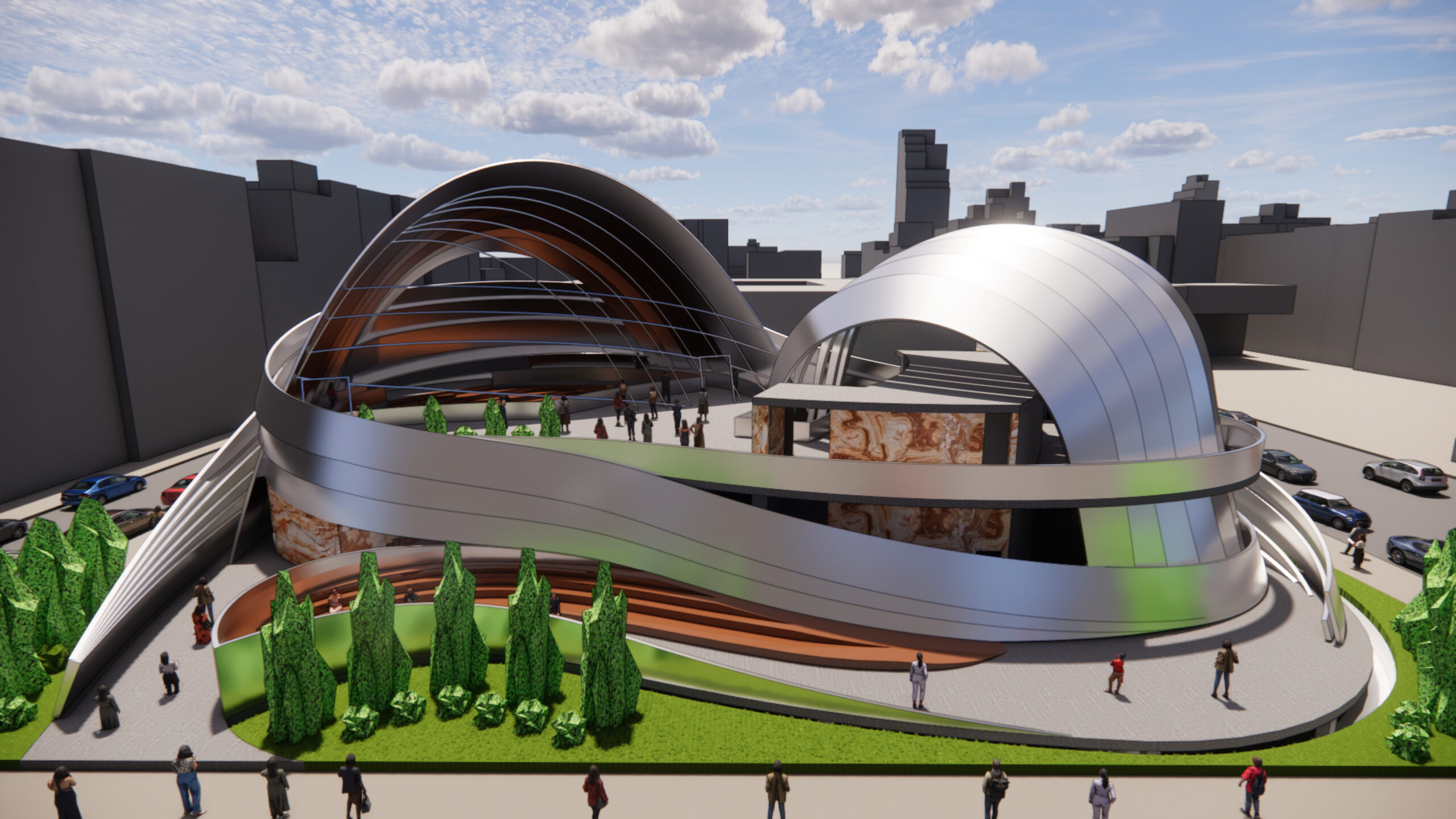
Taylor and other undergraduate architecture students, like Taesean Austin, were asked to propose a community theater on a site on the Lower East Side of Manhattan.
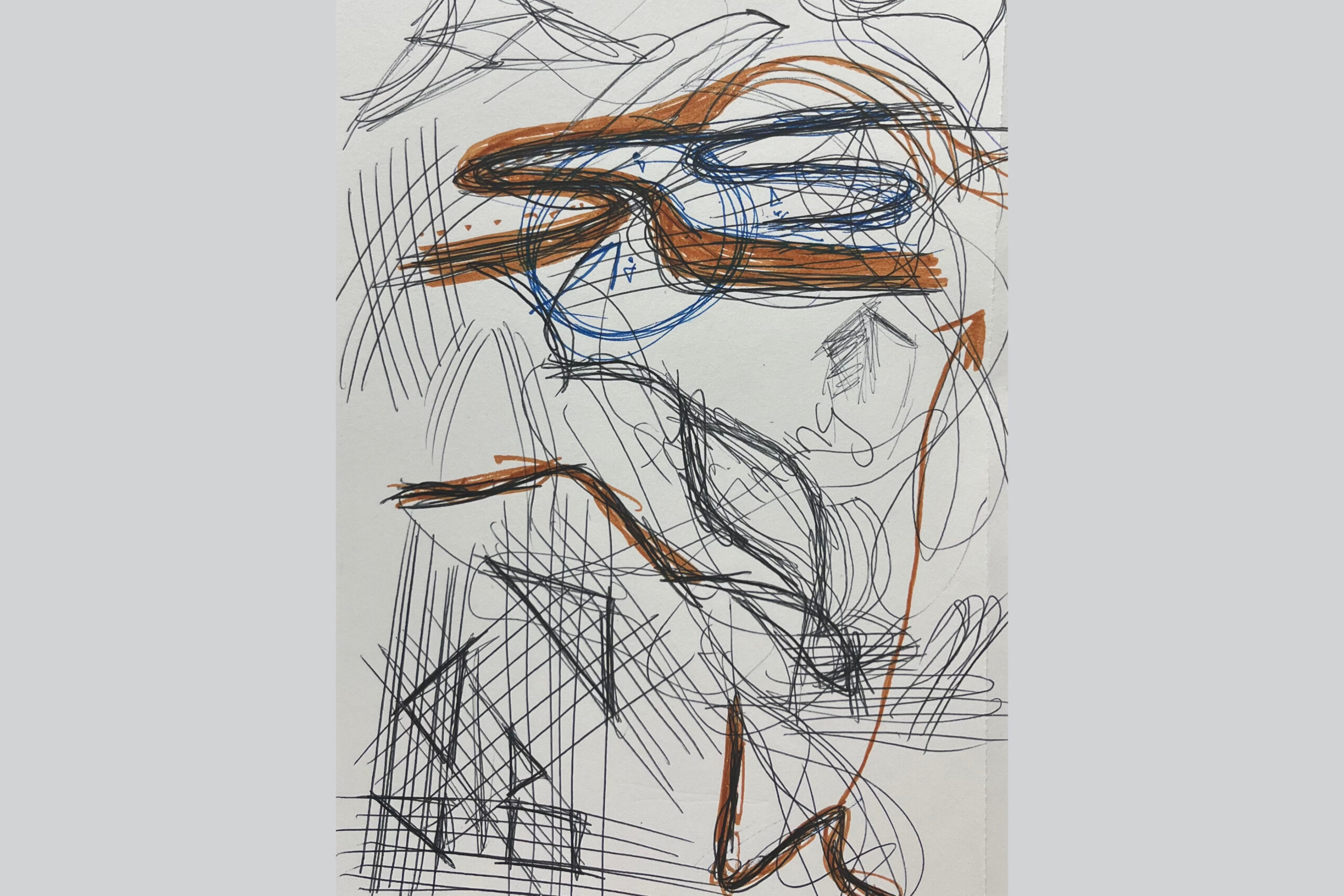
“We visited the site, which I think is a crucial step in architectural design, because you get a sense of the space. You [can] feel the site,” Taylor says. “I wanted to play with compression and expansion. I was driven by this idea of people entering a space and blindly following the curve of a wall to a very grand visually interesting space. I was doing sketches in my notebook to try and represent this.”
Taylor appreciated that her professor, Maria Di Natale, visiting associate professor of architecture, gave her the freedom to find her own way. “[With] Maria I was able to explore who I am as a designer and the things I wanted to do,” says Taylor. “I was able to step into the design I instinctively believed in with that type of freedom. I could explore myself, how I process things, and how I look at architecture. Without the type of freedom that she gave me, I would not have been able to explore that.”
The ability for students to express their personal narrative, along with formal ideas, was among the goals for the studio.
“They were encouraged to stick to what they felt was a suitable intervention and solve all the problems that come with that,” says Di Natale. “In other words, what is the right solution for this type of public building proposal, on this site, in this neighborhood, and at this time in our existence? I encouraged each student to ask themselves this question, for them to clarify their approach and understand the impact their proposals would have. Lastly, the students were asked to question the preconceptions they had about a community theater typology and propose to meet current needs and push past preconceived notions about these kinds of places.”
So, too, was learning to handle a more complex design problem, and, beyond designing for the individual, learning to design for the community. “The theater design prompt is especially helpful for the growth of the student’s design capabilities because it has more complex egress and code conditions than previous semesters,” says Matthew Kennedy, adjunct instructor, who led Austin’s design studio. “The other important factor is that in the previous semester, which was housing, [where] the students learned how to design for the individual, in this project, it is about how you design for a community. It becomes about how one incorporates the history and culture of a given area and synthesizes its greatest aspects into a building that is empathetic to its surrounding context and the users that will occupy it.”
Building Confidence
Learning to trust herself, Taylor pushed past her comfort zone to follow through with her initial intuition. Her proposal, the same sculpturally organic shape that emerged through her sketch, followed by a physical model in paper, merges a series of horizontal and vertical aluminum ribbons.
“The façade pieces interact together,” says Taylor. “At first glance, visitors recognize that the building’s scale remains consistent with the surrounding structures. I wanted the project to respect the site rather than impose upon it. Upon entry, visitors pass through a compressed space. One corridor leads to the theater’s ground level, where the roof becomes the stage backdrop, while the second corridor leads to a grand staircase ascending to the plaza, where visitors can look down onto the theater seating. Both routes create opportunities to physically and visually engage with the façade system.”
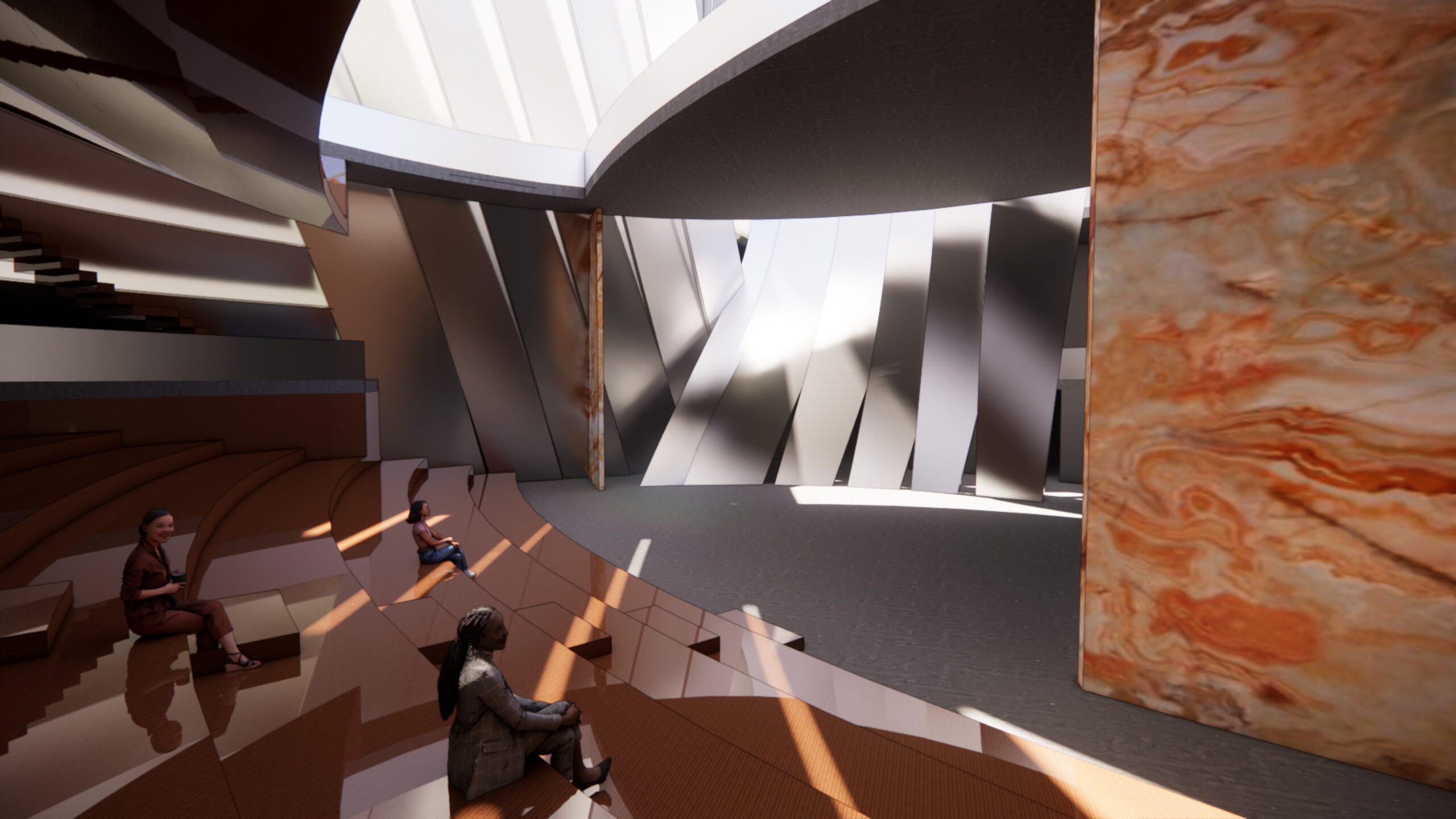
While Taylor’s theater proposal came from the initial sketch and paper model inspired by the site visit, Austin’s came from his research following the site visit—along with his own connection to the community.
“I noticed that the Lower East Side was heavily inspired by art and a sense of community,” says Austin. “Also, a common theme for all my projects is that I try to connect them back to the community. And I thought the Lower East Side was a really good place to do that. It’s an artist’s playground, and I love that about it.”
During his site visit, Austin observed that the area, with all its various elements, seemed to be without a center. “So, I decided I want to design the heart of the Lower East Side, which is the name of the project, ‘The H.E.A.R.T.’ (Harnessing. Engagement. Aiding. Replenishment. Theatre.).”
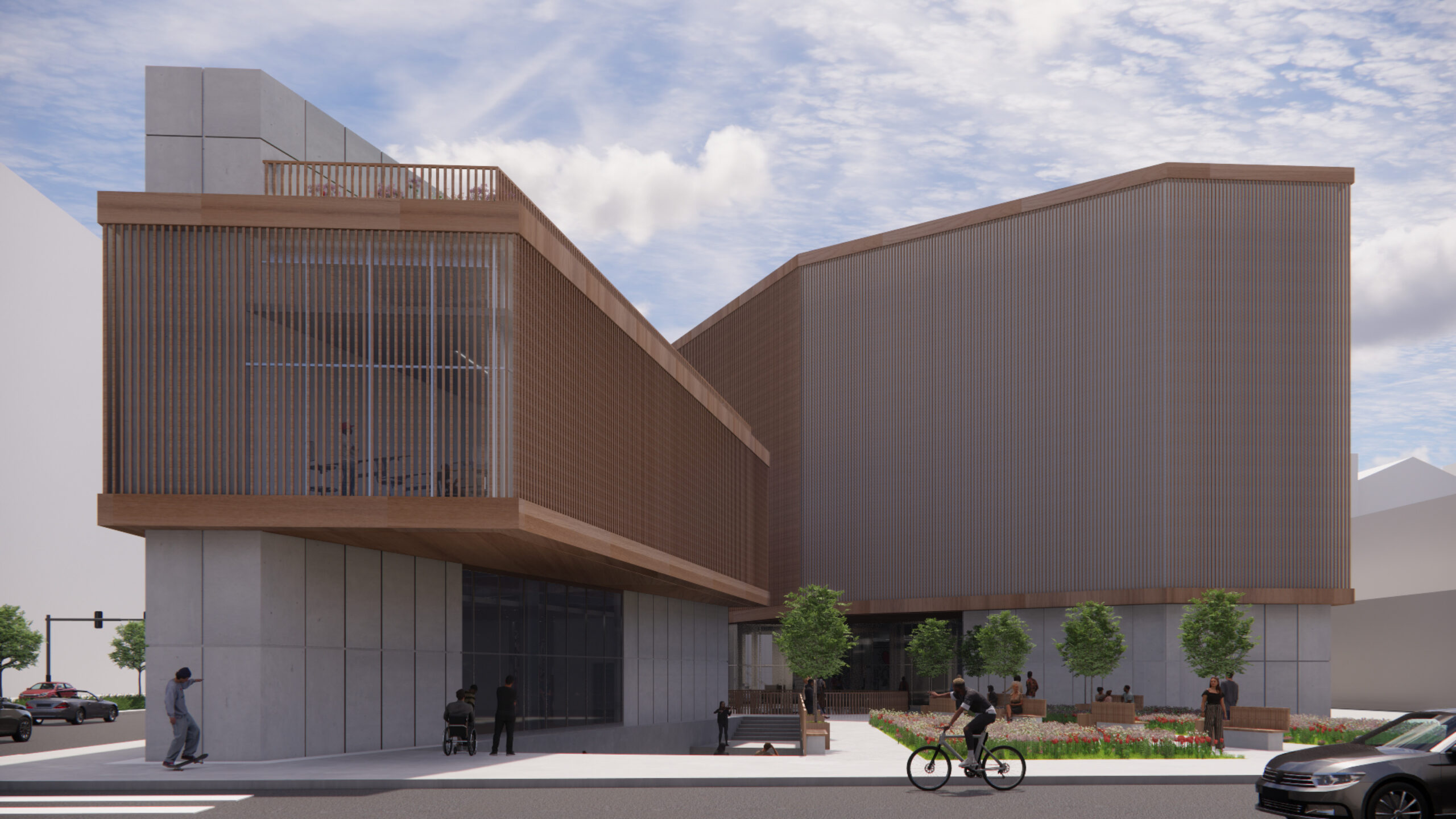
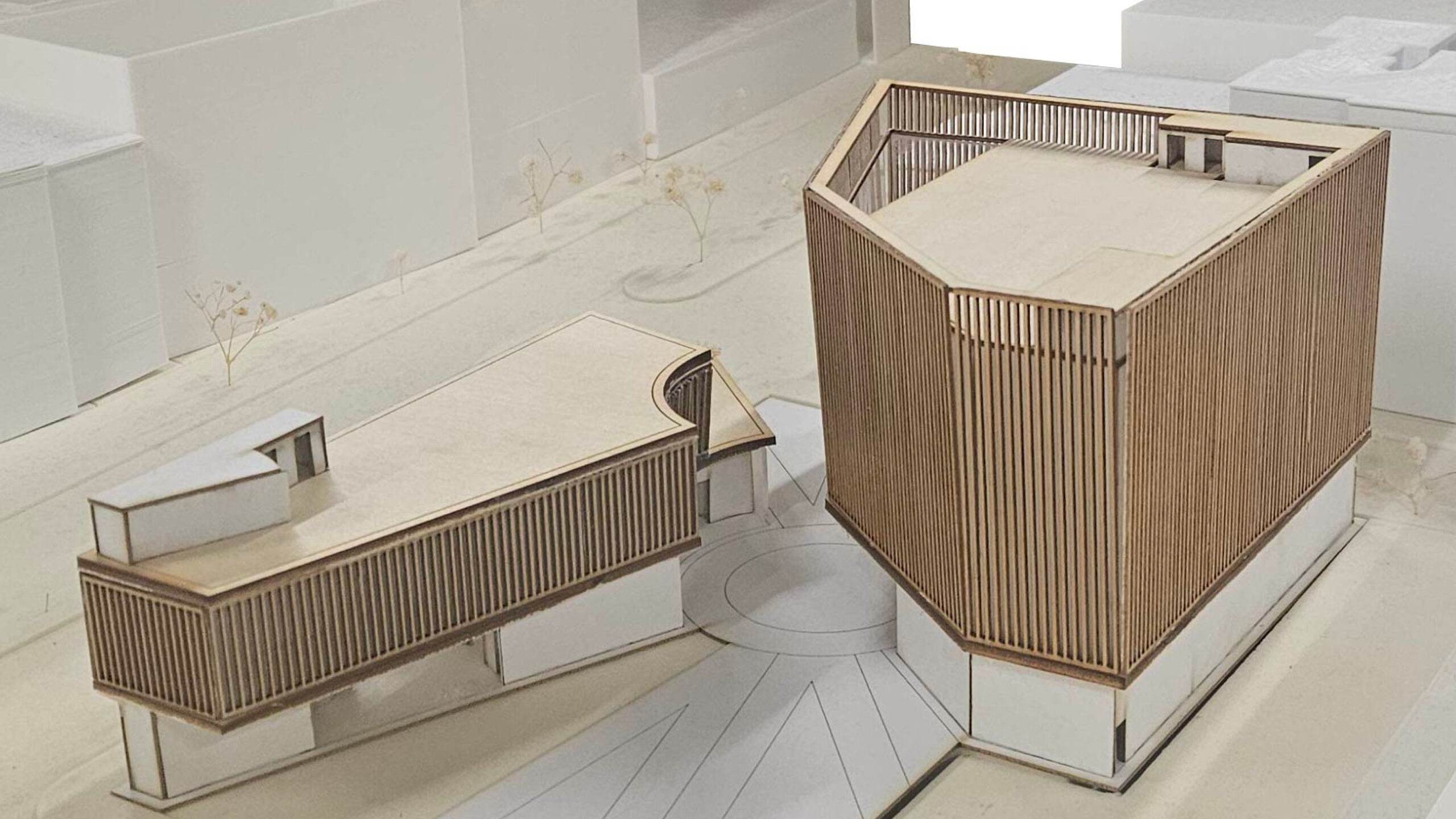
Through extensive research, Austin uncovered the area’s historical and cultural landmarks and mapped their position. He drew lines from those touchpoints to the center point of the site. He used those sight lines to form and cut parts of the theater: two separate but connected buildings defined by their wood louver façade.
“This radial center became ‘the heart’ of the project and combined with the various landmark armatures, it began to shape the site and massing [general shape, form, and size] of the two separate buildings,” says Kennedy. “The separated massing helps create an open and inviting outdoor space shielded from the busy street while allowing two important functions to operate independently and efficiently.”
While Austin learned he doesn’t necessarily want to design a theater again (“However, it’s opened my eyes and [has exposed me to] another option,” he notes.), the experience of designing one secured a strong sense of confidence about his place in architecture. “The project fortified my sense that I just belong in this field,” he says. “[Don’t get me wrong], there were a lot of elements of this project that I really enjoyed. I think the renders came out really nice, my physical model was one of the strongest I’ve ever made, and I got good feedback on my presentation. But when the dust settled, I sat there, and I was able to look at my project and say, ‘You know what? This is the place for me.’”
Community Impact
Including his interaction with other students—“We emphasize a studio culture where all students participate during design studios and are encouraged to collaborate and share ideas with one another outside of class time,” says Di Natale—the project also reaffirmed Austin’s desire to focus on community-centered design.
“[The project] grounded me more in the sense that the one thing I do want to do is something community-related,” he says. “That is my hope. That is what I have enjoyed so much regarding architecture.” The opportunity to design a theater pushed this notion further. “That may change when I step into the field, but I don’t think it will. I think I’ll still enjoy community-focused architecture.”
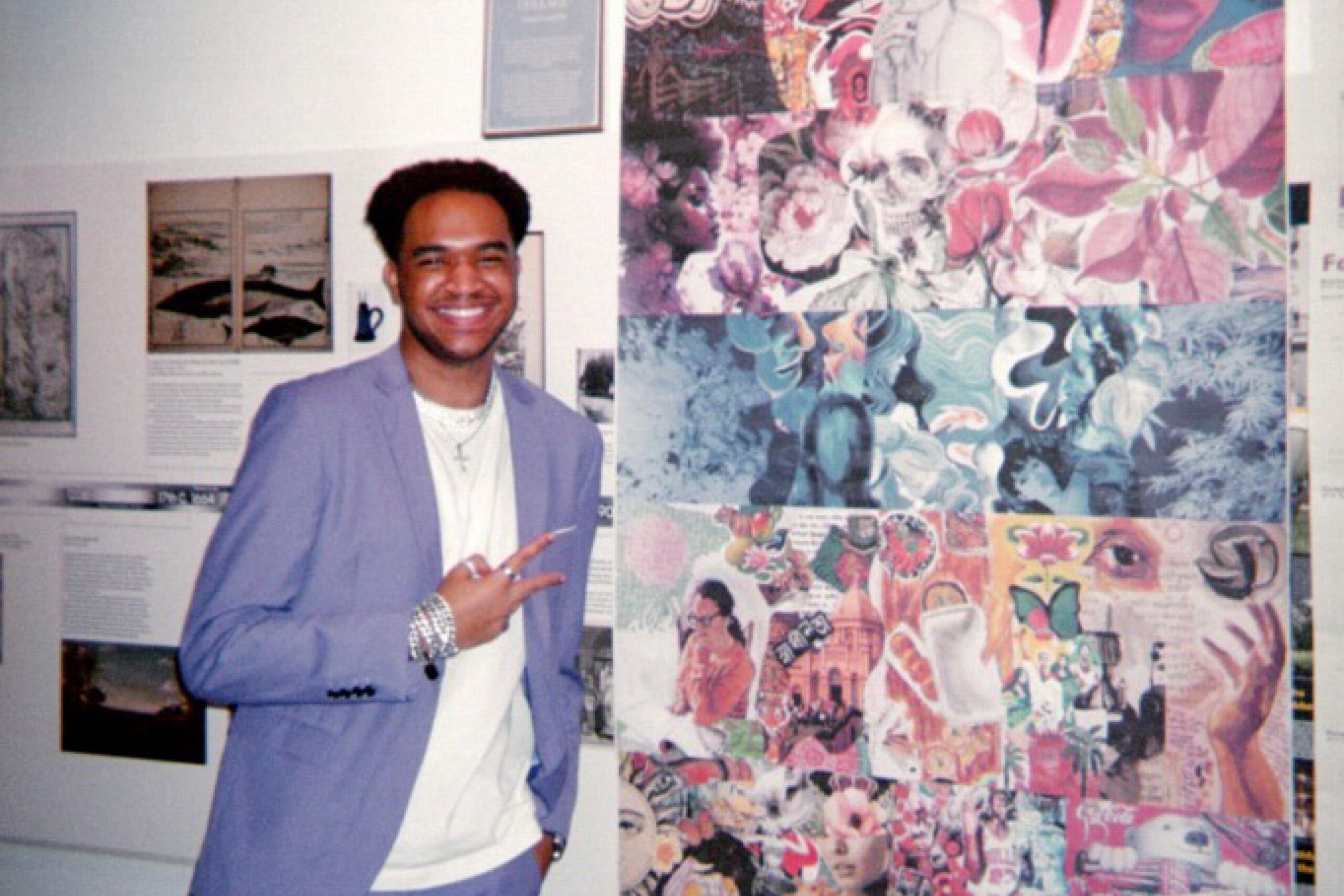
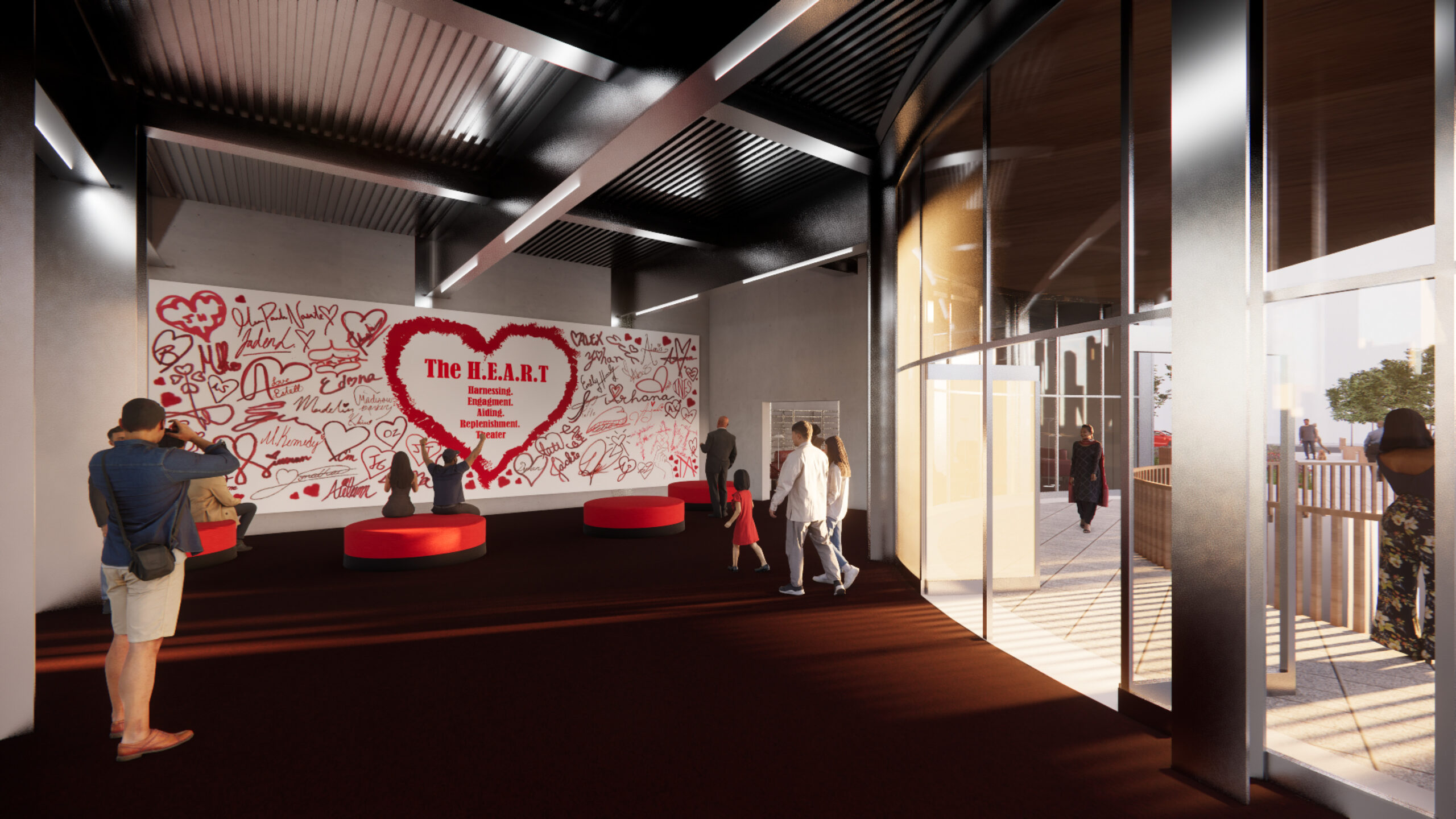
Austin incorporated his appreciation for community directly into his project with a mural that includes the signatures of his classmates, with a heart in the center. “It’s kind of like a bow at the end of the project,” he says. Both Austin and Taylor walked away from the project with more appreciation for community and more confidence.
“I learned to trust myself,” says Taylor. “I learned that sometimes you need a little push, and that when you surround yourself with people who support you, that is when you will be the most successful.”
Building confidence, the project reflects the type of education students receive at New York Institute of Technology, which, says Di Natale, prepares students to be “industry ready.”
“This project in particular showcases the diversification of design challenges the students are asked to solve throughout their undergraduate career,” says Kennedy. “I feel that it not only helps them become better designers but also encourages them to be comfortable when designing for all different niches of architecture. Whether it be residential or commercial, we want our students to feel confident in their design capabilities once they join the workforce.”
By Joann Plockova
This project in particular showcases the diversification of design challenges the students are asked to solve throughout their undergraduate career.
—Matthew Kennedy
More Features
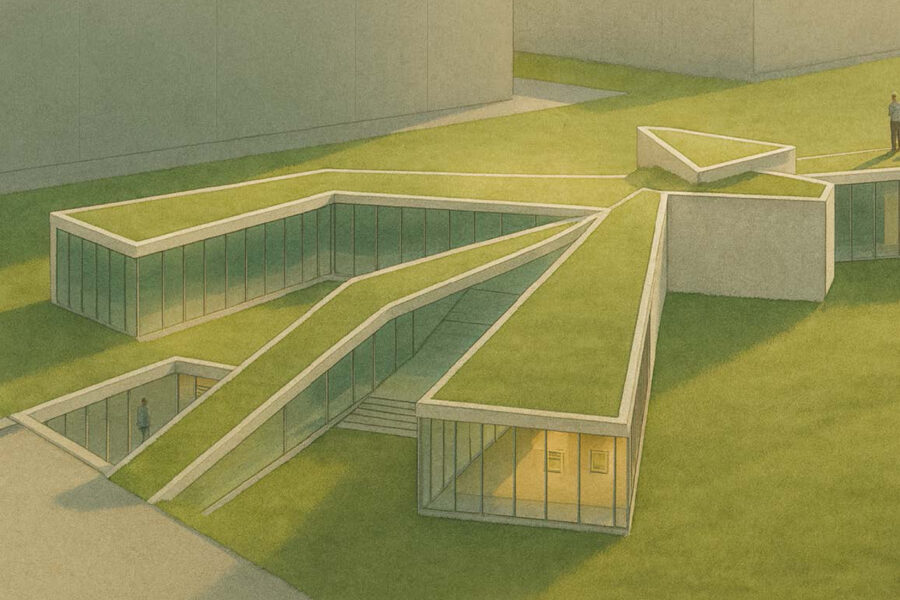
Applauding Students’ Architecture and Design Work
School of Architecture and Design students are recognized for their academic work at MIT’s Reality Hack and in Metropolis magazine’s Future100.
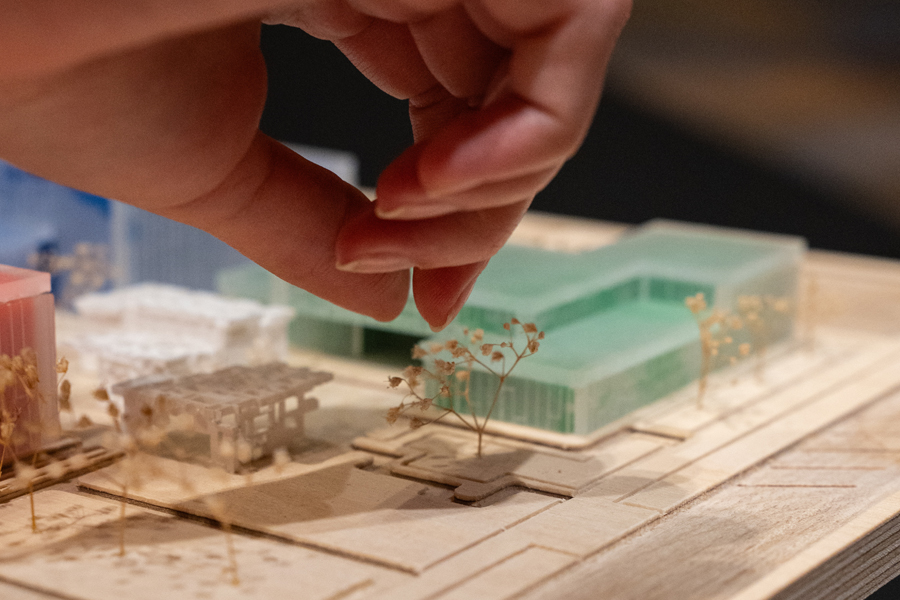
NOMA Competition: Reimagining Kansas City
Twelve architecture students competed in the 2025 Barbara G. Laurie Student Design Competition sponsored by the National Organization of Minority Architects (NOMA) to propose a model for housing that prioritizes those vulnerable to racialized disinvestment.
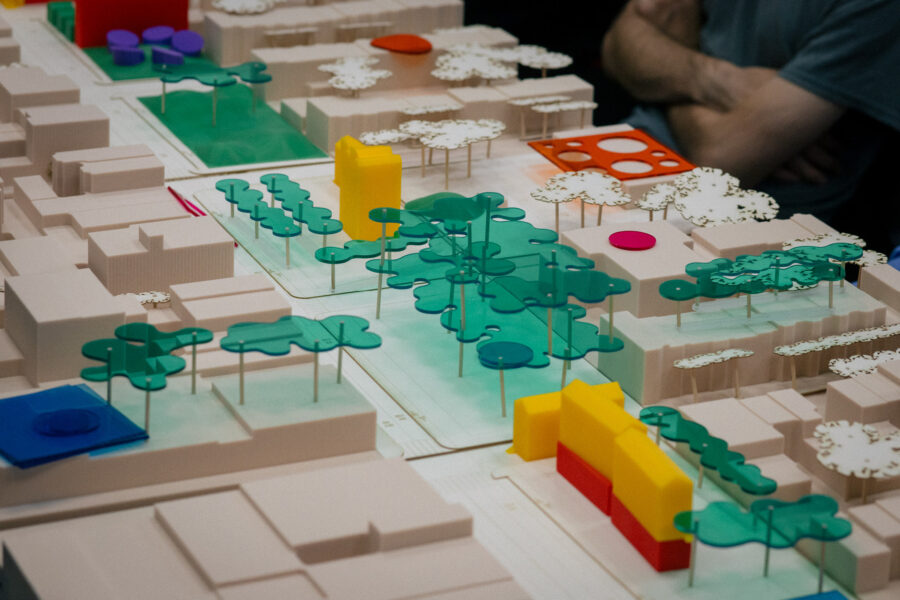
Community Building
Working on the Institute for Public Architecture’s Modeling Community Visions for a Future Without the BQE project, Marcus Wilford (B. Arch. ’16) turned to his alma mater for support.

“Envisioning” More Inclusive Eyewear
As part of a collaborative initiative between New York Tech and the global eyewear company Marcolin, students from the School of Architecture and Design and NYITCOM teamed up to develop potential eyewear solutions for neurodivergent populations.
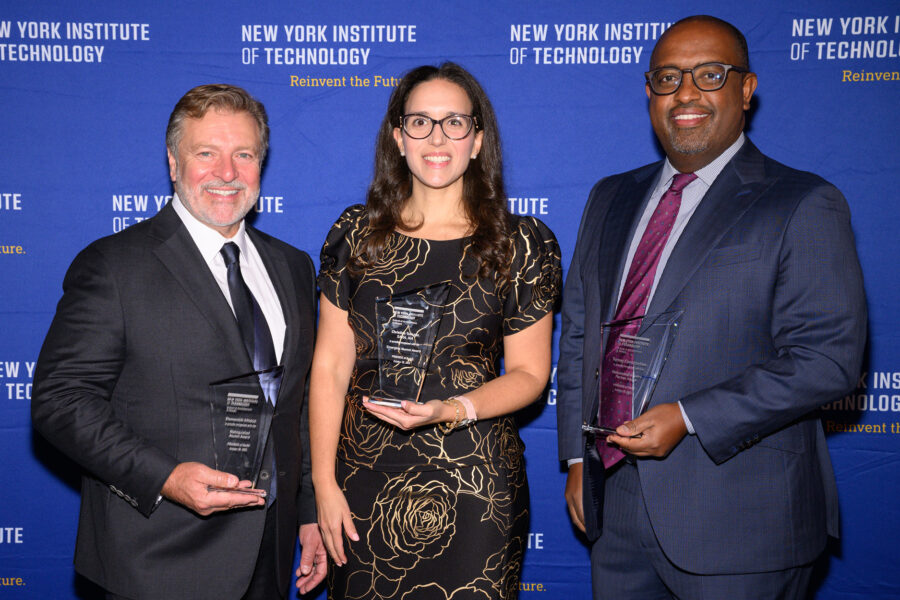
FRIENDS Sets New Fundraising Record
On October 30, the School of Architecture and Design celebrated its 17th Annual Alumni and FRIENDS Reception, raising a record-breaking $550,000 in support of student scholarships, technology upgrades, lectures, study abroad, and new initiatives.
Startup Tech Central Officially Opens
Members of New York Tech and the local community gathered to celebrate the grand opening of Startup Tech Central, a resource for students to transform ideas into real-world impact.