Building Machines…and a Future
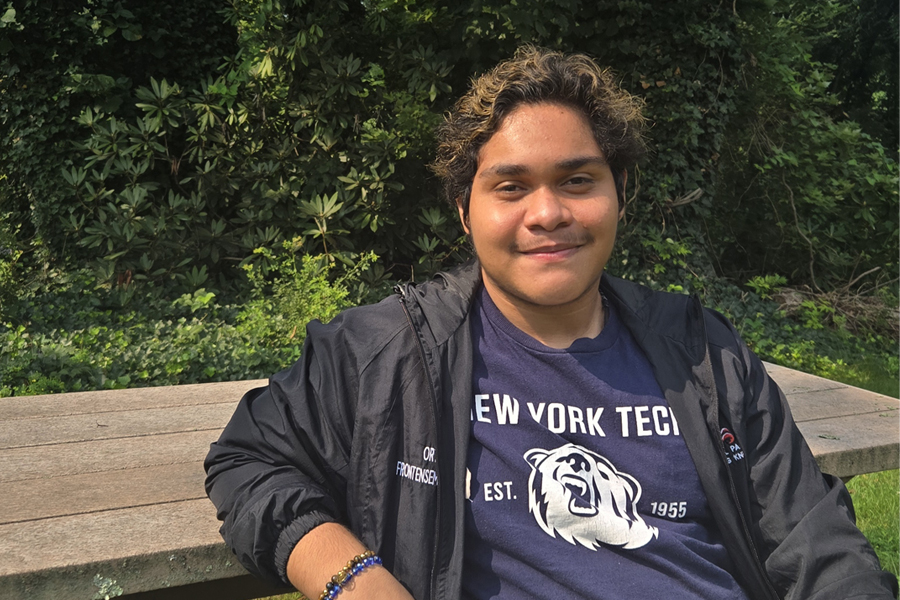
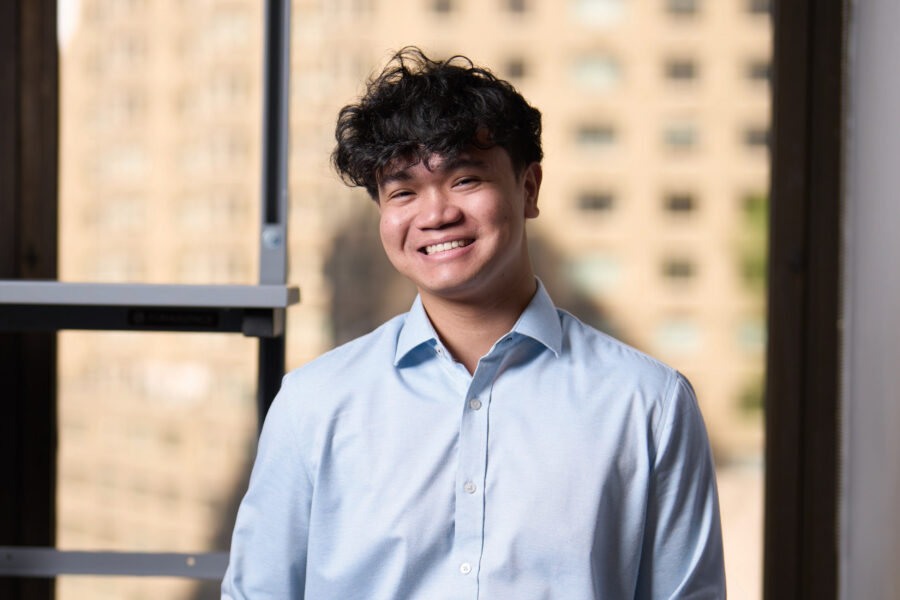
Anthony Vazquez Rivas has numerous family members who are physicians, and he envisioned a similar future when he enrolled in his high school’s sports medicine program. But when he took physics during his junior year, he realized a new passion that sent him in a completely different direction.

“It clicked in my head that I’ve always liked and been good at math and science, and I began to think of careers that incorporate those subjects,” says the fourth-year mechanical engineering student. “Growing up, my dad was always trying to fix things around the house, and he taught me to understand how things work in order to find a solution.”
On the Long Island campus, Vazquez Rivas stays busy with his father’s lesson in mind as he leads New York Tech’s chapter of the Society of Automotive Engineers (SAE). As president, he guides the society’s project objectives. Right now, the group is working on the Baja SAE project, an international collegiate engineering competition where students design and build a prototype of an all-weather, single-seat, off-road vehicle. Vazquez Rivas’ team is collaborating remotely to design their vehicle, but once they are ready for the building phase, they will finalize their project on campus.
“The project is highlighting our students’ capabilities of designing a real engineering project and manufacturing it on our school’s campus,” Vazquez Rivas explains. “Our designs and future build include the physical chassis (frame), transmission, gearbox, suspension, brake system, steering system, safety components, and electrical system.”
This project is not Vazquez Rivas’ first experience with building a moving system. In fall 2024, he teamed up with computer science students Gunn Aggarwal and Evelyn Zhinin Tacuri, and mechanical engineering students Yuri Kent Calumpit, Ray Khan, and Ivy Manglicmot—along with electrical systems expertise from electrical and computer engineering student David Rogala—in the College of Engineering and Computing Sciences to develop a prototype autonomous rover for use by the Port Authority of New York and New Jersey.
In the College Challenge: Vehicular Tunnel Catwalk Robotics, the team designed the Autonomous Response and Emergency Sentinel (A.R.E.S.). Equipped to collect data and flag abnormalities inside the Lincoln Tunnel Catwalk, the emergency response rover can assist both Port Authority headquarters and commuters in the case of an emergency.
Following their selection as finalists, they built their prototype in spring 2025 and Vazquez Rivas and other teammates were offered paid internship opportunities with the Port Authority’s Resilience and Sustainable Design group. This April, the A.R.E.S. had its official test run and experienced no failures, leading to a first-place win.
While there are no immediate next steps for the A.R.E.S., Vazquez Rivas is grateful for the experience he gained, including redesigning and building the frame, securing and assembling mechanical components, wiring electrical components, fine-tuning alignments, and managing and assembling 3-D printing processes.
During last summer’s three-month internship in Manhattan’s Financial District, Vazquez Rivas took part in extreme heat-related studies inside PATH train stations. This introduction to HVAC systems and understanding the causes and effects of extreme heat set in motion new career goals for the future engineer.
This summer, Vazquez Rivas returned to the world of HVACs; he has an internship with the architecture and engineering firm H2M. As a mechanical engineering student intern, he is learning about HVAC systems as well as designing and building real-world HVAC renovations.
Vazquez Rivas reflects that while everything he’s learned in the classroom has given him the technical foundation of knowledge needed to deliver on engineering projects, the experiential opportunities he’s been a part of these last few years have exposed him to the realities of attention to detail, deadlines, budgeting, and customer satisfaction.
As he enters his final two semesters at New York Tech, Vazquez Rivas looks forward to traveling after graduation before beginning his career. His long-term goal is to design HVAC systems as a professional mechanical engineer, and he ultimately hopes to open his own firm.
“I know I can accomplish my goals if I dedicate myself and never stop learning,” he says. “I love the versatility of my degree. Mechanical engineers can be found in every field and can perform many different roles. There will always be something that will appeal to my interests.”
More News
A Passion for Games, a Vision for Business
College of Engineering and Computing Sciences student Cody Ortiz helps his father run a florist shop, an endeavor that inspired him to become an entrepreneur, too.

When Numbers Become Shapes
Ricardo Cabret (M.S. ’14), who studied computer science in the College of Engineering and Computing Sciences, transforms digital code into physical art.
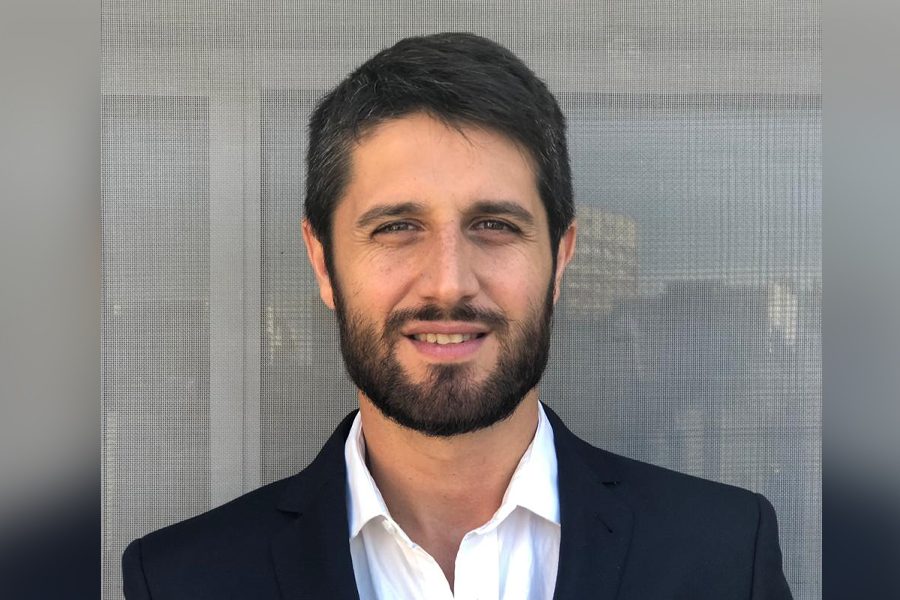
Longtime Economist Finds His Way Into Nuclear Energy Sector
Dario Martinez (M.S. ’25) has spent most of his professional career as an economist, and over the past three years, the energy management alumnus has become one of the voices shaping the conversation around Puerto Rico’s energy grid.
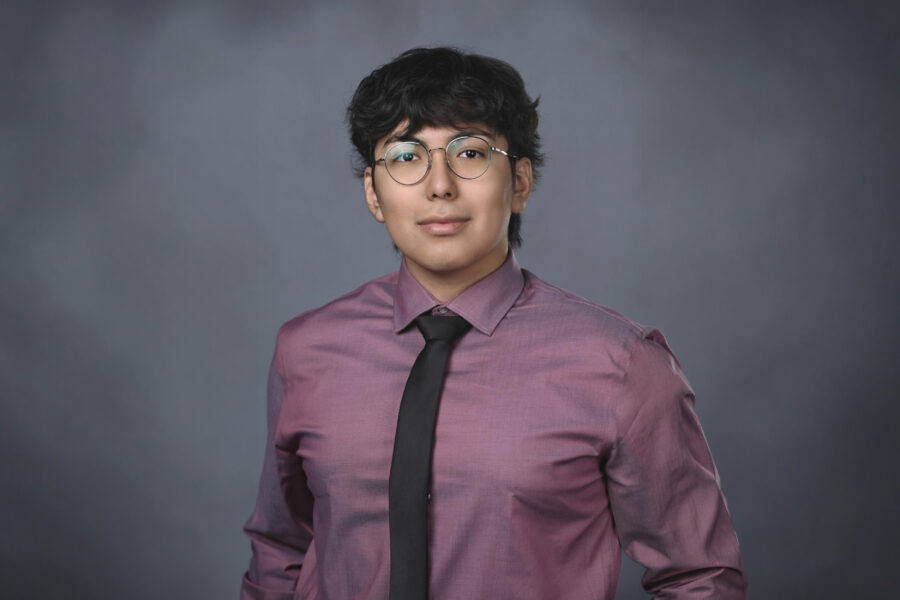
SGA President Paves the Way for Current and Future Students
Student Government Association (SGA) President Yael Mendez Saavedra came to New York Tech because of its reputation and ended up enjoying his extracurricular leadership roles just as much as his studies.
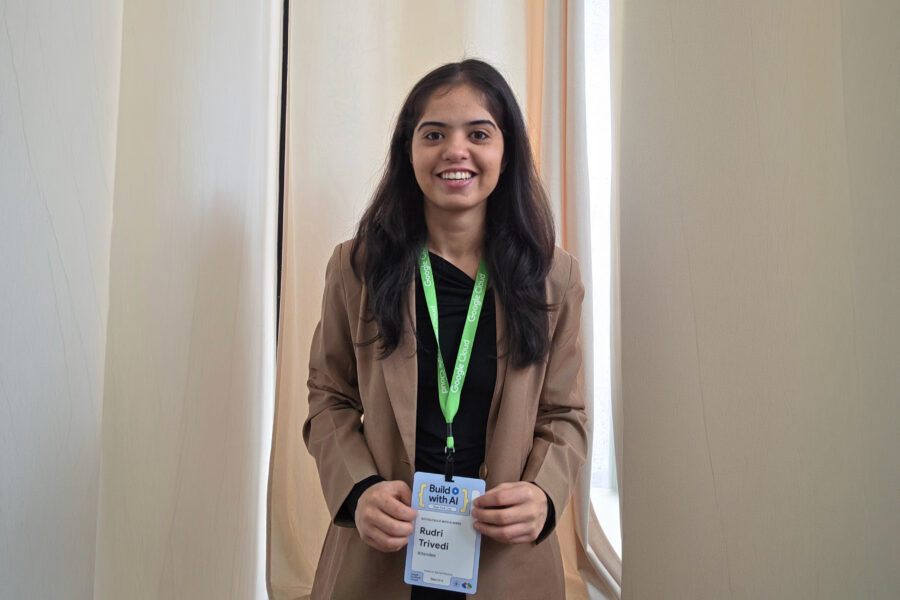
Exploring Data and AI
Computer science graduate student Rudriben “Rudri” Trivedi attended two Google events in New York City to deepen her understanding of the field.
Using Technology for Good
Computer science student Edrich Silva wants a career in technology where he can practice his skills and create social good.